An acidic final rinse CIP product is usually a low-foaming acid formulation used after an alkaline cleaning step to condition or remove remaining mineral films from food and beverage equipment. It is not automatically a cleaner, sanitizer, neutralizer, or no-rinse treatment. Its permitted role—and whether potable-water rinsing must follow—depends on the specific product label, technical data, food-contact authorization, validated sanitation procedure, and the equipment being cleaned.
The practical rule is simple: do not classify a chemical by where it appears in a supplier’s sequence or by the words “final rinse.” Control it as a defined CIP step with a specified concentration, circulation or contact method, drainage requirement, compatibility review, and verification plan.
What an acidic final rinse is intended to do
Many CIP programs use alkaline detergent to lift organic soil such as fats, proteins, carbohydrates, and processing residues. An acid step can then address inorganic deposits associated with hard water, mineral salts, and product-specific films. In brewery service, for example, acid chemistry may be considered where mineral deposits or beerstone-related problems are part of the cleaning challenge.
A low-foaming acidic anionic final-rinse product is designed for recirculating systems, spray devices, return piping, tanks, and other circuits where foam can interfere with pump performance, tank level control, spray coverage, or return flow. “Low foam” is an operating property, not evidence that the product is safe to leave on food-contact surfaces or that it provides a sanitizing outcome.
Depending on its formulation and approved instructions, an acidic final rinse may help:
- Remove or limit residual mineral films after alkaline cleaning.
- Support a repeatable acid phase in a CIP program.
- Reduce the likelihood of scale buildup in appropriate applications.
- Leave surfaces drained after the prescribed exposure period.
- Maintain reliable CIP circulation by avoiding excessive foam.
Those functions are distinct from soil removal by detergent and from microbial reduction by a sanitizer.
Where it may fit in a CIP sequence
There is no universal CIP recipe. Product soils, water quality, equipment geometry, production schedule, materials of construction, and chemical approvals all affect the sequence. A simplified program may look like this:
- Product recovery or push-out: Remove as much remaining product as the system design allows.
- Pre-rinse: Flush loose soil and prepare the circuit for cleaning.
- Alkaline wash: Apply detergent intended for the organic soil load.
- Intermediate rinse: Remove detergent and displaced soil as required by the approved procedure.
- Acid step or acidic final rinse: Apply the designated acid chemistry where mineral control is needed.
- Drain and/or potable-water rinse: Follow the product directions and plant procedure.
- Sanitizing step, if required: Apply the approved sanitizer to pre-cleaned surfaces using its labeled conditions.
- Final drain, inspection, and release: Confirm the circuit meets the plant’s documented pre-operational requirements.
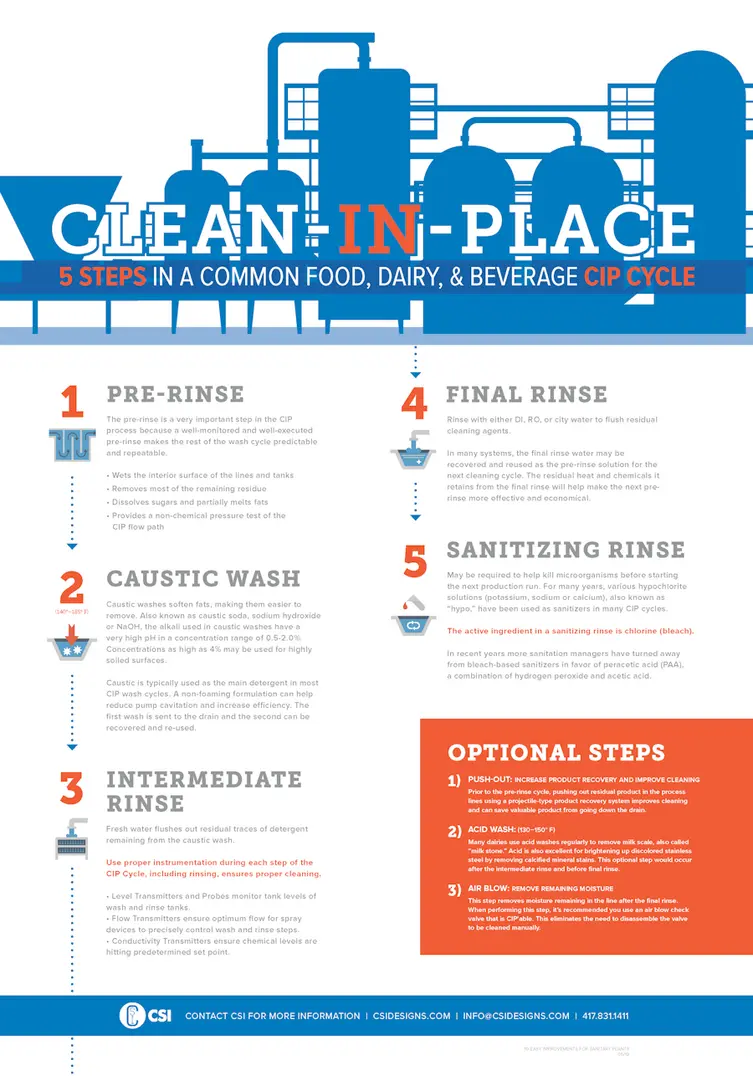
Source: csi.imgix
An acid phase is sometimes described as a “final rinse” because it occurs late in the cleaning sequence. That wording can cause confusion. A final acid rinse may be followed by water, sanitation, or both. Conversely, a sanitizer may be used as the last chemical contact step in another validated program. The order must not be changed simply because two products are both low-foaming or both described as suitable for CIP.
Acidic final rinse, acid cleaner, sanitizer, and water rinse: key distinctions
| Step or product type | Main purpose | What it should not be assumed to do |
|---|---|---|
| Acidic final rinse | Manage mineral residue or provide the specified acid conditioning step | Replace a validated detergent wash or sanitizer |
| Acid CIP cleaner | Remove inorganic scale and mineral deposits under defined use conditions | Function as a no-rinse sanitizer unless specifically approved and labeled for that use |
| Sanitizer | Reduce microorganisms on already clean surfaces under labeled conditions | Remove heavy soil, scale, or detergent buildup |
| Potable-water rinse | Remove chemical and soil residues where the procedure requires it | Sanitize equipment unless an approved sanitizing process is separately applied |
| Neutralization step | Adjust or remove incompatible chemical carryover in a defined program | Be presumed necessary or sufficient without a documented procedure |
A supplier may market an acid product for several tasks, but the plant should rely on the exact product documentation rather than broad category descriptions. Two acidic products can differ substantially in acid type, surfactants, additives, food-contact status, rinse instructions, corrosion behavior, and compatibility with downstream sanitizer chemistry.
Chemical control starts before the CIP cycle
A reliable acidic final-rinse program begins with the chemical specification. Before approving a product, sanitation, quality, engineering, and safety personnel should resolve the following questions.
Is the intended use documented?
Review the current label, technical data sheet, safety data sheet, and supplier instructions. Confirm that the product is intended for the facility’s food or beverage application, the relevant equipment surfaces, and the planned CIP method. If a no-rinse claim is involved, verify the exact conditions under which that claim applies rather than treating it as a general property of acidic chemistry.
Is the chemistry compatible with the entire circuit?
Stainless steel is common in process systems, but a CIP loop may also include elastomers, plastics, sight glasses, pump seals, gaskets, valves, heat-exchanger components, and mixed-metal fittings. Acid concentration, temperature, exposure duration, and repeated use can all affect compatibility. Obtain written compatibility guidance for the actual wetted materials and involve equipment manufacturers where the system includes specialty components.
Are carryover and mixing hazards addressed?
Acid must never be casually introduced into a circuit that may contain incompatible cleaning chemistry. Chlorinated products are a particular concern because mixing them with acid can release hazardous gas. The sequence, intervening rinses, valve lineups, chemical connection method, and operator checks should prevent unintended mixing.
Can operators measure the working solution?
A concentrate feed setting is not enough. The plant needs a practical method to confirm that the delivered solution is within the approved operating range. Depending on the chemistry and supplier method, this may involve titration, conductivity, pH, automated dosing records, or another validated control. The method should distinguish usable solution from a tank that merely received a pump stroke.
Control the operating conditions that determine performance
An acidic final rinse should be treated as a controlled process step, not a short flush added at the end of the cycle. The approved procedure should identify at least:
- Chemical identity and batch or lot traceability where required.
- Target concentration and the method and frequency of confirmation.
- Required solution temperature, if applicable.
- Contact or recirculation time.
- Flow conditions needed to wet intended surfaces and return solution properly.
- Correct supply and return paths, including valves, dead legs, branches, fillers, and transfer lines.
- Required drainage period.
- Whether a subsequent potable-water rinse is required.
- Required sanitizer step, if any.
- Records, acceptance limits, and corrective actions.
Drainage deserves particular attention. A properly circulated solution can still leave pooled liquid in low points, valve cavities, hoses, spray devices, or poorly sloped pipework. Poor drainage raises both residue-management and process-control concerns. It can also create uncertainty about what chemical reaches the next production run or subsequent sanitation stage.
Residue risks: why “final” does not mean “leave it in place”
The relevant residue question is not whether an acid product appears late in the CIP program. It is whether the approved use instructions allow remaining solution on the particular food-contact surface after the specified drain time—and whether the plant can demonstrate that it followed those instructions.
Potential problems include:
- Excess chemical concentration due to dosing error, loss of calibration, or incorrect make-up.
- Inadequate drainage from poorly designed or poorly maintained equipment.
- Chemical trapped in valves, flexible connections, dead legs, or spray hardware.
- Carryover from inadequate rinsing between incompatible chemical steps.
- Water-quality changes that alter chemical behavior or leave mineral residue.
- Using a rinse product as a sanitizer without a validated antimicrobial claim and procedure.
If the product requires a potable-water rinse, that rinse is a required stage—not an optional polish. If the product is authorized for no-rinse use under defined conditions, the facility should still verify concentration, application conditions, drainage, and compliance with the supplier’s directions and internal food-safety plan.
Verification: confirm the process, not just the recipe
CIP chemical residue verification should combine operational checks with hygiene and quality verification appropriate to the process. One test rarely answers every question.
A practical verification program can include:
- Review of time, temperature, flow, conductivity, dosing, and return data from the CIP system.
- Concentration checks using the approved analytical method.
- Visual inspection where equipment can be opened safely and hygienically.
- Inspection of spray devices, gaskets, valves, and known low-drainage points during planned maintenance.
- Checks that the correct final rinse or sanitizing sequence was selected in the automation program.
- Pre-operational inspections and the plant’s established sanitation verification methods.
- Investigation of product quality changes, unusual pH shifts, off-flavors, corrosion signs, or recurring deposits that may indicate a CIP control issue.
Verify residue using methods suitable for the chemical and product risk. Conductivity or pH alone may be useful process indicators, but they do not automatically prove that all residues are absent from every part of a complex circuit. A plant should define what each measurement can establish, its limitations, sampling locations, acceptance criteria, and the action to take when results are outside limits.
Questions to ask before adding an acidic final rinse
Before changing a CIP program, ask:
- What specific soil or mineral problem is this step meant to solve?
- Is an acid cleaner, acidic final rinse, sanitizer, or water rinse actually needed?
- What does the exact product label require after use?
- Is the product compatible with every wetted material in the circuit?
- How will concentration, contact conditions, return routing, and drainage be verified?
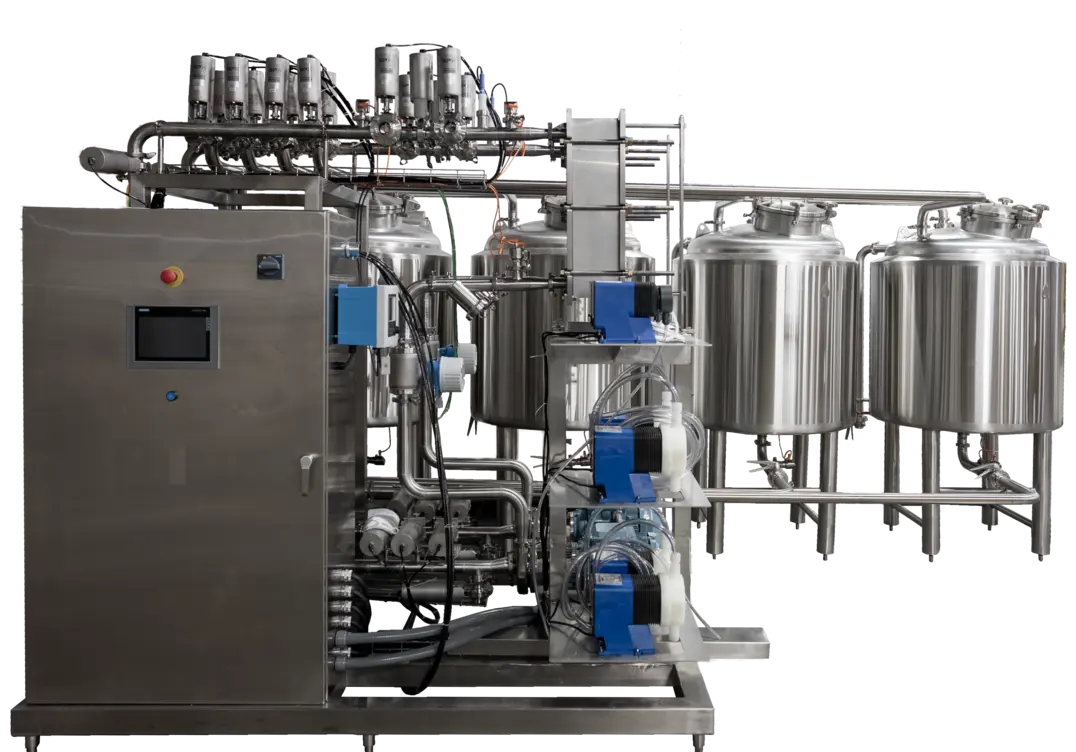
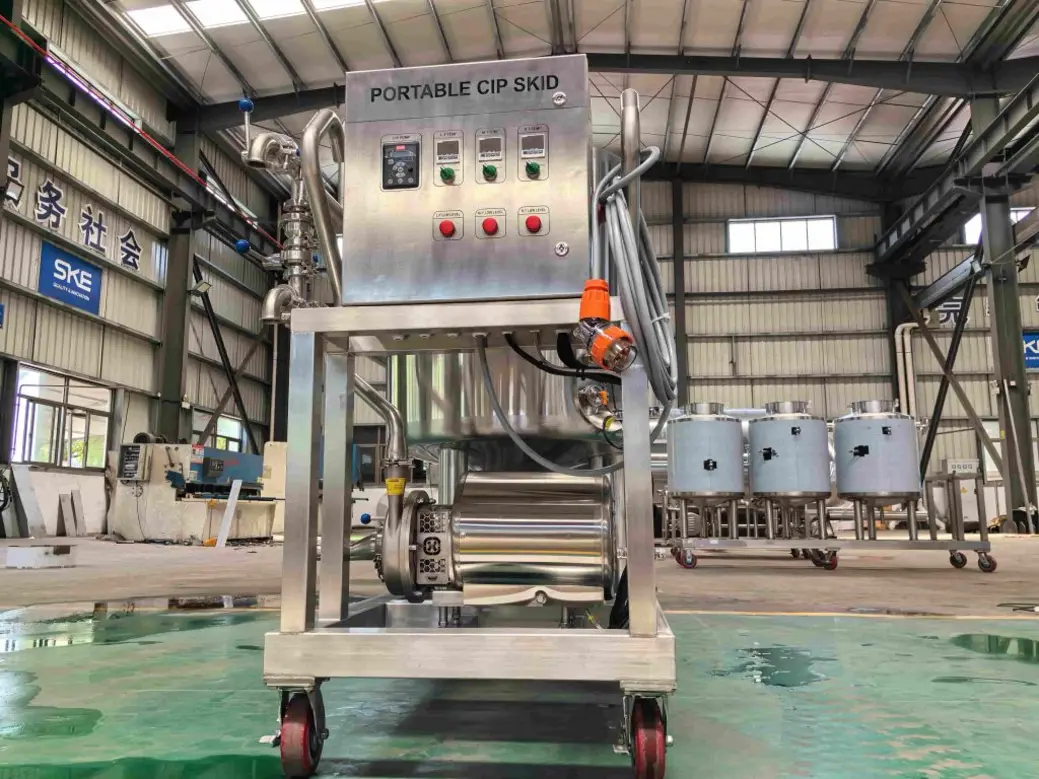
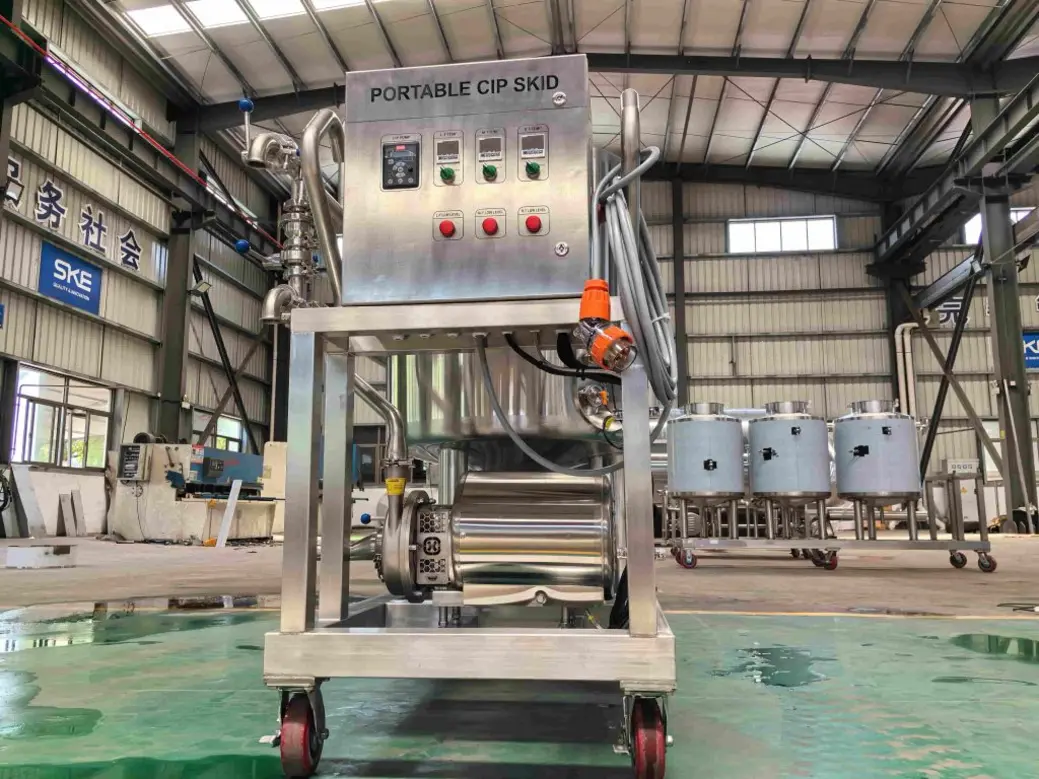
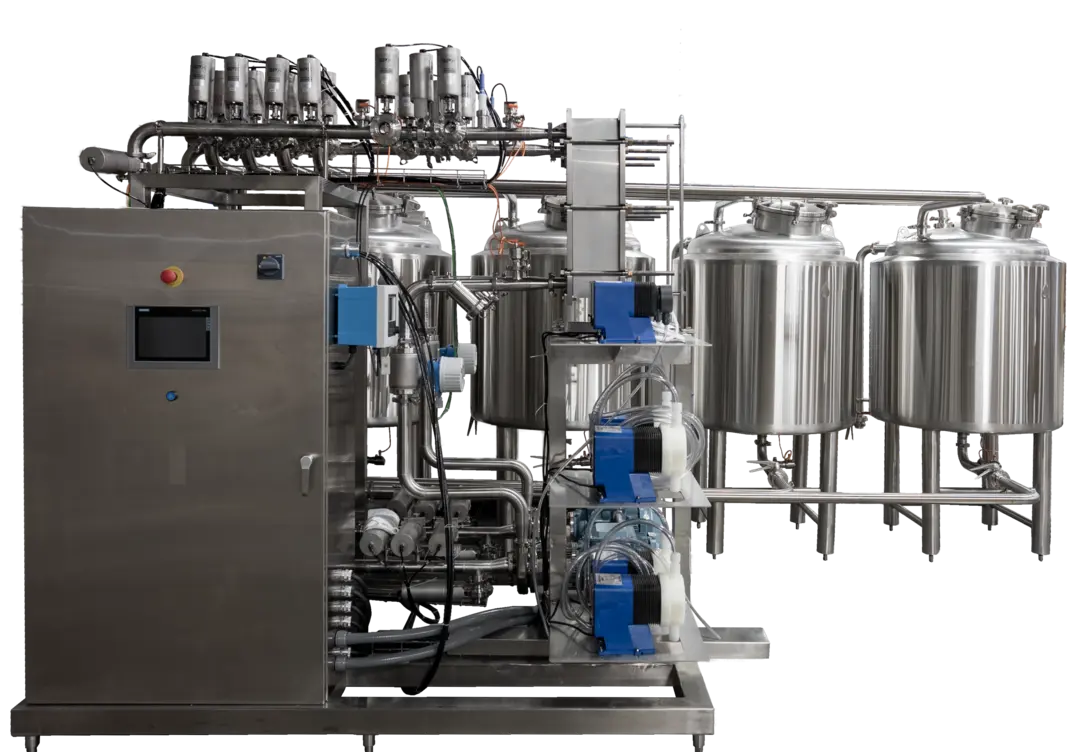
- Can the existing CIP skid deliver the required flow and coverage without unacceptable foam?
- How will the change affect downstream sanitizing chemistry and production startup?
- Has the revised sequence been reviewed and approved through the site’s sanitation, quality, safety, and change-control process?
An acidic final rinse can be a useful part of food and beverage CIP, particularly where mineral control and low-foam circulation matter. It is effective only when its role is clearly defined. The safest approach is to separate cleaning, acid treatment, rinsing, and sanitizing into their actual functions; use each chemical only as documented; and verify the result through controlled operation rather than product terminology.
References
- Sanitation advice : r/Homebrewing. (n.d.). https://www.reddit.com/r/Homebrewing/comments/1ea7x1x/sanitation_advice
- Chemipro CIP 500 ml — Low-Foam Acidic Final Rinse | BrewTaurus – BrewTaurus.com | Brewing Technology. (n.d.). https://brewtaurus.com/products/chemipro-cip-500-ml
- Brewery « Food Sanitations « Algonquin. (n.d.). https://algonquinproducts.com/food_sanitation/brewery
- The 7 Steps of Cleaning & Sanitizing food production lines – Weever. (n.d.). https://weeverapps.com?p=9707
- Proxitane - a non-rinse anti-microbial CIP sanitiser with Peroxyacetic acid. (n.d.). https://chemron.com.au/shop/sanitising/proxitane
- The 7 Steps of Cleaning & Sanitizing food production lines | Weever. (n.d.). https://weeverapps.com/sanitation-management/the-7-steps-of-cleaning
- Acidic CIP Cleaner (Nitric/Phosphoric) | Atlas Global Trading Co.. (n.d.). https://industrialchemicalssupplier.com/products/acidic-cip-cleaner-nitric-phosphoric.html
- CIP Chemicals for Food Processing: A Complete Guide. (n.d.). https://igchemsolutions.com/cip-chemicals-for-food-processing