Allergen changeover production scheduling should begin with a simple objective: avoid running a product that does not declare an allergen after a product that contains that allergen unless the required, validated changeover has been completed and released. On shared lines, the production order is a preventive control. It affects where allergen residues may remain, how often sanitation is needed, and whether operators and QA can reliably manage the next run.
The common starting pattern is to run products with fewer or no relevant allergen declarations before products with progressively more complex allergen profiles, then place the highest-risk or most inclusive allergen runs near the end of a block or shift. That pattern can reduce avoidable sanitation interruptions, but it is not a substitute for a documented allergen control program. A safe schedule must follow the facility’s product-specific changeover matrix, cleaning validation, label controls, and release procedures.
Start with an allergen and changeover matrix
Do not ask planners to make sequencing decisions from product names, memory, or a general rule such as “run allergens last.” Build a controlled matrix that shows what each SKU brings to the line and what is required before the next SKU can start.
For each product, the matrix should identify:
- Allergens intentionally present in ingredients, inclusions, seasonings, toppings, coatings, and rework.
- The declared allergen information for the finished product and its approved packaging.
- Whether the product is intended to be free from an allergen handled elsewhere on the line.
- The equipment path used, including shared feeders, hoppers, depositor heads, conveyors, cooling equipment, dust collection, utensils, and packing equipment.
- The approved cleaning, inspection, verification, and QA release requirements for each relevant transition.
- Restrictions on rework, work-in-progress, returned packaging, and retained ingredients.
The matrix is not merely a list of allergens. It is a decision tool for the specific “from-to” transition. A change from Product A to Product B may have different requirements than the reverse change, even if both products contain allergens. For example, an equipment train that has handled sesame may require a defined changeover before a product that does not declare sesame can run. The necessary actions should be based on the site’s hazard analysis and validated sanitation method, not on an assumption that a routine wipe-down is sufficient.
Why a count of allergens is not enough
A product containing two allergens is not automatically a safe predecessor to every product containing one allergen. What matters is whether the following product declares the specific allergens that could carry over, and whether all relevant contact and non-contact areas are controlled.
A practical matrix therefore compares allergen identity, not just the number of allergens. It should also account for physical form. Dry powders, sticky fillings, seeds, particulates, liquid coatings, and dust-generating ingredients can create different residue and cleaning challenges. Sesame allergen changeover planning, for example, may need to consider visible seeds as well as residues in hard-to-access equipment areas, depending on the process.
Build the schedule in production blocks
Once the matrix is current, planners can group production into blocks rather than scheduling every order independently. A block is a set of runs that can proceed under defined controls before a full allergen-related sanitation event is needed.
A typical approach is:
- Run products with no relevant allergen declarations first.
- Group products with compatible allergen profiles where the approved matrix allows the transition.
- Add allergens as late in the process as practical when the product and process design allow it.
- Schedule products with the broadest or most difficult-to-clean allergen profile later in the block.
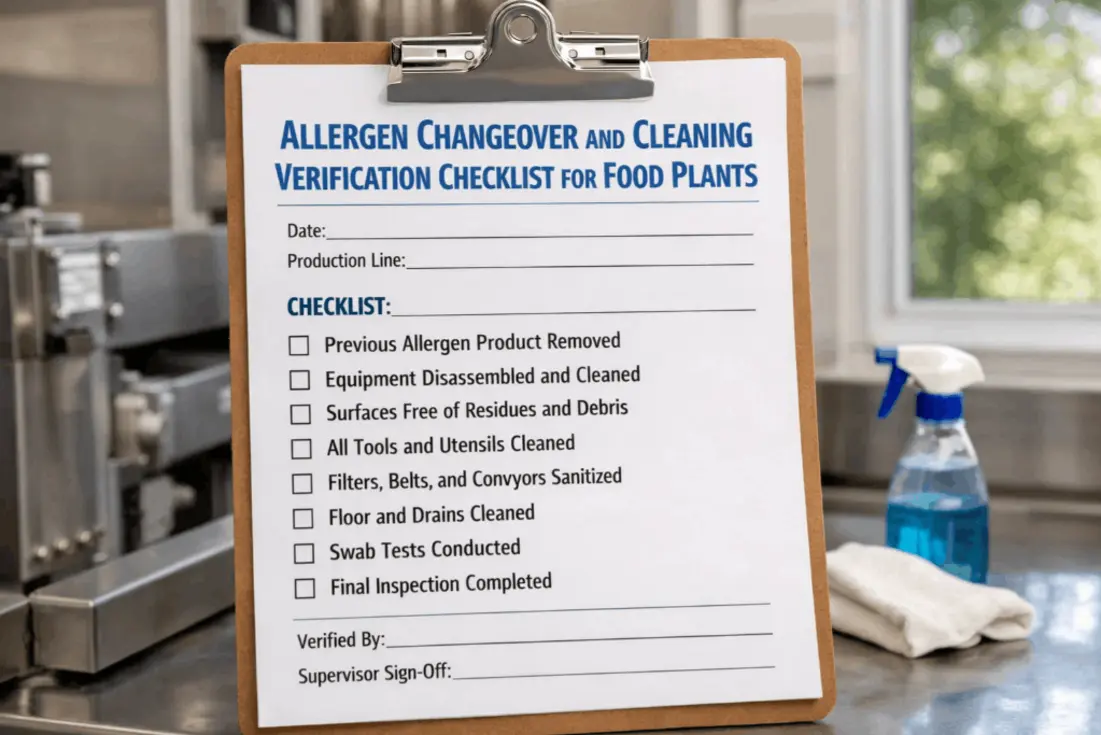
- Place the validated full cleaning at a planned boundary before an incompatible next product, after the block, or during another approved downtime window.
This is often described as a low-to-high sequence. It can reduce the number of disruptive mid-shift washdowns, but only where the matrix confirms that the transitions are acceptable. It is a scheduling preference, not a universal release rule.
Source: oxmaint
Low-to-high versus high-to-low sequencing
| Sequence direction | Typical scheduling use | Main concern |
|---|---|---|
| Low-to-high allergen profile | Build a compatible production block and place more inclusive allergen products later | The next product may not be protected if the profile is treated as a simple ranking rather than a specific allergen comparison |
| High-to-low allergen profile | Generally avoided when the following product does not declare allergens present in the prior run | A validated cleaning and release are usually needed before the lower-allergen product can start |
| Same allergen profile | May allow a more efficient transition if ingredients, equipment route, labels, and validated procedures align | Differences in other allergens, product form, rework, or packaging can still make the transition unsuitable |
| Incompatible allergen profiles | Requires the defined full changeover before the next product | Production pressure must not override cleaning, verification, or QA release requirements |
The schedule should make the required status visible. Rather than writing only “changeover,” identify whether the transition is a routine product change, an allergen-controlled changeover, or a full sanitation and release event. This prevents sanitation teams from receiving vague or late instructions.
Define when full validated cleaning is required
A full validated cleaning is required whenever the facility’s approved matrix, hazard analysis, or customer and regulatory obligations require it for the next product. The decision should not be left to an individual planner or line lead during a busy shift.
Common triggers include:
- The next product does not declare an allergen handled in the prior product.
- A product is changing from an allergen-containing formula to an allergen-free or differently declared formula.
- The process uses shared equipment that can retain ingredients in inaccessible points, seals, dead legs, transfer lines, or collection systems.
- Rework or work-in-progress from the prior run cannot be controlled for the next formula.
- A line upset, spill, incorrect ingredient addition, packaging error, or unplanned maintenance has changed the planned risk condition.
- The approved schedule has been disrupted and the actual product order no longer matches the changeover plan.
Cleaning procedures, chemicals, contact times, disassembly steps, inspection points, sampling methods, and acceptance criteria must be established by the facility and verified through its own validated program. Scheduling can reduce the frequency of necessary cleaning; it cannot reduce the effectiveness required for a given transition.
Coordinate production, sanitation, QA, and maintenance
Allergen production sequencing fails when the schedule is treated as a planner-only document. The line cannot safely run based on an ideal sequence if sanitation labor, QA release, maintenance access, ingredients, or packaging materials are not ready.
Before issuing the schedule, confirm:
- Production: Actual line route, run duration, product change parts, and expected interruptions.
- Sanitation: Required labor, access time, tools, cleaning materials, and the distinction between routine and full changeovers.
- QA and food safety: Required inspections, documentation, verification activities, hold status, and authority to release the line.
- Maintenance: Planned work that may open equipment, create debris, or alter the cleaning sequence.
- Warehouse and staging: Segregated allergen ingredients, correct identification, controlled movements, and traceable WIP.
- Packaging: Correct film, cartons, labels, coding information, and removal of prior-run materials.
A short daily review is useful when a line handles many SKUs. Review the actual prior product, the scheduled next product, the allergen transition classification, required sanitation, and packaging status. This is especially important after schedule changes caused by equipment downtime, late ingredients, urgent orders, or a rejected batch.
Treat packaging as part of allergen changeover control
A clean line can still produce a serious allergen labeling problem if the wrong package or label remains at the machine. Packaging controls should be tied to the product sequence and line release process.
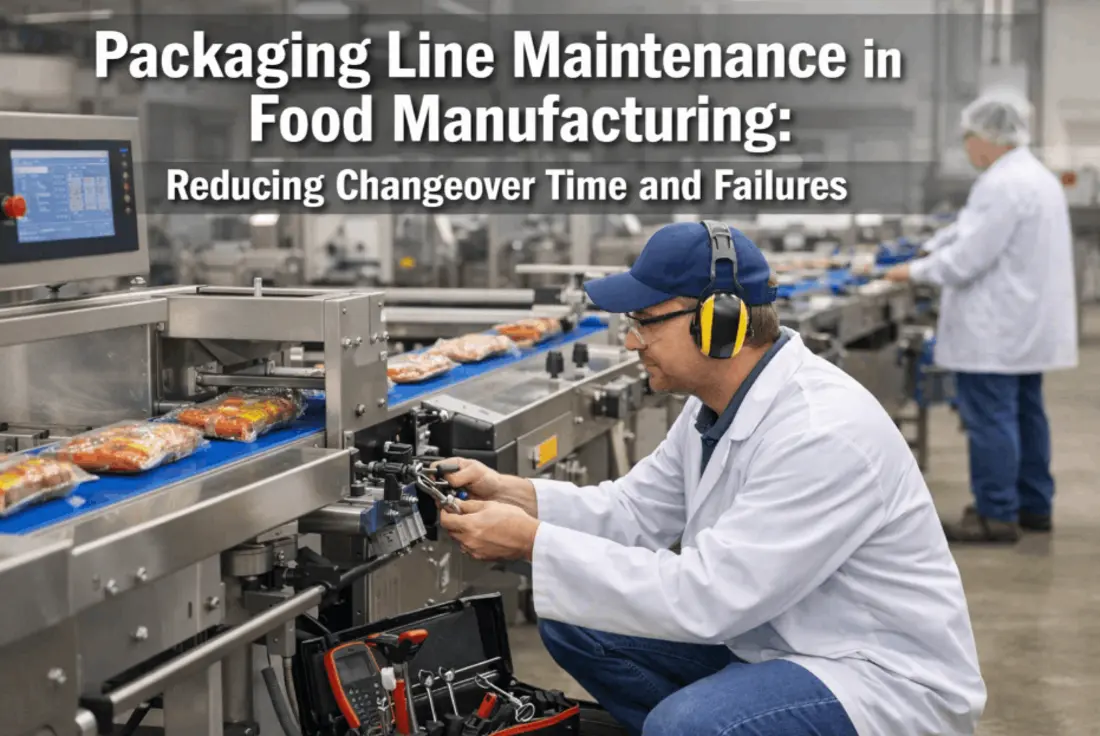
At each packaging changeover, the team should account for unused printed materials, label rolls, coding data, preprinted cases, and samples from the previous order. The line-clearance procedure should identify what must be removed, reconciled, or retained under control. The new material should be checked against the approved product specification before the run begins.
Source: oxmaint
This matters during allergen sequencing because a product may be physically compatible with the preceding run but require different declared allergen information. Compatibility of residues does not make packaging interchangeable.
Control rework and work-in-progress separately
Rework can defeat an otherwise sensible allergen schedule. Material from a later, higher-allergen run should not be casually fed into an earlier or lower-allergen product. Every rework container should remain identified with its product, allergen profile, date or lot information, and permitted destination.
Build rework decisions into the schedule rather than resolving them at the line. If rework has no approved destination within the current allergen block, hold it under defined control. Do not use production urgency as a reason to bypass the product-specific rework rule.
Manage schedule disruptions without creating a hidden risk
Real production schedules change. A filler may stop, a customer order may move forward, or a raw material may arrive late. When that happens, do not simply insert an available SKU into the open time slot.
Use a disruption check:
- Identify the actual product last run on the affected equipment.
- Identify the allergen and packaging profile of the proposed replacement run.
- Consult the approved from-to changeover matrix.
- Confirm the sanitation, inspection, and release activities required for the revised transition.
- Update the schedule and communicate the change to production, sanitation, QA, warehousing, and packaging personnel.
- Record the actual sequence and any required corrective action.
If the required controls cannot be completed, the line should not be released for the proposed product. The cost of an unplanned cleaning is usually easier to manage than the consequences of allergen cross-contact or incorrect labeling.
A practical daily checklist for planners
Before finalizing an allergen-aware schedule, verify that:
- Every scheduled SKU has a current allergen profile and approved packaging specification.
- The sequence is checked against a controlled from-to changeover matrix.
- Compatible products are grouped only where the facility’s procedures permit it.
- Full allergen cleaning events are placed at known transition points with enough time and labor assigned.
- QA verification and release requirements are visible on the schedule.
- Rework and WIP have approved, traceable destinations.
- Packaging materials match the order of production and line-clearance needs.
- Contingency products have been assessed before they are used as substitutes.
- The actual run order will be recorded if it differs from the plan.
Effective food line scheduling cross-contact prevention is not about eliminating cleaning. It is about placing necessary cleaning where it protects the next product, grouping compatible work without making unsafe assumptions, and ensuring that every change in production order is visible to the people responsible for sanitation, verification, and release.
References
- Appendix 9: Allergen Cross-Contact Prevention. (n.d.). https://www.fda.gov/media/129670/download
- Production Scheduling and Line Management: Foundational Approaches to Preventing Allergen Cross-Contact. (n.d.). https://blog.aibinternational.com/production-scheduling-and-line-management-foundational-approaches-to-preventing-allergen-cross-contact
- Allergen Scheduling: Sequencing Changeovers That Protect Capacity. (n.d.). https://www.tryharmony.ai/allergen-scheduling-sequencing-changeovers-that-protect-capacity
- How to Avoid Allergen Cross Contact in Food Manufacturing - Certified Laboratories. (n.d.). https://certified-laboratories.com/blog/food-allergen-testing-avoiding-allergen-cross-contact
- Allergen Control Program Guide for Food Manufacturers. (n.d.). https://www.alleratech.com/blog/allergen-control-program
- FMCG Allergen Management: Cleaning Validation, Changeover, and CMMS Audit Trails. (n.d.). https://oxmaint.com/industries/fmcg/fmcg-allergen-management-cleaning-validation-changeover
- Allergen Control in Food Manufacturing: How CMMS Prevents Cross-Contamination. (n.d.). https://oxmaint.com/industries/food-manufacturing/allergen-control-food-manufacturing-cmms-cross-contamination
- How to Prevent Cross-Contamination and Allergen Cross-Contact in Shared Facilities. (n.d.). https://experts.gohaccp.com/blog-prevent-cross-contamination