Automated sandwich assembly line sanitation is not simply a matter of washing visible food-contact surfaces at the end of a shift. A ready-to-eat sandwich line combines moist ingredients, bread handling, slicing, depositing, conveyors, cutting equipment, robotic tooling, and packaging interfaces. The sanitation program has to control residues and cross-contact risks while making sure difficult areas can actually be reached, inspected, and verified.
The practical starting point is to divide the line into hygienic zones, identify every food-contact and adjacent non-food-contact surface, and build a cleaning method around the equipment’s real access points. Cleaning methods, chemicals, disassembly steps, and verification criteria should be approved through the site’s food-safety system, equipment documentation, chemical supplier instructions, and applicable regulatory requirements.
Start with the product and process map
Before writing a sanitation procedure, map the sandwich from ingredient entry to sealed package. This reveals where contamination, residue accumulation, or allergen carryover can occur.
A typical automated system may include bread feeders, ingredient slicers, depositors, pick-and-place robots, transfer belts, cutting stations, vision systems, tray or wrapper interfaces, and discharge conveyors. Each component creates different cleaning concerns:
- Bread handling equipment can generate crumbs and dry debris in guides, rollers, belt returns, and guarding.
- Meat, cheese, sauces, spreads, vegetables, and other moist ingredients can leave residues in hoppers, nozzles, manifolds, trays, slicers, and transfer points.
- Robotic end effectors may contact bread, proteins, cheese, or toppings and can have joints, vacuum cups, hoses, brackets, and fasteners that require close inspection.
- Conveyors can retain material at belt edges, transfer points, drive and idle rollers, scrapers, belt returns, and underneath-frame areas.
- Cutters may collect product residues around blades, blade guards, holders, discharge chutes, and nearby supports.
- Packaging interfaces are often close to open product and should be assessed for debris, condensation, lubricant migration, and access limitations.
The map should identify the direction of product flow, people flow, cleaning-tool movement, waste removal, and airflow where relevant. This is more useful than treating an entire room as one sanitation area.
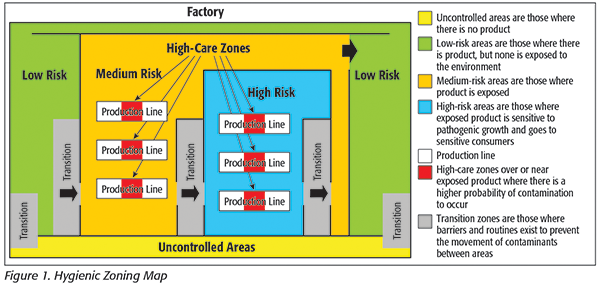
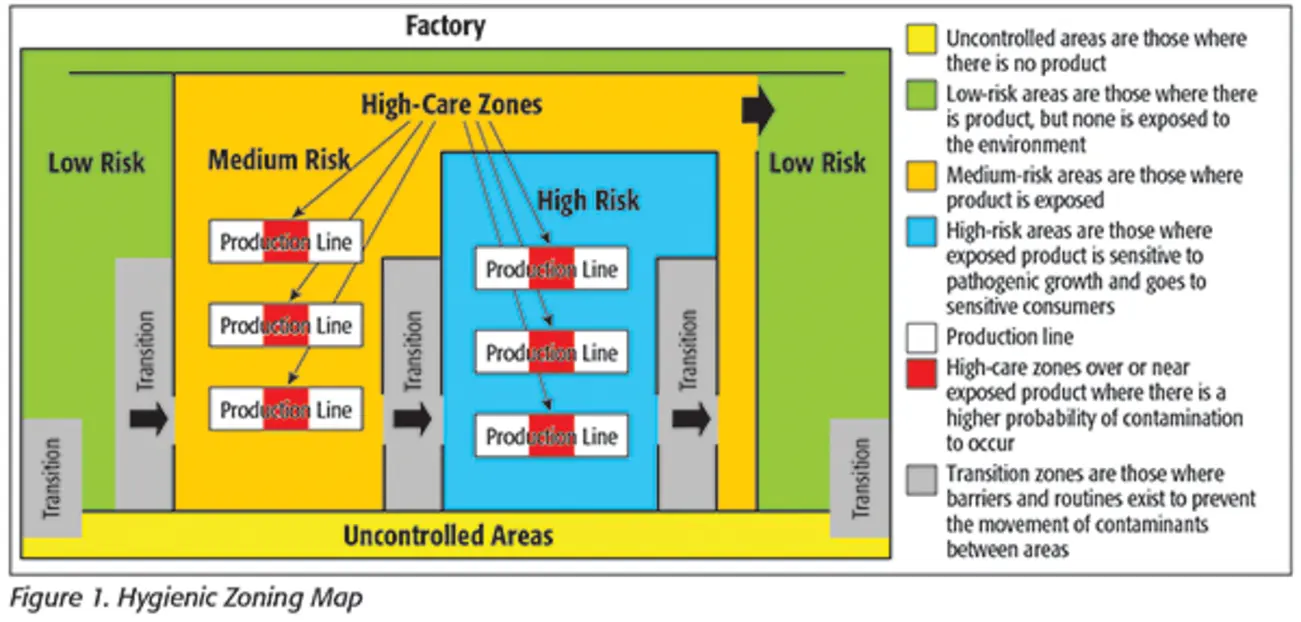
Establish hygienic zones around open ready-to-eat product
RTE hygienic zoning should reflect the risk profile of the product and the facility’s food-safety plan. The central principle is to protect the open sandwich after ingredients have been prepared and before it is enclosed in its package.
In practice, a sandwich operation may separate areas such as ingredient receiving and preparation, open-product assembly, and post-packaging handling. The exact boundaries depend on the facility, products, utilities, personnel routes, and packaging process.
Within the assembly area, make a clear distinction between:
| Area or surface | Sanitation focus |
|---|---|
| Direct food-contact surfaces | Must be cleaned, rinsed or otherwise treated as required by the validated procedure, sanitized where applicable, and inspected before production. |
| Splash and adjacent surfaces | Can transfer residues or contamination to food-contact areas through movement, drips, aerosols, tools, or employee contact. |
| Framework and utility areas | Often overlooked; inspect ledges, cable supports, pneumatic components, drives, guards, and underside surfaces. |
| Non-production-side equipment | May still affect the hygienic zone if employees, tools, carts, or maintenance activities move between areas. |
Zone controls should be operational, not just lines on a plant drawing. Examples include dedicated tools and carts, defined entry practices, controlled movement of waste and used parts, and cleaning sequences that avoid carrying soil from less controlled areas toward open product.
Source: food-safety
Design the cleaning sequence around access, not assumptions
Automated equipment is only as cleanable as its accessible surfaces. A sanitation standard that assumes a belt, guard, hopper, nozzle, or robotic tool can be adequately cleaned without removal may leave hidden soils untouched.
For each machine, create a sanitation access list that answers these questions:
- Which components must be removed for cleaning?
- Which parts can be released without tools, and which require controlled tools or maintenance support?
- Where are the hidden product traps?
- Can cleaning personnel see the food-contact surface after disassembly?
- Are parts uniquely identified to prevent incorrect reassembly?
- Are seals, gaskets, vacuum cups, belt guides, and scraper elements inspected for wear?
- Is there a defined method for protecting electrical enclosures, sensors, motors, and other components that are not suitable for direct washdown?
Good hygienic design supports sanitation through open frames, smooth and drainable surfaces, minimized horizontal ledges, rounded transitions, and access to product zones. However, a washdown rating on an individual robot or component should not be interpreted as proof that an entire integrated line can receive the same cleaning treatment. The complete machine configuration, controls, guarding, cable routing, and supplier instructions need to be reviewed.
Choose dry, controlled-moisture, or wet cleaning deliberately
Sandwich lines commonly handle both dry debris and moist, high-residue ingredients. That makes a single cleaning approach impractical.
Dry cleaning may be appropriate for accessible crumb accumulation or other dry soils where introducing water would create sanitation or operational problems. Brushes, scrapers, vacuums designed for the intended use, and removable collection components may be part of the method. The procedure should control how debris is contained and removed so it does not spread across the line.
Controlled-moisture cleaning may suit localized residues on equipment that cannot tolerate broad wet washdown. Wiping, foaming, or other methods must be compatible with the equipment and followed by the required rinsing, drying, and sanitizing steps established by the site.
Wet cleaning is often needed for components exposed to spreads, proteins, cheese, produce, or other adherent materials. It should be limited to equipment and areas designed for it. Water management matters: overspray can push soil into bearings, cable trays, belt interiors, framework voids, or adjacent zones. Standing water and poor drainage also deserve attention during pre-operational inspection.
The correct method is not determined by appearance alone. Confirm chemical compatibility, concentration, contact conditions, rinse requirements, and sanitizer use with the chemical supplier, equipment manufacturer, and facility sanitation program. Do not substitute chemicals or alter cleaning parameters without formal approval.
Clean in a sequence that prevents recontamination
A useful food assembly line sanitation sequence generally moves from gross soil removal through detailed cleaning, then inspection, sanitizing where required, reassembly, and release. The exact order should fit the line layout and validated sanitation program.
A practical sequence may include:
- Secure the line. Stop production, manage energy isolation according to site procedures, remove product and packaging, and protect components as required.
- Remove gross debris. Collect bread crumbs, ingredient remnants, and waste before applying water or chemicals that could spread soil.
- Disassemble designated parts. Remove belts, tools, hoppers, blades, guards, nozzles, trays, or other components specified by the sanitation instruction.
- Clean food-contact parts and surfaces. Use the approved method for the soil type and equipment material.
- Clean adjacent and framework surfaces. Include undersides, supports, guards, drives, belt returns, and product-zone utility routing.
- Inspect before sanitizing or reassembly. Look for residues, trapped moisture, damaged parts, loose hardware, and inaccessible buildup.
- Sanitize and reassemble as required. Follow the site’s approved sanitizer procedure and allow required conditions before startup.
- Complete pre-operational release. Confirm the line is clean, assembled correctly, safe to operate, and free of cleaning materials or tools.
Source: vbssys
Give special attention to conveyors, cutters, and end effectors
These components are frequent sanitation weak points because they repeatedly contact or closely pass open product.
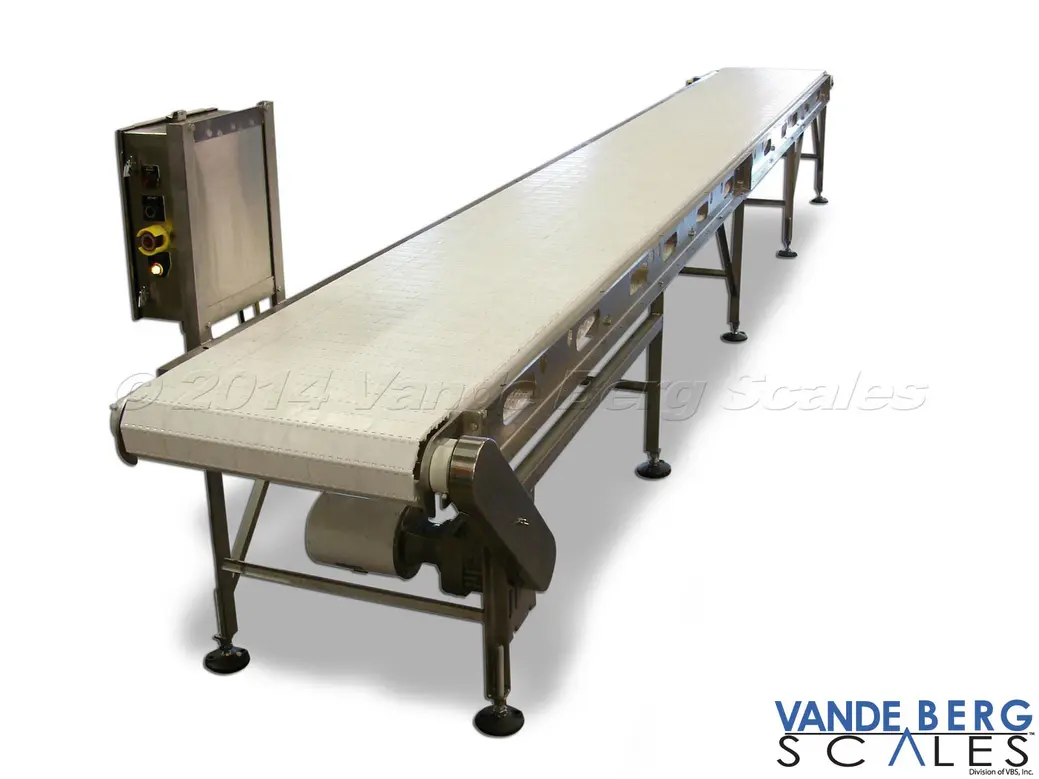
Conveyors
Conveyor sanitation should include the belt’s product side, underside, edges, guides, rollers, transfer points, return path, supports, and any belt-wash or scraping system. A belt that looks clean from above may still carry residues below or at the edge. If belts are removed, inspect the frame and components normally hidden beneath them before reinstallation.
Slicers and cutters
Slicing and cutting stations should have a defined safe cleaning and inspection method. Product residue can collect near blades, holders, guards, discharge zones, and fasteners. Sanitation teams should not improvise access around sharp components; use the machine-specific procedure and required protective measures.
Robotic tools and vacuum systems
End effectors should be evaluated by actual product contact. Vacuum cups, grippers, clamps, hoses, manifolds, and tool-change interfaces can retain crumbs, moisture, or ingredient fragments. Tool-free changeover can simplify cleaning and allergen management, but it does not eliminate the need to inspect the tool storage area and the interfaces where tools mount.
Build allergen changeovers into sanitation planning
A recipe change can be a sanitation event when the outgoing and incoming formulations have different allergen profiles. The level of cleaning needed should be determined by the facility’s allergen-control plan and risk assessment, not by the speed of the changeover.
Document which ingredients contact each point in the line, including slicers, depositors, robotic tooling, conveyor belts, transfer devices, catch trays, and rework containers. Pay particular attention to hard-to-see locations where cheese fragments, sauces, seeds, nut-containing ingredients, or protein residues may remain.
Useful controls include dedicated or clearly identified parts where appropriate, controlled tool storage, verified cleaning instructions, and a documented line-clearance process. Visual cleanliness alone may not be sufficient for allergen changeover approval. The facility should use the verification approach specified in its allergen program.
Verify sanitation before production starts
Sanitation verification for food equipment should combine observation, records, and the methods established in the site’s food-safety program. Verification confirms that the sanitation process was completed as intended; it is not a substitute for a cleanable equipment design or a practical cleaning procedure.
A pre-operational inspection should cover:
- Visible residues on food-contact and adjacent surfaces
- Moisture, pooling, drips, or condensation in product areas
- Correct installation of belts, blades, guards, tools, and removable parts
- Condition of gaskets, seals, belt edges, vacuum cups, and scraper elements
- Foreign-material risks such as damaged plastic, loose fasteners, or worn components
- Chemical residue concerns and completion of required rinse steps
- Removal of cleaning tools, tags, temporary covers, and maintenance materials
The site may also use approved rapid hygiene tests, allergen verification methods, microbiological environmental monitoring, or other checks as part of its program. Test locations, acceptance criteria, sampling frequency, and corrective actions should be established and interpreted by qualified personnel under the facility’s documented controls.
Make recurring findings actionable
The same failed inspection point appearing repeatedly is usually an equipment-access or procedure-design problem, not just a sanitation labor problem. Record recurring findings by exact location: for example, a belt return, hopper gasket, robot tool joint, cutter guard, or conveyor transfer point.
Then determine whether the cause is inadequate access, unsuitable cleaning method, poor drainage, worn parts, insufficient disassembly instructions, rushed changeovers, or a design feature that traps product. Corrective actions may include revising the sanitation standard, adding access hardware, replacing worn components, changing tool storage, modifying guards, or involving the equipment supplier in a hygienic-design review.
The objective is a repeatable sanitation process that fits production reality: operators can change products without uncontrolled carryover, sanitation crews can reach and inspect the equipment, and the facility has documented evidence that the line is ready for safe operation.
References
- Robotic Sandwich Assembly Line. (n.d.). https://www.staubli.com/us/en/robotics/industries/food/ready-made-meals/automated-production-of-sandwiches.html
- A Guide to Food Manufacturing Automation. (n.d.). https://www.jrautomation.com/blog/a-guide-to-food-manufacturing-automation
- Commercial Sandwich Assembly Line. (n.d.). https://www.grotecompany.com/en-us/sandwich-assembly-line
- Deli Sandwich Assembly Line — Robotic | JLS Automation. (n.d.). https://www.jlsautomation.com/deli-sandwich-assembly
- (PDF) End Effector Development for Automated Sandwich …. (n.d.). https://www.researchgate.net/publication/275006983_End_Effector_Development_for_Automated_Sandwich_Assembly
- Robot automates sandwich production | 2020-06-25. (n.d.). https://www.provisioneronline.com/articles/109578-robot-automates-sandwich-production
- Small Automation, Big Impacts: A Sandwich Assembly …. (n.d.). https://hermary.com/industry-trends/small-automation-big-impacts-02
- Food Processing Facility Requirements for Modern Manufacturing. (n.d.). https://www.bakfoodequipment.com/food-processing-facility-requirements