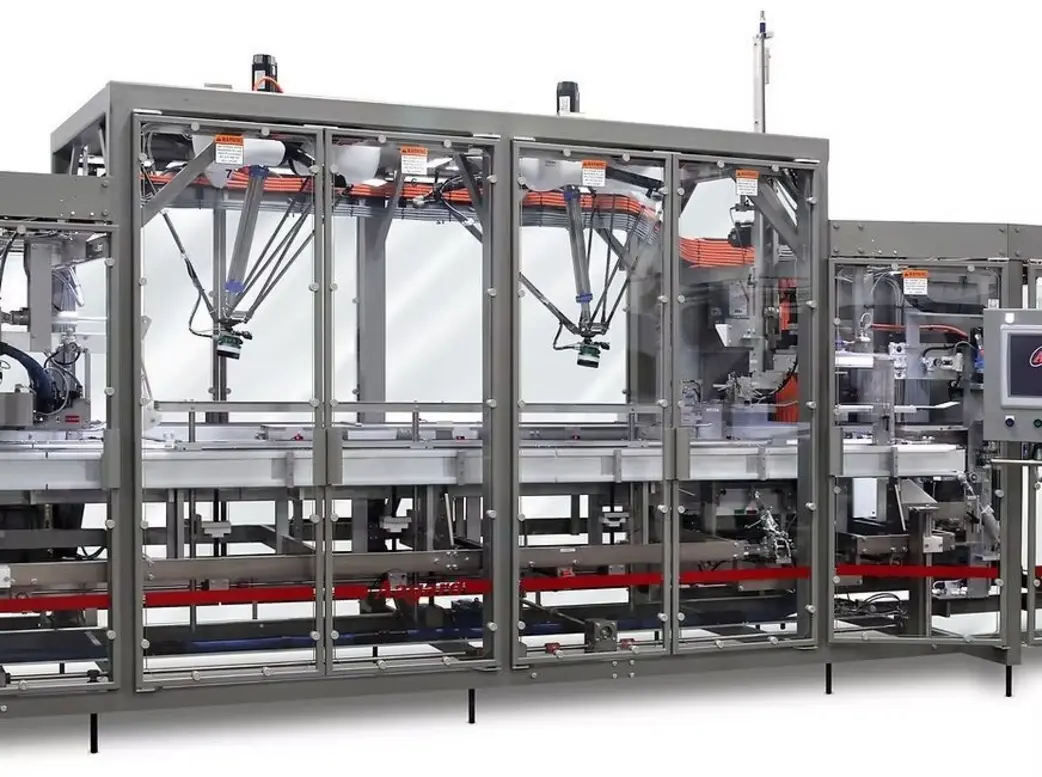
An automatic case packer should be selected from the finished product backward, not from a cases-per-minute figure alone. The correct machine must receive packs in a stable orientation, create the required count and pattern, load the intended corrugated case without damaging the product or case, and discharge cases in a format the downstream conveyor and palletizer can handle.
For most food packaging lines, the practical selection sequence is: define the product and primary pack, define the shipper case and pack pattern, establish the required sustained output, then evaluate loading style, changeovers, accumulation, controls, and line integration. A machine with a high nominal rate can still underperform if its infeed cannot consistently present the required collation or if frequent SKU changes consume available production time.
Start with the complete packing requirement
A useful automatic case packer specification describes more than product dimensions and target cases per minute. It should identify what arrives at the case packer, how it must leave, and what happens when either adjacent machine stops.
Collect this information for every SKU expected to run on the system:
- Primary package type: carton, pouch, flow-wrap, tray, cup, bottle, bag, multipack, or other format.
- Product dimensions, weight, center of gravity, rigidity, and surface condition.
- Required orientation: upright, flat, on edge, nested, alternate-facing, or mixed orientation.
- Case count and collation pattern, such as rows, layers, or interlocked arrangements.
- Case style, board grade range, dimensions, print orientation, and closure method.
- Expected production rate by SKU, including short-term peaks and the sustained operating rate.
- Number of SKU and case-size changes, plus the realistic time allowed for each changeover.
- Downstream handling requirements, including case orientation, labeling, checkweighing, inspection, and pallet pattern.
This package of information is the basis for comparing a food case packing machine. It also gives equipment suppliers the operating conditions needed to assess feasibility rather than quoting against a single simplified speed number.
Choose the loading architecture around the product and case
The principal loading methods—top load, side load, wraparound, and robotic loading—can overlap in capability. The appropriate choice depends on product stability, case design, desired speed, pattern flexibility, and available floor space.
| Configuration | How products enter the case | Usually suits | Main tradeoff |
|---|---|---|---|
| Top load case packer | Products are placed downward into a case or tray from above | Flexible SKUs, delicate products, varied patterns, products needing controlled placement | May require more vertical clearance and can be less suitable for some very high-speed applications |
| Side load case packer | A formed product group is pushed horizontally into a pre-erected case | Stable products already traveling in the correct horizontal orientation | Product and collation must tolerate lateral transfer and pushing forces |
| Wraparound case packer | Products are collated while a corrugated blank wraps around the group | High-volume, consistent products and close-fitting cases | Less forgiving of broad case variation, unstable collation, or weak corrugated blanks |
| Robotic loading system | Robot picks individual products or grouped units and places them into cases | Irregular products, complex patterns, mixed formats, frequent changes | Requires careful end-of-arm-tooling, controls, guarding, and validation of actual cycle performance |
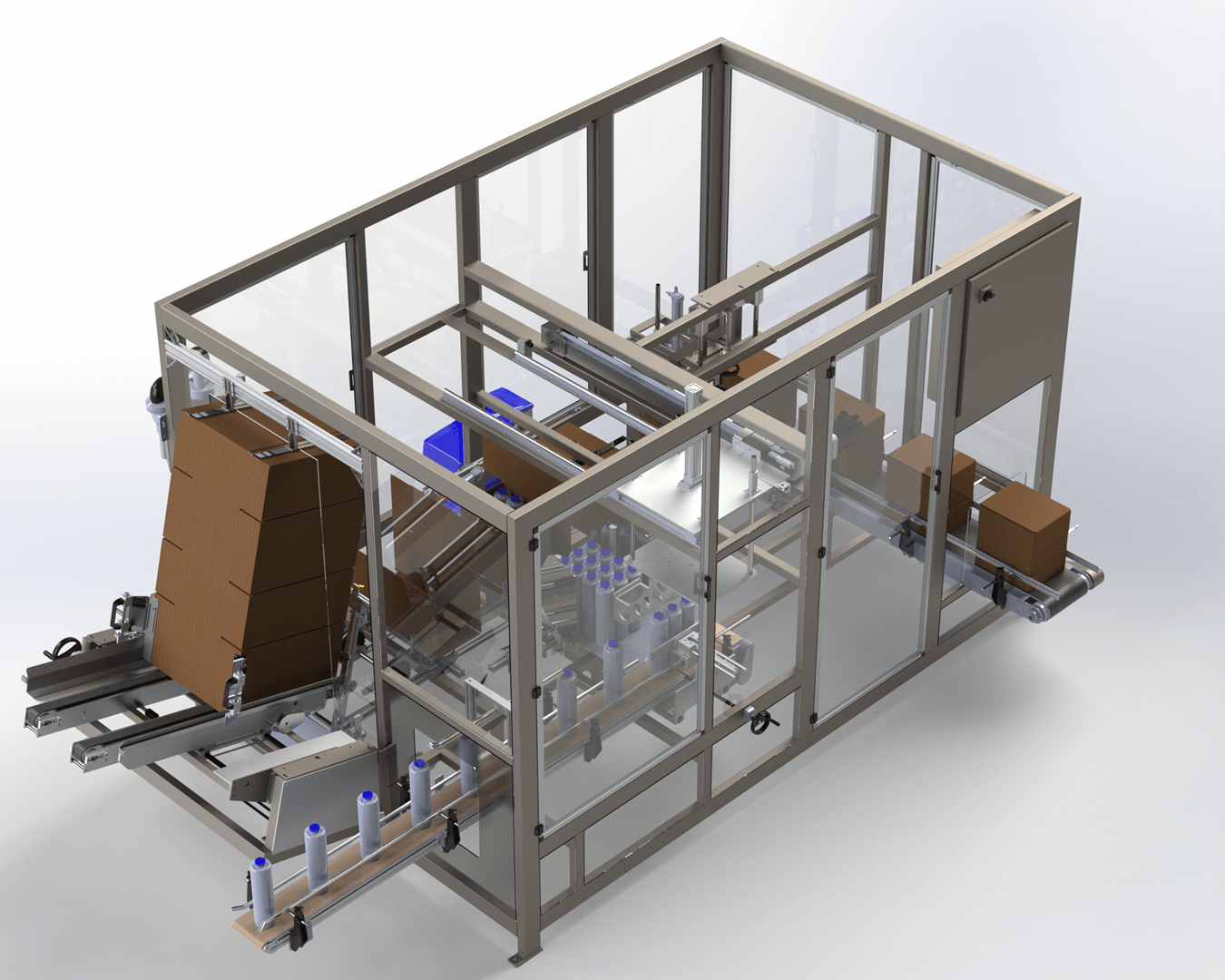
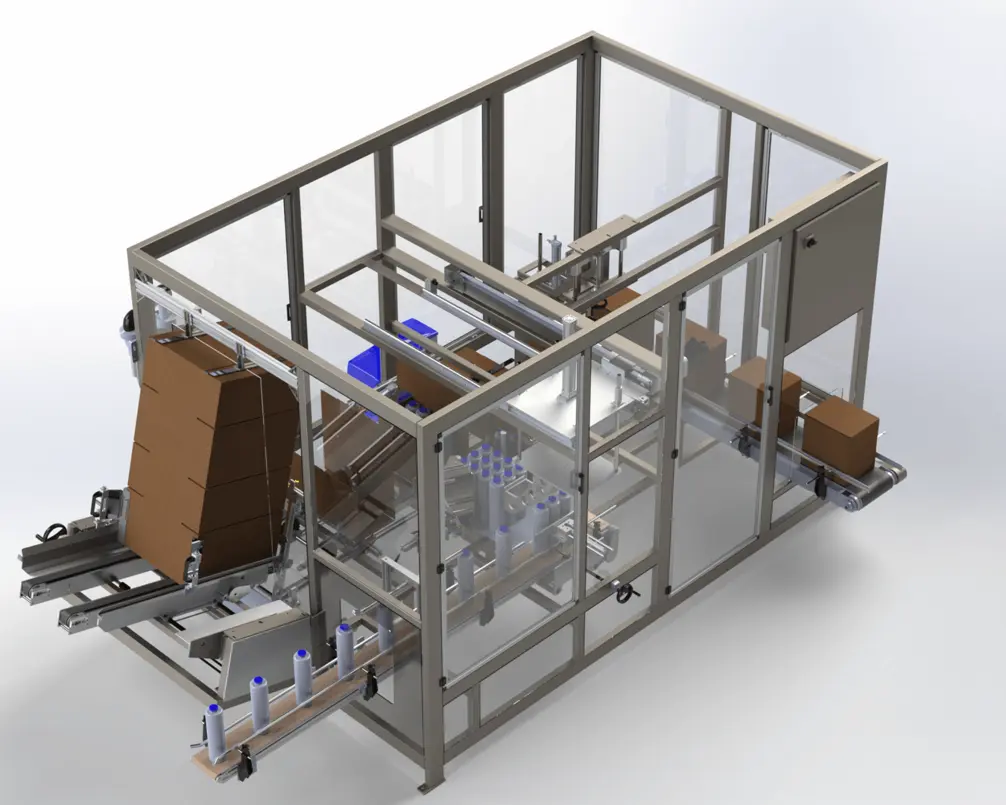
Top-load case packers
A top load case packer is often considered when pack patterns vary, products are fragile, or the line needs controlled placement into cases. Products may be picked singly or in groups and lowered into a case from above. This approach can accommodate packs that are difficult to push sideways, including some flexible bags, lightweight cartons, or products with an orientation that must be preserved.
Top loading is not automatically the most flexible answer. The machine still needs reliable product spacing, a stable pickup method, sufficient clearance above the case, and a way to control the product during transfer. Evaluate how the machine handles partially filled cases, tall or narrow packs, and patterns with multiple layers.
Side-load case packers
A side load case packer forms a product group and transfers it horizontally into an erected corrugated case. It can be a strong choice where products arrive consistently oriented and can be collated into a firm load. Cartons, rigid trays, and certain multipacks are common candidates.
The key question is whether the product group remains intact during the transfer. Loose pouches, slick film packs, unstable stacks, or products that easily scuff may need guides, compression control, a different collation method, or another loading architecture. Case opening quality also matters: a poorly squared case can create friction, product hang-ups, and incomplete loading.
Wraparound case packers
A wraparound case packer builds the corrugated case around a collated product group, typically using a die-cut blank. This can create a close-fitting shipper and can suit lines with stable, repeatable pack formats and high output requirements.
The case is part of the machine process rather than simply a container waiting to be filled. That means blank quality, scoring, folding behavior, adhesive application, and product-group consistency deserve early attention. A wraparound system should be assessed with the actual corrugated blanks and production packs planned for regular operation—not only ideal samples.
Robotic loading approaches
Robotic loading can be useful where pack patterns are complex, product formats vary, or mechanical lane formation would be cumbersome. A robot may place products directly into a case, pick pre-collated groups, or serve multiple loading stations.
Robots do not eliminate the need for stable infeed control. They still need predictable product presentation, workable pick surfaces, appropriate tooling, and enough cycle time to recover from normal variation. Include recovery behavior in the evaluation: how does the system handle a missed pick, an empty pick, a damaged pack, or a product gap?
Source: paxiom
Design product collation before specifying speed
Collation is the controlled grouping of primary packs into the count, orientation, and pattern required for a shipping case. It is often the real constraint in automatic case packer selection.
A case packer can only load what it receives. If products arrive touching, drifting, rotating, or with inconsistent gaps, the packer may wait for groups, reject incomplete patterns, or load poorly formed cases. This is particularly important for flexible bags, uneven cartons, lightweight trays, and packs with low friction or variable seal geometry.
Review these infeed questions:
- Can upstream equipment deliver products one-by-one with repeatable spacing?
- Is a metering conveyor, lane divider, turning device, accumulation table, or servo collation section required?
- Must products be counted, indexed, stacked, or layered before loading?
- Can the required pattern be formed without excessive compression or product-to-product contact?
- Will the product remain stable when conveyor speed changes or when the line restarts?
- Does the packer need to accept random infeed, or should orientation be resolved upstream?
A good specification states the responsibility boundary for product presentation. Without that clarity, a packer may be expected to correct problems that originate at the wrapper, cartoner, conveyor transfer, or accumulation system.
Source: image.made-in-china
Calculate case packer throughput as a system rate
Case packer throughput should be expressed in both product units per minute and completed cases per minute. The basic relationship is straightforward:
Required cases per minute = required product units per minute ÷ units per case
But selection should not stop there. The machine must sustain the requirement across expected case counts, patterns, and SKU changes while allowing for normal stoppages and variation. A nominal maximum speed is not the same as a line’s dependable operating output.
Ask suppliers to clarify:
- The demonstrated rate for each proposed SKU and case pattern.
- Whether the stated rate includes case erection, product loading, sealing, and discharge.
- The assumed product pitch, incoming orientation, and infeed gap quality.
- The maximum rate for continuous operation versus a brief machine-cycle rate.
- Required accumulation upstream and downstream of the packer.
- The response when the case sealer, labeler, checkweigher, or palletizer pauses.
Accumulation is particularly important. A small buffer can isolate short interruptions, but uncontrolled accumulation can destabilize pouches, crush cartons, or lose product orientation. Determine where packs can safely accumulate and where completed cases can queue without blocking critical equipment.
Match the case style to distribution and palletizing needs
The selected shipper case should protect the product and run reliably through erection, loading, sealing, conveying, and palletizing. An automatic case packer cannot fully compensate for inconsistent corrugated material or a case design that does not open squarely.
For regular slotted containers and similar pre-erected cases, consider flap behavior, squareness, case stiffness, and the clearance needed for loading. For wraparound cases, examine blank consistency, score quality, glue-flap design, and the tolerance between the product group and the finished case.
Coordinate case orientation with the palletizer early. The case packer discharge may need to present a specific leading panel for print inspection, labeling, date coding, or pallet pattern formation. Reorienting cases later can add conveyors, transfers, and potential instability.
Plan for SKU changeovers and operator work
Lines with frequent SKU changes should prioritize adjustment simplicity and repeatability. A highly productive machine for one case size may be a poor operational fit if operators must make numerous manual changes for every product run.
Review which adjustments are manual, tool-less, recipe-driven, servo-controlled, or assisted by change parts. Include product guides, lane dividers, case magazines, case forming components, loading heads, and discharge guides. Ask how operators verify the setup before releasing production.
A practical changeover review should also consider the case magazine. If cases or blanks must be replenished often, confirm access, loading height, storage arrangement, and whether replenishment can occur without stopping the process. Operator access for clearing occasional jams should be evaluated with guarding and normal operating procedures in place, not assumed from an open demonstration setup.
Specify integration, controls, and maintainability
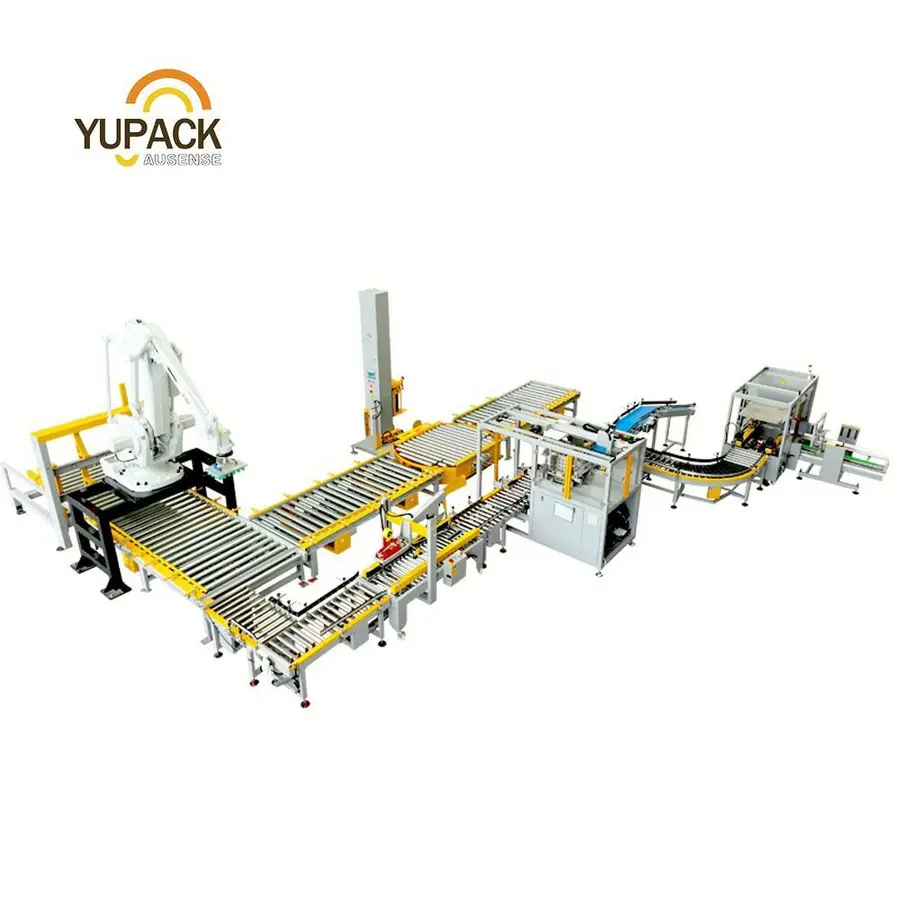
The case packer is an end-of-line system component. It should exchange the right status and stop signals with upstream packaging machines, case sealing, inspection, labeling, and palletizing equipment.
Include requirements for:
- Line control philosophy and communication with adjacent machines.
- Product and case tracking, particularly where rejects must be removed accurately.
- Fault messages that identify the affected station or condition.
- Access for format changes, cleaning, inspection, and routine maintenance.
- Availability of wear parts, recommended spares, and technical documentation.
- Required utilities, including electrical supply, compressed air, vacuum, adhesive equipment, or other services used by the proposed design.
For food applications, assess the machine layout against the plant’s cleaning methods and packaging environment. The right construction, guarding, drainage approach, material selection, and access level depend on whether the case packing area is dry, dusty, chilled, frozen, or exposed to washdown. These requirements should be defined by the facility and verified with the equipment supplier before purchase.
Use acceptance testing to validate the real specification
Acceptance testing should prove that the selected machine handles representative production conditions. A meaningful test uses actual primary packs, corrugated cases or blanks, labels where relevant, and the intended pack patterns.
The test plan should define the SKUs to be run, target rates, allowed product and case variation, expected reject handling, changeover expectations, and integration checks. It should also state how incomplete loads, product jams, case-opening failures, missing cases, and downstream stops will be handled.
Avoid accepting a machine solely because it runs one easy SKU at peak speed. The more useful question is whether it runs the production mix predictably at the required sustained rate, with reasonable operator intervention and without creating downstream palletizing problems.
Common automatic case packer selection mistakes
- Selecting on maximum cases per minute without confirming product infeed quality and collation time.
- Treating all corrugated cases as interchangeable despite differences in board behavior, dimensions, or blank quality.
- Assuming a side-load transfer will suit flexible or unstable products without trialing the actual pack.
- Choosing a wraparound format without defining blank supply, adhesive requirements, and product-group tolerance.
- Underestimating SKU changeovers, especially on lines with multiple case counts and pack orientations.
- Omitting upstream and downstream accumulation from the project scope.
- Designing the case packer independently from the palletizer, labeler, inspection equipment, and case conveyor layout.
- Using ideal samples for factory acceptance rather than representative packs and shipping cases.
A practical selection checklist
Before requesting proposals, confirm that the project team can answer these questions:
- What product formats, orientations, and case patterns must run?
- Which case styles, dimensions, and corrugated materials are required?
- What sustained output is needed for each SKU after normal line interruptions are considered?
- How will products be spaced, oriented, counted, and collated before loading?
- Is top load, side load, wraparound, or robotic loading the most compatible method for the product group?
- What changeover frequency and setup time are operationally acceptable?
- Where can safe, stable accumulation be placed upstream and downstream?
- What case orientation and condition does the palletizer require?
- What site conditions affect cleaning, access, utilities, and equipment construction?
- What representative materials and performance criteria will be used for acceptance testing?
The best automatic case packer selection is therefore a line-design decision, not simply a machine comparison. When product handling, collation, case quality, throughput, and downstream palletizing are defined together, the selected system is more likely to produce stable cases at a rate the full packaging line can actually sustain.
References
- Wrap-around Case Packer - Automated Packaging Lines. (n.d.). https://www.yuhoupack.com/blog/blog-7/wrap-around-case-packer-selection-guide-13
- How to Choose a Case Packer. (n.d.). https://anchor-motion.com/how-to-choose-a-case-packer
- Case Packers: Complete Buyer’s Guide (2026). (n.d.). https://www.aagard.com/blog/case-packers-buyers-guide
- Choosing the Right Case Packer for Your Operation. (n.d.). https://www.linkedin.com/posts/nathan-koury-73534610b_what-should-you-look-for-when-choosing-a-activity-7498718489965309952-wkw1
- A Guide to Modern Case Packing Solutions & Technology. (n.d.). https://rocketmachineworks.com/a-guide-to-modern-case-packing-solutions-technology
- How to Select the Right Case Packing & Palletizing …. (n.d.). https://www.packagingtechtoday.com/machinery/end-of-line/how-to-select-the-right-case-packing-palletizing-equipment
- Top Load Case Packer | Massman Automation. (n.d.). https://massmanautomation.com/machines/case-packing-equipment-systems/top-load-case-packer
- Choosing the right case packer: side infeed vs. top load. (n.d.). https://www.tissueworldmagazine.com/technical-theme/packaging/edson-case-packing-solutions