Bouillon cube press mold sticking usually has more than one cause. The immediate symptom may be a cube that remains in a cavity, tears during ejection, accumulates on the punch face, or leaves residue that gradually hardens. In most cases, the durable correction is to restore control of the product condition, pressing cycle, mold surface, scraper action, and cleaning routine before adding a release spray.
A release agent can sometimes support a stable process, but it should not be used to mask wet material, poor powder distribution, damaged tooling, or a cleaning failure. Start by determining whether sticking began with a recipe or ingredient change, after a tooling change, at a particular shift, or only after the machine has run for some time. That pattern narrows the investigation quickly.
First, identify the sticking pattern
Record where material adheres and when the issue appears. A consistent pattern is more useful than a general report that the press is “sticking.” Check retained samples and inspect the press only under the site’s approved isolation and access procedures.
| Observed pattern | Likely cause categories to investigate first |
|---|---|
| Material sticks from startup | Product moisture or fat distribution, mold finish, setup, incorrect or unsuitable tooling |
| Sticking grows during the run | Residue buildup, ineffective scraper, heat transfer, gradual product change, inadequate interim cleaning |
| One cavity or row sticks repeatedly | Localized mold damage, blocked feature, alignment issue, uneven fill, damaged scraper contact |
| Cubes tear or chip during ejection | Excessive adhesion, insufficient product strength, worn edges, ejection or timing problem |
| Oily film appears on tooling | Fat separation, excessive liquid addition, ingredient variation, temperature-related handling change |
| Hard deposits remain after routine scraping | Incomplete cleaning method, unsuitable cleaning chemistry, inaccessible geometry, delayed cleanup |
Do not change several variables at once. A formulation adjustment, a press-setting change, and a new release material made together can conceal the true cause and make the next production run harder to interpret.
Check the product before changing the press
Bouillon and seasoning cubes are compacted mixtures, not uniform metal or plastic parts. Their release behavior depends heavily on how dry ingredients, powdered fat, liquid oil, salt, starches, extracts, seasonings, and other components are distributed. A process for bouillon cubes may mix particulate ingredients with powdered fat and then add liquid oil before shaping. That sequence illustrates why fat distribution and liquid addition deserve attention when sticking develops.
Moisture and liquid additions
Excess moisture is a common cause of food pressing mold residue buildup. It can increase cohesion at the tool surface, promote smearing instead of clean compaction, and contribute to deposits that become progressively more difficult to remove. Moisture can enter through raw materials, hygroscopic powders, extracts, liquid additions, environmental exposure, or an unintended change in mixing and holding conditions.
Compare the affected batch with a known stable batch using the plant’s approved product specifications and test methods. Review ingredient condition, storage history, additions, mixer sequence, and time between mixing and pressing. Confirm that the product was not held in a way that changed its flow or moisture pickup before it reached the press.
Fat and oil distribution
Too little lubricating fat at the particle level may raise friction and make the compact grip the tooling. Too much free oil, or oil that is unevenly distributed, can create a smeared or tacky film on punches and cavities. Either condition can cause sticking, but the appearance is different.
Look for localized oily deposits, nonuniform color or texture in the feed, clumps after mixing, or a difference between early and late portions of a batch. Verify the mixing sequence and whether the mixer is achieving uniform distribution without creating agglomerates. Any recipe change should be reviewed through the plant’s product-development, quality, and labeling controls, including allergen implications where applicable.
Particle size and blend uniformity
A blend that contains excessive fines may pack tightly into surface imperfections. Large particles, fibrous inclusions, or poorly dispersed extracts may interfere with compaction and leave weak cubes that break during ejection. Segregation between the mixer and feed hopper can also produce a product condition at the press that differs from the condition initially approved at mixing.
Inspect the feed system for dead zones, bridging, inconsistent agitation, and separation during transfer. The objective is not simply a full hopper; it is a consistent, free-flowing feed presented to every cavity.
Review compression and ejection conditions
The press must compact the blend sufficiently to create a durable cube without driving material into every scratch, corner, and clearance. Excessive compression can raise adhesion and make ejection difficult, particularly with a moist or highly cohesive formulation. Insufficient compression can produce fragile cubes that appear to stick because they fracture or leave material behind during release.
Review approved operating records for changes in fill depth, compression force, dwell behavior, press speed, ejection motion, and feeder operation. Compare the actual machine condition with the validated or established production setting rather than relying only on an operator’s usual setting.
Important checks include:
- Whether press speed changed to meet output demand.
- Whether cavity filling is even across the tool.
- Whether ejection is smooth and synchronized with downstream handling.
- Whether the problem worsens as tooling warms during production.
- Whether cubes are damaged before leaving the mold, or only after contacting a takeoff device.
- Whether tooling alignment, guides, or moving parts show abnormal play or wear.
Do not bypass guards, interlocks, or approved machine procedures to observe the press more closely. If timing, mechanical adjustment, or tooling alignment is in question, involve qualified maintenance personnel and follow the machine manufacturer’s instructions.
Inspect mold surfaces and scraper performance
Worn mold surfaces are a recognized cause of cube adhesion. Scratches, corrosion, pitting, burrs, rough polishing, damaged corners, and coating loss can create anchoring points for compacted product. A tool may look generally clean yet still retain material in small defects that become the starting point for larger deposits.
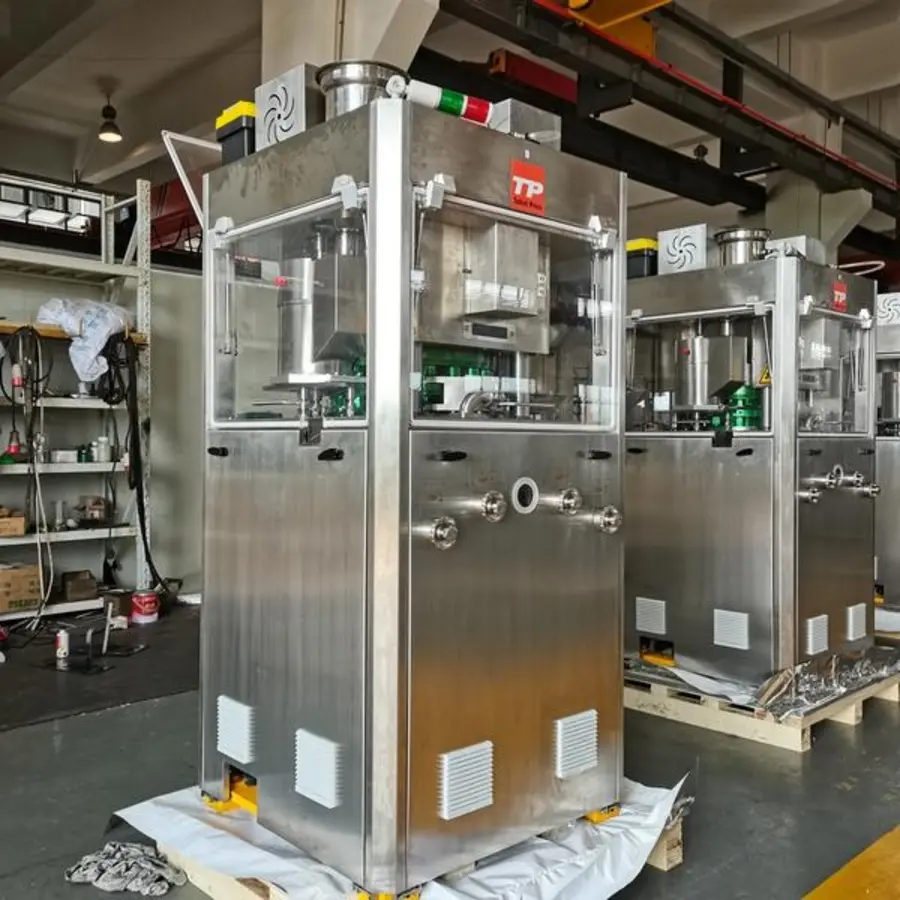
Source: img.waimaoniu
Inspect cavity walls, punch faces, edges, relief areas, and ejection-related contact surfaces under suitable lighting. Compare repeatedly sticking cavities with unaffected cavities. If possible, document the position of defects so that the same location can be monitored over subsequent runs.
Scrapers deserve the same attention. A scraper that is worn, incorrectly positioned, contaminated, or unable to maintain consistent contact may merely move residue around the tool rather than remove it. Check for uneven contact across the working width, buildup behind the scraper, damaged scraper material, and evidence that residue is being redeposited on the tooling.
Replace or repair tooling through the equipment supplier or a qualified tool specialist when surface damage is beyond the site’s approved maintenance scope. Aggressive hand polishing can alter critical geometry, create a rougher finish, or introduce contamination if it is not controlled.
Bouillon cube press cleaning: remove deposits without creating new problems
Scraping alone often fails when the residue has hardened in corners, fine lettering, surface damage, or tight clearances. Repeated dry scraping can also damage the mold surface if unsuitable tools are used. A better approach is a documented cleaning method matched to the residue, tool material, and machine design.
A practical cleaning sequence is:
- Stop and isolate the equipment safely. Follow the plant’s approved lockout, access, and food-safety procedures.
- Remove loose product first. Use only tools approved for the equipment and food-contact area. Avoid implements that can gouge surfaces or shed fragments.
- Disassemble only as authorized. Expose cavities, punches, scrapers, and other product-contact parts according to the manufacturer’s instructions.
- Apply the validated cleaning method. The correct detergent, concentration, contact conditions, rinsing requirement, and mechanical action depend on the residue and the site sanitation program.
- Inspect before reassembly. Confirm that deposits are gone from cavities, corners, seams, and scraper contact areas, and inspect for damage revealed by cleaning.
- Dry and reassemble as required. Residual water or cleaning material can create a new sticking problem or affect product quality.
- Verify release on restart. Use the site’s approved pre-operational inspection and startup checks before returning to normal production.
Cleaning chemicals, rinse requirements, sanitation verification, and drying controls must be established by the facility’s food-safety program and compatible with the machine and mold materials. Verify these details with chemical suppliers, equipment documentation, and applicable regulatory requirements rather than applying generic cleaning recipes.
When a mold release strategy is appropriate
Seasoning cube mold release may be useful when the formulation and press are otherwise stable but the product still requires a controlled reduction in tool adhesion. It is not a substitute for correcting a wet batch, a deteriorated surface, or an accumulating deposit.
Before introducing or changing a release material, assess these questions:
- Is the material suitable for the intended food application and market?
- Is its use permitted under the product specification and labeling system?
- Could it affect flavor, cube appearance, dissolution behavior, wrapping, or downstream packaging?
- Is it compatible with the mold material, seals, and existing cleaning method?
- Can application be made uniformly without overspray, pooling, or contamination of nonproduct areas?
- How will the plant verify application consistency and prevent excessive use?
A release strategy is usually more reliable when it is delivered in a controlled, repeatable way rather than as an operator response to visible sticking. If spraying is used, establish an approved application method, inspection point, replenishment practice, and cleaning requirement. Reassess the process if the required application rate appears to increase over time; that may indicate returning residue buildup or a change in the product.
A practical troubleshooting sequence
Use a short, controlled trial plan rather than prolonged trial-and-error production.
- Define the symptom. Identify cavities, time of onset, cube defects, and visible residue.
- Preserve evidence. Retain representative affected cubes and document tool locations before cleaning removes the pattern.
- Clean and inspect the tool. Remove deposits using the approved method, then assess surface condition and scraper contact.
- Compare product condition. Review ingredients, moisture-related checks, mixing sequence, oil addition, hold time, and feed behavior against a stable batch.
- Verify press condition. Check authorized settings, filling consistency, ejection, alignment, and wear items.
- Run one controlled adjustment. Change one documented factor at a time and inspect release across the full mold, not just the first few cycles.
- Standardize the correction. Update cleaning frequency, inspection records, setup instructions, or formulation controls when the cause is confirmed.
When to stop and escalate
Stop routine troubleshooting and involve quality, sanitation, maintenance, or the equipment supplier when deposits cannot be removed through the approved method; tooling shows pitting, cracking, corrosion, or damaged geometry; cube defects create a potential product-quality concern; or a formulation change may affect food safety, allergens, labeling, or regulatory compliance.
Recurring bouillon cube press mold sticking is best treated as a process-control issue. A clean, sound mold releases consistently only when it receives a stable blend under suitable pressing and ejection conditions. Release materials can have a place in that system, but they work best as a controlled finishing measure—not as the first response to a mold that is already accumulating hardened product.
References
- Common Problems in Bouillon Cube Production & Solutions -. (n.d.). https://laufeymachine.com/bouillon-cube-machine-4
- Chicken Bouillon Cube Press. (n.d.). https://www.tp-tabletpress.com/product-tag/chicken+bouillon+cube+press
- Process for making bouillon or seasoning cubes. (n.d.). https://patents.google.com/patent/WO2006063694A1/en
- Fully‑Automatic Seasoning Cube Making Machine …. (n.d.). https://www.instagram.com/reel/Db_OjlkScjk
- Injection molded products sticking to the mold (broken …. (n.d.). https://www.linkedin.com/pulse/injection-molded-products-sticking-mold-broken-runner-huang-ting-kp37c
- 5 Causes of Parts Sticking in Injection Molding. (n.d.). https://www.asaclean.com/blog/5-causes-of-parts-sticking-in-injection-molding
- Are Your Sprue or Parts Sticking? Here Are Some Solutions. (n.d.). https://www.ptonline.com/articles/injection-molding-are-your-sprue-or-parts-sticking-here-are-some-solutions
- Stock cubes making equipment - Making.com. (n.d.). https://making.com/stock-cubes