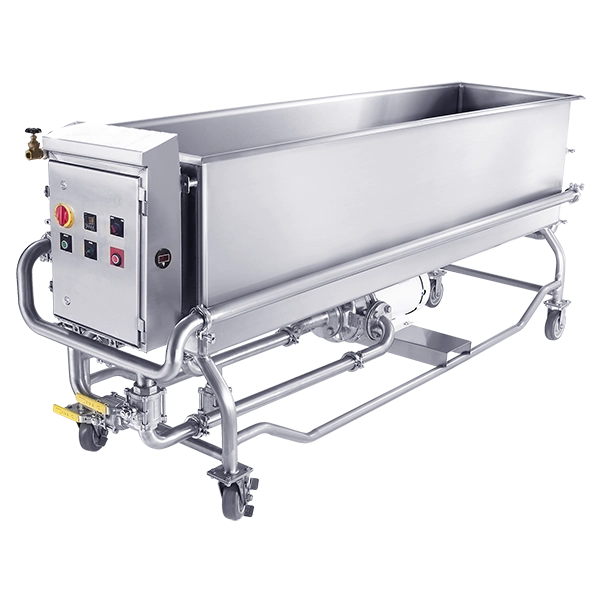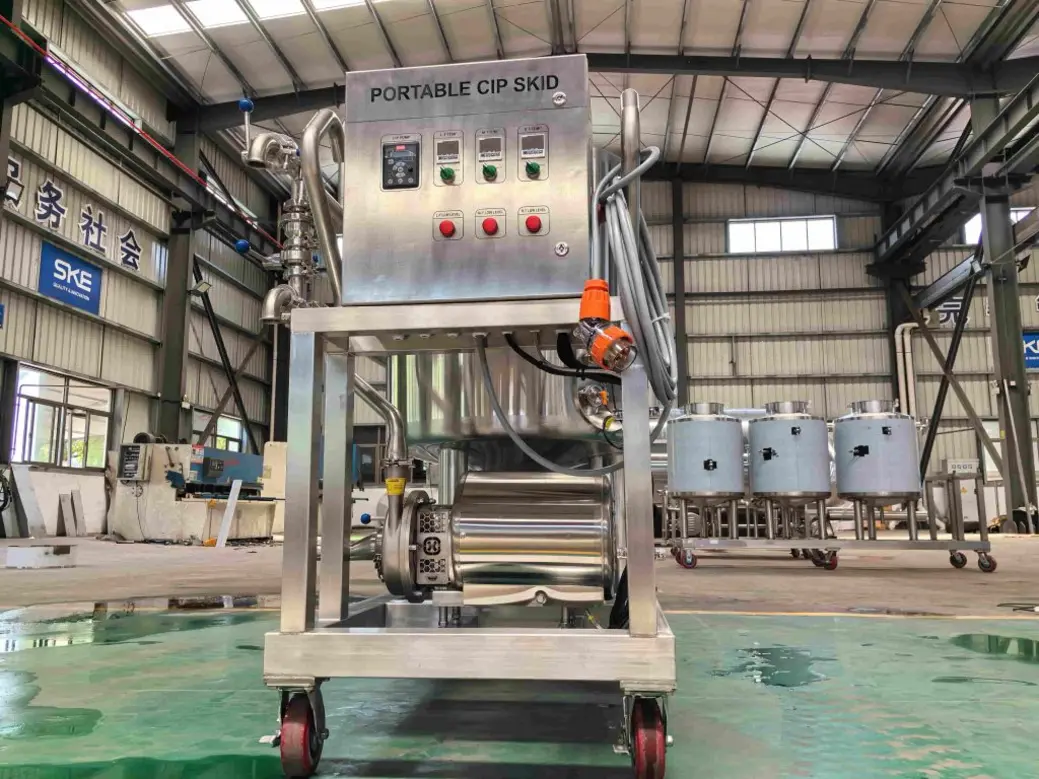
CIP vs COP cleaning is usually not an either-or choice. Clean-in-place (CIP) is the practical method for enclosed product paths that can be cleaned effectively without opening the equipment, such as properly designed tanks, pipelines, and some pumps and valves. Clean-out-of-place (COP) is necessary for removable parts, exposed product-contact areas, and complex components that cannot receive reliable cleaning coverage in place.
The right decision starts with cleanability, not automation. If cleaning solution cannot contact, drain from, and be verified across every relevant product-contact surface, calling equipment “CIP-able” does not solve the problem. A well-run food plant commonly uses CIP for the main process circuit and COP or manual cleaning for selected tear-down parts.
CIP and COP: the core difference
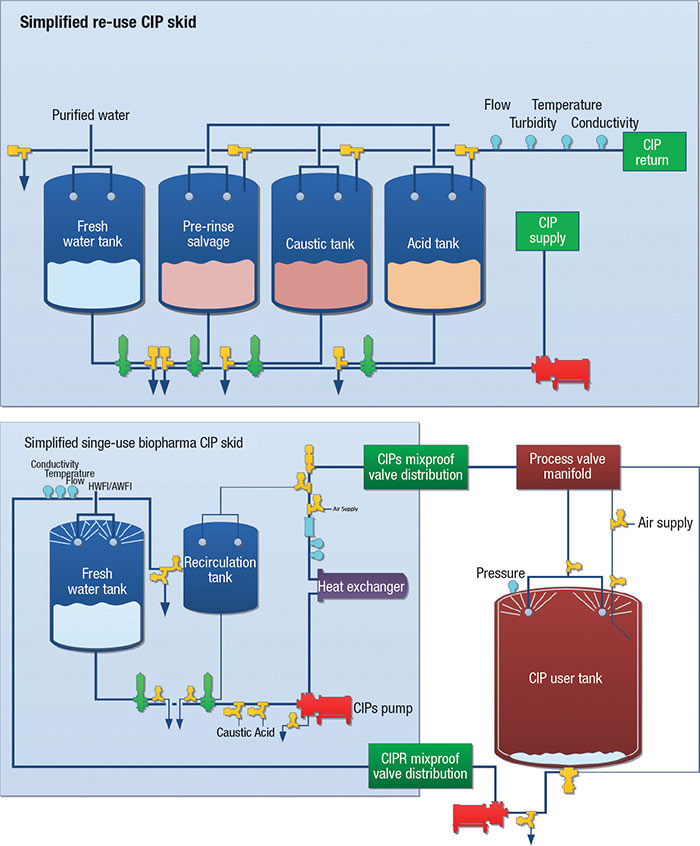
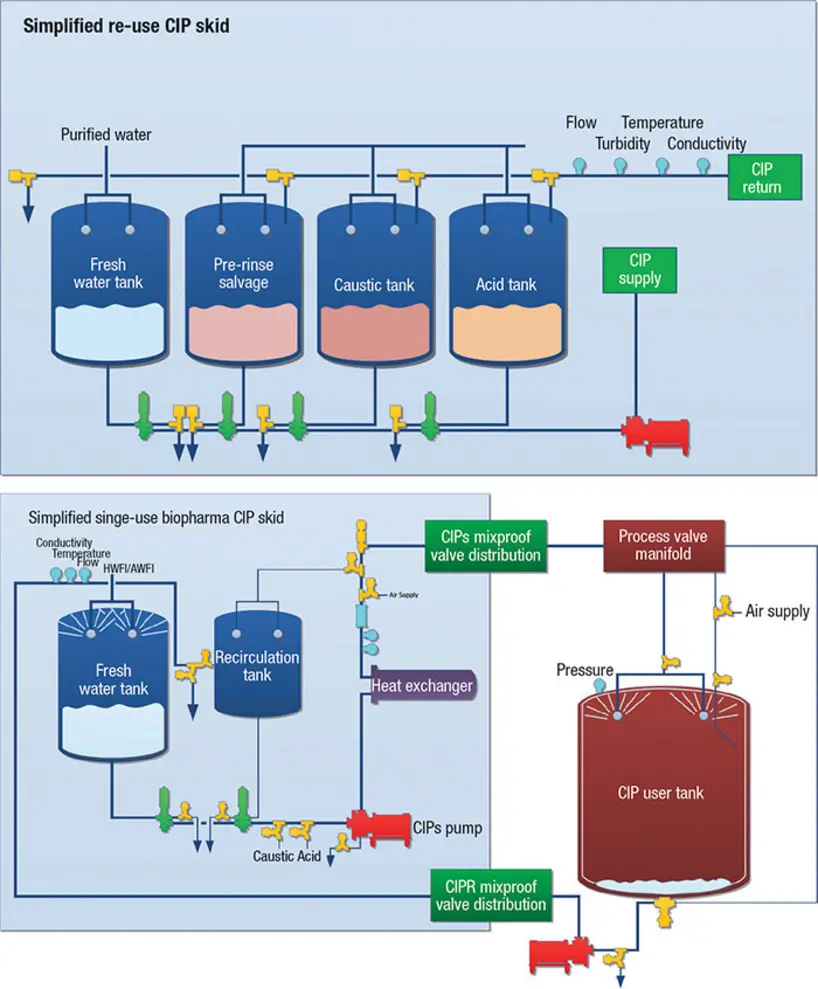
CIP cleans equipment in its installed position. Water and cleaning solutions are delivered through a controlled circuit, generally using tanks, pumps, valves, supply and return piping, and the equipment being cleaned. The system may be manually operated, semi-automated, or automated, but its defining feature is that the process equipment stays assembled.
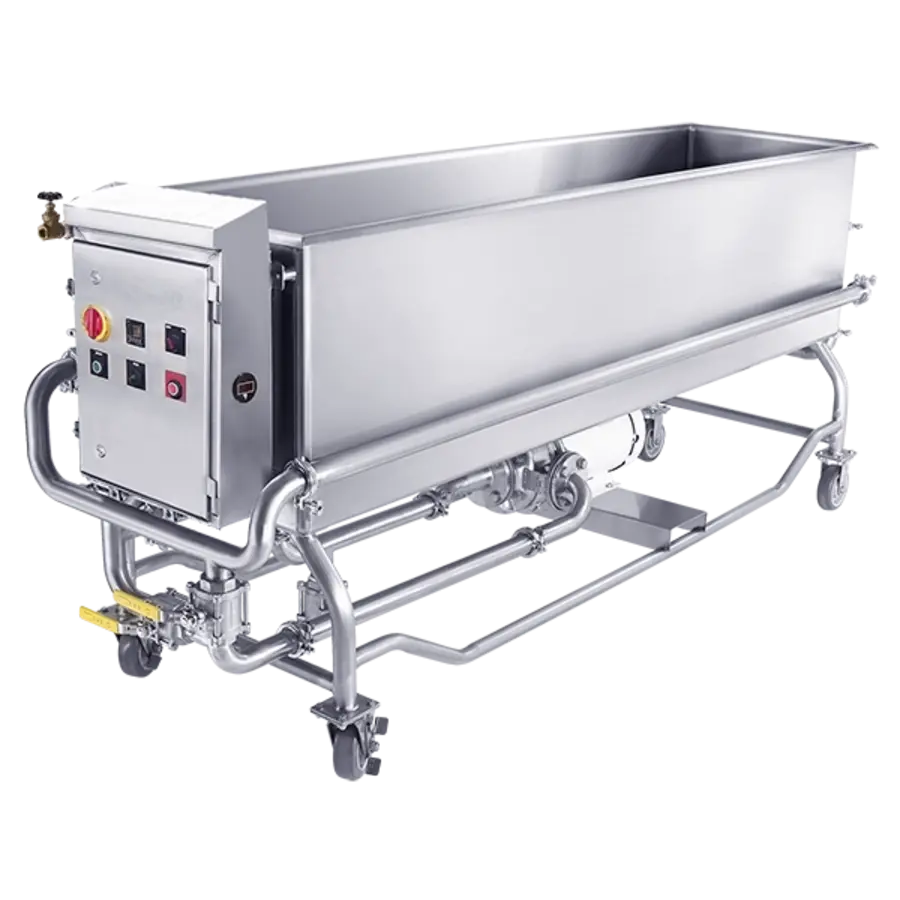
COP requires components to be removed from the production line and cleaned in a separate wash area, wash tank, or parts-washing machine. Depending on the item and plant procedures, workers may also brush, inspect, rinse, and sanitize components before reassembly.
| Decision factor | CIP cleaning | COP cleaning |
|---|---|---|
| Basic method | Cleans assembled equipment through an internal circuit | Cleans removed components in a separate area or washer |
| Best suited to | Tanks, pipelines, closed product circuits, and equipment designed for solution coverage and drainage | Gaskets, fittings, valve parts, filler parts, guards, utensils, and difficult-to-reach components |
| Disassembly | Limited or none for the intended CIP circuit | Required for the parts being cleaned |
| Labor profile | Lower routine hands-on cleaning labor, but requires setup, monitoring, maintenance, and verification | More handling and reassembly work, with a greater dependence on consistent work practices |
| Production impact | Can reduce teardown time for compatible equipment, but the cleaning cycle still occupies the line | Can extend changeover or sanitation time when many parts must be removed and reinstalled |
| Main limitation | Cannot reliably clean surfaces that are not reached by the cleaning circuit | Can become labor-intensive and variable when access, parts control, or cleaning methods are poorly managed |
When CIP is the better fit
CIP is generally the first choice for equipment that is large, fixed, enclosed, or impractical to dismantle routinely. Typical candidates include process tanks, transfer lines, manifolds, heat-transfer circuits, and other closed product systems designed for internal cleaning.
A CIP program works best when the equipment and piping have been designed around the cleaning method. The cleaning circuit must deliver solution to all intended surfaces, provide adequate mechanical action for the soil involved, and allow the system to drain. Dead ends, poorly located instruments, uncleanable valve cavities, and areas that hold product or cleaning solution can undermine the result.
Source: haskell
CIP also has an operational advantage where repeatability matters. A defined cycle can control the sequence of rinses and cleaning steps and can record selected operating information when the system has suitable instrumentation and controls. That does not eliminate the need for verification. Plants still need procedures for confirming that cycles ran as intended and that cleaning outcomes meet their own food-safety, quality, allergen, and regulatory requirements.
CIP is not automatically appropriate simply because a line is enclosed. Before relying on it, assess whether the process circuit has:
- A complete, identifiable cleaning path from supply through return.
- Product-contact surfaces exposed to the cleaning solution rather than shielded from it.
- Proper drainage and no persistent product or liquid traps.
- Components that can withstand the intended cleaning chemistry and operating conditions.
- Valves, instruments, pumps, and connections that are included in the cleaning design or identified for teardown.
- A method to verify cleaning performance and detect deviations.
When COP is the better fit
COP is appropriate when a part must be removed to expose its product-contact surfaces or when its geometry prevents dependable in-place cleaning. Common examples include gaskets, clamps, small fittings, valve internals, pump rotors, filler change parts, tank vents, guides, shields, knives, and product-handling utensils.
It is also useful for equipment that was not designed as a fully cleanable CIP circuit. A grinder, depositor, packaging component, or older machine may contain joints, seals, housings, and exposed zones that cannot be reached by a circulating solution. Attempting to force such equipment into a CIP routine can leave the plant with hidden residue rather than a genuinely simpler sanitation process.
Source: dougmac
COP depends heavily on good handling discipline. Parts should be identified, protected from damage, thoroughly accessible for cleaning and inspection, and reassembled correctly. A separate cleaning area should support orderly flow from soiled parts to clean parts, while preventing mix-ups and recontamination. The exact wash method, chemicals, exposure conditions, and sanitation controls should be established and verified for the product, soil, equipment materials, and applicable requirements.
Product residue often decides the method
The nature of the soil can change the answer even when two machines have similar geometry. Thin, water-soluble product residue in a smooth, drainable line may be a strong CIP candidate. Sticky, fatty, particulate, dried-on, or proteinaceous residues may need more mechanical action, longer access, or direct inspection than a simple circulation path can provide.
Consider these questions during selection:
- Does the product settle, pack, harden, or build up in corners and seals?
- Are particulates likely to collect in valves, pumps, screens, or low points?
- Does the process involve allergens that require defined cleaning and verification controls between runs?
- Can residues be seen or accessed during inspection after a normal CIP cycle?
- Does the equipment contain porous, damaged, rough, or worn surfaces that retain soil?
The answer may be a hybrid procedure: CIP the closed product path, then remove specified components for COP. This is often more realistic than trying to make one method cover every surface.
Sanitary design determines whether CIP can work
CIP is a system capability, not merely a utility connection. A tank with a spray device, for example, still needs a hygienic internal design, suitable spray coverage, drainability, and cleanable attachments. Likewise, a pipe circuit needs more than a pump and return line; it needs a layout that avoids areas where cleaning solution or product can bypass critical surfaces.
Equipment intended for manual or COP cleaning has a different design requirement: workers must be able to reach and inspect product-contact surfaces without excessive effort or improvised tools. If normal sanitation requires difficult access, extensive hidden disassembly, or inconsistent reassembly, the underlying equipment design deserves attention.
Recurring sanitation difficulty is often a design or maintenance signal. Worn seals, damaged gaskets, corroded surfaces, poor welds, leaking valves, and inaccessible assemblies can turn a once-manageable cleaning task into a persistent risk. Redesigning a product-contact area, replacing a problematic valve arrangement, or standardizing quick-access components may provide a more durable improvement than adding labor to the sanitation shift.
Compare total operating cost, not only labor
CIP generally requires capital investment in tanks, pumps, controls, piping, instrumentation, and integration with the production line. It may reduce repeated teardown labor and make cleaning cycles more consistent, but it consumes utilities and requires maintenance of the CIP system itself.
COP can have a lower initial barrier for small parts and intermittent operations, yet repeated disassembly, transport, washing, inspection, drying, and reassembly add labor and downtime. The plant must also manage spare parts, damage, and the risk that a component is omitted or assembled incorrectly.
A useful comparison should include:
- Sanitation labor and supervisory time.
- Planned line downtime and changeover frequency.
- Water, energy, cleaning chemical, and wastewater demands.
- Replacement parts and maintenance burden.
- Space for a CIP skid, return piping, or a dedicated COP wash area.
- Documentation, inspection, and verification needs.
- The cost of product loss, delayed startup, or cleaning failures.
A practical selection checklist
Use CIP when the equipment is a closed, fixed system and the cleaning design can reliably contact and drain all intended product-contact surfaces. Use COP when removal is necessary to expose and inspect the parts, or when a component is too complex for dependable in-place coverage.
Before finalizing a method, ask the equipment supplier, sanitation team, engineering team, and quality group to review the same questions:
- Which product-contact surfaces are included in the cleaning method?
- Which parts remain outside the CIP circuit and require removal?
- Can the equipment be drained, inspected, and reassembled consistently?
- What residues and production conditions create the most difficult cleaning case?
- What evidence will demonstrate that the validated procedure remains effective in normal operation?
- Does the written procedure clearly assign responsibility for teardown, cleaning, inspection, and release?
The practical conclusion
The best CIP vs COP cleaning strategy is usually a defined combination rather than a single technology choice. Use CIP where equipment geometry supports repeatable internal cleaning. Use COP where disassembly creates the access needed for thorough cleaning and inspection. Where neither method provides reliable access, treat the problem as an equipment cleanability and sanitary-design issue—not as a reason to add more cleaning steps without addressing the source.
References
- CIP/COP Archives - M.G. Newell. (n.d.). https://www.mgnewell.com/tag/cip-cop
- CIP Cleaning: How to Ensure Food Safety Standards | Tractian. (n.d.). https://tractian.com/en/blog/cip-cleaning-how-to-ensure-food-safety-standards
- Top Tips to Make Your CIP and COP Systems Work For You | Food Safety Magazine. (n.d.). https://www.food-safety.com/articles/4655-top-tips-to-make-your-cip-and-cop-systems-work-for-you
- Quality Management System. (n.d.). https://www.ams.usda.gov/sites/default/files/media/DairyEquipmentReviewGuidelines.pdf
- What is CIP in food processing?. (n.d.). https://umbrex.com/resources/umbrex-explainers/agriculture-food-explainers/cip-in-food-processing
- Clean in Place (CIP): The Complete Guide | Process Types, Chemicals, & Equipment. (n.d.). https://runlaminar.com/blog/clean-in-place
- Understanding CIP and COP Systems - Sensorex Liquid Analysis Technology. (n.d.). https://sensorex.com/cip-cop-systems
- CIP vs. COP: Which Cleaning Method is Right for Your Production Line?. (n.d.). https://www.nerconconveyors.com/Nercon-Blog/CIP-vs.-COP-Which-Cleaning-Method-is-Right-for-Your-Production-Line.htm