Low circulation flow in a food plant washer or CIP loop is often caused by a restriction before it is caused by a failed pump. Product fragments, labels, gaskets, mineral deposits, congealed fats, and residue can collect in strainers, filters, pump inlets, check valves, spray devices, and low points in the return path. The quickest reliable response is to confirm the flow loss, check accessible restrictions and valve positions, then compare the pump’s actual operating condition with the validated cleaning or washing requirement.
Circulation pump clogging in food processing matters because a pump can continue running while delivering too little solution to clean equipment as intended. A low-flow condition should not be treated as a minor maintenance nuisance. It can affect washer performance, chemical distribution, spray coverage, and the repeatability of a CIP cycle. If the system cannot meet its approved operating conditions, follow the facility’s sanitation, quality, and release procedures before returning equipment to service.
Where blockages usually develop
A circulation pump does not necessarily have to ingest a large object to lose performance. Progressive fouling is common: residue narrows a screen opening, grease builds on the suction side, or deposits reduce the effective passage through a valve or spray device. The resulting pressure and flow pattern can look similar to pump wear.
Typical collection points include:
- Tank outlets and pump suction piping. Heavy solids, settled product, packaging fragments, and poorly drained residue can move toward the pump when circulation starts.
- Basket strainers, inline filters, and screens. These components protect downstream equipment, but they become restrictions when cleaning frequency does not match the soil load.
- Pump impellers and wear clearances. Fibrous product, film, string, gasket material, and deposits can interfere with impeller movement or reduce pumping efficiency.
- Check valves and small valve passages. A lodged particle or damaged internal component may prevent full opening.
- Spray balls, rotary spray heads, and washer manifolds. Fine debris and mineral scale can obstruct nozzles and reduce distribution.
- Return lines and low points. Poor draining, accumulated solids, or a partially closed valve on the return side can increase system resistance.
- Heat exchangers and other narrow passages. Product residue or scale may restrict a circuit even when the pump and filter appear clear.
Fats and oils can create a different failure pattern from hard debris. They may remain fluid during production, then thicken or solidify during shutdown or when temperature changes. Protein-rich soils can also become difficult to remove if the cleaning sequence is not matched to the product and equipment design. The correct cleaning chemistry, temperatures, concentrations, and contact times must be established by the plant’s validated sanitation program and chemical supplier guidance rather than guessed during troubleshooting.
Start with the symptom, not the pump
Before opening a pump, identify what changed. A sudden loss of flow after a particular production run points toward debris, a valve-routing issue, or a blocked strainer. A gradual decline over weeks may point toward accumulating deposits, impeller wear, seal problems, cavitation, instrumentation drift, or a partially restricted circuit.
A useful first question is whether the problem affects every route or only one route. If a common CIP supply pump serves several circuits and only one circuit has poor performance, the restriction is more likely downstream in that route. If every route is low, look first at the tank level, pump suction, shared filter or strainer, pump condition, common supply piping, and control settings.
Common low-flow patterns
| Observed condition | Likely cause categories | First checks |
|---|---|---|
| Flow dropped suddenly after a cycle began | Blocked strainer, wrong valve position, lodged debris, air entry | Confirm route, tank level, valve feedback, strainer differential pressure or condition |
| Flow is low on one circuit only | Restricted branch, blocked spray device, check valve issue, incorrect routing | Compare branch pressure and flow with a known-good route; inspect accessible branch components |
| Flow is low on all circuits | Shared suction restriction, pump issue, common supply restriction, incorrect speed setting | Check tank outlet, suction line, shared filter, pump speed, vibration, and discharge pressure |
| Pump sounds rough or unstable | Air entrainment, cavitation, inadequate suction conditions, mechanical damage | Check liquid level, suction valves, leaks, blocked suction screen, and abnormal vibration |
| Pressure is higher than normal but flow is low | Downstream restriction or partially closed valve | Inspect filters, discharge valves, check valves, nozzles, and restricted branches |
| Pressure and flow are both low | Suction problem, worn impeller, air in circuit, low pump speed, bypass leakage | Inspect suction conditions, pump operation, recirculation paths, and measured speed |
Checks to make before disassembly
Do not immediately remove a pump cover or loosen sanitary fittings. First isolate the issue using the system’s available measurements and normal operating information. Follow the site’s lockout, chemical handling, depressurization, and confined-space procedures where applicable. Never bypass guards, interlocks, alarms, or safety controls to keep a cycle running.
1. Confirm the reading is real
Review the flow indication, pressure readings, pump speed, and tank level. If there is a flow meter, compare the current value with the normal value for the same circuit and recipe. Historical flow records are especially useful because they show whether the decline was immediate or progressive.
Also consider whether the instrument itself may be misleading. A faulty transmitter, wiring issue, blocked sensing point, or uncalibrated instrument can create an apparent flow problem. Use the plant’s approved verification method before relying on an isolated reading.
2. Verify routing and valve position
Incorrect valve lineup is a common cause of low circulation. A valve may be commanded open but fail to reach position, or a manual valve may be left partially closed after maintenance. Check confirmed valve feedback where available, inspect accessible manual valves, and review the active route against the intended CIP or washer circuit.
Pay attention to bypasses and return paths. An unintended open bypass can reduce flow through the target equipment even while the pump appears to be operating normally.
3. Check the suction side first
Centrifugal circulation pumps need a stable liquid supply. Low tank level, an obstructed outlet, a closed suction valve, an air leak, or accumulated material in the suction line can cause unstable operation and reduced flow. Signs can include fluctuating pressure, unusual noise, vibration, or intermittent flow.
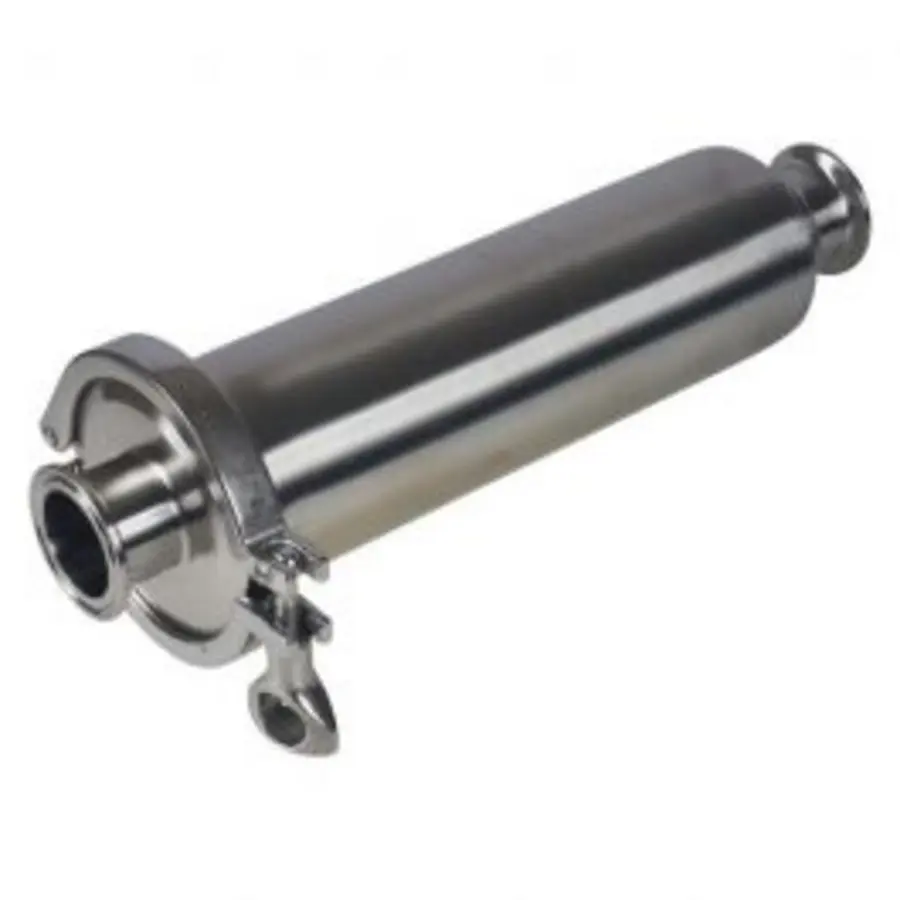
If the design includes a suction screen, basket strainer, or filter, inspect it according to the facility’s safe isolation and sanitation procedures. Record what is found. The material removed often identifies the upstream source of the problem.
Source: glaciertanks
4. Inspect filters and strainers as evidence, not just as parts to clean
A dirty strainer should be cleaned, but the work should not end there. Determine what blocked it:
- Product chunks may indicate inadequate recovery, draining, or pre-rinsing.
- Fibers may come from a product ingredient, brush, cloth, or damaged hose.
- Gasket fragments can indicate deteriorating fittings or valve seals.
- Metal, plastic, or packaging debris may require a broader foreign-material investigation.
- Greasy deposits may indicate that the cleaning sequence or mechanical removal step is not adequately controlling the soil load.
Documenting the debris type and source helps maintenance and sanitation teams prevent repeated CIP circulation pump blockage rather than repeatedly cleaning the same screen.
5. Compare pump behavior with a known-good condition
If the filter and routing are clear, assess the pump without assuming it is clogged. Compare present flow, pressure, speed, motor load where available, vibration, and sound with normal operating records. A worn impeller, damaged seal, loose coupling, motor or drive problem, or internal recirculation can reduce output without a physical blockage.
A pump that loses prime, leaks at the seal, or operates with persistent noise should be evaluated by qualified maintenance personnel. Continuing to run a pump under unsuitable suction conditions can worsen mechanical damage.
How to distinguish a restriction from pump damage
The pressure-flow relationship usually provides the best clue. A downstream restriction often produces elevated discharge pressure with reduced flow. A suction restriction or air ingress may produce unstable readings, noise, and low flow. A worn or damaged pump may show low flow and low pressure even with a clear route and adequate suction.
These are indicators, not definitive diagnoses. The actual outcome depends on pump type, piping arrangement, control valves, variable-speed settings, and the location of pressure instruments. Use the system’s piping diagram, pump curve, baseline operating data, and approved troubleshooting procedures when available.
A practical sequence is:
- Compare the affected route with a route that performs normally.
- Verify tank level, suction valve position, and accessible suction restrictions.
- Inspect the shared strainer or filter.
- Confirm discharge valves, check valves, and bypass positions.
- Review pump speed and electrical or mechanical condition.
- Isolate and inspect individual branches only after the common causes have been checked.
Corrective actions after the cause is found
For a blocked screen or strainer, clean and reinstall it using the correct gasket, clamp, and inspection practices for the sanitary connection. Confirm that no damaged screen, missing seal, or bypass path remains. If the system has multiple filter stages, inspect the downstream stage as well.
For product accumulation in piping or a pump housing, remove the material only after the circuit has been safely isolated, drained, depressurized, and made safe for maintenance. Reassemble the equipment according to the manufacturer’s instructions and the site’s hygienic maintenance requirements. A post-maintenance cleaning step and verification may be required before food-contact equipment returns to production.
For damaged impellers, seals, valve internals, or spray devices, replacement parts should be compatible with the process, cleaning chemicals, temperature range, and sanitary design. Repeatedly installing replacement parts without investigating why they failed can leave the underlying issue unresolved.
Preventing repeat blockages
The most effective prevention program addresses both the material entering the loop and the team’s ability to notice declining performance early.
Improve solids control upstream
Use appropriate screens, product recovery practices, drain management, and pre-rinsing methods to reduce the solid load entering recirculation equipment. The right approach depends on the product. Thick sauces, dairy residues, meat fats, vegetable matter, powders, and bakery soils do not behave the same way in a wash system.
Avoid treating a strainer as the primary product-removal method. It is a protective device, not a substitute for a cleaning sequence designed to remove the expected soil.
Set cleaning intervals from evidence
A calendar-only task may be too frequent for one line and too infrequent for another. Set initial inspection intervals based on product type, run length, historical debris, and operating conditions. Then adjust the interval using inspection findings and flow trends.
For food plant washer pump maintenance, a simple log can be valuable. Record the circuit, date, observed flow and pressure, strainer condition, debris type, corrective action, and whether performance recovered. This turns recurring complaints into usable maintenance data.
Verify flow, not just pump operation
A running pump is not proof of adequate cleaning circulation. Where instrumentation is installed, trend supply flow and pressure by route. Compare each cycle with its established operating range and investigate a sustained change before it becomes a failed sanitation cycle.
Review equipment and circuit design when clogging persists
Frequent restrictions may reveal a design issue rather than a discipline issue. Examples include undersized strainers, inaccessible filters, poor tank outlet geometry, low points that retain solids, unsuitable pump selection, small passages in a high-soil service, or a circuit that combines incompatible soil loads.
A hygienic design review may be appropriate when the same loop repeatedly plugs despite proper cleaning and maintenance. Include sanitation, maintenance, operations, quality, and the equipment supplier or qualified engineering support in that review.
When to stop and escalate
Stop routine troubleshooting and involve qualified personnel when there is chemical exposure risk, unexplained pressure behavior, repeated seal failure, electrical faults, severe vibration, evidence of foreign material that could affect product safety, or inability to verify the required circulation conditions.
Likewise, do not release a CIP or washer circuit based solely on the fact that flow has returned. The plant should determine whether the interrupted or low-flow cycle remains acceptable under its validated sanitation program, quality procedures, and applicable regulatory requirements.
A clogged circulation pump is often a visible symptom of residue control, filtering, routing, or maintenance gaps elsewhere in the system. Checking the simplest shared restrictions first, documenting what is found, and trending flow by circuit gives food plants a more reliable way to restore performance and reduce repeat blockages.
References
- [PDF] CIP and Sanitation of Process Plant - SPX Flow. (n.d.). https://www.spxflow.com/assets/pdf/apv-cip-systems-22003-05-02-2013-gb.pdf
- CIP (Clean-in-Place) System Maintenance for Food & Beverage. (n.d.). https://oxmaint.com/industries/fmcg/cip-clean-in-place-maintenance-food-beverage
- Clean-in-Place (CIP). (n.d.). https://tractian.com/en/glossary/clean-in-place-cip
- Sanitation Performance Standards Compliance Guide | Food Safety and Inspection Service. (n.d.). http://www.fsis.usda.gov/inspection/compliance-guidance/sanitation-performance-standards-compliance-guide
- Clean-in-Place (CIP) Systems: Everything You Need to Know. (n.d.). https://www.csidesigns.com/blog/articles/clean-in-place-cip-systems
- Clean-in-Place Troubleshooting Checklist. (n.d.). https://qualitru.com/clean-in-place-cip-troubleshooting
- ClP Systems For Food & Beverage: How Flow Measurement Fits In. (n.d.). https://www.turbinesincorporated.com/news-resources/cip-systems-in-food-beverage-how-flow-measurement-fits-in
- Seven Steps to a Clean and Sanitized Food Processing Facility. (n.d.). https://bristola2.com/feeds/blog/food-processing-plant-cleaning