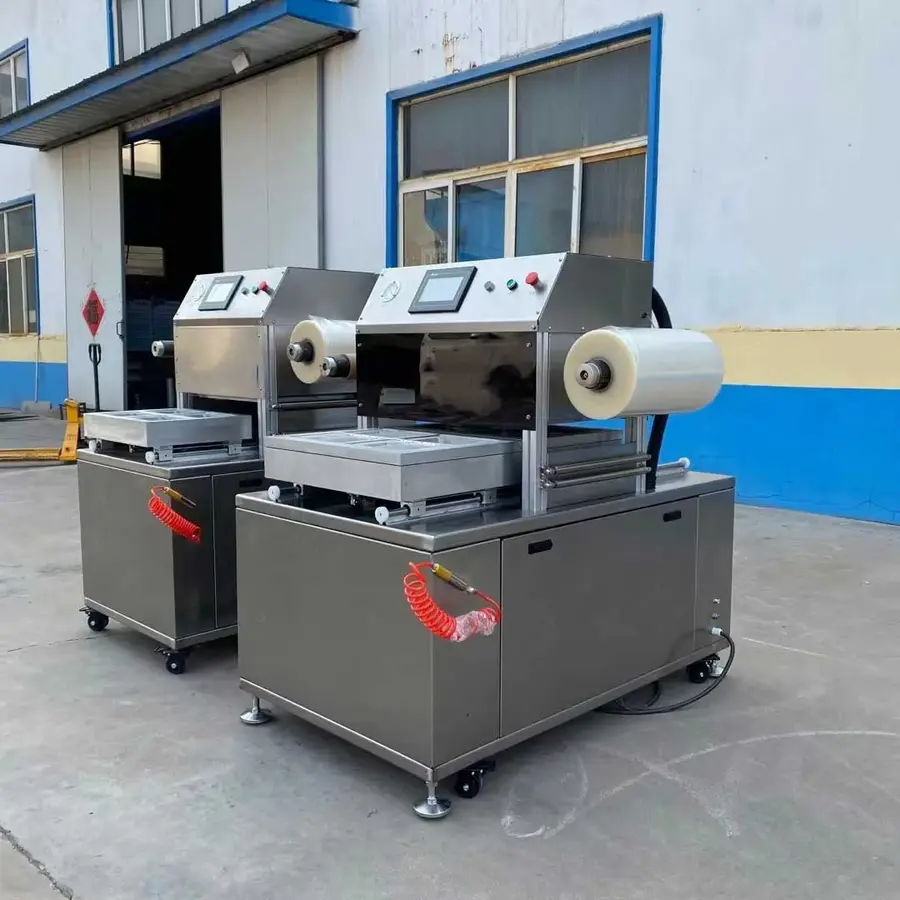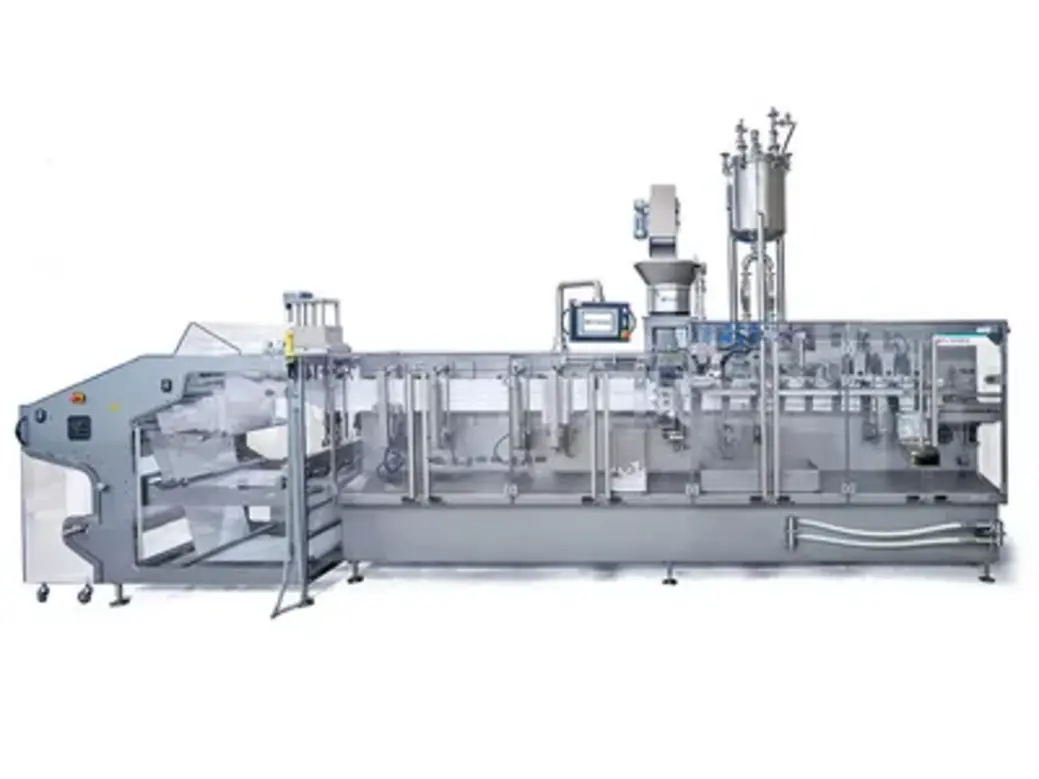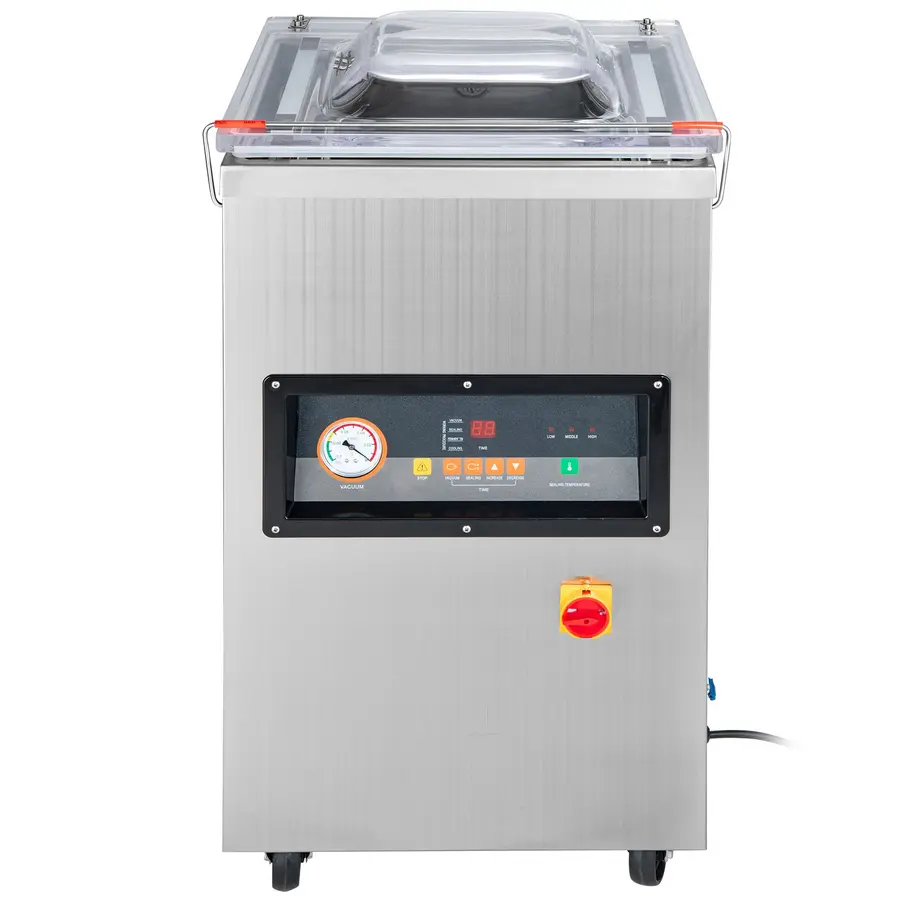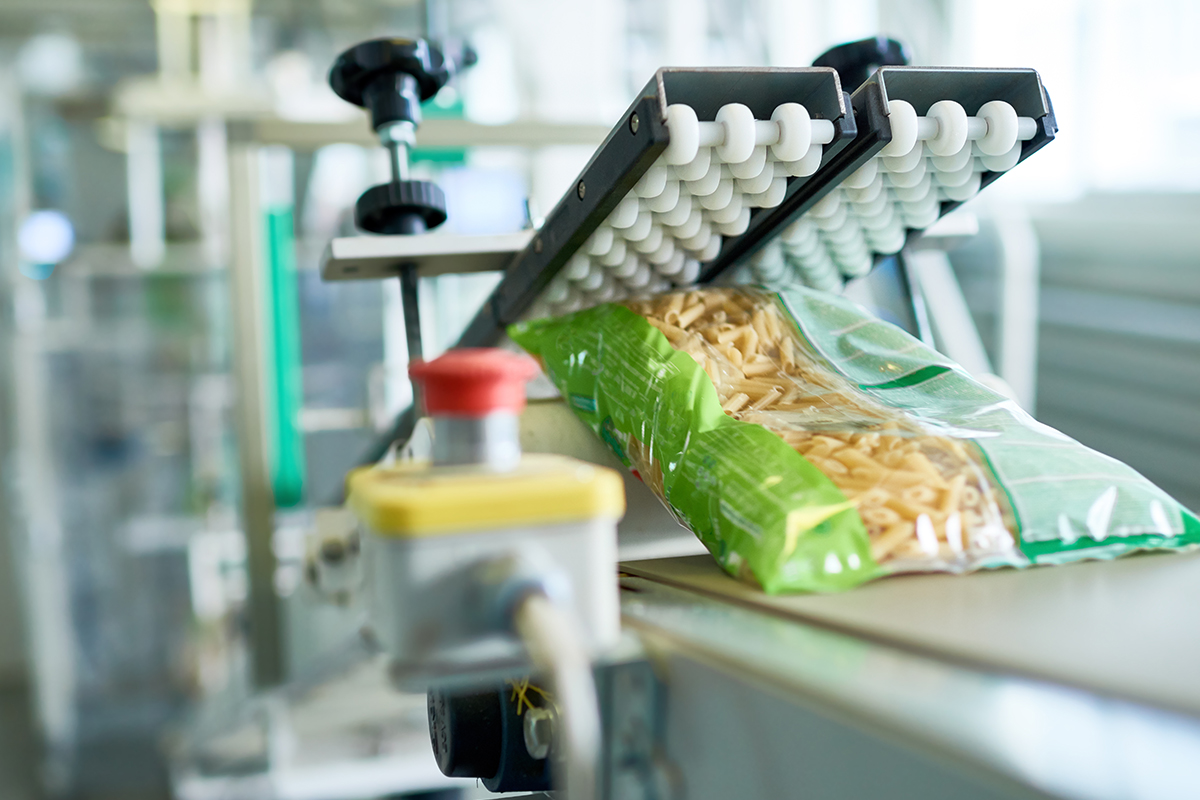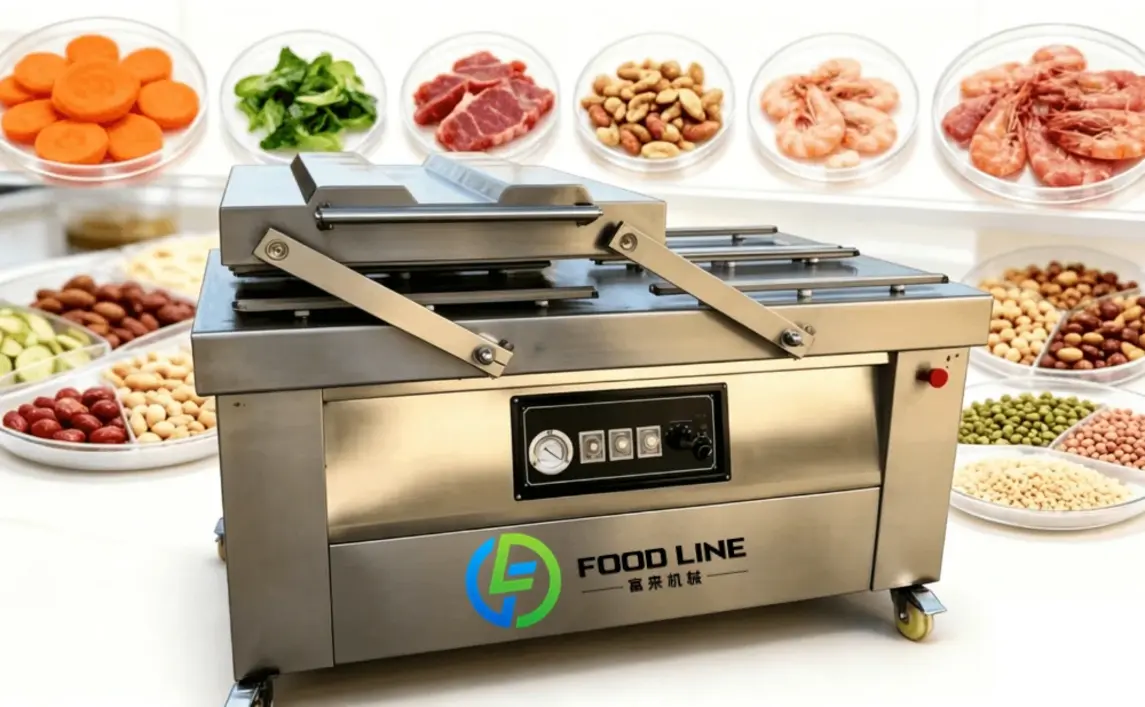
A commercial vacuum packaging machine for cooked food should be selected first by product behavior: whether the food is dry, moist, sauce-containing, hot-filled, chilled, or cooked in the pouch. For many cooked foods with gravies, soups, marinades, or free liquid, a chamber vacuum sealer is usually the more practical starting point because the pouch remains inside the chamber while pressure is reduced. External-nozzle systems are better suited to certain larger bags and lower-liquid products, but they are less forgiving when product liquid can move toward the seal area.
The machine is only one part of the decision. A sound package requires a compatible pouch, a clean and consistent seal, and a documented food-safety process appropriate to the product and distribution method. Vacuum packaging removes air from the package; it does not, by itself, cook food, make food shelf-stable, validate a cooling process, or establish a use-by date.
Start with the product and process
Before comparing seal-bar lengths, pump sizes, or chamber layouts, map the actual product flow:
- Is the product cooked before packaging, or cooked after sealing in a cook-in pouch?
- Does it contain free liquid, oil, sauce, or purge?
- Is it packaged chilled, warm, frozen, or under another validated process condition?
- What pouch size, fill weight, and headspace are needed?
- Will packs be handled manually, conveyed, boxed, frozen, reheated, or distributed through cold storage?
- What product-specific process controls are required under the rules and guidance that apply to the operation?
These questions determine whether the packaging system can produce repeatable packs without contaminating the seal zone or creating excessive rework. They also prevent a common error: treating the vacuum packer as the safety control when the real controls may lie in cooking, cooling, formulation, sanitation, storage, and distribution.
Chamber versus external-nozzle vacuum systems
A chamber system evacuates the air from the entire chamber, including the pouch exterior. Because pressure changes around the bag and inside it together, the product is less likely to be pulled aggressively out of the pouch during evacuation. This makes chamber equipment a common choice for vacuum packaged prepared foods, especially products containing liquids or soft components.
An external-nozzle system places the open end of the pouch over or around a nozzle, then draws air from the pouch directly. These systems can be useful where bag dimensions are large, where product is relatively dry or firm, or where the workflow benefits from an open loading area. However, sauce and liquid near the pouch opening can interfere with evacuation and seal integrity.
| Consideration | Chamber vacuum sealer | External-nozzle vacuum system |
|---|---|---|
| Products with sauces or free liquid | Generally better suited | Requires close control of fill level and pouch positioning |
| Pouch format | Commonly uses flat vacuum pouches sized for the chamber | Can accommodate some larger or specialty bag formats |
| Production format | Available as tabletop, single-chamber, double-chamber, and automated systems | Often used for larger bags or specific production layouts |
| Operator workflow | Product is loaded into and removed from a chamber | Operator manages the bag opening at the nozzle area |
| Seal contamination risk | Still requires clean seal areas, but liquid handling is generally easier | Can be more sensitive to liquid migrating toward the seal area |
Why chamber sealers are often preferred for liquids
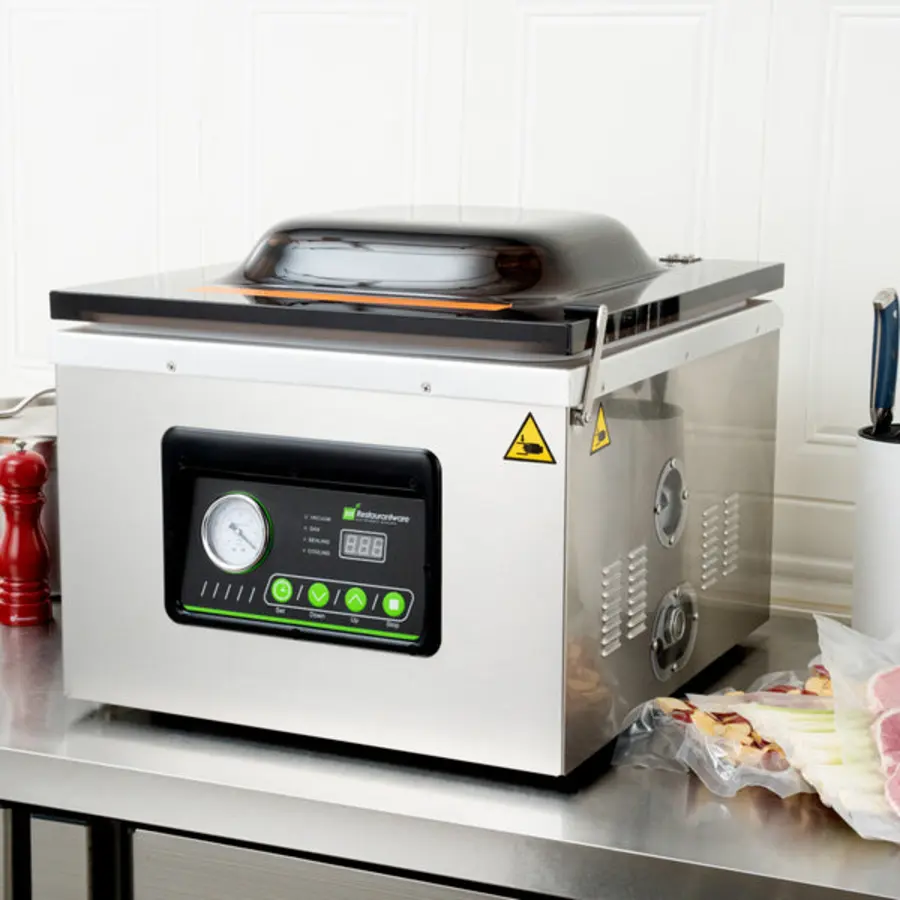
A chamber vacuum sealer for liquids does not eliminate the need for good filling practice. Product still needs sufficient space between the fill line and the seal area, and the pouch mouth must remain clean and flat across the seal bar. But chamber operation can reduce the tendency for liquid to surge outward as vacuum is drawn.
For soups, braises, sauces, cooked beans, marinated proteins, and similar products, consider practical controls such as consistent fill temperatures, controlled fill weights, pouch supports or angled inserts where appropriate, and a work method that keeps the top of each pouch clean. The right settings depend on the product, pouch structure, and machine, so they should be established through production trials and documented verification rather than copied from another product.
Source: restaurantware
Choosing a commercial food vacuum sealer
The best equipment format depends on daily output, package size range, staffing, available floor space, and the amount of changeover expected.
Tabletop chamber sealers
Tabletop units can suit test kitchens, small batch producers, commissaries, and operations with limited output. They are generally useful for product development and short production runs, provided the chamber size, seal-bar configuration, and duty cycle match the actual package.
Their limitations become apparent when operators must process many pouches per shift, use larger bags, or package several formats. Labor can become the main constraint because loading, arranging, and unloading are manual.
Floor-model single-chamber machines
A larger single-chamber unit can offer more usable chamber volume and a more robust platform for routine production. It may suit a producer running a limited number of SKUs in moderate batches. Evaluate ergonomic loading height, chamber access, seal-bar arrangement, and clearance around the machine for staging filled pouches.
Double-chamber machines
Double-chamber designs help maintain workflow by allowing an operator to load one chamber while the other is running. They can be a practical step up when the product and pouch format are stable enough to justify higher output, but a fully automated line is not needed.
The gain is not simply faster vacuum time. It comes from reducing operator waiting and maintaining a repeatable load-seal-unload rhythm.
Belt and automated chamber systems
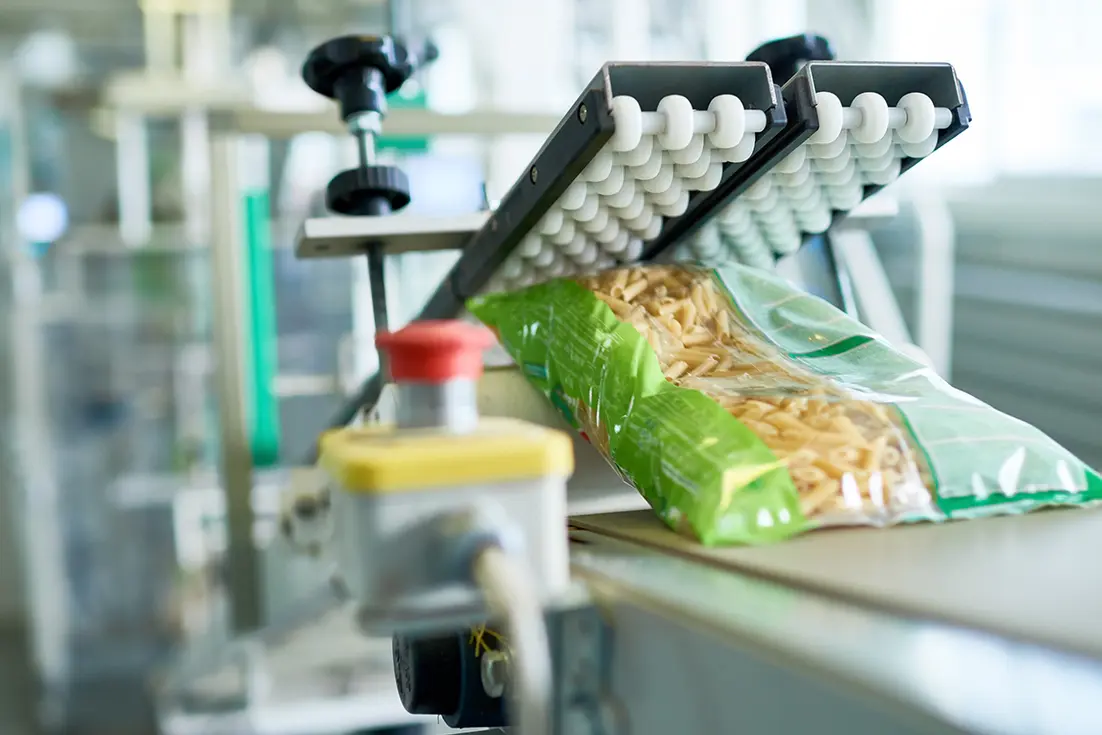
For higher-volume prepared-food lines, automated chamber systems may be appropriate. These systems can support a more continuous material flow and may integrate with upstream filling, pouch handling, coding, checkweighing, inspection, or downstream cartoning.
Automation should be justified by more than nominal throughput. Assess how it handles product changeovers, sanitation access, pouch size changes, rejects, and downtime. An automated system that is difficult to clean or slow to change over may not suit a diverse prepared-food program.
Pouch selection: vacuum bags are not all the same
A pouch must match the product, machine, handling conditions, and intended process. For cooked foods, the key distinction is often between a standard vacuum pouch and a cook-in vacuum pouch.
Standard vacuum pouches may be appropriate for packaging a product after it has been cooked and cooled under the processor’s established procedure. They are selected for sealability, barrier performance, puncture resistance, clarity, and handling needs.
Cook-in vacuum pouches are designed for products that will be subjected to a defined cooking or post-seal thermal process while enclosed. Their suitability depends on the pouch construction and the supplier’s documented application limits. Do not assume that any vacuum bag can be used for cook-in processing, hot water exposure, steam, or reheating.
When discussing pouch materials with a supplier, specify:
- Product type, including fat content, acidity, particulates, sharp edges, bones, and sauce components.
- Maximum intended processing and handling conditions.
- Whether the pouch will be cooked, pasteurized, chilled, frozen, reheated, or otherwise thermally exposed after sealing.
- Required barrier properties for the planned distribution method.
- Seal-bar type and machine configuration.
- Expected abuse during boxing, freezing, transport, and retail handling.
- Any labeling, traceability, or regulatory requirements relevant to the product category.
Seal quality matters more than a strong-looking seam
A seal can appear visually acceptable and still fail under handling or temperature exposure. Common causes include wrinkles, product residue, moisture in the seal area, incompatible film, uneven pressure, worn seal components, and incorrect machine settings.
Build seal inspection into normal operations. Operators should look for clean, continuous seals, consistent width and appearance, no trapped product at the seal area, and no visible channels that could allow leakage. A formal quality program should define the applicable testing and acceptance method for the product and packaging system.
Source: ficsi.in
Vacuum packaging food safety: what the machine cannot do
Vacuum packaging is a form of reduced-oxygen packaging. It reduces exposure to oxygen and can help limit oxidation-related quality loss, but it also changes the package environment. That change must be addressed by the broader food-safety plan.
For cooked foods, shelf life and safety depend on the complete process, not on vacuum level alone. Relevant factors can include product formulation, cooking, cooling, prevention of post-cook contamination, pouch integrity, cold-chain management, storage conditions, distribution, and intended consumer handling. Requirements vary by product, location, and business type.
Processors should verify applicable requirements with the relevant food-safety authority, regulatory agency, process authority, or qualified food-safety professional. This is particularly important when using vacuum packaging for refrigerated ready-to-eat foods, extended shelf-life products, cook-chill systems, cook-in-bag products, or any process where reduced oxygen is part of the control strategy.
Avoid unsupported assumptions such as:
- “A tighter vacuum means a safer product.”
- “A cook-in pouch automatically creates a shelf-stable food.”
- “Vacuum sealing replaces validated cooking or cooling controls.”
- “Any refrigerated vacuum-packed product can use the same storage life.”
- “A package that does not visibly leak is necessarily process-safe.”
Equipment and operating checklist
Use this checklist when comparing machines or preparing a specification:
- Product fit: Can the chamber, nozzle arrangement, and seal-bar layout accommodate the filled pouch without crowding or distortion?
- Liquid handling: Does the machine suit the amount of free liquid and the product’s tendency to move during evacuation?
- Pouch compatibility: Is the pouch approved by its supplier for the intended machine and thermal application?
- Seal access: Can operators keep pouch mouths clean and position them consistently?
- Output: Is capacity based on realistic loading, unloading, and changeover time rather than only machine cycle claims?
- Cleaning: Are the chamber, lid, seals, drain areas, and adjacent surfaces accessible for the site’s sanitation program?
- Utilities: Confirm electrical requirements, compressed air needs if applicable, ventilation considerations, and floor-space clearance.
- Maintenance: Ask about pump service, replacement wear parts, lid gaskets, seal components, diagnostics, and local technical support.
- Quality controls: Can the operation establish repeatable checks for seal integrity, coding, fill weight, and package appearance?
- Process validation: Have the food-safety and shelf-life requirements been reviewed separately from equipment selection?
Common selection mistakes
The first is buying by chamber size alone. A large chamber is useful only if the seal-bar arrangement, pouch dimensions, product staging, and operator workflow also fit.
The second is using a pouch selected only for cost. Lower-cost film may create more failures if it punctures, seals inconsistently, lacks required barrier performance, or is not suitable for the intended thermal exposure.
The third is specifying a machine before defining the process. A producer may purchase a capable commercial food vacuum sealer and later discover that its product requires different pouches, a revised filling method, better cooling controls, or a separate validated process.
The fourth is overlooking sanitation and service access. Prepared-food packaging areas often face frequent changeovers and product residue. Equipment that is difficult to access, inspect, or maintain can create avoidable downtime and inconsistent results.
Selecting the practical system
For low-to-moderate output of cooked foods with sauces or liquids, start by evaluating a chamber vacuum sealer with enough chamber height and seal-bar length for the actual filled pouch. For stable, higher-volume products, compare double-chamber or automated chamber systems based on labor flow, changeover demands, and sanitation access. Consider external-nozzle equipment primarily where the product is relatively dry, bag size drives the choice, or the process has been proven to control liquid movement and seal cleanliness.
Finally, treat machine selection, pouch selection, and food-safety process design as three connected decisions. A reliable vacuum package requires all three to work together: equipment that handles the product, film that withstands the intended process, and controls that are appropriate for the food being produced.
References
- Best Vacuum Packaging Machine - Commercial Equipment & Supplies. (n.d.). https://promarksvac.com
- Commercial Kitchen Food Chamber Fresh Packing Sealer …. (n.d.). https://www.amazon.com/Commercial-Kitchen-Chamber-Packing-Automatic/dp/B0FDQS3HFK
- Continuous Vacuum Sealing Machines: The Complete Guide for Food & Meat Processors. (n.d.). https://promarksvac.com/blog/continuous-vacuum-sealing-machines-complete-guide
- Automatic Vacuum Packaging Machine Food …. (n.d.). https://www.pinterest.com/pin/264093965644831216
- Food Packaging Safety in a Vacuum | FoodHandler. (n.d.). https://foodhandler.com/food-packaging-safety-vacuum
- Essential Equipment for Effective Food Packaging | Maxima.com. (n.d.). https://maxima.com/en/blogs/maxima/essential-equipment-needed-for-effective-food-packaging
- Vacuum Chamber Packaging Machines | Reiser Food. (n.d.). https://www.reiser.com/product_category/vacuum-chamber-packaging
- Vacuum-sealed food: What are the food safety concerns?. (n.d.). https://www.canr.msu.edu/news/vacuum-sealed-food-what-are-the-food-safety-concerns