An environmental monitoring positive result corrective action should be treated as a controlled food-safety event, not simply as a failed swab that needs another swab. The immediate objective is to contain the potential risk, determine the significance of the location and organism, remove contamination or harborage conditions, verify the response through a documented resampling plan, and decide whether affected equipment, areas, or product can be released under the facility’s written procedures.
The exact response depends on the organism or indicator, the sample zone, product exposure, the laboratory result status, the plant’s hazard analysis, and applicable regulatory requirements. A Zone 1 food-contact positive generally requires a more urgent and broader assessment than a result from a remote non-food-contact area. Teams should therefore follow a preapproved environmental monitoring program (EMP), product-disposition procedure, and escalation plan rather than relying on an improvised response.
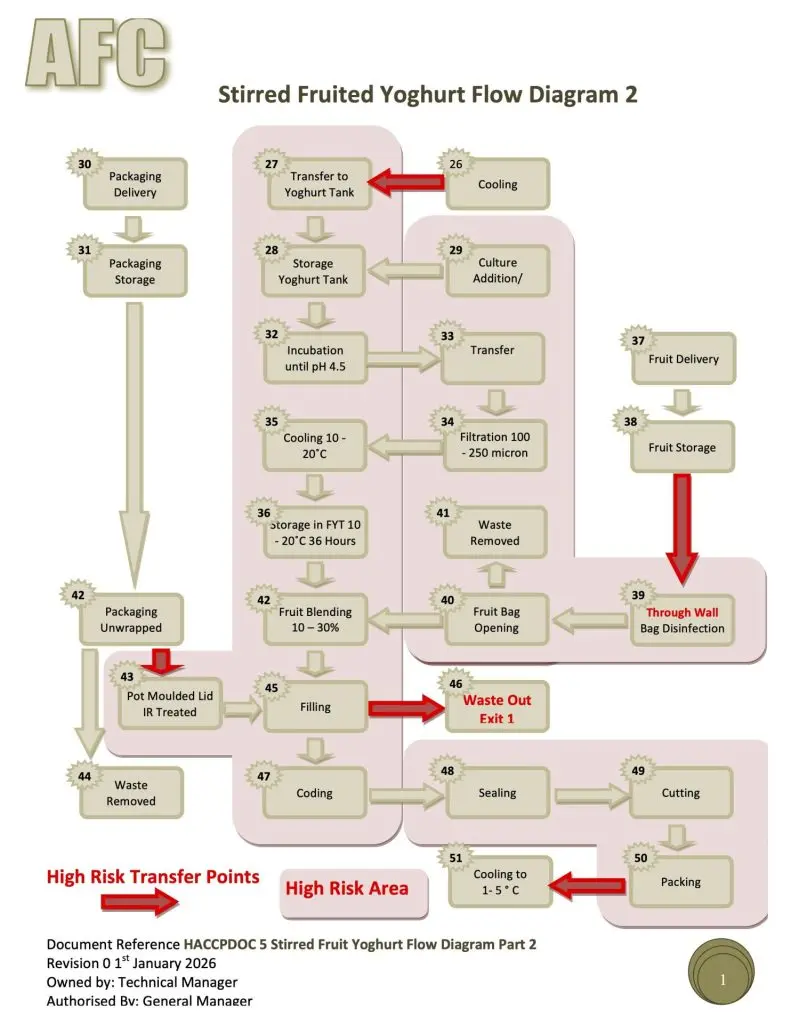
The overall response flow
A disciplined response usually follows this sequence:
- Receive and verify the laboratory result.
- Notify the responsible food-safety, sanitation, operations, maintenance, and quality personnel.
- Contain the implicated area and evaluate potentially affected product.
- Investigate the positive location and likely contamination pathways.
- Perform enhanced cleaning, inspection, repair, or equipment teardown as warranted.
- Collect follow-up or vector samples using a written food facility resampling plan.
- Review results, trends, and evidence of control.
- Document disposition, preventive actions, verification, and formal closure.
Source: tcisys
The response should be fast enough to prevent further spread, but it also needs to be evidence-based. Cleaning before documenting the initial location, surrounding conditions, recent events, and equipment status can erase useful clues. Conversely, delaying sanitation while waiting for a lengthy investigation can allow a problem to persist. A practical procedure assigns responsibilities for both activities and defines the order of work.
1. Verify the result and activate the response team
Start by confirming exactly what the result means. Record the organism or indicator, analytical method, result status, sampling date and time, sample collector, site identification, line or room, zone classification, production status, and laboratory report reference.
A presumptive result, confirmed pathogen result, elevated indicator result, and recurring low-level indicator trend may each require different actions. The EMP should state what triggers immediate containment before final confirmation and what additional decisions follow a confirmed result. Do not assume that every laboratory result carries the same product or regulatory implication.
The response leader should promptly notify the functions that can control the situation. This commonly includes:
- Food safety or quality assurance
- Sanitation leadership
- Production supervision
- Maintenance or engineering
- Warehouse and inventory control when product status may be affected
- Corporate technical, regulatory, or legal support when required by the company’s escalation procedure
Assign one person to manage the corrective-action record. That person should maintain the timeline, ensure tasks have owners and due dates, and prevent the investigation from becoming a set of disconnected emails or verbal updates.
2. Contain the area and assess product exposure
Containment is about preventing possible spread while facts are gathered. Depending on the site and risk assessment, the plant may restrict access, stop or segregate activity on the implicated line, prevent equipment movement to other areas, and control movement of tools, sanitation equipment, footwear, carts, and personnel.
Product assessment should begin immediately, particularly when the result is from a food-contact surface or an area with a credible route to exposed ready-to-eat product. The team should identify production lots, time periods, rework, ingredients, packaging materials, and downstream handling associated with the location. Product should be placed under the plant’s defined hold or disposition controls when required by the hazard analysis, customer requirements, regulatory framework, or internal policy.
This is not a one-size-fits-all release decision. Whether product can move, must remain on hold, requires further evaluation, or needs another disposition is a site-specific decision that should be made by authorized personnel using the plant’s written procedures and applicable requirements. Environmental results alone should not be interpreted outside their sampling context.
3. Investigate the positive site before treating it as an isolated event
An environmental monitoring investigation should ask two related questions:
- Where could the organism or indicator have originated?
- What route allowed it to reach the sampled location?
Begin with the exact sample point. Review the site map, zone designation, photographs if available, and the collector’s notes. Determine whether the site is a direct food-contact surface, adjacent equipment framework, control panel, floor, drain, overhead structure, utensil, wheel, employee-touch surface, or another location.
Then inspect the area in expanding rings. A positive beneath a conveyor may point to a different contamination pathway than a positive on a framework member above an exposed product zone. Look at nearby surfaces, both high and low, as well as transfer points, hollow or enclosed components, hard-to-reach interfaces, seals, rollers, belts, bearings, guards, drains, niches, and areas disturbed during maintenance.
Useful investigation records include:
- Recent sanitation observations and pre-operational findings
- Previous EMP results from the same location and nearby sites
- Equipment repairs, breakdowns, lubrication, adjustments, or temporary fixes
- Construction, roof leaks, condensation, flooding, drain backups, or structural damage
- Traffic changes involving people, forklifts, carts, waste, tools, or raw materials
- Changes in suppliers, ingredients, product formulation, shift staffing, or production schedules
- Cleaning changes, including access limitations, tool availability, or missed disassembly steps
A recurring result at the same site suggests that cleaning may not reach a harborage point, that a repaired component has created a cleanability issue, or that the sampling site is consistently exposed to a broader source. A single negative follow-up result does not by itself explain why the positive occurred.
4. Use vector sampling to define the extent of the event
Follow-up sampling should be purposeful. It is often described as vector or investigative sampling because it expands outward from the original site to determine whether contamination is localized, spreading, or associated with a route through the environment.
The written food facility resampling plan should define how sites are selected, who approves deviations, when samples are collected, and how results affect operations and product decisions. Follow-up sites may include the original location, immediately adjacent surfaces, nearby food-contact and non-food-contact sites where appropriate, employee-touch points, product transfer paths, equipment interiors, and likely upstream or downstream routes.
Site selection should reflect the facility’s zone map and process flow rather than a fixed geometric pattern applied without thought. For example, a positive near a filler may require attention to adjacent product-contact components, framework, floor interfaces, access panels, and cleaning tools. A positive in a drain may call for examination of splash potential, traffic routes, drain maintenance, and nearby equipment bases.
Sampling timing also matters. Samples collected before cleaning may help establish the extent of contamination. Samples collected after enhanced sanitation are used to verify whether corrective actions worked. Plants should define these purposes clearly so the records are interpretable.
5. Perform enhanced cleaning and correct the underlying condition
Enhanced cleaning after an environmental positive should go beyond repeating the normal sanitation task without examination. The sanitation and maintenance teams should first identify what must be opened, removed, repaired, or accessed to clean the relevant surfaces effectively.
Actions may include deeper equipment disassembly, removal of accumulated residues, cleaning of structural niches, replacement of damaged parts, correction of drainage or condensation conditions, repair of seals and welds, and revision of access methods. Any chemical selection, concentration, contact time, rinsing practice, or sanitation validation requirement should follow the facility’s approved sanitation procedures, chemical supplier instructions, equipment guidance, and applicable requirements. Do not substitute generic online recommendations for validated plant instructions.
Maintenance involvement is essential when the issue is mechanical or hygienic-design related. A cracked belt, worn gasket, corroded surface, inaccessible hollow member, damaged insulation, poor drainage point, or difficult-to-clean framework cannot be reliably solved by asking sanitation to clean harder.
Before restart, the responsible team should inspect the completed work. The review should confirm that equipment was reassembled correctly, tools and temporary materials were removed, affected surfaces are accessible for routine sanitation, and any sanitation verification or pre-operational checks required by the plant were completed.
6. Define what acceptable resampling evidence looks like
A corrective action is not complete because the area has been cleaned. It is complete when the facility has evidence that the immediate issue was addressed and that the recurrence risk is controlled to the level defined in its EMP.
The number, location, frequency, and acceptance criteria for follow-up samples should be established in the EMP or corrective-action procedure. Some programs intensify sampling after a positive and require repeated acceptable results before returning to normal monitoring. The appropriate approach depends on organism risk, zone, product exposure, historical results, and the facility’s documented risk assessment.
Review follow-up results together, not one at a time. Ask whether the original site cleared, whether adjacent sites remain negative, whether the same area has a history of findings, and whether the corrective action addressed the suspected route. If follow-up samples remain unacceptable, escalate the investigation rather than repeatedly applying the same cleaning response.
7. Document the event so it can be audited and learned from
A complete pathogen positive corrective action record should allow another qualified person to understand what happened, what decisions were made, and why the event was closed. At minimum, include:
| Record element | What it should show |
|---|---|
| Trigger | Laboratory result, site, organism or indicator, date, and result status |
| Risk assessment | Zone, product exposure, production context, and hold or release evaluation |
| Containment | Restrictions, product controls, notifications, and timing |
| Investigation | Inspection findings, likely source or route, relevant history, and contributing events |
| Corrections | Cleaning, repair, teardown, replacement, or procedural changes completed |
| Resampling | Locations, timing, method references, results, and interpretation |
| Verification | Evidence that assigned actions were completed and effective |
| Prevention | Changes to sanitation, maintenance, traffic control, training, sampling design, or frequency |
| Closure | Authorized approval, closure date, and rationale |
Avoid recording only “recleaned and reswabbed.” That statement does not demonstrate the extent of the issue, whether the equipment was inspected, why the response was considered adequate, or how recurrence will be prevented.
8. Close the corrective action only after effectiveness is reviewed
Closure should be an authorized decision, not an administrative step taken when laboratory paperwork arrives. The food-safety team should verify that all required follow-up results are acceptable under the plant’s plan, product disposition is documented, repairs or procedural changes are complete, and the root cause has been addressed as far as the evidence allows.
Not every event produces a single proven root cause. In those cases, document the most credible contributing factors, explain the limits of the investigation, and identify preventive measures that reduce the plausible routes of recurrence. This is more useful than declaring an unsupported cause simply to close a record.
Finally, trend the event. Review whether similar positives occur on the same equipment, during the same season, after maintenance, on a particular shift, or in one environmental zone. Trend review can show that a series of apparently isolated results is actually a sanitation, facility-design, traffic, or maintenance-control problem.
Common mistakes that weaken an EMP response
Several patterns routinely reduce the value of corrective actions:
- Treating an environmental positive as a laboratory issue rather than a process-control signal.
- Cleaning the sampled point but not examining nearby surfaces and contamination pathways.
- Resampling without a documented purpose or site-selection rationale.
- Releasing product without completing the site-specific assessment required by the plant’s procedures.
- Leaving maintenance out of a problem caused by poor access, damaged components, drainage, or hygienic design.
- Closing the record after negative results without verifying that corrective and preventive actions were implemented.
- Failing to trend repeat findings across time, shifts, lines, or locations.
A practical corrective-action checklist
Before closing an environmental monitoring positive result corrective action, confirm that the team can answer yes to the following questions:
- Was the result correctly identified, recorded, and escalated?
- Was the site classified correctly, and was product exposure assessed?
- Were area and product controls applied according to the facility’s procedure?
- Was the original site and surrounding environment investigated before and during corrective work?
- Did sanitation and maintenance address both contamination and likely harborage conditions?
- Did the resampling plan include the original site and risk-based surrounding locations?
- Were follow-up results reviewed as a set against the EMP’s acceptance criteria?
- Were product disposition, verification, preventive actions, and closure approvals documented?
- Was the event added to trend review and used to improve the food plant environmental monitoring program?
A strong EMP is not defined by how many swabs a plant collects. It is defined by whether positive findings trigger timely containment, thoughtful investigation, effective sanitation and repair, meaningful verification, and documented decisions that improve control of the processing environment.
References
- Environmental Monitoring and Its Role in Food Safety. (n.d.). https://www.alchemysystems.com/blog/environmental-monitoring-food-safety
- Environmental Monitoring Program: An Early Warning System for …. (n.d.). https://www.qualityassurancemag.com/article/aib1213-environmental-monitoring-program
- [PDF] Environmental Monitoring and FSMA Compliance - Safe Food Alliance. (n.d.). https://safefoodalliance.com/wp-content/uploads/sfc2017-environmental-monitoring.pdf
- 8 Corrective Actions for Your Environmental Monitoring Program. (n.d.). https://www.neogen.com/en/usac/neocenter/blog/8-corrective-actions-for-your-emp
- Common Questions When Developing an Environmental Monitoring Program for a Food Facility | VCE Publications | Virginia Tech. (n.d.). https://pubs.ext.vt.edu/FST/fst-445/fst-445.html
- Environmental Monitoring Program (EMP) Guide for Food Safety - FSNS. (n.d.). https://fsns.com/environmental-monitoring-programs-emp-for-food-safety-your-complete-guide
- 6 Effective Corrective Actions That Should Be Included In Your Environmental Monitoring Program. (n.d.). https://smartfoodsafe.com/corrective-actions-in-environmental-monitoring-program
- Corrective Action Plans for Monitoring | Zosi Learning. (n.d.). https://www.zosilearning.com/blog/corrective-action-plans-step-up-environmental-monitoring