A visually clean machine is not, by itself, evidence that an allergen changeover is controlled. Food allergen changeover cleaning validation is the documented process of showing that a defined cleaning method removes allergen residue from a specific line, under normal operating conditions, well enough to support the next intended product run.
The practical approach is to reduce the cleaning challenge before sanitation starts, clean the real residue pathways, inspect the equipment in its opened condition, use appropriate analytical evidence, and document what happened. Validation establishes that the method can work; routine verification confirms that trained teams continue to perform it as intended.
Start with the production schedule and allergen matrix
Cleaning is only one control in a broader food manufacturing allergen cross contact control system. The lowest-risk changeover is often the one that does not need to occur in the middle of a shift.
Maintain an allergen matrix that identifies the allergens associated with every formula, rework stream, work-in-process container, packaging material, and line. Production planning can then sequence compatible products together where appropriate and identify transitions that need a validated allergen clean.
A useful changeover decision should consider more than the ingredient statement. Review:
- The allergen or allergens in the outgoing and incoming products.
- The amount and form of residue, such as powder, paste, particulate inclusions, oil, or coating.
- Whether the next product is intended to be free of the relevant allergen.
- Shared equipment, utensils, transfer hoses, dust collection, conveyors, fillers, and packaging stations.
- Rework practices and temporary storage between processing steps.
- Whether the cleaning method is dry, wet, or a controlled combination of both.
The highest-risk locations are not always on the main process machine. A shared scoop, mobile vacuum, ingredient tote, floor-level transfer point, guard ledge, or packaging contact surface can defeat an otherwise well-cleaned line.
Define the changeover scope before cleaning begins
An allergen changeover procedure should say exactly what is included. Avoid instructions that simply state “clean the line.” They leave too much interpretation to the sanitation crew and make validation difficult.
Map the route taken by the outgoing allergen-containing product from ingredient receiving through processing, packaging, and rework. Then identify all product-contact surfaces and credible non-product-contact transfer points. Include areas where material can accumulate and later dislodge.
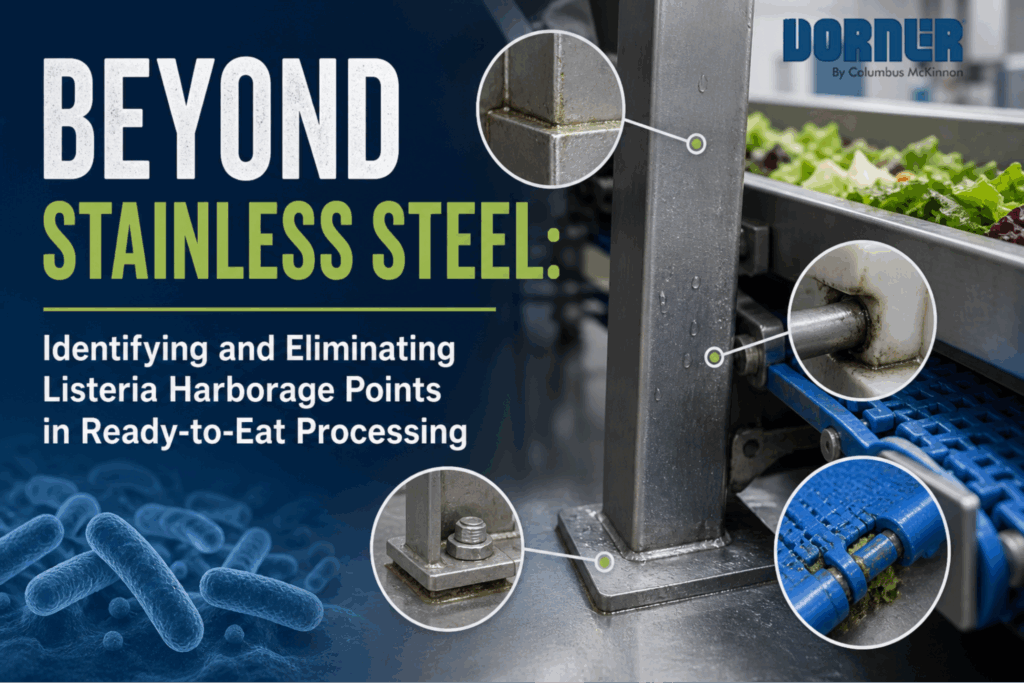
Typical hard-to-clean harborage points
Equipment design and product behavior determine the priority points, but common examples include:
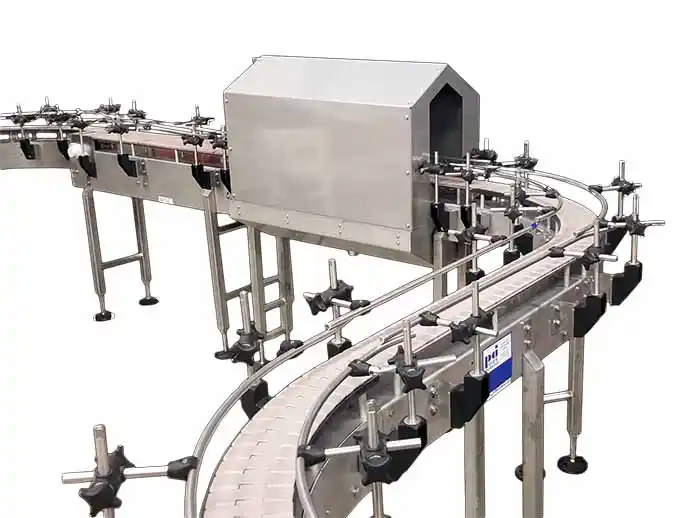
- Conveyor belt joints, underside supports, rollers, guides, and frame ledges.
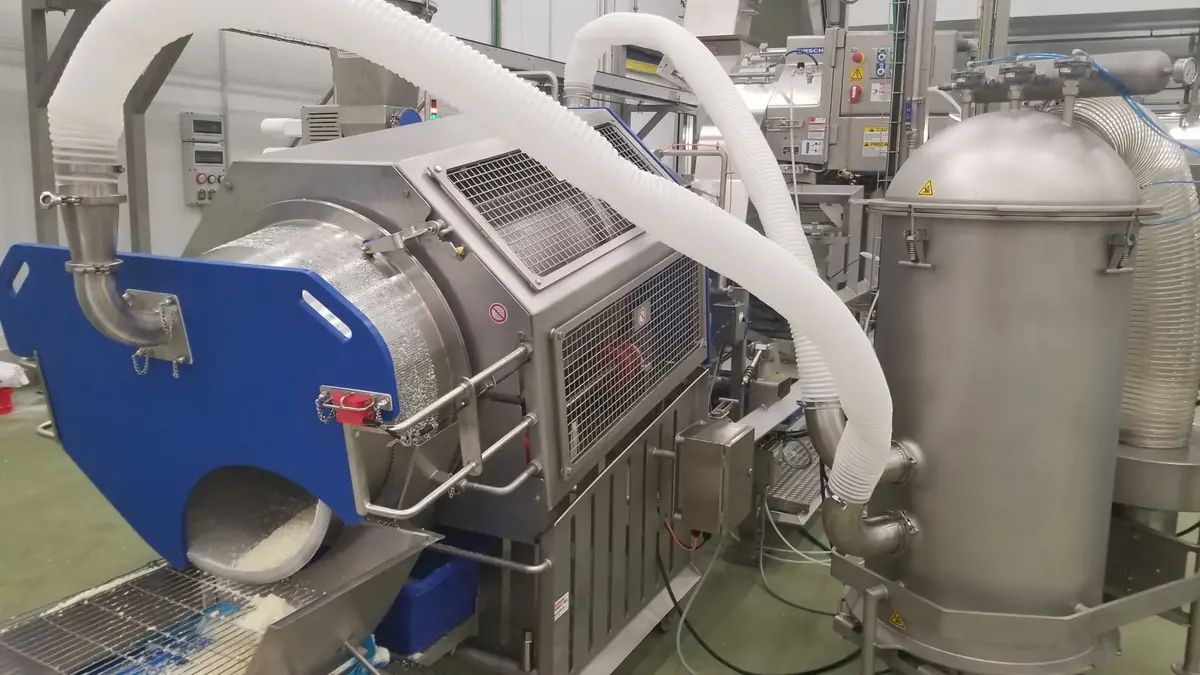
- Screws, augers, sifters, screens, feeders, and enclosed transfer conveyors.
- Hopper seams, dead ends, gaskets, clamps, valves, and flexible connectors.
- Depositor heads, nozzles, manifolds, filler components, and seals.
- Mixer shafts, paddles, discharge doors, and access covers.
- Dust collection ducts, extraction hoods, vacuum hoses, and filter-change areas.
- Checkweighers, metal detectors, guides, bins, and equipment immediately downstream of the process.
- Tools, utensils, carts, containers, and maintenance items that travel between lines.
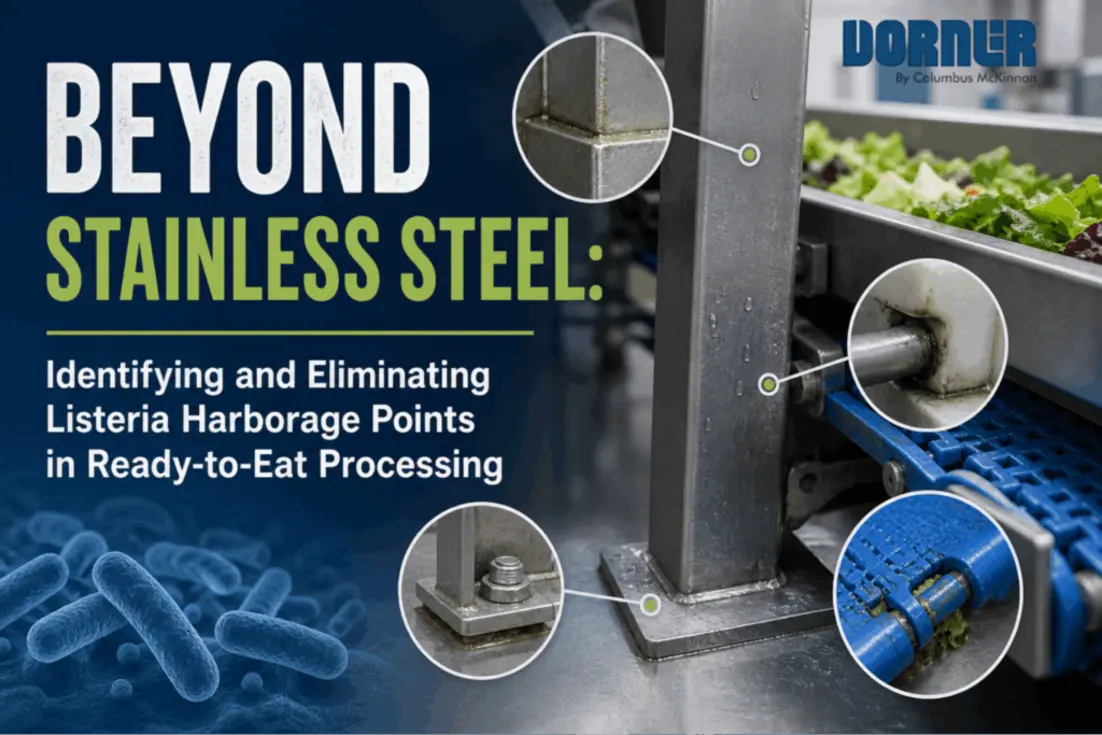
Source: dornerconveyors
For each point, specify whether it must be disassembled, how it is cleaned, how it is reassembled, and who confirms it is ready. If a part cannot be accessed without shortcuts, that is an equipment-design issue to manage rather than a reason to omit it from the procedure.
Choose dry or wet cleaning based on the process
The cleaning approach must fit the product, equipment, and facility controls. Dry processing areas may use controlled dry-cleaning methods to avoid introducing moisture or creating conditions that are unsuitable for the process. Wet-cleaning methods may be necessary where residue adheres strongly or where the equipment and sanitation program are designed for wet cleaning.
Neither method should be assumed effective merely because it is routine.
With dry cleaning, pay particular attention to controlled removal and containment. Blowing or spreading powder can move allergen residue into adjacent zones, equipment interiors, and overhead structures. The procedure should define approved collection tools, cleaning direction, waste handling, and how equipment is protected before restart.
With wet cleaning, the documented method should address the full sequence used at the plant, including any removal of gross soil, detergent application, mechanical action, rinsing where applicable, drying, and reassembly. Chemical selection, concentration, water quality, contact time, and other operating parameters must be established for the site and supported by the chemical supplier, equipment manufacturer, sanitation program, and applicable food-safety requirements. Do not borrow settings from another line without demonstrating that they work on the equipment and residue in question.
Build validation around the actual worst-case changeover
Validation is not a single passing swab. It is evidence that a defined procedure is capable of controlling a defined allergen risk under representative, preferably challenging, production conditions.
Start by selecting a meaningful scenario. In many facilities, this is a transition from a product with a substantial load of a particular allergen to a product that does not contain that allergen, on a shared line with difficult-to-access features. The selected case should reflect normal staffing, normal tools, normal production residue, and the intended cleaning method.
A practical validation plan includes the following steps.
1. Conduct and document a risk assessment
Describe the allergen, products, line configuration, residue characteristics, cleaning method, likely transfer routes, and intended consumer protection outcome. Identify critical sampling locations based on where residue is likely to remain, not simply where a swab is convenient to take.
2. Write the cleaning method in sufficient detail
The written method should define the required preparation, lockout and safety controls under the site program, disassembly points, tools, cleaning sequence, inspection points, reassembly steps, and line-release authority. It should also identify actions that are prohibited because they could spread residue or bypass cleaning.
3. Train the people who perform and inspect the work
Validation of a procedure that only succeeds when one highly experienced employee performs it is weak operational control. Sanitation, production, maintenance, and quality teams need clear roles. Production operators should understand the hold condition: the incoming product does not start until the required release is complete.
4. Execute the method and inspect before testing
Visual inspection remains important because visible residues, trapped material, or incomplete reassembly are direct signs that cleaning was not completed. Inspect with guards and covers opened where the procedure requires access. A visual check should not be treated as a substitute for allergen-specific evidence when validation requires testing.
5. Use an appropriate testing strategy
Allergen swab testing food plant programs commonly use surface swabs at selected equipment locations. The analytical method should be suitable for the specific allergen, surface type, and expected residue. Some facilities also test rinse samples, where relevant, or evaluate the first product after changeover as part of a planned validation design.
ATP and general protein tests can be useful sanitation verification tools, but they do not necessarily demonstrate the absence of a specific allergen. Their result should not be interpreted as allergen-specific clearance unless the site has scientifically justified that use for the defined application. Conversely, an allergen test has limitations: sample recovery varies by surface and residue, kits have method-specific detection capabilities, and a negative result applies only to the sampled place and conditions.
Work with qualified laboratory, test-kit, quality, and regulatory resources to establish sampling methods, acceptance criteria, sample handling, and interpretation. The FDA has described allergen cross-contact as a chemical hazard and provides preventive-controls examples that include documented cleaning, visual inspection, and verification activities. Facilities should confirm the regulatory and customer requirements that apply to their products and markets.
6. Review results and establish the validated standard
Review the entire run, not only the final test result. Confirm that the team followed the written method, equipment was in the intended condition, samples came from the planned locations, and records are complete. If the method is effective, finalize the procedure, sampling map, release steps, training requirements, and routine verification schedule.
Validation versus verification: keep the terms separate
These activities support each other but answer different questions.
| Activity | Core question | Typical timing |
|---|---|---|
| Validation | Can this defined cleaning method effectively control the identified allergen risk on this equipment? | Before routine reliance on the method and after significant changes |
| Verification | Was the validated method performed correctly and is the system continuing to operate as intended? | During routine changeovers and according to the site plan |
| Monitoring | Were required cleaning steps and process controls completed at the time of the activity? | During the changeover |
Routine verification may include checklist review, pre-operational inspection, targeted ATP or protein testing where justified, allergen-specific swabs at planned intervals, record review, and supervisor or quality sign-off. The frequency and methods should be risk-based. A complex line, difficult residue, history of failures, or change in process conditions may justify more intensive verification.
What to record for an audit-ready changeover
A reliable record makes the event reconstructable. It should show both compliance with the procedure and the response to deviations.
At minimum, retain the product transition, allergen profile, line and equipment scope, date and shift, cleaning personnel, cleaning method, disassembly confirmation, visual inspection result, test method and test-kit lot information where used, sampling locations, results, release decision, and reviewer signature or electronic approval.
Also retain corrective-action records when something goes wrong. A passing final swab does not erase a missed cleaning step; the record should show how the deviation was assessed and resolved.
When cleaning fails or a result is unclear
Do not release the line based on assumption. Place the affected equipment and potentially affected product under the site’s hold process while qualified personnel assess the result.
The immediate response commonly includes re-cleaning the identified area, expanding inspection to connected equipment, checking whether the written method was followed, and repeating testing according to the established plan. The deeper investigation should ask why residue remained. Common causes include inadequate disassembly, inaccessible design features, worn seals or damaged belts, incorrect tools, insufficient cleaning time in the work schedule, poor residue removal before wet cleaning, uncontrolled dry-cleaning practices, and incomplete training.
If failures recur, revise the risk assessment and procedure rather than repeatedly asking crews to “clean better.” The solution may require a changed schedule, improved access, redesigned component, dedicated utensils, added containment, modified cleaning chemistry, or a different sampling plan. Changes that affect equipment, product formulation, cleaning method, or allergen risk should trigger review of the validation status.
A concise allergen changeover release checklist
Before starting the incoming product, confirm that:
- The correct changeover procedure was selected for the product transition.
- Product, rework, packaging, and tools from the previous run have been removed or controlled.
- Required equipment was opened, cleaned, inspected, and correctly reassembled.
- Hard-to-clean points received the specified attention.
- Required visual checks and verification tests were completed and reviewed.
- Any deviations were documented, investigated as required, and resolved before release.
- The person with release authority has approved startup.
The goal is not to create more paperwork. It is to convert a visually plausible cleaning task into a controlled, repeatable process supported by evidence. That is the central purpose of food allergen changeover cleaning validation.
References
- Allergen Changeover and Cleaning Verification Checklist for Food Plants. (n.d.). https://oxmaint.com/industries/food-manufacturing/allergen-changeover-cleaning-verification-checklist-food
- Allergen Cleaning Validation & Verification | PDF | Verification And Validation | Quality. (n.d.). https://www.scribd.com/document/165303519/Allergen-Cleaning-Validation-Verification
- Allergen Control Program Guide for Food Manufacturers. (n.d.). https://www.alleratech.com/blog/allergen-control-program
- Allergen Cleaning Validation. (n.d.). https://www.qualityassurancemag.com/article/aib0811-allergen-cleaning-life-threatening-contaminant-risk
- Allergen Validation: Analytical Methods and Scientific Support for a Visually Clean Standard. (n.d.). https://www.food-safety.com/articles/print/3812-allergen-validation-analytical-methods-and-scientific-support-for-a-visually-clean-standard
- [PDF] Draft Guidance for Industry - Chapter 11: Food Allergen Progr - FDA. (n.d.). https://www.fda.gov/media/172318/download
- Allergen Changeover Validation for Consumer Packaged Goods. (n.d.). https://sgsystemsglobal.com/glossary/allergen-changeover-validation-consumer-products
- Hazard Analysis and Risk-Based Preventive Controls for Human Food:. (n.d.). https://www.fda.gov/media/100002/download