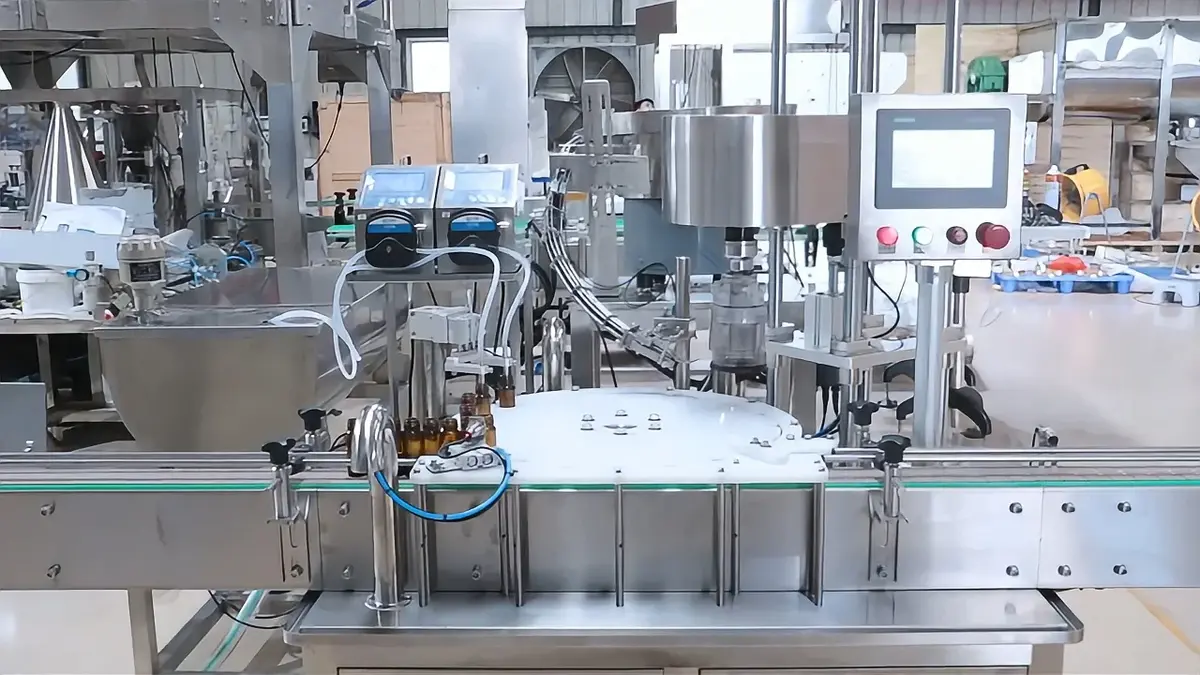
A useful food filling automation assessment starts before a supplier is asked for a machine recommendation. Document what operators actually do, how long each task takes, where product or packages wait, what changes between runs, and what conditions make the process harder. The goal is not to prove that every manual activity should be automated. It is to give suppliers or integrators enough evidence to define a workable scope.
The strongest pre-automation brief combines a simple process map, representative production observations, product and package information, photos or video, and a clear statement of the production problem. This work helps distinguish a filling-machine need from a broader issue involving feeding, container handling, capping, coding, inspection, cleaning, or staffing.
Start with the production question
Before documenting equipment, define the reason for considering automation. A line may need more output, more consistent fills, less repetitive manual work, lower giveaway, fewer handling steps, better traceability, or a more manageable staffing model. These are different problems and may require different solutions.
Write the objective in operational terms. For example:
- Increase the number of acceptable finished packs produced during a normal run.
- Reduce the queue of empty containers before filling.
- Stabilize fill weight or fill level within the site’s approved specification.
- Reduce manual handling around a hot, messy, heavy, or repetitive task.
- Make frequent product or package changeovers more predictable.
- Remove the need for operators to perform a particular transfer, dosing, capping, or inspection step.
Avoid beginning with a fixed equipment answer such as “we need a fully automatic filler.” A semi-automatic filler, a better product feed arrangement, container indexing, a capper, or a short integrated section of conveyor may address the actual constraint with less disruption. Flexibility, available runtime, and staffing availability are all relevant when assessing how far automation should go.
Map the existing manual filling process
Create a plain-language map of the current operation from product arrival through finished-pack handoff. Walk the process during a normal production run rather than relying only on a written procedure. The written method may not show routine adjustments, workarounds, waiting time, or rework.
A simple table is often enough.
| Process stage | What to record | Why it matters |
|---|---|---|
| Product supply | Where product comes from, how it is transferred, batch size, holding conditions, interruptions | Determines whether the filler has a reliable product feed |
| Container preparation | How containers are supplied, oriented, checked, or cleaned | Identifies manual handling and container-feed needs |
| Filling | Dosing method, operator actions, fill checks, spills, drips, foam, product loss | Defines the core filling requirement |
| Closure | Cap, lid, seal, or other closing method; torque or seal checks where applicable | Filling automation may expose a downstream closure bottleneck |
| Coding and labeling | When and where codes and labels are applied and verified | Shows whether the line needs coordinated controls or inspection |
| Case packing or handoff | How finished packs are accumulated, packed, palletized, or moved | Reveals whether output can leave the filler at the required rate |
| Cleaning and changeover | What is disassembled, washed, adjusted, or replaced between runs | Affects uptime, hygienic design, and tooling needs |
For each step, note the operator role. Is the person continuously working, waiting for the next container, checking fills, correcting container position, replenishing materials, clearing jams, or performing quality checks? An automated machine can only improve overall output if upstream and downstream work can support it.
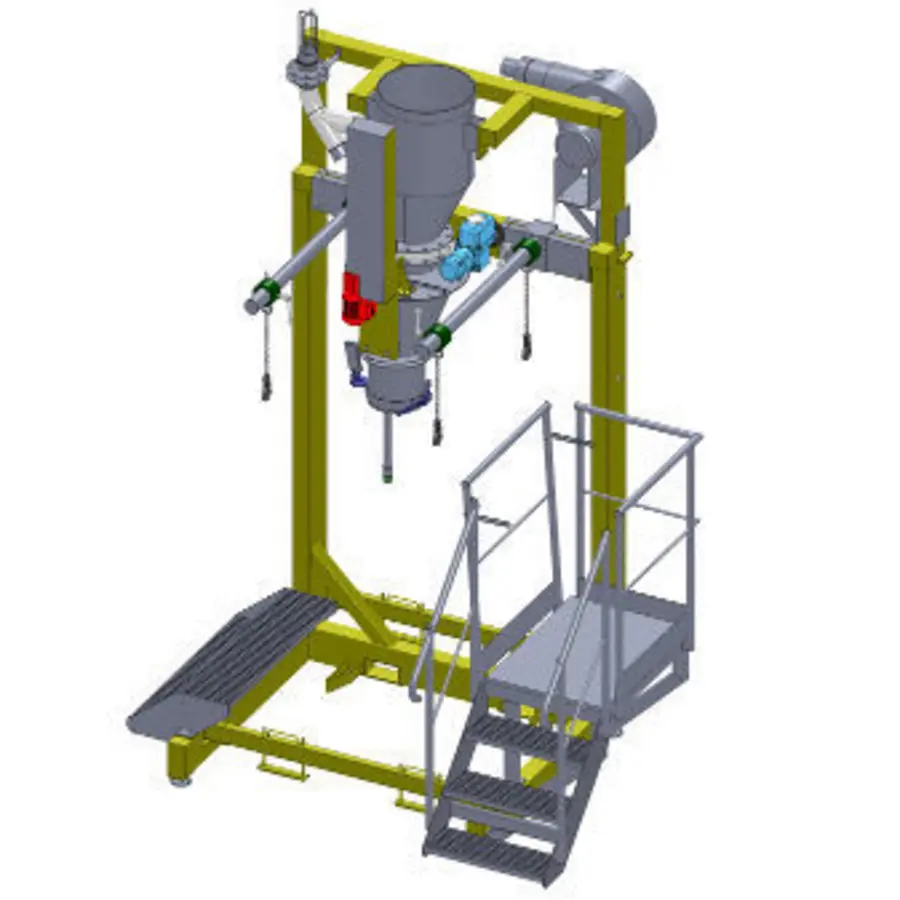
Source: img.directindustry
Record normal operation and difficult operation
Do not document only the best-looking run. Capture the conditions that cause real production losses:
- The first packs after startup.
- Product nearing the end of a batch or tote.
- Foaming, stringing, dripping, splashing, or particulate settling.
- A container that does not stand, index, or seal consistently.
- A label roll, cap supply, or container supply replenishment event.
- A typical product or pack changeover.
- Cleanup after a spill or rejected pack.
- A stoppage and the method used to restart.
These observations establish design constraints. For example, an apparently simple filling task may be limited by product temperature changes, a narrow container opening, inconsistent incoming containers, or the time needed to manually replenish closures.
Capture process video that a supplier can use
A filling line process video is one of the most useful parts of an inquiry when it is recorded with purpose. It should show the work flow, not just a close-up of product entering a container.
Record short clips from several angles during representative production. Start with a wide view that shows product supply, the manual fill position, operators, container staging, and the route to the next process. Then capture closer views of filling, container handling, closure application, and any recurring issue.
For each clip, identify the product, package format, approximate point in the run, and what the viewer should notice. A brief note such as “operator pauses to level product before lidding” is more useful than an unlabeled video.
Good video should show:
- How product reaches the filling point.
- The full container path before and after filling.
- The operator’s hands and repeated actions without obscuring the equipment.
- Fill behavior at the nozzle or dosing point.
- How often an operator intervenes.
- Any accumulation, waiting, or blocked conveyor section.
- Change parts, adjustments, or hand tools used during a format change.
Do not record proprietary recipes, employee personal information, customer labels, passwords, control screens, or restricted areas unless your organization approves sharing them. If the material is confidential, establish how suppliers will receive and handle it before distribution.
Define the product and filling requirements
The filler cannot be selected from target speed alone. Product behavior usually determines the viable filling principle and the level of hygiene and cleaning attention required.
Prepare a product sheet for every product family that may run on the line. Include:
- Product name and whether it is liquid, paste, sauce, suspension, particulate-containing product, powder, or another format.
- Expected variation in viscosity or flow behavior across normal production conditions.
- Whether the product contains pieces, fibers, seeds, particulates, or inclusions that could affect valves, nozzles, pumps, or accuracy.
- Tendency to foam, settle, separate, string, drip, or stick.
- Product temperature at filling and any conditions that must be maintained or verified by the producer’s process authority.
- Sensitivity to shear, agitation, air entrainment, or extended holding.
- Current fill target, permitted fill specification, and method used to verify fills.
- Product-contact material requirements, cleaning method, and allergen-changeover considerations.
A supplier may consider gravity, pump-based, piston, auger, net-weight, or other dosing approaches depending on the product and package. The important early task is to describe the product honestly, including its difficult behavior. Ask prospective suppliers to validate the proposed method with suitable product and package samples where possible.
Document packages, closures, and format changes
Package details shape the mechanical scope around the filler. Gather representative samples of empty and finished packs, as well as caps, lids, seals, labels, and any secondary packaging that interacts with the line.
Your brief should identify:
- Container material, dimensions, opening or neck style, base stability, and usable fill volume.
- All pack formats expected now and those reasonably expected in the near term.
- Closure style and how it is currently applied or verified.
- Whether the package requires orientation before filling, capping, labeling, or coding.
- Appearance requirements, including cleanliness around the container opening and acceptable product residue.
- Label position, date-code location, and inspection expectations.
- Typical run length for each format and the required changeover frequency.
A line that runs one stable bottle may suit a different approach than one that changes among jars, tubs, pouches, and multiple fill sizes. Frequent changeovers may justify attention to tool-less adjustments, recipe control, change-part storage, and setup verification—not merely maximum output.
Measure flow, not just filler speed
The target rate should describe the complete packaging process. A filling machine’s nominal rate does not guarantee the same number of acceptable finished packs if container feeding, closing, labeling, coding, or packing cannot keep up.
Track a representative run and record:
- Start and finish times for the run.
- Planned breaks, cleaning, and changeovers.
- Output accepted by the next process or packed as finished goods.
- Rejects, rework, giveaway, spills, and damaged packages.
- Stoppages and their causes.
- Time spent waiting for product, containers, closures, labels, or operator support.
- Number of people assigned at each point.
You do not need a sophisticated manufacturing-execution system to start. A manual observation sheet can reveal the constraint. Look for the location where work repeatedly accumulates or where an upstream step waits because a downstream step is blocked.
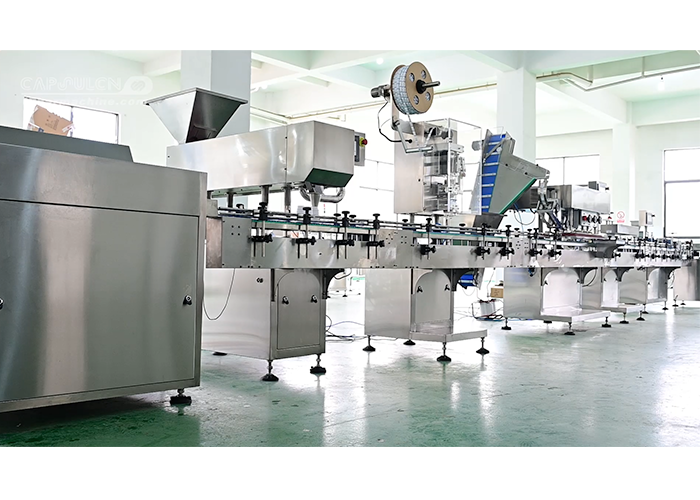
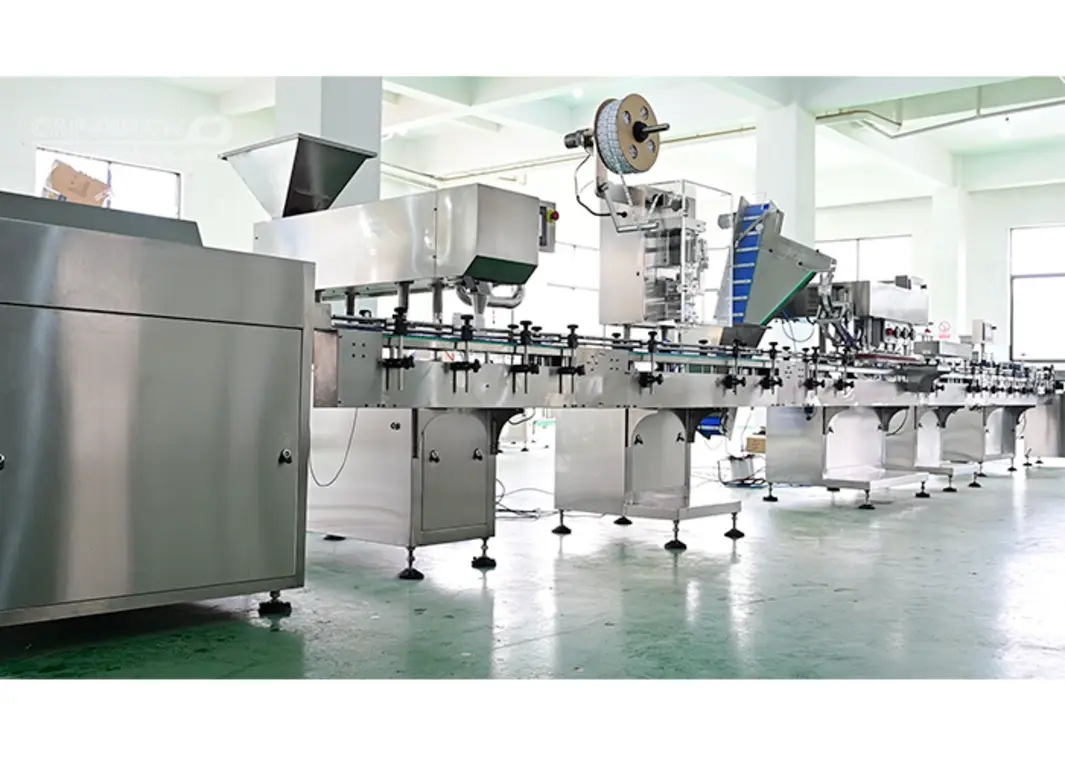
For example, if filled containers regularly wait for hand-applied lids, increasing filling speed alone may simply increase the queue. If operators spend substantial time replenishing containers, an automatic container feed or accumulation system may deserve equal consideration. This is why food packaging line automation is usually a system question rather than a standalone filler purchase.
Source: lenismachines
Check site constraints before requesting proposals
A technically suitable machine may still be difficult to install if the site cannot support it. Include a simple layout drawing, photographs of the intended area, and basic dimensions. Mark doors, columns, drains, walkways, existing equipment, and access routes for delivery, maintenance, and cleaning.
Also document the utilities and interfaces that must be confirmed:
- Electrical supply and available connection points.
- Compressed air availability and quality requirements to be confirmed with the supplier.
- Product transfer connections, pump location, tank or hopper arrangement, and return paths if used.
- Water, drainage, and cleaning connections where relevant.
- Space for guarding, operator access, material replenishment, and maintenance.
- Ventilation or environmental conditions that could affect the equipment or product.
- Interfaces with existing conveyors, checkweighers, labelers, printers, metal detectors, inspection systems, or plant controls.
Do not assume a new filler will integrate easily with existing equipment. Note the make, model, control arrangement, operating direction, conveyor height, and practical condition of adjacent machinery if those details are available. An automation integrator needs this information to define responsibility for mechanical, electrical, controls, safety, and commissioning interfaces.
Turn observations into an automation brief
The final document does not need to be long. It needs to be specific enough for a supplier to understand the job and identify open questions. A practical automation brief can include the following sections.
1. Project objective
State the production problem, desired outcome, product families, pack formats, and the expected timing for the project.
2. Current process
Attach the process map, workflow description, staffing arrangement, and a summary of observed losses or recurring interventions.
3. Product and package data
Provide product sheets, package drawings if available, representative samples, photos, and a list of required formats.
4. Production requirement
Describe the required finished-pack output, expected operating schedule, run lengths, changeovers, and the basis for the target. Separate normal output from aspirational peak output.
5. Scope boundaries
Clearly say what is in scope and what is not. For example: product feed tank, filling, container infeed, cap handling, capping, coding, label application, inspection, conveyors, guarding, controls, installation, training, and acceptance testing.
This is especially important when working with an automation integrator. A proposal can appear complete while leaving key ownership gaps between the filler supplier, conveyor supplier, electrical contractor, and plant team.
6. Validation and acceptance approach
Ask how the proposed system will be tested with your product and packaging, what samples are needed, what performance assumptions apply, and what conditions must be present at the site. Internal quality, sanitation, engineering, and operations stakeholders should review the acceptance approach before purchase commitments are finalized.
Questions to ask before contacting suppliers
Use these questions to improve early conversations:
- Which product and package combinations are mandatory on day one?
- Which formats are optional or future possibilities?
- Is the main constraint filling, product supply, container handling, closure application, or downstream packing?
- What recurring manual adjustment would the system need to eliminate or simplify?
- How will product behavior be demonstrated or validated before final selection?
- What cleaning, disassembly, or clean-in-place requirements must the proposed equipment meet?
- Which existing machines must communicate or physically connect with the new system?
- Who owns line controls, guarding, installation coordination, commissioning, operator training, and spare-parts support?
- What production conditions must be met for site acceptance?
Common assessment mistakes
The most frequent mistake is specifying only a desired speed. Output matters, but it is incomplete without product behavior, pack details, changeover needs, cleaning expectations, and evidence of the true bottleneck.
Another common error is filming a single smooth cycle while excluding replenishment, stoppages, cleanup, and format changes. Suppliers need to see the exceptions because exceptions often drive the required automation scope.
Finally, do not treat automation as a way to avoid process definition. An automatic system makes an undefined process more visible; it does not automatically resolve unstable product feed, inconsistent containers, unclear quality checks, or inadequate downstream capacity.
A careful food filling automation assessment gives the project a usable starting point. It helps producers compare proposals on scope and operating fit rather than headline speed alone, and it gives equipment suppliers or integrators the information needed to design around the real process.
References
- The Latest in Food & Beverage Automation: Trends & Insights. (n.d.). https://etechgroup.com/blog/food/automation-trends-in-food-and-beverage
- Liquid Filling Machines for Food and Beverage Industries. (n.d.). https://www.ygfillingmachine.com/news/Liquid-Filling-Machines-for-Food-and-Beverage-Industries.html
- Food & Beverage Filling - Motion Automation Intelligence. (n.d.). https://ai.motion.com/industries/food-and-beverage/filling
- A guide to food filling machines. (n.d.). https://shemeshautomation.com/blog/a-guide-to-food-filling-machines
- Sauce Filling Machines UK | Viscous Food Filling Equipment. (n.d.). https://www.packagingautomationuk.co.uk/sauce-filling-machines
- THE ULTIMATE BOOK: FOOD FILLING MACHINE. (n.d.). https://www.lintyco.com/the-ultimate-book-food-filling-machine
- Ensuring Food Safety: The Ultimate Guide to Liquid Packaging Machines - Fres-co System USA. (n.d.). https://www.fresco.com/guide-to-liquid-packaging-machines
- IEC 62443-Based OT/ICS Risk Assessment Checklist. (n.d.). https://shieldworkz.com/regulatory-playbooks/iec-62443-based-ot-ics-risk-assessment-checklist-for-food-beverage-manufacturing-sector