A dependable food manufacturing production data collection system does more than replace paper logs. It should capture process values at their source, associate them with the correct product run or batch, alert the right people when a limit or condition needs attention, and preserve records so they can be reviewed later without uncertainty about who entered or changed them.
For most plants, the practical answer is a layered system: calibrated field instruments supply measurements; PLCs or controllers run the process; HMIs or SCADA systems present operating information; a historian retains continuous process signals; and electronic quality or batch-record tools capture inspections, checks, approvals and corrective actions. The right mix depends on the process, existing controls, recordkeeping obligations and the site’s ability to maintain the system.
Start with the records that must be dependable
Do not begin by choosing a software brand or by collecting every available PLC tag. Start with a record map. List the decisions, food-safety controls, quality checks and production events that require evidence.
Typical record groups include:
- Critical-control-point or preventive-control monitoring records.
- Cook, pasteurization, retort, cooling or other validated-process records where applicable.
- Lethality monitoring records and supporting process variables.
- End temperatures, hold conditions, pressures, flows, pH readings or other relevant product parameters.
- Metal detector, checkweigher, seal-integrity or package-inspection verification records.
- Sanitation, pre-operational inspection and environmental-monitoring entries where included in the plant program.
- Ingredient, allergen, lot, recipe and batch genealogy information.
- Equipment alarms, downtime, changeovers, operator actions and deviations.
- Calibration, maintenance and verification records for instruments that support critical measurements.
Each record should have a clear owner, a defined source and a stated review method. For example, a temperature may come automatically from a transmitter, while a visual package check requires a named person to enter an observation. Treating those two records as if they have the same origin and reliability creates avoidable gaps.
A practical data-collection architecture
A food plant does not need one application to do every job. It does need the applications to pass the correct context and preserve reliable records.
1. Field instruments and machine sensors
This layer includes temperature probes, pressure transmitters, flowmeters, load cells, conductivity sensors, switches, vision systems and inspection equipment. Its job is measurement.
For safety- or quality-relevant signals, selection and maintenance matter as much as the data platform. Confirm the instrument’s range, accuracy, installation location, response characteristics, hygienic suitability and calibration approach against the plant’s process requirements. A well-designed historian cannot correct a poorly located probe or an unverified instrument.
2. PLCs, machine controllers and data acquisition
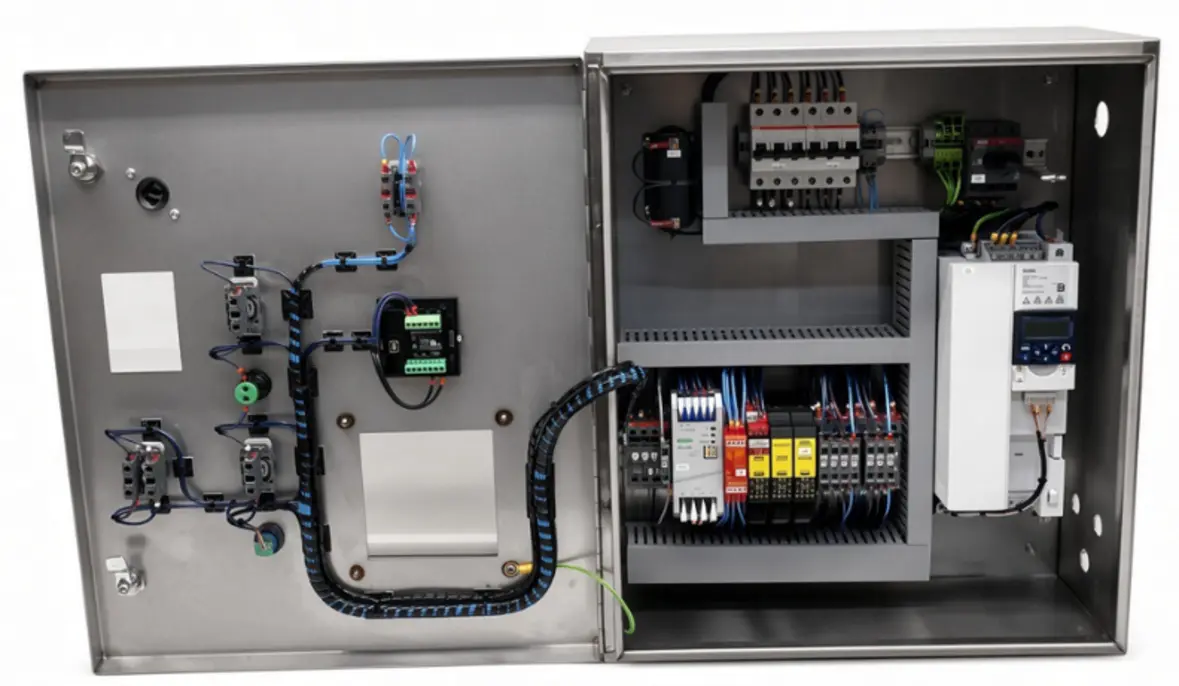
PLCs and dedicated machine controllers read inputs, execute control logic and command equipment. They are the best place to capture the operating state that gives a measurement meaning: pump running, valve position, recipe step, conveyor status, production mode or fault condition.
Production line data acquisition should collect more than an isolated value. A temperature record, for instance, may need its timestamp, engineering units, measurement quality, equipment identity, product or recipe context and operating state. Without that context, later review may not establish whether the reading occurred during the relevant process step.
Avoid loading a controller with unnecessary reporting tasks. The control system’s first responsibility is stable, safe operation. A gateway, SCADA server or other approved interface can often collect data without burdening the control application.
3. HMI and SCADA systems
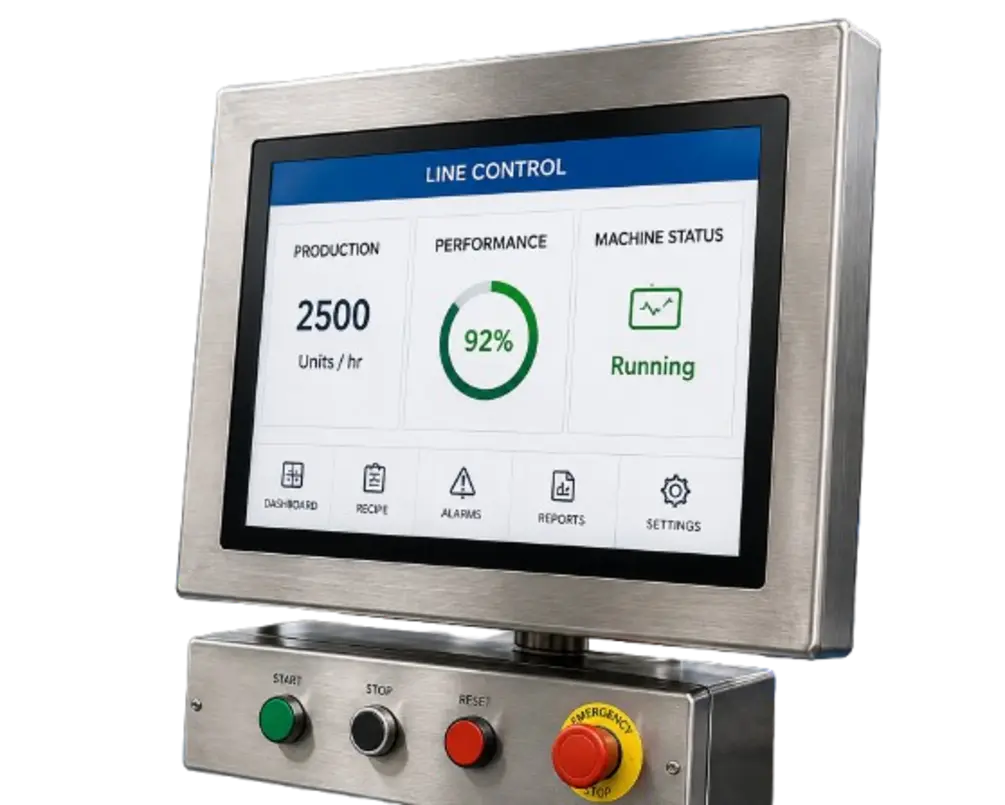
Human-machine interfaces display machine status locally. SCADA systems typically provide broader supervisory views, alarm handling, trends and access across lines or plant areas.
For operators, the useful screen is not the one with the most numbers. It is the one that makes the current decision clear: what product is running, whether a process step is complete, which value is out of expectation, what response is required and whether the event has been acknowledged.
An HMI may retain limited local history, but it is not automatically a long-term record system. Confirm how much information it keeps, whether records survive hardware replacement, how timestamps are managed and whether the data can be retrieved in a usable form.
4. The food plant process data historian
A food plant process data historian is designed for time-stamped process signals collected repeatedly over time. It can retain readings from many sources, apply efficient storage methods and retrieve trends over long periods.
Historians are especially useful for continuous or frequent data such as temperatures, pressure, flow, motor status, valve position, setpoints and alarm states. They can help teams investigate deviations, compare runs, identify recurring excursions and verify whether process behavior changed after a maintenance or recipe adjustment.
A historian is not, by itself, a complete electronic batch record. It may store thousands of signals accurately but still lack the operator observations, approvals, lab results and structured exception workflows needed for a finished production record. The system should link historian data to batches or runs rather than forcing users to search manually through trends after the fact.
5. Electronic batch records and quality workflows
Electronic batch records food manufacturing systems organize the evidence associated with a defined batch, lot, production order or run. Depending on the process, they may include recipe information, ingredient verification, equipment identification, operator entries, inspections, laboratory results, deviations and release decisions.
The strongest designs combine automatic collection with purposeful manual entry. Automation can capture machine data consistently. Operators and quality personnel still need straightforward workflows for inspections, observations, corrective actions and review. A system that is difficult to use at the line will invite incomplete entries, delayed entries or workarounds.
How HACCP and lethality records fit into the system
HACCP data collection software should reflect the plant’s actual food-safety plan rather than impose generic forms. For each monitored point, define the parameter, method, frequency or event trigger, responsible role, acceptable condition, response to deviation and verification or review requirement. The details must come from the facility’s validated process, product requirements and applicable regulatory obligations.
For a critical measurement, automatic capture can reduce transcription errors and show the original sequence of events. But automatic capture does not eliminate the need for review. Someone still needs to assess exceptions, confirm corrective actions and determine whether the record is complete.
Lethality monitoring records require particular care because they depend on the validated process model and the correct process inputs. The relevant calculations, assumptions, sensor locations, time synchronization, recipe controls and review procedures should be established by qualified process and food-safety personnel. Do not assume that a temperature trend alone demonstrates an adequate lethality process. The system must be configured and verified against the plant’s approved method.
Selection criteria that materially affect the outcome
Use the following questions to compare systems and integrators.
| Selection area | What to evaluate | Why it matters |
|---|---|---|
| Source connectivity | PLC brands, machine interfaces, instruments, inspection devices, lab systems and enterprise systems | Manual exports and isolated databases weaken traceability. |
| Time and context | Clock synchronization, timestamps, time zones, batch IDs, recipe steps and line states | Data must show when and under what conditions an event occurred. |
| Data integrity | Named accounts, roles, audit trails, controlled corrections, record retention and backup recovery | Food-safety and quality records must remain attributable and reviewable. |
| Alarm handling | Priorities, notification paths, acknowledgement, escalation and documented response workflows | An alarm is useful only if it leads to an appropriate response. |
| Usability | Line-side screens, mobile or fixed terminals, offline behavior, language needs and entry burden | Operators need to complete records accurately during production. |
| Reporting | Batch summaries, exception reports, trends, exports and review queues | The plant should be able to find evidence without rebuilding it manually. |
| Validation support | Configuration control, test documentation, change management and vendor support | Changes to critical records require disciplined assessment and testing. |
| Ownership | Access to raw data, configuration files, export formats and support responsibilities | The plant needs continuing access to its own operational records. |
Data integrity is a design requirement, not a report feature
When electronic records are used to meet regulated or customer requirements, involve the quality and regulatory teams early. Requirements can differ by product, market, customer program and whether electronic records replace required paper records. The applicable rules, including any expectations for electronic signatures and audit trails, should be confirmed with qualified internal or external regulatory expertise.
At a practical level, dependable systems usually include:
- Unique user identities rather than shared accounts.
- Role-based permissions that limit configuration and record changes.
- Reliable, synchronized time sources.
- Audit trails that show original entries, changes, user identity, time and stated reason where required.
- Controlled handling of missing data, communication failures and manual substitutions.
- Backup, restoration and retention procedures tested on a defined schedule.
- Change control for tag lists, alarm limits, recipes, calculations, reports and user workflows.
A common mistake is allowing an administrator to overwrite an original record without retaining the prior value. Another is relying on a spreadsheet export as the only long-term evidence. Exports can be useful, but the system of record should preserve the original information, associated context and audit history.
Common implementation mistakes
Collecting too much data without a use case
Plants can connect thousands of tags quickly. That does not make the result useful. Prioritize values that support control, food safety, quality, traceability, maintenance or production decisions. Add lower-priority signals after the core record set is stable.
Automating a flawed paper process
A digital form with vague prompts, unclear ownership or no exception workflow remains a weak record. Simplify the process first. Specify who acts, what they document and who reviews it.
Ignoring batch and product context
A trend may prove that a value existed, but not necessarily which product it applied to. Capture batch, lot, work order, recipe, equipment path and relevant product transitions automatically where possible.
Treating alarms as documentation
An alarm history shows that a condition was detected. It may not show the investigation, disposition or corrective action. Link alarm events to an exception workflow when that evidence is needed.
Delaying operator involvement
Operators understand where process states change, where sensors are unreliable and where manual checks are realistic. Include them in screen design, workflow testing and training before release.
A staged implementation approach
A phased project is usually more reliable than a plant-wide conversion.
- Map the current records. Identify paper logs, spreadsheets, controller logs and disconnected databases.
- Rank records by risk and operational value. Start with records that are difficult to retrieve, prone to transcription errors or essential to production review.
- Define the data model. Establish tag names, units, equipment hierarchy, batch identifiers, user roles and retention expectations.
- Build one representative workflow. Pilot a line, process area or record type with realistic operators and reviewers.
- Test normal and abnormal conditions. Include lost communications, sensor faults, product transitions, shift changes, corrections and report retrieval.
- Train for decisions, not only screens. Users should know what to do when data are missing or an exception appears.
- Expand with change control. Reuse proven templates, while checking each new line against its own equipment and process requirements.
Final selection checklist
Before approving a food production data platform, verify that it can answer these questions quickly and reliably:
- Can the plant show the original source, timestamp and quality status for a critical value?
- Can a reviewer connect the value to the correct batch, recipe, line and process step?
- Can the system distinguish automatic measurements from manual observations?
- Can authorized users correct records without erasing the original information?
- Can operators document deviations and required actions without leaving the production area?
- Can the plant retrieve complete records after a system outage, hardware replacement or staff turnover?
- Can quality personnel review exceptions efficiently rather than reading every data point?
- Can the system be tested and maintained as equipment, recipes and food-safety plans change?
The best food manufacturing production data collection system is not necessarily the one with the most dashboards or the largest tag count. It is the one that turns reliable measurements and human observations into complete, understandable records that operators can use during the shift and quality teams can trust afterward.
References
- Historian Data Management for Food Plants: Time-Series …. (n.d.). https://dpsfoodeng.com/blog/historian-data-management-for-food-plants-time-series-process-intelligence
- Manufacturing Data Historian – Time-Series Process Historian for GMP Plants. (n.d.). https://sgsystemsglobal.com/glossary/manufacturing-data-historian-process-historian
- Food and Beverage - Streamline Control. (n.d.). https://streamlinecontrol.com/food-and-beverage-redesign
- Data Integrity for Temperature Records: 21 CFR 11. (n.d.). https://ifactoryapp.com/industries/food-manufacturing/data-integrity-temperature-records-21-cfr-part-11
- HACCP Digital Recordkeeping and Monitoring Systems. (n.d.). https://oxmaint.com/industries/food-manufacturing/haccp-digital-recordkeeping-monitoring-systems
- Electronic Record Keeping - Purdue Extension. (n.d.). https://www.extension.purdue.edu/extmedia/FS/FS-12.pdf
- SCADA vs Historian: Industrial Data Collection Solutions …. (n.d.). https://industrialmonitordirect.com/blogs/knowledgebase/scada-vs-historian-industrial-data-collection-solutions-for-manufacturing
- Electronic data monitoring to meet food safety requirements | 2018-11-08 | Snack Food & Wholesale Bakery. (n.d.). https://www.snackandbakery.com/articles/92324-electronic-data-monitoring-to-meet-food-safety-requirements