A food manufacturing traceability system creates a usable record of what entered the plant, where it was stored, what was consumed in each production run, how product was packed, and which customers received each finished lot. Its purpose is not simply to print lot codes. It is to preserve lot genealogy: the documented links that allow a plant to trace backward from finished product to ingredients and forward from an ingredient lot to affected finished goods and shipments.
For a system to work during a quality event, data capture has to follow the actual material flow. Receiving records, warehouse transactions, batch records, packaging data, rework records, and shipping documents must use compatible lot identifiers. A sophisticated ERP or MES cannot correct missing scans, unclear handwritten lot numbers, or an operator selecting the wrong material at the point of use.
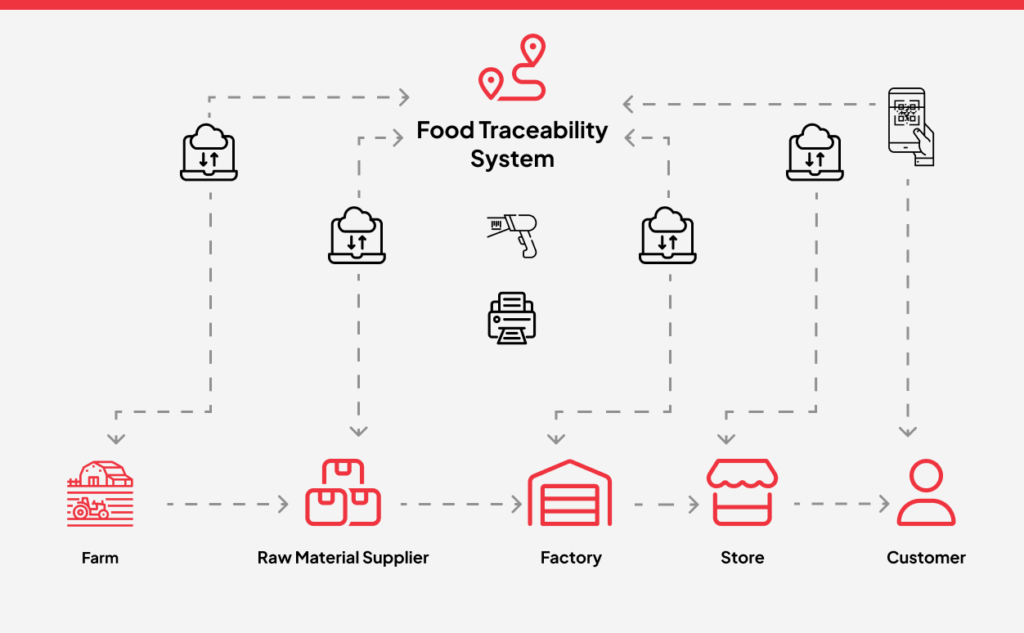
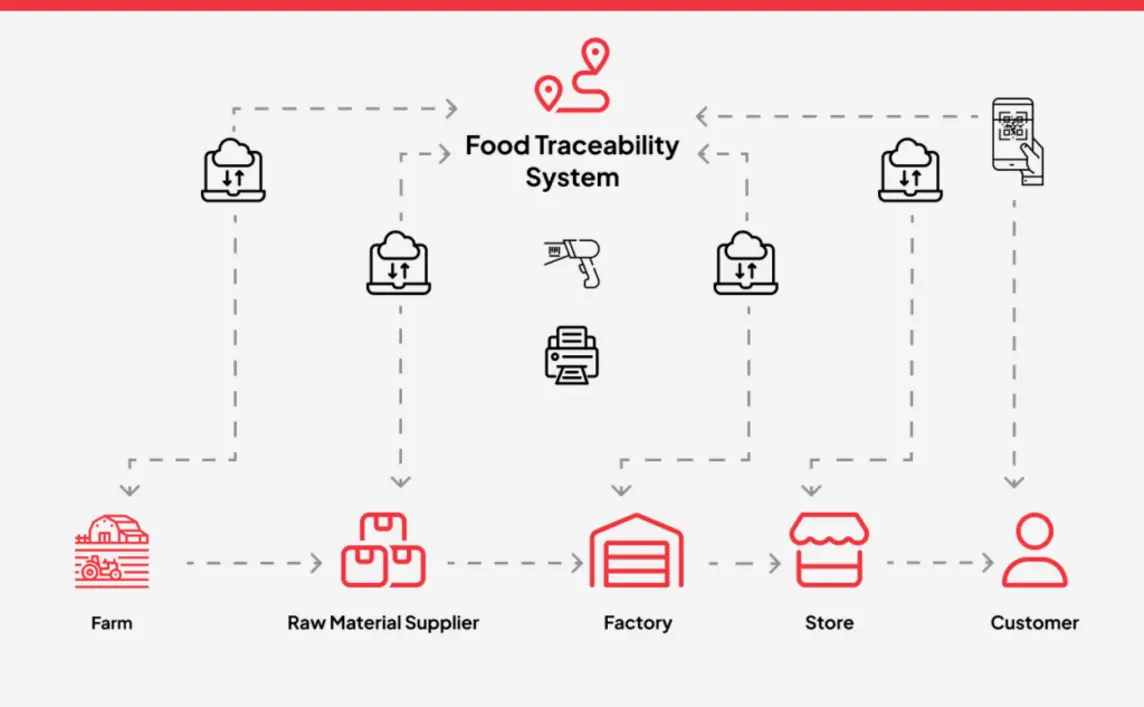
The traceability chain at a glance
A practical food lot tracking system follows this basic path:
- Receive a supplier lot and assign or record its internal identity.
- Store and move the lot while preserving its location, status, and quantity.
- Dispense the specific ingredient and packaging lots to a production order or batch.
- Process the batch and record the output lot or work-in-process lot it creates.
- Pack and label finished product with a code tied to the production record.
- Control rework and by-products so they do not break the genealogy chain.
- Move, pick, and ship finished lots against customer orders.
- Query and test the complete chain through routine mock recalls.
The result should support two questions quickly: “What went into this finished lot?” and “Where did this ingredient lot go?” Both are necessary. Backward tracing helps investigate a finished-product complaint or test result. Forward tracing helps define the scope of a supplier issue, suspected contamination event, or withdrawal.
Source: foodtech.folio3
1. Receiving: establish the source record
Traceability begins before ingredients reach production. At receiving, the plant should capture the supplier’s lot or batch identifier, item identity, quantity, receipt date, supplier, and any internal lot number assigned by the site. Relevant receiving and quality documents should be connected to that record where the plant’s program requires them.
A receiving label commonly carries a human-readable lot number and a barcode. Barcode scanning reduces rekeying, but the label design must be consistent enough for operators and scanners to use reliably. If supplier labels vary, the plant may need an internal receiving label that links the supplier lot to the internal material lot.
Receiving is also the first material-status decision. Lots may be available for use, on hold pending review, rejected, or restricted for a defined purpose. The inventory system should prevent an unauthorized status from being issued to production. A lot record that exists only in a receiving spreadsheet but is not reflected in warehouse and production transactions will soon become unreliable.

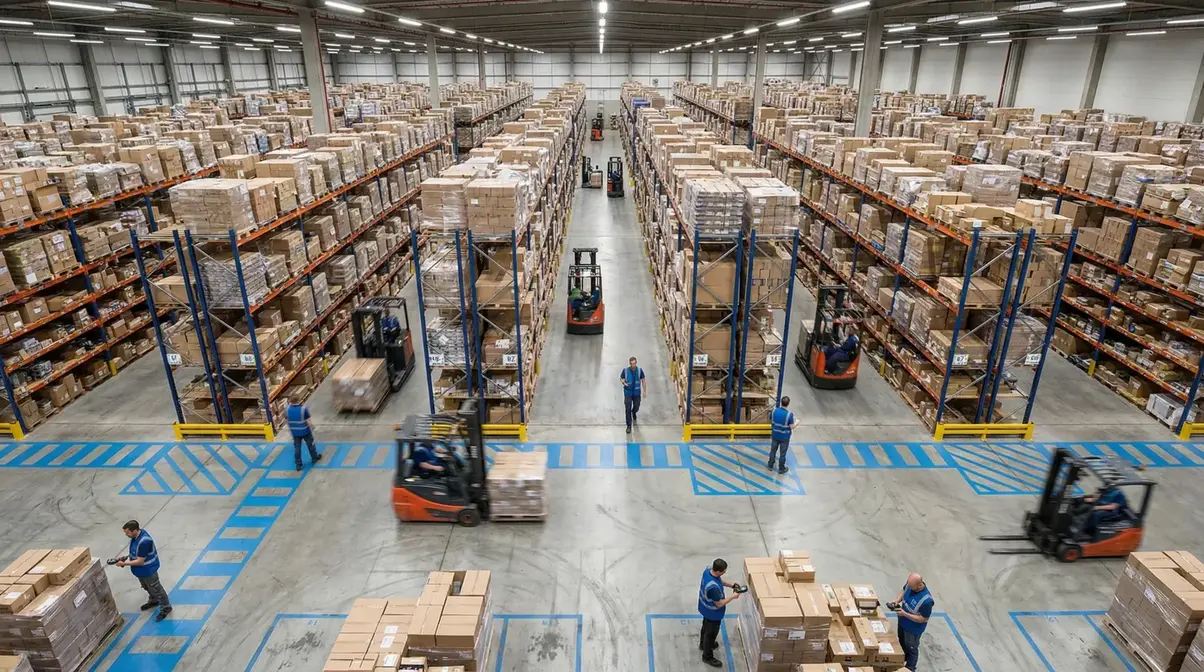
Source: elements-resized.envatousercontent
2. Storage and internal movement: retain identity and status
After receipt, ingredient to finished product traceability depends on maintaining identity through storage. A warehouse management process may record the lot, warehouse zone, rack or bin, pallet identifier, quantity, and status for each movement.
The level of location detail should fit the operation. A small plant may track lot-level inventory by room or designated area. A larger warehouse with many pallets and frequent replenishment may need pallet-level identification and scan-confirmed moves. In either case, operators need a clear rule: material cannot be transferred, combined, or relabeled without a transaction that preserves the source lot relationship.
This stage also exposes a common weakness. If multiple ingredient lots are staged together in an unmarked container or hopper, the system may show what was supposed to be used rather than what was actually used. The physical identification method must match the electronic record.
3. Dispensing: connect actual lots to the batch
At dispensing, the system connects raw-material lots to a specific production order, formula, kettle, mixer, line, or batch. This is the point where a food production traceability process becomes more than inventory control.
An operator may scan the batch order, scan each ingredient lot, and confirm the quantity issued. The system can then compare the selected material to the formula and flag a wrong item, an unavailable lot, or an unusual quantity. Whether those controls are electronic, paper-based, or mixed, the batch record should show the lots actually consumed—not merely the lots planned by the recipe.
For bulk ingredients, the record may need to identify a silo, tote, tank, or feeder and define how its contents are managed. If a vessel contains multiple received lots, the plant needs a documented method to maintain the relationship between those inbound lots and the batches produced while the vessel is being drawn down. This is a process-design question, not only a software setting.
4. Processing: create and preserve batch genealogy
Processing transforms ingredient lots into work in process and eventually finished goods. A batch traceability in food manufacturing record typically links the production order or batch number to:
- Ingredient and packaging lots used
- Actual quantities issued or consumed, where recorded
- Equipment or line used
- Production date, shift, and key timestamps
- In-process lots, intermediate tanks, or staging containers
- Quality, hold, release, and deviation records relevant to the batch
- Yield, scrap, by-product, or rework transactions
A continuous process may not have neat batch boundaries. In that case, the plant must define a practical lot window, such as a run, shift, time block, or product changeover interval. The boundary should be narrow enough to support a targeted investigation while remaining realistic for how the line runs. The right definition is the one that can be executed consistently and demonstrated from records.
5. Packaging: tie the code on the product to the production record
Packaging creates the code most likely to be seen by customers, distributors, and investigators. The finished-product lot or date code must map back to the correct production record. It should also be linked to packaging-material lots when those materials matter to the investigation, such as printed labels, film, cartons, or closures.
Coding equipment, vision inspection, printers, labelers, and case packers can contribute useful data, but automation alone is not proof of traceability. Plants should verify that the line is applying the intended code, that the code changes correctly at changeover, and that records associate the code with the right run.
The hierarchy also matters. If consumer units, cases, and pallets carry different identifiers, the system should define their parent-child relationship. Case and pallet aggregation can make warehouse picking and shipment tracing much faster, especially when a customer receives only part of a finished lot.
6. Rework, returns, and split lots: manage the difficult links
Rework is one of the most frequent ways lot genealogy becomes incomplete. Rework is material from a prior process or run that is intentionally returned to production under controlled conditions. Its source lot, quantity, date, status, and destination batch need to be recorded. If rework from several finished lots enters a new batch, that new batch inherits links to all applicable source lots.
The same principle applies to splits and combines. One inbound lot may be divided among several containers, and several lots may be combined in a blend, tank, or production run. The system must support one-to-many and many-to-one relationships rather than forcing a false one-lot-to-one-batch model.
Customer returns should be kept distinct from normal rework unless the plant’s approved procedures specifically allow another disposition. Traceability software cannot determine whether returned material is suitable for use; that decision belongs to the site’s documented quality and food-safety program.
7. Warehouse picking and shipping: close the forward-trace loop
A finished lot is not fully traceable forward until shipment records identify its destination. At minimum, the system should link the finished lot to the sales order, customer, shipment or load reference, ship date, and quantity. Case or pallet scans can improve precision by showing exactly what was picked and loaded.
Shipping accuracy matters because a recall scope should be based on actual distribution, not a general assumption that every customer received every lot. A system that reports all customers who received a specified lot, including remaining internal inventory, gives the response team a more defensible starting point for an investigation.
ERP, MES, and scanning: choose the architecture that fits the plant
A food manufacturing traceability system may be built from paper batch records, spreadsheets, an ERP, a manufacturing execution system (MES), warehouse software, barcode tools, or an integrated platform. The best choice depends on the number of lots, rate of transactions, production complexity, and the plant’s ability to maintain disciplined procedures.
| Approach | Suitable situation | Main limitation |
|---|---|---|
| Paper and controlled spreadsheets | Simple, low-volume operations with few products and clear batch boundaries | Manual transcription and retrieval can become slow and error-prone |
| ERP-centered traceability | Plants needing purchasing, inventory, production, and sales records in one business system | Shop-floor data capture may require added terminals, scanners, or integrations |
| MES plus ERP integration | Multi-line or high-transaction plants needing detailed execution records | Requires careful master-data design and ownership across departments |
| Warehouse scanning integrated with production | Operations with frequent pallet movement, lot picking, and customer shipments | Does not replace accurate batch and rework records |
Integration should have a clear purpose. The ERP commonly holds item masters, purchasing, inventory, and orders. An MES may guide execution and capture production events. Warehouse tools may manage locations and pallet moves. Quality systems may hold specifications, release decisions, deviations, or test results. Interfaces must pass the identifiers that connect these systems; otherwise, teams may still need manual reconciliation during an incident.
Define critical tracking events before buying software
A useful implementation starts with a material-flow map, not a vendor demonstration. Walk the plant from dock to shipment and identify each event where identity, quantity, location, ownership, status, or form changes.
Typical critical tracking events include receiving, internal transfer, dispensing, blending, transformation, packaging, rework addition, finished-goods release, palletization, shipment, return, and disposal. For each event, define:
- The triggering action
- The person or system responsible for recording it
- The lot identifier before and after the event
- Required data fields and verification method
- The physical label or container-control method
- What happens when a scan fails, a label is damaged, or material is found without identification
For foods subject to specific traceability rules, covered entities should consult the applicable official requirements to determine required records, lot-code practices, data elements, retention, and response expectations. The system scope should also reflect customer requirements and the plant’s own hazard analysis and quality procedures.
Test the system with a mock recall
A mock recall tests records, people, and process discipline under realistic pressure. Choose either an inbound ingredient lot or a finished-product lot and trace it in both directions. The exercise should identify all linked batches, inventory locations, rework connections, packaging records where applicable, and shipments.
Do not measure success only by how quickly a report is generated. Review whether the report matches physical inventory and shipping records, whether any manual assumptions were needed, and whether the team can explain every gap. Corrective actions may include improving labels, changing scan points, training operators, revising lot-window rules, or repairing system interfaces.
Common traceability failures to prevent
- Recording planned ingredients instead of the lots actually dispensed
- Allowing unlabelled partial bags, totes, or staging containers on the floor
- Reusing or changing lot codes without documented controls
- Losing source identity when lots are combined in a silo, tank, or rework container
- Treating a production date as a complete lot record when multiple runs occurred
- Failing to link case or pallet movements to shipment records
- Maintaining quality, warehouse, production, and sales data in disconnected files
- Testing only backward tracing or only forward tracing
A traceability system is effective when the record structure mirrors the plant’s physical process. Start with clear lot definitions and disciplined data capture at the points where material changes hands or form. Then use scanning, ERP, MES, and reporting tools to make those records faster to create, easier to verify, and usable when a targeted recall or quality investigation is underway.
References
- Food Traceability: A Complete Guide for Manufacturers. (n.d.). https://www.brahmin-solutions.com/blog/what-is-food-traceability
- Food Traceability: A Complete Guide for Manufacturers. (n.d.). https://brahmin-solutions.com/blog/what-is-food-traceability
- The Importance of Traceability in Food Manufacturing | Craftybase. (n.d.). https://craftybase.com/blog/importance-food-traceability
- FSMA 204 Food Traceability Guide for Food Packing Operations. (n.d.). https://bar-code.com/fsma-204-traceability-lot-code-requirements-food-packing
- Food Traceability Software for Manufacturing & Compliance | NutraSoft. (n.d.). https://www.nutrasoft.ca/en/traceability
- FDA Food Traceability Rule (Section 204): What Food Manufacturers Must Do Now. (n.d.). https://oxmaint.com/industries/food-manufacturing/fda-food-traceability-rule-section-204-food-manufacturers
- Food Traceability Software for Manufacturers | NutraSoft. (n.d.). https://www.nutrasoft.ca/traceability
- Top 10 Best Food Manufacturing Traceability Software of 2026. (n.d.). https://wifitalents.com/best/food-manufacturing-traceability-software