A food powder dust collection system should be specified as a capture-and-material-handling system, not simply as a filter collector with a stated airflow. The first job is to prevent dust from escaping at each generation point: receiving, bag dumping, conveying transfers, screens, blenders, and filling equipment. The second is to transport the captured material reliably, filter the air, manage collected powder, and address sanitation and combustible-dust risks appropriate to the specific product and facility.
The practical starting point is a dust-source map. Document where dust is released, when it is released, the product involved, the operating conditions, and whether each point can be enclosed. That information should drive hood design, duct layout, fan selection, filter media, cleaning approach, and the safe handling of collector discharge. Buying a collector first and attempting to connect every problem point later commonly produces poor capture, difficult cleaning, and expensive rework.
Start with a dust-source map
Walk the process from ingredient receiving through finished-product packaging. At each point, record the material, the task, the release mechanism, and the operating schedule. A brief dust cloud during a bag dump may need a different control approach than a continuous pneumatic transfer or a high-speed powder filling operation.
Typical dust-generation points include:
- Bulk-bag unloading, sack tipping, manual weighing, and ingredient charging
- Silo filling and bin venting
- Conveyor transfer points, especially at drop zones
- Vibratory screens, sifters, mills, and grinders
- Mixer loading, discharge, and sampling ports
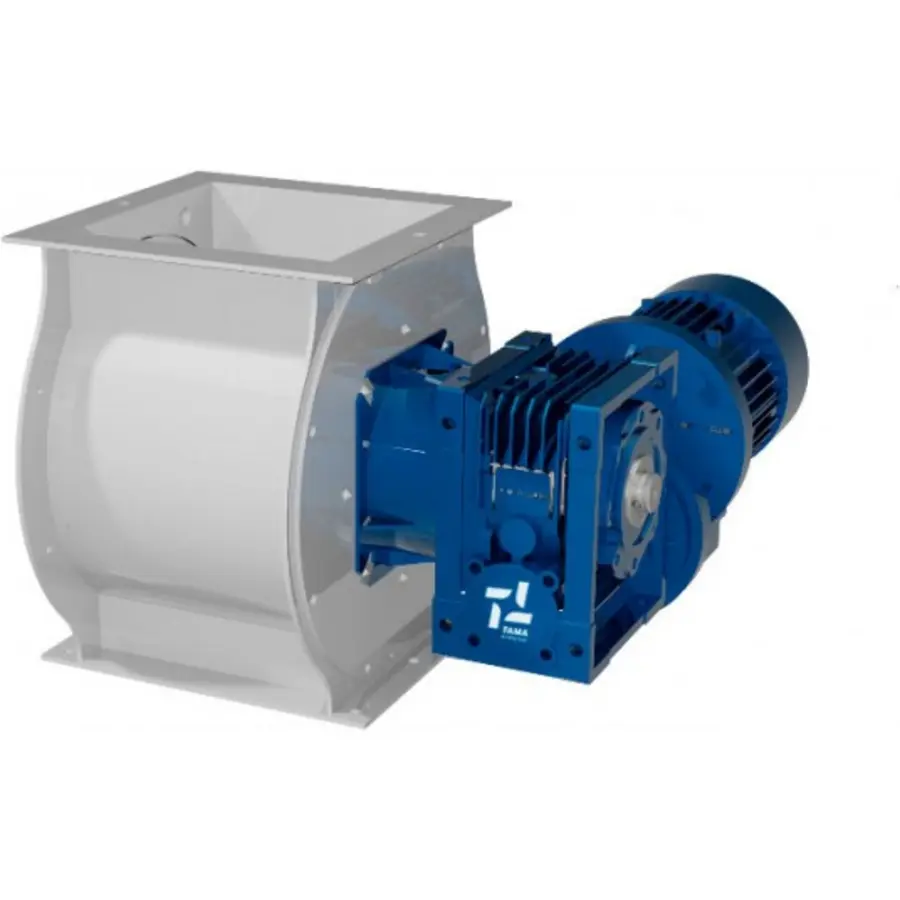
- Pneumatic conveying receivers and rotary valves
- Powder filling, checkweighing, sealing, and case packing areas
- Cleanup activities that disturb deposited powder
For each source, determine whether it is intermittent or continuous, open or enclosed, and attended by an operator. Note product characteristics as well: particle size distribution, bulk density, moisture sensitivity, stickiness, abrasiveness, oil content, agglomeration tendency, and whether several products share the system. These details affect both capture performance and filter behavior.
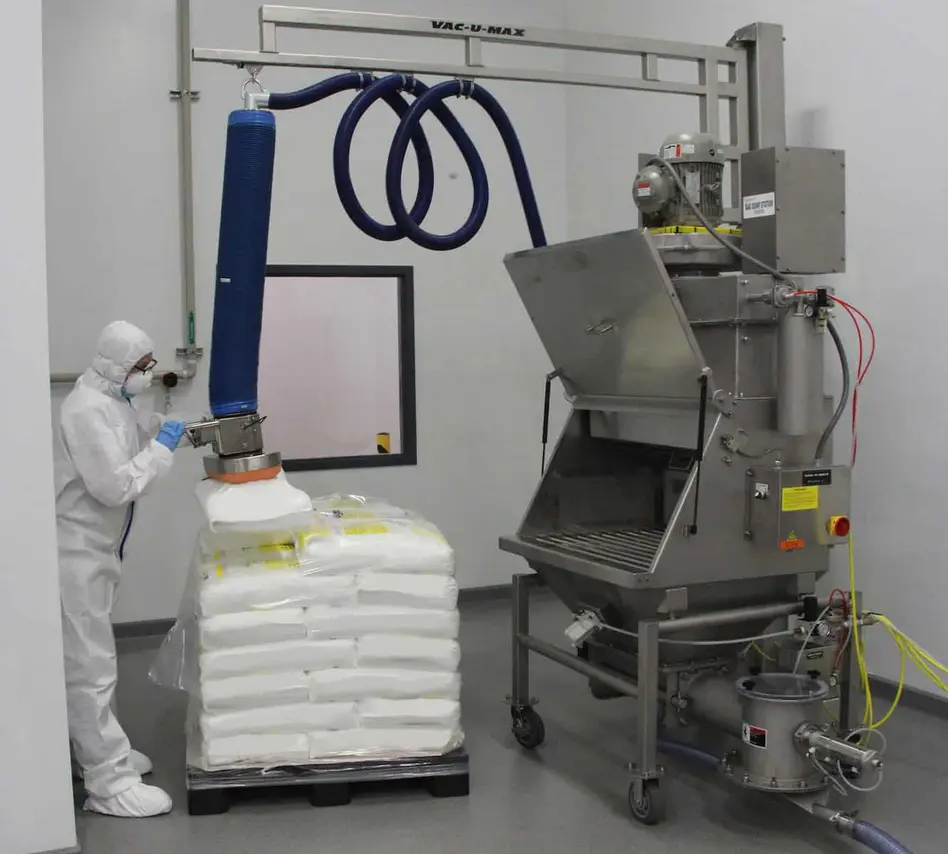
Source: bulkinside
A source map should also identify hygiene boundaries. Dust from a raw-material receiving area may not belong in the same collection path as powder from a post-process or finished-product packaging area. Similarly, a shared collector can create concerns where allergen-containing powders and non-allergen products are processed. The facility’s food-safety and allergen-control program should determine whether segregation, dedicated equipment, validated cleaning, or another control is needed.
Design capture before calculating collector airflow
Airflow is useful only when it reaches the dust cloud. The most effective food powder handling dust control usually starts with source capture through enclosure, partial enclosure, or a properly located pickup hood.
Use enclosure wherever the process allows
An enclosure limits the volume that must be controlled and reduces the chance that room drafts pull powder into the surrounding area. Useful examples include enclosed bag-dump stations, covered conveyor transfers, sealed mixer charge points, and guarded filling zones with extraction connections.
Complete enclosure is not always practical. Operators may need access for bag handling, sampling, inspection, or changeover. In those cases, minimize opening size, place extraction close to the release point, and avoid layouts that pull dust across the operator’s breathing zone or across exposed product.
Account for displaced air
Many dust events are caused by air being displaced from a vessel rather than by powder falling alone. Filling a bin, charging a blender, or dropping bags into a dump station can force air out through the nearest opening. The exhaust arrangement must handle that displaced air while maintaining inward airflow at access openings.
A hood attached to a large, uncontrolled opening is often a poor substitute for enclosure. If an operator repeatedly sees dust roll out of an opening, the issue may be insufficient capture, but it may also be a poorly shaped hood, excessive cross-drafts, a restrictive duct run, or an operation that releases powder faster than the enclosure can contain it.
Do not use room cleaning as the primary capture strategy
General room extraction may improve background air conditions, but it is usually less efficient than capturing dust at its source. It can also create unwanted drafts, pull conditioned air from the building, and move powder between zones. Local extraction should be the primary control method where a defined dust source exists; room ventilation and make-up air should support that strategy.
Size the system as connected parts
A food processing dust collector is one component in a system that includes hoods, enclosures, ductwork, fan, filtration section, controls, discharge equipment, and make-up air. All must be sized together.
Establish realistic operating cases
Do not add the airflow associated with every pickup point unless every point actually operates at the same time. Instead, list operating scenarios, such as receiving plus screening, blending plus packaging, or full-line production. Include any operations that may run concurrently during startup, sanitation preparation, or unusual production schedules.
The fan and collector must support the required simultaneous demand, with enough allowance for duct losses, filter loading, and normal system variation. A qualified system designer should calculate pressure losses across each branch and component rather than relying on a collector’s nominal airflow rating.
Keep ductwork simple and maintainable
Duct routing affects both capture and housekeeping. Long duct runs, abrupt elbows, unnecessary branches, poorly arranged transitions, and dead-end sections can increase pressure loss and create locations where material settles.
Specify ductwork with these practical priorities:
- Keep runs as short and direct as the building layout permits.
- Use branch arrangements that balance airflow to active pickup points.
- Provide access where inspection and cleaning are necessary.
- Avoid difficult-to-clean ledges, pockets, and unsupported flexible connections where powder can accumulate.
- Consider abrasion resistance where dense or abrasive materials are conveyed.
- Locate dampers, gauges, and test points where personnel can inspect them safely.
A system that appears balanced when clean may lose performance as filters load or product deposits build in ducts. Permanent pressure indicators and documented airflow checks make these changes visible.
Select filtration media for the actual powder and cleaning method
Cartridge collectors and baghouse-style collectors are common options for dry food ingredients. The better choice depends on powder behavior, required airflow, available footprint, cleaning method, expected loading, and maintenance access. Some applications may use other separation or filtration arrangements, especially where the process, product, or hazard assessment requires them.
Filter selection should address more than particle capture. Discuss the powder’s tendency to bridge, smear, absorb moisture, build static charge, or release oils. Fine, cohesive, or oily materials may clean differently from free-flowing flour-like powders. A filter medium that performs well on one ingredient can be unsuitable for another.
Ask the supplier or system designer to explain:
- The proposed filter-media construction and its suitability for the powder
- How filters are cleaned and how cleaning is controlled
- How differential pressure will be monitored and interpreted
- Whether filters can be changed without exposing workers or contaminating adjacent areas
- Whether the housing and seals are appropriate for the required sanitation approach
- How the design accommodates moisture, condensation, or washdown exposure if these are possible
Filter cleaning should remove accumulated dust without unnecessarily damaging the media or returning dust to the process area. The appropriate cleaning regime and acceptable pressure range are equipment- and application-specific and should be established with the manufacturer and verified during commissioning.
Source: tamaaernova
Treat collector discharge as product or waste by design
A hopper is not a disposal plan. Captured powder must leave the collector consistently. If it accumulates, it can interfere with filtration, create maintenance work, and complicate safety management.
First decide whether collected material is recoverable product, rework material, or waste. That decision should be made through the facility’s quality and food-safety controls, not assumed because the powder originated from a food ingredient. Material captured from a source near an open process may have a different status from powder collected from a floor-level cleanup connection or a mixed-use production area.
Discharge arrangements can include sealed bins, drums, bags, screw conveyors, or rotary airlocks. Selection depends on material flow, containment needs, access, and the pressure conditions at the hopper. The discharge connection must remain sealed enough to avoid disrupting collector operation or releasing dust during handling.
Specify hygienic construction and cleaning access early
Food applications need construction details that are often overlooked in generic dust-control projects. The right level of hygienic design depends on where the system is installed, whether collected material is retained, the product risk assessment, and the facility’s cleaning program.
Consider the following in the specification:
| Design area | Questions to resolve |
|---|---|
| Product-contact status | Is captured powder intended for recovery, or is it controlled as waste? |
| Materials of construction | Are duct, hopper, seals, and access components suitable for the environment and cleaning method? |
| Cleanability | Can personnel access filters, hoppers, valves, and duct sections without creating dust release or inaccessible buildup areas? |
| Changeover | How will allergen or product changeovers be managed if equipment is shared? |
| Moisture exposure | Is the collector located away from washdown, or is a different construction and cleaning approach required? |
| Maintenance | Can filters and wear parts be serviced without exposing nearby open product? |
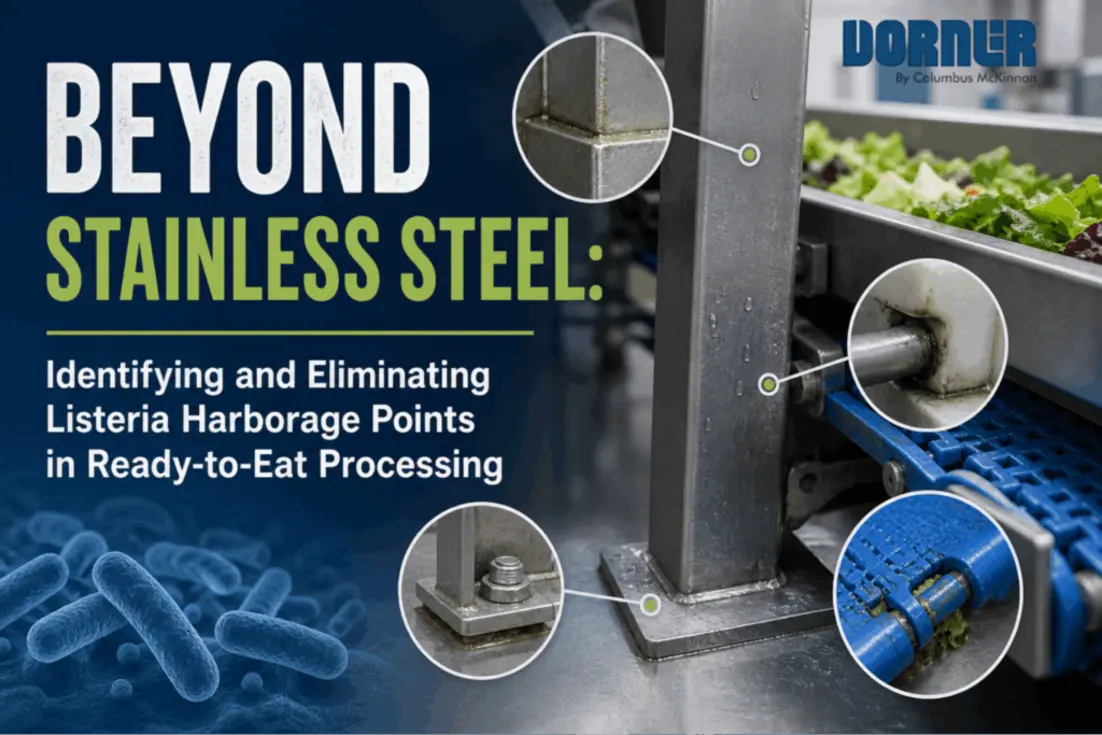
Stainless steel may be appropriate in some food zones, but it is not a complete hygienic specification. Surface condition, joints, gaskets, access doors, drainage considerations, and actual cleaning practices matter as much as material selection.
Address combustible-dust risk before finalizing the collector location
Many organic food powders, including materials such as flour, starch, sugar, cocoa, powdered dairy ingredients, spices, and grain-based products, may present combustible-dust hazards under certain conditions. The risk cannot be determined from the ingredient name alone. Particle characteristics, moisture, processing conditions, accumulation, confinement, ignition sources, and equipment configuration all matter.
A combustible dust food plant should have the relevant powder hazards assessed by qualified personnel. Confirm the current requirements that apply through the authority having jurisdiction, the facility insurer, equipment suppliers, and qualified fire-protection and process-safety professionals. The assessment may affect collector placement, explosion protection, isolation, electrical equipment selection, grounding and bonding, housekeeping, and maintenance procedures.
Do not treat a generic statement that a collector is “explosion-proof” as a complete safety solution. Protection and isolation methods must match the hazard analysis and the final system layout. Changes to ingredients, particle size, drying operations, collector location, duct routing, or discharge equipment can require the assessment to be revisited.
Commission the system with measurable checks
Commissioning should confirm performance at each pickup point, not merely verify that the fan starts. Establish baseline readings for differential pressure, fan operating condition, and airflow or other suitable indicators at critical hoods. Observe actual production tasks, including bag dumping and filling, because empty-equipment checks can hide release problems.
A practical commissioning checklist includes:
- Verify that the intended pickup points are open and correctly connected.
- Check visible capture during normal and worst-case dust-generating tasks.
- Confirm inward airflow at enclosures and access openings where required.
- Record baseline pressure and airflow indicators for future troubleshooting.
- Check hopper discharge and container-change procedures for dust release.
- Confirm that access doors, gaskets, dampers, and flexible connections are sealed and serviceable.
- Train operators on normal indicators, abnormal conditions, and who to notify when performance changes.
Common selection mistakes
The most common mistake is sizing from a collector catalog instead of from the process. Other frequent errors include combining incompatible product zones on one collector, overlooking hopper discharge, underestimating the impact of duct routing, locating pickup hoods too far from the release point, and ignoring make-up air.
Another recurring problem is designing for clean filters only. Filters load during operation, and performance must remain acceptable through the intended cleaning cycle. Plan routine inspection around pressure trends, dust accumulation, discharge reliability, filter condition, and visible emissions at capture points.
Questions to put in an equipment inquiry
Before requesting proposals for a food powder dust collection system, provide a clear package containing:
- A process flow diagram and floor plan with each dust source marked.
- Product data, including expected powder behavior and any available dust-hazard information.
- Operating scenarios showing which sources run simultaneously.
- Desired containment level and operator-access requirements at each source.
- Sanitation, allergen, quality, and product-recovery requirements.
- Available installation space, utility constraints, noise limits, and make-up-air considerations.
- The facility’s current combustible-dust assessment requirements and responsible review parties.
- Required commissioning records, performance checks, training, and maintenance documentation.
A well-designed system makes dry-ingredient production cleaner and easier to operate because it controls dust where it begins. The strongest specification connects source capture, enclosure, airflow, filtration, discharge, cleaning access, and hazard review into one coordinated design.
References
- Dust Collector System for Food Processing Industry.. (n.d.). https://www.herding.com/fr/dust-collector-system-food-processing-industry
- Dust Collector System for Food Processing Industry.. (n.d.). https://www.herding.com/en/dust-collector-system-food-processing-industry
- Food & Dry Ingredient Handling > Dust Collection - PMMI ProSource. (n.d.). https://www.prosource.org/category/processing-equipment/food-and-dry-ingredient-handling/dust-collection
- Food Industry Dust Collector for Processing Plants Guide. (n.d.). https://www.powertechindia.com/food-industry-dust-collector
- Food Processing Dust Collection Systems. (n.d.). https://www.hastingsair.com/industries/food-processing
- Dust Collection for the Food Processing Industry. (n.d.). https://www.slyinc.com/industries/food-processing
- Dust Collection Solutions for Food Processing | RoboVent. (n.d.). https://www.robovent.com/industrial-dust-collection/food-processing-industry
- Designed a System for 1440 Foods’ Powder Mixing Expansion. (n.d.). https://baghouse.com/case-study-how-we-designed-a-dust-collection-system-for-1440-foods-powder-mixing-expansion