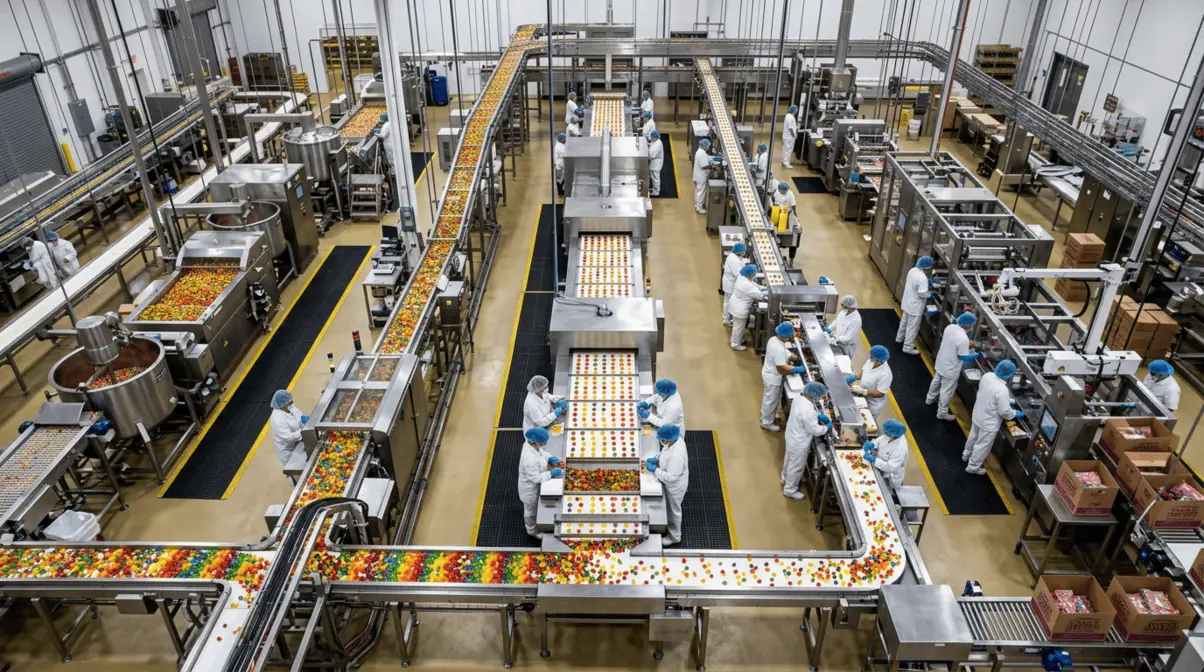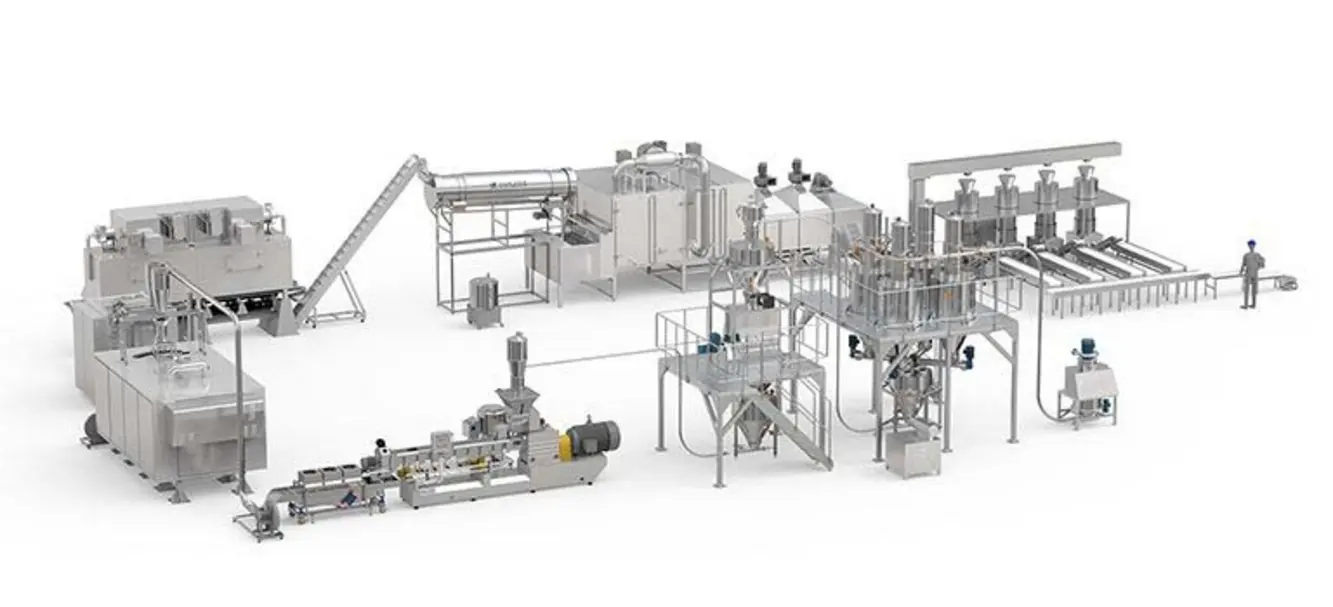
Food processing equipment maintenance in wet and sanitary areas is not simply ordinary mechanical work performed around stainless steel. Each task must protect the product zone as well as restore machine function. A sound routine starts with hygienic work controls, then checks what washdown and cleaning chemicals may have done to seals, electrical enclosures, bearings, fasteners, drains, and exposed surfaces.
For technicians new to food plants, the practical rule is straightforward: control contamination before opening equipment, inspect carefully after washdown, use approved repair materials, and leave a clear record of what was changed and what must happen before production restarts. Site sanitation procedures, food-safety plans, equipment manuals, and lockout/tagout requirements set the exact local requirements.
Start with a hygienic maintenance plan
Maintenance work can introduce metal fragments, grease, tools, temporary materials, and unclean hands or clothing into areas that may contact food. The work plan should therefore cover both the repair and the condition in which the equipment is returned.
Before beginning, confirm the equipment identity, production status, work scope, and isolation method. Coordinate with operations, sanitation, and quality personnel where the plant’s procedures require it. A small adjustment on a guarded conveyor may be routine; replacing a product-contact seal, opening a pump, or welding near a process line usually needs more deliberate controls.
A practical pre-work check includes:
- Verify the machine is safely isolated under the facility’s energy-control procedure.
- Identify product-contact, splash-zone, and non-product areas before disassembly.
- Remove or protect exposed product, packaging, and nearby utensils as required by the site.
- Bring clean tools and only the parts, lubricants, and consumables approved for that application.
- Check clothing, footwear, hair restraints, and personal hygiene requirements for the area.
- Plan how tools, removed hardware, waste, and replacement parts will be accounted for.
- Decide who must inspect, clean, sanitize, or release the equipment before startup.
Do not assume that a replacement part is suitable because it fits mechanically. Its material, surface condition, lubricant compatibility, cleanability, and location all matter. For food-contact and other hygiene-sensitive uses, verify the plant’s approved-parts list and applicable supplier documentation rather than relying on appearance or a general description such as “food grade.”
Inspect equipment immediately after washdown
Washdown can reveal defects that are difficult to see on dry equipment. It can also create failures by driving water toward bearings, cable entries, seals, and enclosures. The best time for a focused inspection is often after cleaning and before production startup, when surfaces are visible and the machine is accessible.
Look for retained water and poor drainage
Standing water is a maintenance clue, not just a sanitation concern. Look at horizontal frame members, hollow sections, belt supports, guards, drip edges, leveling feet, and the bases of motors and controls. Water retained in a location may indicate an inadequate slope, damaged cap, missing drain feature, distorted guard, or an unauthorized field modification.
Also inspect the floor around the machine. Persistent puddling can expose low-mounted components to more water than intended and may make access unsafe. Correcting a drainage or equipment-position issue can prevent repeated electrical and corrosion problems.
Check seals, bearings, and drive components
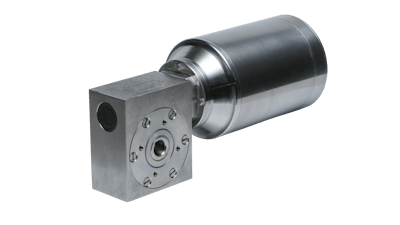
Inspect shaft seals, bearing housings, gearmotor interfaces, chain guards, and belt tracking points for moisture entry, displaced seals, unusual residue, or lubricant leakage. A clean exterior does not prove that water has not entered a component.
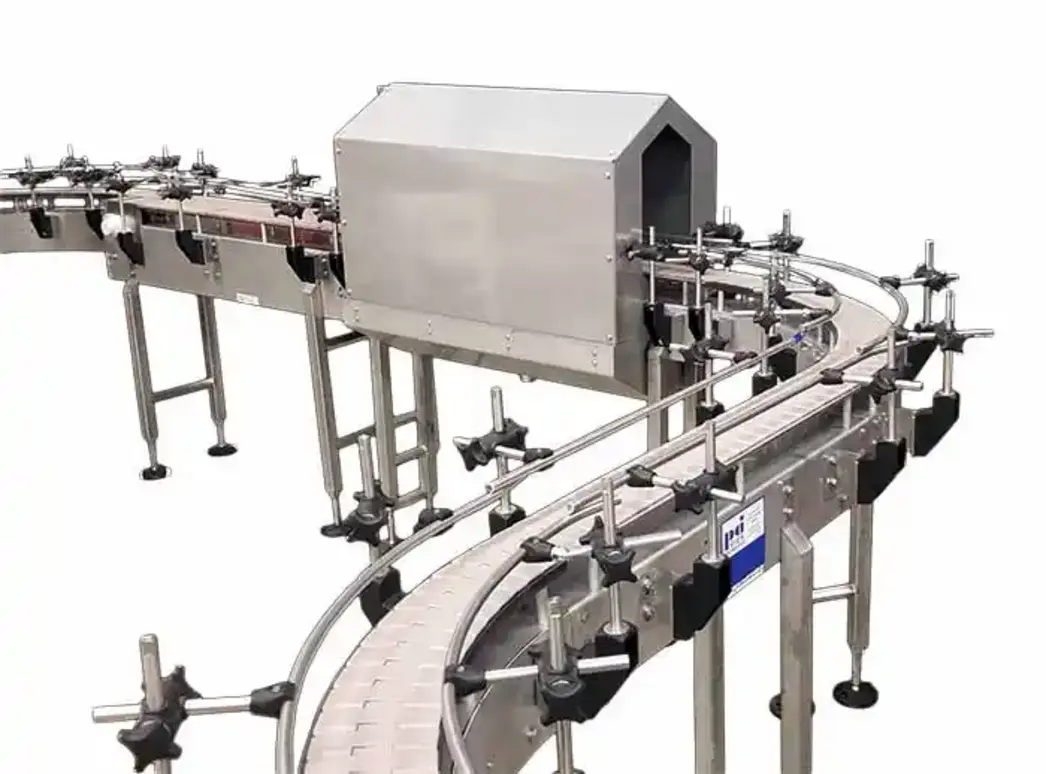
Pay special attention to interfaces that move, vibrate, or receive direct spray. Loose mounting hardware and worn shafts can shorten seal life. On conveyors, also check sprockets, rollers, belt guides, tensioning devices, and return-path components for wear that could produce debris or make cleaning less effective.
Examine electrical ingress points
Wet-area failures often begin at the boundary between a cable and an enclosure. Inspect cable glands, conduit fittings, junction-box covers, gaskets, pushbuttons, sensor faces, connectors, and unused openings. Look for loose fittings, cracked housings, compressed or damaged gaskets, missing plugs, corrosion, and water paths created by cable routing.
Do not open energized electrical equipment or defeat guards or protective devices to speed troubleshooting. If moisture is suspected inside an enclosure, follow the site’s electrical safety process and involve qualified personnel. The cause may be a failed seal, poor enclosure condition, incorrect installation, direct spray exposure, or condensation.
Source: img.foodmanufacturing
Treat corrosion as an early-warning condition
Stainless steel is widely used in food plants, but it is not maintenance-free. Repeated exposure to moisture, chemicals, trapped residues, dissimilar metals, surface damage, and poor drainage can all contribute to staining, pitting, crevice corrosion, or rusting of adjacent carbon-steel parts.
During food plant maintenance inspections, examine welds, fasteners, hinges, frame joints, guard mounts, threaded areas, casters, electrical supports, and locations beneath clamps or labels. Brown staining deserves investigation even when the machine remains operable. The source may be external contamination, damaged surface finish, an unsuitable fastener, chemical exposure, or water trapped at a joint.
Avoid improvised abrasion or chemical treatment that could worsen the surface or leave residues. Escalate corrosion findings according to the plant’s maintenance and sanitation process. Repairs to food-contact surfaces may require a specified finish, cleaning method, inspection, and documented release.
Make repairs cleanable and controllable
A mechanically successful repair can still be unsuitable if it leaves an exposed thread, sharp edge, hollow void, unsealed joint, or inaccessible debris trap. Hygienic equipment repair means restoring both function and cleanability.
When replacing seals, gaskets, belts, guides, guards, or fasteners, compare the new arrangement with the original sanitary design. Confirm that surfaces can be cleaned, drainage has not been blocked, and the repair does not create a ledge or crevice where soil can collect. If a temporary repair is unavoidable, label it, record its limitation, and schedule a permanent correction through the site’s change-control process.
Welding, grinding, drilling, and cutting require particular control because they can create metal debris, heat damage, rough surfaces, and hard-to-clean geometry. Protect the area, account for debris, and arrange the cleaning and verification steps required by the facility before equipment returns to service. A maintenance technician should not independently decide that a repaired product-contact surface is acceptable without the appropriate plant review.
Control lubrication rather than adding more
Lubrication errors are common in wet environments. Under-lubrication can damage bearings and drives, but excess lubricant can migrate, trap soil, attract debris, or create a product-contamination concern. Water-resistant lubricant is not automatically appropriate for every location.
Build lubrication routes around equipment manuals and the facility’s approved-lubricant program. The route should identify the point, lubricant type, application method, interval or condition trigger, and any cleanup requirement. Keep lubricants in clearly identified containers and prevent mix-ups between products.
For each lubrication task, inspect the fitting and surrounding area first. A missing cap, damaged fitting, leaking seal, or grease accumulation may point to a problem that adding lubricant will not solve. Wipe away excess material as permitted by the site procedure, and record abnormal findings for follow-up.
Use inspection levels that fit the equipment
Not every machine needs the same inspection depth. A useful food processing equipment maintenance program ranks assets by safety, food-safety impact, production criticality, failure history, and exposure to washdown.
| Inspection level | Typical focus | Practical use |
|---|---|---|
| Operator observation | Noise, leaks, loose guards, tracking, visible damage | During normal operation and handover |
| Post-washdown check | Water retention, enclosure integrity, damaged seals, corrosion | Before startup or during pre-operational review |
| Scheduled preventive inspection | Wear, alignment, lubrication condition, fasteners, electrical connections | Planned maintenance window |
| Condition-based assessment | Vibration, temperature, motor condition, repeat fault patterns | Critical or failure-prone assets |
| Teardown or overhaul | Internal wear, seal condition, shafts, gearboxes, process-contact components | Planned lifecycle work or recurring failure investigation |
Condition monitoring can help focus labor on high-impact assets, but it does not replace visual sanitary inspections. A healthy vibration trend does not show a cracked cable gland or a damaged gasket.
Close the job with a production-ready handoff
The end of the repair is a control point. Before releasing equipment, confirm that all tools, loose parts, temporary protections, and maintenance debris have been removed. Reinstall guards and covers, restore the machine configuration, and verify that drains, access panels, and cleanout points remain functional.
The area and equipment should then receive the cleaning, sanitizing, inspection, and release activities required by the plant’s procedures. The exact method and acceptance criteria should come from the site’s sanitation program and food-safety plan; they should not be improvised by maintenance personnel during a repair.
A useful handoff record states:
- Asset identification, date, time, and technician or contractor.
- Reported symptom and observed condition.
- Work completed, parts installed, and approved lubricant or consumables used.
- Any product-contact or hygienic-design implications.
- Cleaning, sanitation, quality, or operational follow-up required before restart.
- Temporary repairs, remaining risks, and planned permanent action.
- Test run results and the person or function receiving the equipment.
Clear records make recurring faults easier to identify. For example, repeated moisture faults at one motor may show that replacing the motor is treating the symptom while cable routing, washdown direction, drainage, or enclosure selection remains unresolved.
Common maintenance mistakes in wet food plants
Several habits that are merely inefficient in a general factory can become significant risks in a food facility:
- Reusing a damaged gasket because the line needs to restart.
- Using an unapproved sealant, grease, tape, or fastener near the product zone.
- Leaving excess lubricant on an exposed component.
- Closing an electrical enclosure without checking its gasket, cable entries, and cover condition.
- Treating rust staining as cosmetic without investigating its source.
- Installing a repair that blocks drainage or creates a cleanability problem.
- Returning a machine to operations without documenting required cleaning and release steps.
- Repeating a short-term fix without a record, root-cause review, or permanent repair plan.
A practical routine for reliable sanitary operation
Reliable washdown equipment maintenance depends on a disciplined sequence: prepare hygienically, isolate safely, inspect post-washdown damage pathways, repair with approved materials, remove maintenance-related contamination, and document the handoff. That sequence protects uptime because it addresses failures that wet service can accelerate, including corrosion, water ingress, lubricant loss, and seal deterioration.
The details will vary by product, equipment design, sanitation chemicals, and regulatory scope. Technicians should use the machine manufacturer’s instructions alongside the facility’s written sanitation, quality, safety, and maintenance requirements. In a food plant, the objective is not only to make the machine run again; it is to return it in a condition that can be safely cleaned, inspected, and operated.
References
- Food Processing Equipment Maintenance: Complete Guide. (n.d.). https://loyalfoodmachines.com/food-processing-equipment-maintenance
- Food Processing Plant Maintenance: Best Practices Guide. (n.d.). https://www.bristola2.com/feeds/blog/food-processing-plant-maintenance
- Food Processing Plant Maintenance: Best Practices Guide. (n.d.). https://bristola2.com/feeds/blog/food-processing-plant-maintenance
- Food Processing Equipment Maintenance - Food-Grade Services. (n.d.). https://knackindustrial.com/food-processing-equipment-maintenance.php
- Food Manufacturing Maintenance: Complete Guide. (n.d.). https://oxmaint.com/blog/post/food-manufacturing-maintenance-complete-guide-
- The Importance of Washdown Systems in Food Processing. (n.d.). https://www.strahmangroup.com/resources/blog/importance-of-washdown-systems-in-food-processing-industry
- Maintenance in a Food Manufacturing Facility — Keeping a …. (n.d.). https://extensionpubs.unl.edu/publication/g1815/2007/html/view
- Food processing environments are tough on equipment …. (n.d.). https://www.facebook.com/HELUKABELUSA/videos/food-processing-environments-are-tough-on-equipment-between-frequent-washdowns-m/2893052094232815