Fresh food packaging problems should be treated as a controlled diagnostic exercise, not as an immediate machine fault. A leaking tray, soft pack, poor appearance, gas loss, crushed product, or short shelf-life complaint can originate from equipment condition, an operating deviation, an unsuitable pack format, product variation, inadequate staffing, or a failure in downstream cold-chain handling.
The fastest route to a useful answer is to contain affected product, define the symptom clearly, and compare the failed condition against a known-good run. Check the package, the sealing process, the machine’s condition, the current format setup, and the people and procedures involved before changing several variables at once.
Start with containment and a clear failure definition
Do not begin by adjusting temperature, pressure, vacuum, gas settings, or machine speed based only on a general complaint. First, establish what has failed and where it was detected.
Useful first questions include:
- Is the issue visible at pack-off, after cold storage, after transport, or at retail?
- Does it affect every pack, one lane, one shift, one product, or one production period?
- Is the primary symptom a seal leak, poor pack appearance, inadequate gas retention, product damage, condensation, tray deformation, incorrect label application, or apparent early spoilage?
- Did the problem begin after a film roll change, tool change, maintenance activity, recipe adjustment, format introduction, cleaning cycle, or staffing change?
- Are retained samples, production records, quality checks, and machine alarms available for the affected period?
Segregate product according to the site’s food-safety and quality procedures while the cause is investigated. Decisions about release, hold, rework, disposal, shelf life, and notification should follow the manufacturer’s documented controls and applicable regulatory requirements.
Use a four-part cause framework
Most chilled food packaging failures can be sorted into four overlapping groups. This prevents teams from blaming the machine when the issue is actually a format, product, or operating-control problem.
| Cause group | Typical signs | First checks |
|---|---|---|
| Equipment condition | Repeating defects on one lane or station; drift after a maintenance interval; inconsistent seal appearance | Sealing surfaces, alignment, wear parts, sensors, pneumatic or vacuum performance, preventive-maintenance status |
| Process deviation | Failure begins at a particular time, speed, recipe, or product condition | Machine recipe, setpoint verification, actual process readings, line speed, product feed, dwell consistency, startup checks |
| Pack-format or material issue | Failure follows a new tray, film, lidding material, label, or pack geometry | Approved specification, tooling match, film orientation, tray flange geometry, material storage, supplier change control |
| Staffing or execution issue | Problem clusters by shift, setup crew, product changeover, or temporary labor period | Training, work instructions, handover quality, setup confirmation, escalation discipline, staffing coverage |
A failure can involve more than one category. For example, a worn guide may create inconsistent film tracking, but the issue may only become visible after a narrower film format is introduced. Likewise, a correctly functioning tray sealer may still produce weak seals if product contamination reaches the seal area because product placement or line timing has changed.
Check equipment condition before making broad adjustments
Packaging machine servicing is not only a scheduled maintenance activity. It is also a structured way to rule out physical causes when defects occur.
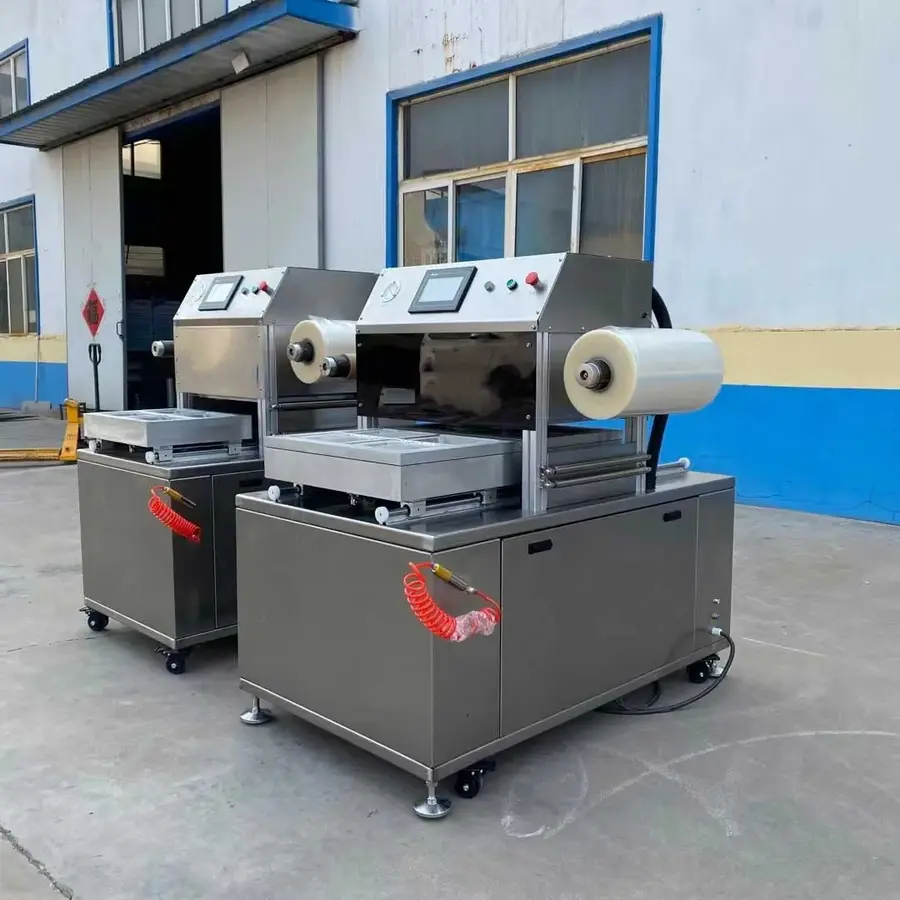
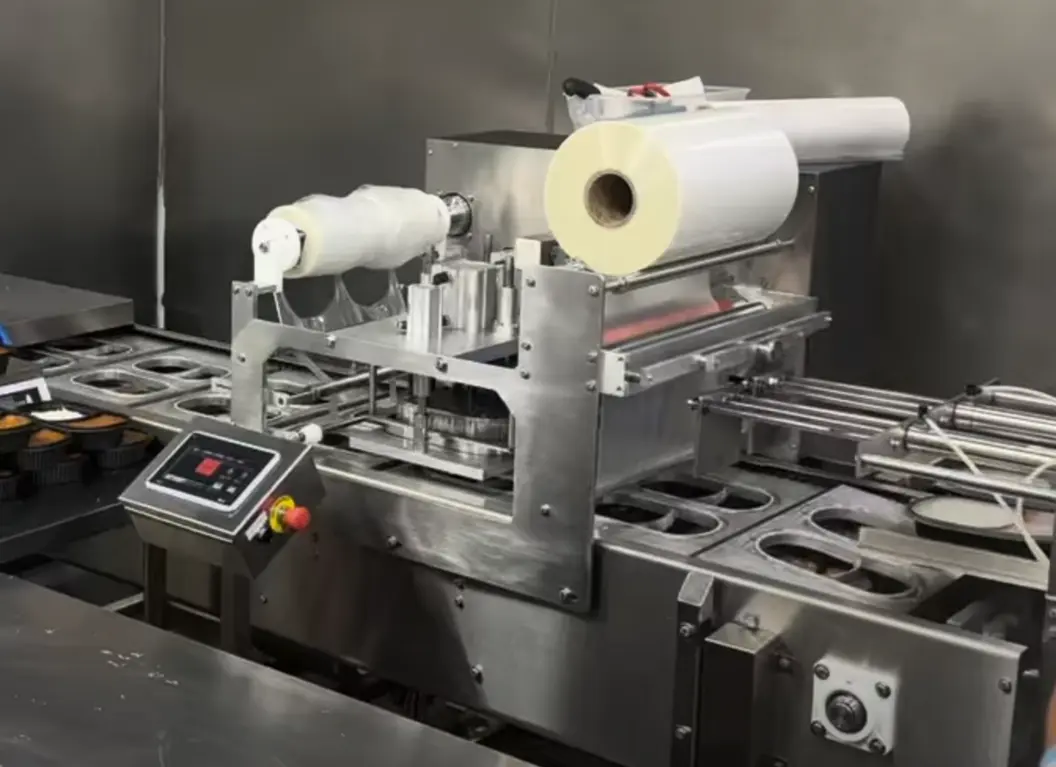
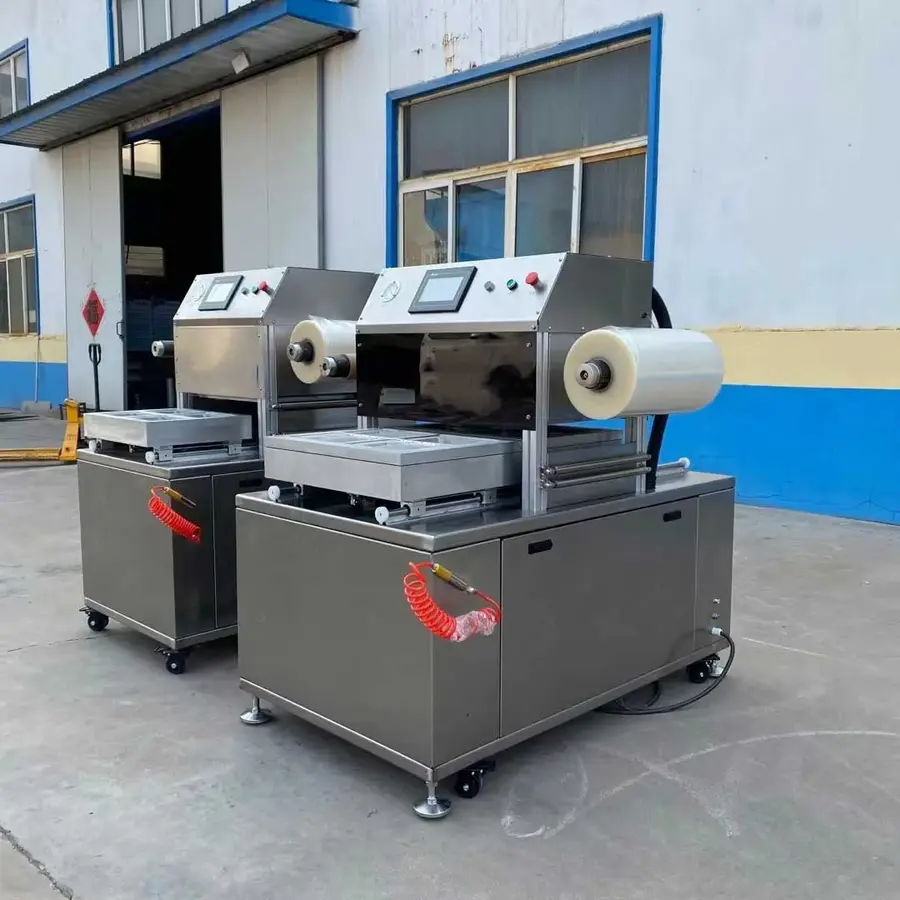
Inspect the parts that directly influence pack formation and sealing. Depending on the equipment, this may include sealing jaws or plates, tooling surfaces, tray locators, film clamps, cutting components, guide rails, vacuum and gas-flush connections, pressure systems, sensors, conveyors, and discharge handling.
Look for conditions such as:
- Damaged, worn, contaminated, or uneven sealing surfaces
- Tooling that is loose, misaligned, or not suited to the active tray format
- Film tracking problems, wrinkles, poor tension, or inconsistent registration
- Product or liquid entering the seal area
- A weak or intermittent vacuum supply, gas-flow issue, or pneumatic instability
- Sensor faults that alter indexing, product position, or sealing sequence
- A lane-specific defect pattern suggesting a localized mechanical issue
- Recent maintenance work that was not followed by a documented setup and verification check
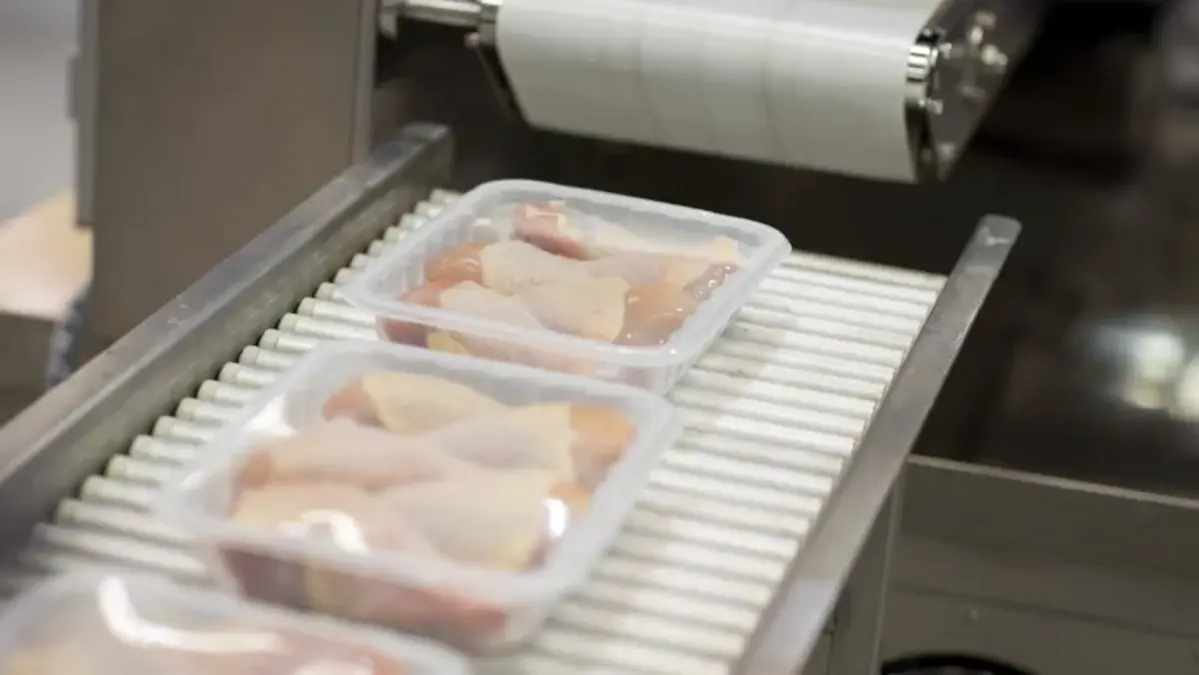
Source: provisioneronline
Do not defeat guards, interlocks, alarms, or safety devices to keep a line running. If inspection requires access inside guarded areas, follow the equipment manufacturer’s instructions and the site’s lockout, isolation, and authorized-maintenance procedures.
Compare actual condition with the approved setup
A machine display can show a selected recipe without proving that the physical process is occurring as intended. Confirm that the correct toolset, film, tray, product, and operating program are in use. Then compare actual checks with the site’s validated or approved packaging specification.
This distinction matters in fresh chilled packing. A setting that produced acceptable packs with one tray or film structure may not be appropriate for another, even if both formats appear similar. Use approved change-control information rather than adapting settings informally on the line.
Review the packaging line process deviation
A process deviation is any departure from the established operating method that can affect pack quality. It may be obvious, such as an unapproved speed increase, or subtle, such as a different product feed pattern that allows sauce, moisture, crumbs, or food particles onto the sealing flange.
Trace the process from product infeed to final inspection:
- Product presentation: Check fill weight, product height, portion position, liquid movement, and whether the product can contact the seal zone.
- Tray or pack placement: Confirm that trays are seated, oriented, and transferred consistently into the sealing area.
- Film handling: Review film identity, storage condition, threading path, tension, tracking, and roll-change practices.
- Sealing cycle: Verify the active recipe and the recorded process controls against the approved specification.
- Discharge and handling: Examine whether packs are scuffed, flexed, punctured, crushed, or distorted after sealing.
- Cold-chain interface: Determine whether the apparent failure developed after packing, during storage, dispatch, transport, or retail handling.
Packaging defects that appear after distribution are not automatically packaging-machine failures. Temperature exposure, handling damage, pallet loading, case design, and retail refrigeration can create symptoms that resemble a weak pack. Investigate the full product journey before assigning root cause.
Verify seal integrity and MAP operational controls
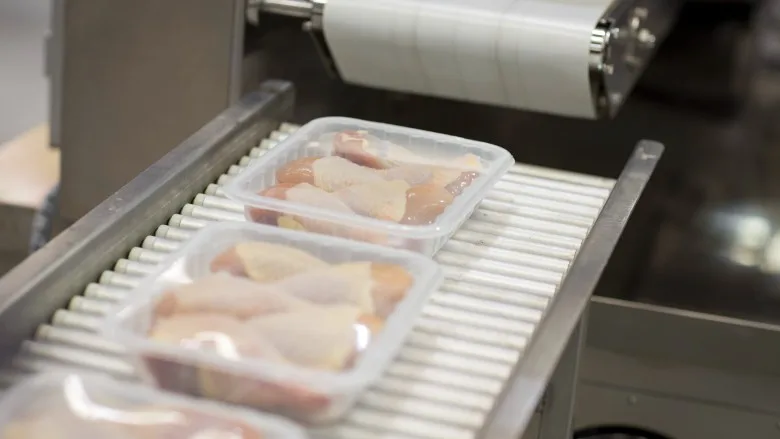
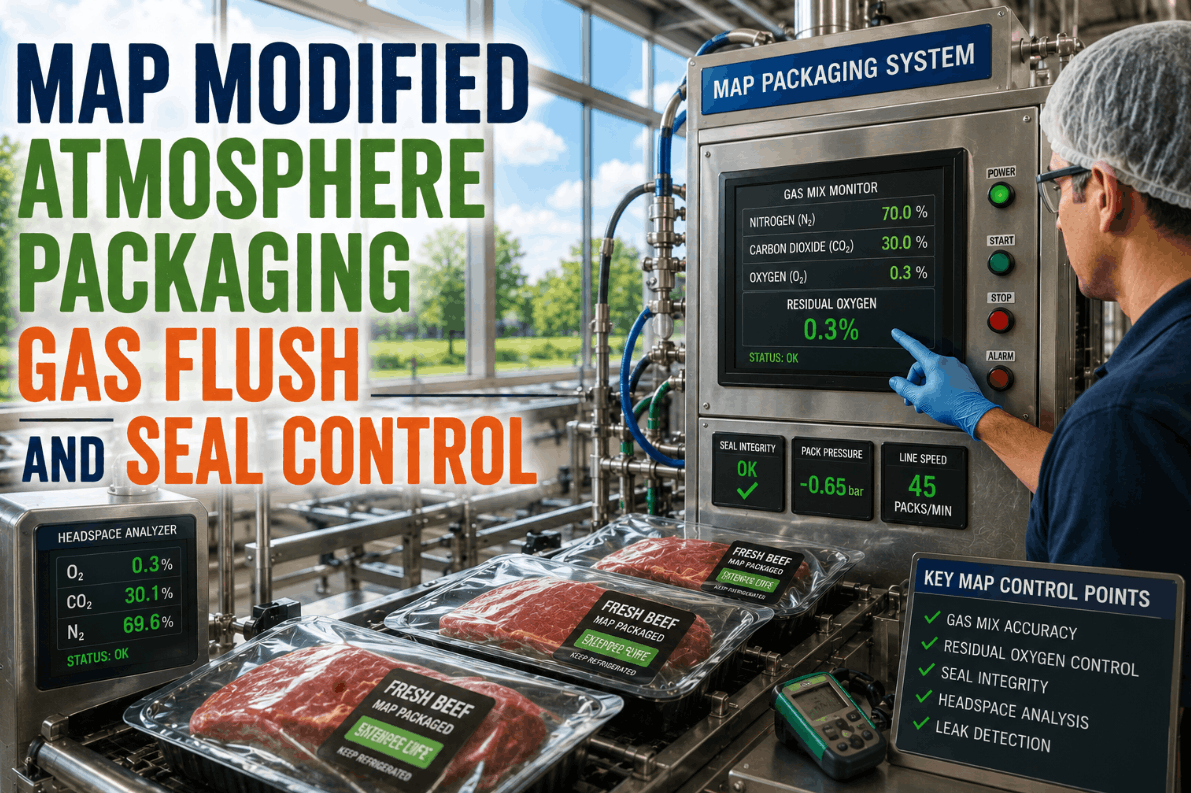
Modified atmosphere packaging depends on the pack remaining intact after sealing. A pack may look acceptable immediately after production while a small leak, incomplete seal, damaged tray flange, or material incompatibility causes performance to deteriorate later.
The right verification method depends on the package and the manufacturer’s control plan. Common approaches can include visual examination, destructive seal inspection, leak detection, seal-strength testing, and gas analysis. The method, sample plan, acceptance criteria, calibration status, and response to failures should be defined by the site’s quality system and packaging specification.
Practical checks for seal-related failures
When investigating a seal issue, compare good and failed packs for:
- Wrinkles, channels, folds, or contamination in the sealing area
- Uneven seal width or appearance across the tray perimeter
- Damage at tray corners, flanges, or cut edges
- Film pull, distortion, or poor trimming
- Differences between lanes, cavities, shifts, or production times
- Evidence of product contact with the seal area
- Changes in tray, film, lidding material, or supplier lot
For MAP, verify the gas supply, mixing arrangement, connections, process sequence, and gas-analysis procedure against the approved pack specification. Do not assume a displayed setting, cylinder label, or nominal gas blend confirms the atmosphere inside finished packs. Where gas composition is a quality or safety control, the site should use its documented verification method and escalation process.
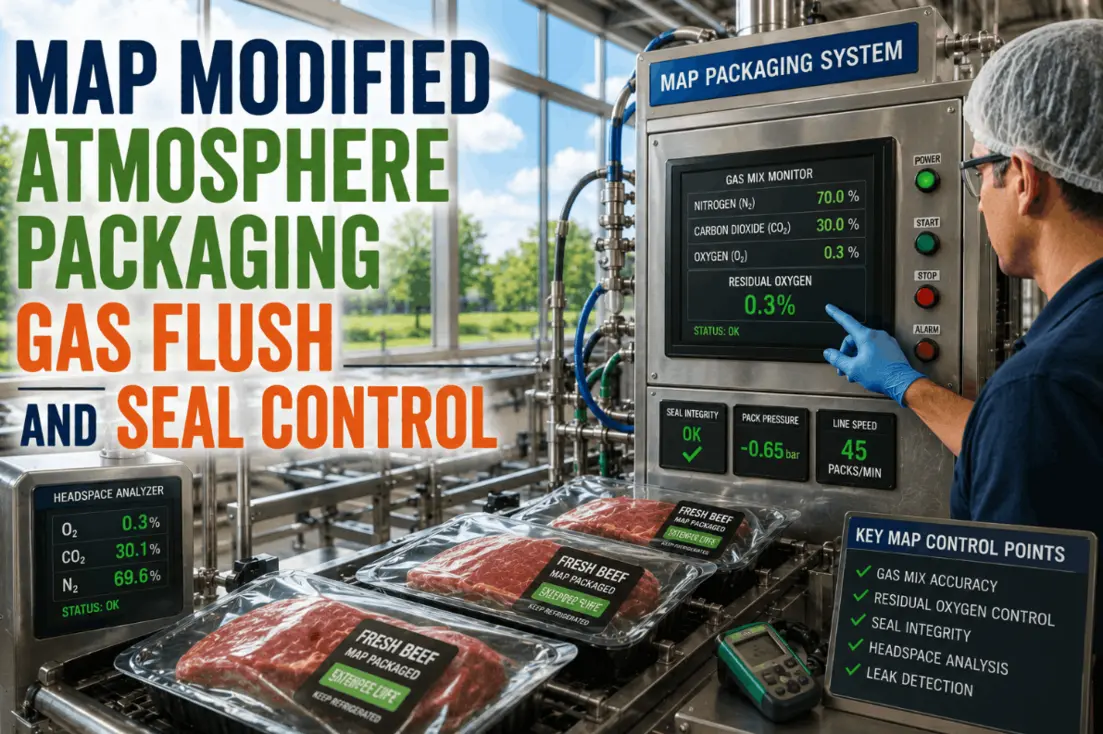
Source: ifactoryapp
Treat new pack formats as controlled process changes
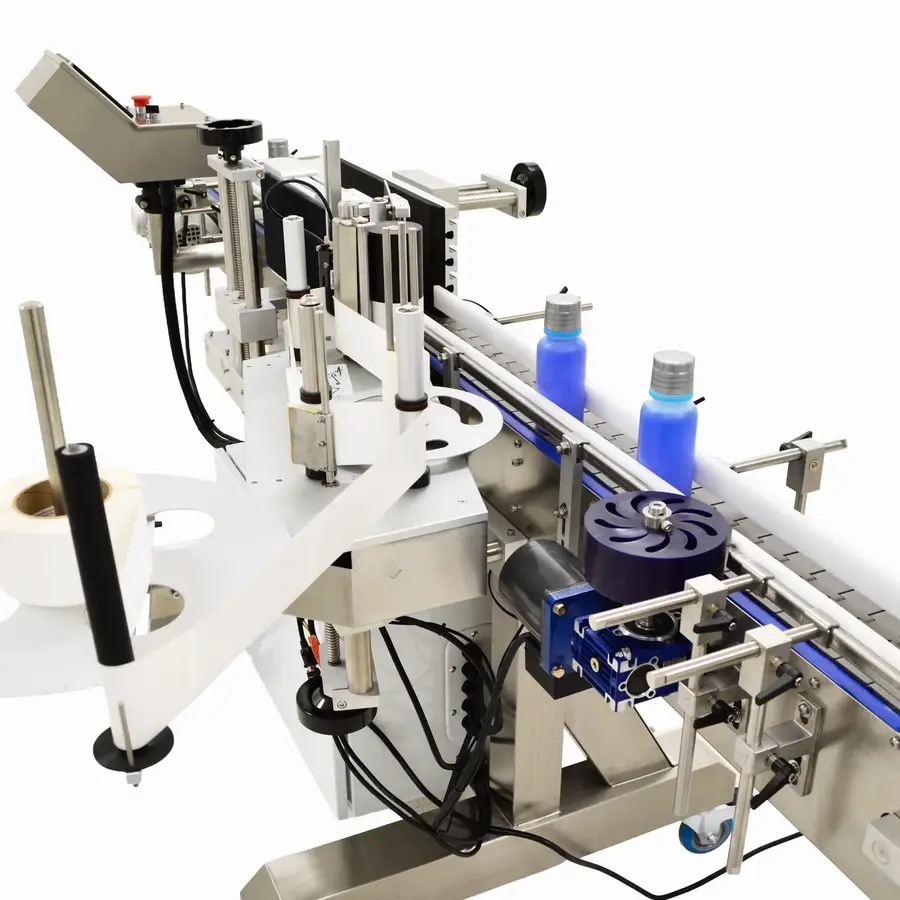
A new tray size, depth, flange design, film gauge, lidding material, label position, carton pattern, or product portion can change line behavior. Even small dimensional differences can affect sealing contact, film draw, vacuum performance, cutting, pack ejection, and downstream handling.
Before concluding that a new format is defective, review whether the change was properly assessed across the full line. The review should include compatibility with the sealer toolset, approved machine recipe, product fill profile, film specification, inspection method, secondary packaging, and distribution conditions.
A useful comparison is to run retained samples or documented reference packs from the previous approved format alongside samples from the changed format, using the same controlled inspection method. This helps distinguish a format-specific problem from a broader machine or process issue.
Assess staffing, training, and handover quality
Staffing problems are often process-control problems in disguise. A line may have enough people but still lack trained coverage for format changes, film loading, seal inspection, quality sampling, fault escalation, or end-of-run cleaning and restart.
Look for gaps such as:
- Operators asked to run unfamiliar packaging formats without documented training
- Temporary or reassigned staff without clear visual work instructions
- Incomplete shift handovers after a defect or machine adjustment
- Different setup methods between crews
- Quality checks recorded inconsistently or not acted on promptly
- Maintenance, operations, and quality teams working from different versions of the pack specification
The corrective action should be specific. “Retrain operators” is rarely enough on its own. Improve the task instruction, define the setup confirmation points, clarify who can alter critical settings, and document the condition that requires escalation.
A practical escalation sequence
When fresh food packaging problems persist, use a staged escalation rather than repeatedly adjusting the line.
- Contain and document: Identify affected lots or time periods, retain representative samples, and record the symptom.
- Confirm the pack specification: Verify the approved tray, film, product, recipe, and inspection requirements.
- Inspect machine and tooling condition: Focus on physical wear, alignment, contamination, utilities, and lane-specific differences.
- Review process records: Compare settings, alarms, speed, changeovers, quality checks, and staffing against a known-good run.
- Test the suspected mechanism: Change one authorized variable at a time and document the result.
- Escalate to specialist support: Involve the equipment manufacturer, packaging-material supplier, tray supplier, or qualified service provider when the evidence points to tooling, material compatibility, controls, or a defect that cannot be resolved safely on site.
Prevent recurrence with better evidence
The most useful corrective action is one that makes the next failure easier to detect and diagnose. Maintain a pack-format history, machine-service record, approved setup parameters, changeover checklist, defect photographs, and clear quality escalation criteria. Trend failures by product, format, lane, shift, film or tray lot, and time after packing.
Fresh chilled packaging is a system, not a single machine function. By separating equipment condition, operating process, pack format, staffing execution, and post-pack handling, manufacturers can avoid random adjustments and focus on the evidence most likely to reveal the true cause.
References
- Common Food Packaging Failures and How to Avoid Them. (n.d.). https://rutanpoly.com/common-food-packaging-failures-and-how-to-avoid-them
- Common Problems and Solutions in Modified Atmosphere …. (n.d.). https://landercn.com/modified-atmosphere-packaging/common-problems-and-solutions-in-modified-atmosphere-packaging-map-for-food
- Common Problems in Automatic Food Packaging and …. (n.d.). https://shkpack.com/ko/blogs/news/common-problems-in-automatic-food-packaging-and-how-to-solve-them
- Package Seal Testing for Food Packaging Quality. (n.d.). https://exigesinstruments.com/package-seal-testing-food-packaging
- Modified Atmosphere Packaging Technology of Fresh and Fresh-cut Produce and the Microbial Consequences—A Review. (n.d.). https://pmc.ncbi.nlm.nih.gov/articles/PMC7089433
- Five ways to mitigate common sealing issues. (n.d.). https://www.wnapt.com/knowledge-center/blogs/Five-ways-to-mitigate-common-sealing-issues
- Leak Detection for Packaging and Seal Integrity Testing. (n.d.). https://www.pryde.com.au/post/leak-detection-and-seal-integrity-testing-avoiding-product-loss
- What’s Really Behind Food Package Failures May Shock You - Inline Plastics. (n.d.). https://www.inlineplastics.com/blog/whats-really-behind-food-package-failures-may-shock-you