A bottle unscrambler should be sized as a supply system for the filler, not as an isolated machine. Start with the filler’s sustained bottle demand, then allow enough operating margin and downstream accumulation to prevent brief stops from starving the filler. The final specification must also reflect the hardest bottle to run: its shape, weight, neck geometry, material, label features, and required orientation.
For many food packaging lines, a rotary bottle unscrambler is a practical choice when empty plastic bottles arrive in bulk and must be delivered upright, neck-up, at a controlled rate. The machine can reduce manual bottle handling, but its real value depends on whether it provides stable output through normal line interruptions and can change between the container formats the plant actually runs.
What a rotary bottle unscrambler does
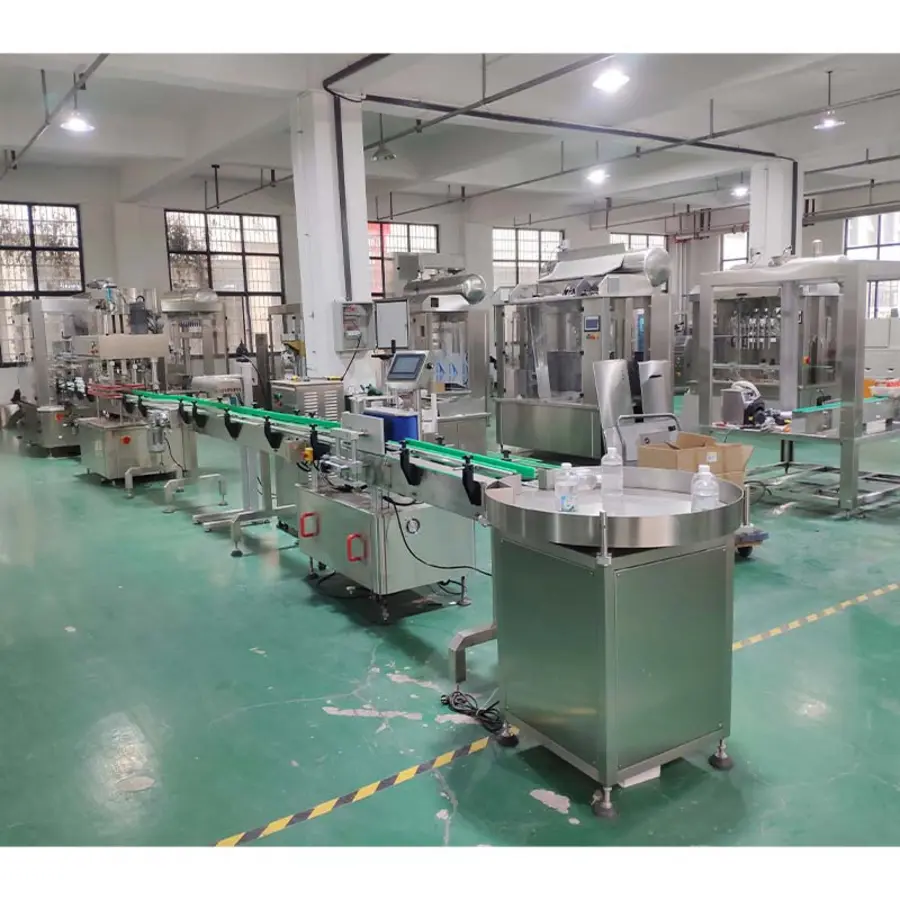
A rotary bottle unscrambler, sometimes called a bottle orienting machine, accepts bottles in random positions from a bulk hopper. It separates and presents them to a rotating sorting system, where mechanical guides, gravity, and often air assistance allow correctly oriented bottles to continue while improperly positioned bottles are returned for another pass. Properly oriented containers leave on a single-file conveyor for filling, capping, labeling, or other downstream operations.
The exact design differs by supplier and bottle type. Some systems use a rotating bowl or disc with pockets, rails, and reject paths. Others combine bulk handling with belts and orientation modules. The common objective is the same: produce a consistent neck-up bottle stream without damaging containers or creating frequent jams.
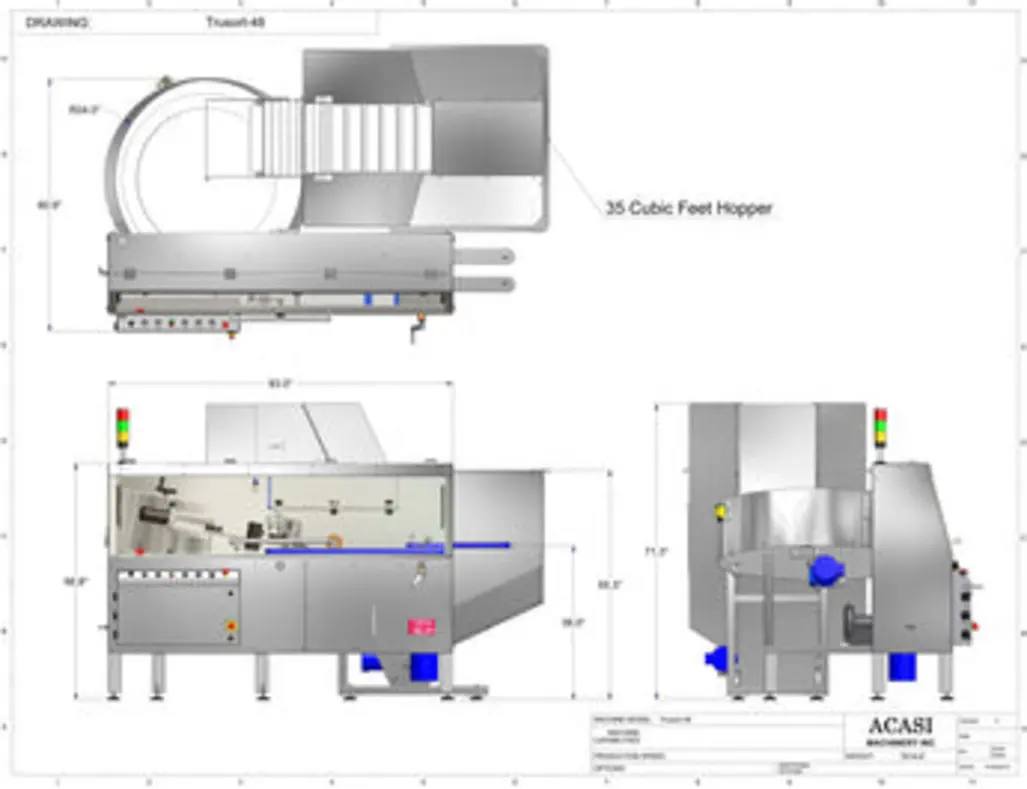
Source: acasi
A rotary design is often well suited to high-volume bulk bottle feeding because it can combine storage, separation, orientation, and discharge in a compact equipment area. However, it is not automatically the best answer for every container. Very unusual shapes, handles, off-center necks, low-rigidity lightweight bottles, or frequent format changes may require dedicated tooling, more extensive trials, or a different orienting approach.
The first sizing question: what rate must the filler receive?
Use the filler’s required sustained rate as the starting point. Do not begin with the supplier’s maximum advertised unscrambler rate. A machine that can reach a high rate with one small, round bottle may run substantially slower with a larger, square, flexible, or unstable package.
Ask for these operating figures:
- Filler target bottles per minute during normal production
- Expected maximum production rate by SKU
- Typical filler efficiency and minor-stop pattern
- Number and duration of planned breaks or bottle replenishment intervals
- Required accumulation between the unscrambler and filler
- Expected future speed increase, if a line expansion is credible
The unscrambler should normally have reserve capacity above the filler’s demand so it can rebuild accumulation after a minor interruption. A commonly cited planning approach is to provide roughly 15% to 20% more available rate than the filling machine, but this is only a starting point, not a universal rule. The correct margin depends on bottle behavior, available accumulation, controls response, and how often the filler stops. A line with little accumulation or frequent interruptions may need more reserve; a line with a large, well-controlled buffer may need less.
A simple preliminary calculation is:
Required stable unscrambler output = maximum filler demand × planned capacity margin
For example, if a filler needs 120 bottles per minute and the line team chooses a 20% planning margin, the preliminary output target is 144 bottles per minute. The supplier should confirm that rate for every relevant bottle, not merely for a favorable sample.
Size the machine around the hardest container
Bottle geometry has a direct effect on orienting reliability, speed, discharge stability, and change-part requirements. Provide physical samples early in the selection process, including production-quality bottles rather than only design samples.
Bottle details to document
For each format, record:
- Overall height and maximum body width
- Base diameter or footprint dimensions
- Neck finish diameter, height, and location
- Round, oval, rectangular, square, or asymmetrical body shape
- Center of gravity and whether the bottle is top-heavy
- Empty bottle weight and wall stiffness
- Material, such as PET, HDPE, PP, or another resin
- Handles, grips, embossing, molded labels, seams, or decorations
- Whether bottles nest, interlock, cling from static, or scuff easily
- Required discharge orientation beyond neck-up, such as handle direction or label-panel position
Small, rigid, symmetrical bottles are generally easier to handle than broad, lightweight, irregular containers. A bottle that stands securely on a conveyor may still be difficult to separate in bulk if it nests with neighboring bottles. Conversely, a tall container with a narrow base may orient correctly inside the machine but tip during transfer to the filler.
If the line uses one highly challenging bottle alongside several easy formats, size and test the project around the challenging format. Otherwise, the equipment may meet the nominal rate only for the easiest SKU.
Hopper capacity is a labor and uptime calculation
Hopper volume does not determine orienting speed, but it determines how often operators must replenish bottles. This matters especially for small bottles: a hopper can hold a large piece count, while the same physical volume may hold only a short supply of large bottles.
Calculate hopper run time using the usable bottle quantity, not a theoretical maximum:
Hopper run time in minutes = usable hopper bottle count ÷ actual line consumption rate
For instance, a hopper holding 3,000 usable bottles feeding a line at 150 bottles per minute provides about 20 minutes of run time before allowance for residual bottles, refill practices, and actual equipment behavior. If the plant expects unattended operation through longer intervals, either specify more bulk storage, use an automatic bottle supply arrangement, or adjust staffing expectations.
Also consider how bottles will reach the hopper. Bag dumping, gaylord unloading, bulk conveyance, and manual replenishment each need floor space, safe access, and a practical method for preventing mixed bottle formats from entering the system.
Specify accumulation separately from hopper storage
Hopper storage and bottle packaging line accumulation solve different problems.
- Hopper storage keeps the unscrambler supplied with random bulk bottles.
- Downstream accumulation keeps the filler supplied with upright, ready-to-fill bottles during brief disturbances.
An unscrambler can have a full hopper while the filler starves if there is inadequate discharge control or no usable buffer between the two machines. Conversely, a downstream buffer can absorb short filler stops but cannot compensate for a hopper that must be refilled too often.
The outfeed conveyor should match the bottle’s stability. Lightweight or tall bottles may need close guide control, suitable conveyor transfers, or an air conveyor arrangement to prevent tipping after discharge. The conveyor receiving bottles must also have enough length and control logic to manage backup without forcing bottles against one another or causing jams.
When reviewing layout, identify the accumulation zone, its usable capacity, and what happens when the filler stops. Confirm whether the unscrambler slows, stops, recirculates bottles, or continues feeding. Poor coordination at this point is a common cause of repeated micro-stops.
Define the required orientation, not just “neck-up”
Many filling lines require only an upright, neck-up bottle. Others need a more specific rotational position for downstream equipment. Examples include bottles with handles, front panels, trigger features, off-center necks, or label-registration requirements.
Be precise about where orientation is needed:
| Requirement | Typical implication for the unscrambler and line |
|---|---|
| Neck-up only | Standard upright discharge may be sufficient. |
| Handle or molded feature aligned | Additional orienting capability or downstream orientation control may be needed. |
| Front label panel presented consistently | Confirm whether orientation occurs before filling, before labeling, or both. |
| Off-center neck correctly presented | Machine trials and bottle-specific tooling are especially important. |
| Capper requires defined bottle position | Review the entire filler-to-capper transfer, not only the unscrambler outfeed. |
A bottle orienting machine should be specified according to the orientation needed at the point of use. Requiring precise rotational orientation at the unscrambler when it is not needed until labeling may add unnecessary complexity. On the other hand, assuming downstream equipment will correct orientation without confirming it can do so can create a costly integration problem.
Plan bottle unscrambler changeover around actual production scheduling
A multi-SKU food line may gain more from fast, repeatable changeovers than from maximum top speed. Ask suppliers to break down the bottle unscrambler changeover procedure by task:
- Change parts to remove and install
- Guides, rails, disc settings, or sorting elements to adjust
- Tools required
- Format recipes or mechanical setting records available
- Verification steps before production starts
- Cleaning access and parts handling requirements
- Storage space for dedicated format components
Dedicated change parts can improve repeatability and stability for difficult bottles, but they increase the number of components to manage. More adjustable systems may reduce tooling inventory, yet they can require careful setup and validation. The right choice depends on the number of bottle formats, run lengths, operator skill, and cost of lost production time.
Do not accept a stated changeover time without defining its boundaries. Confirm whether it includes cleaning, bringing parts to the line, settings verification, first-bottle inspection, and recovery to stable production rate.
Integration questions for the equipment specification
A useful request for quotation should include more than bottles per minute. It should state the system boundaries and responsibilities.
Include these items in the specification
- Bottle drawings and multiple physical samples for every format
- Required rate by format and the target stable output rate
- Required orientation at the unscrambler discharge
- Hopper replenishment method and desired run time
- Downstream conveyor type, elevation, width, guides, and accumulation length
- Filler infeed conditions and control interface requirements
- Available floor area, maintenance clearance, and operator access
- Electrical and compressed-air utilities to be confirmed with the supplier
- Required construction, cleanability, and material compatibility for the production environment
- Changeover expectation, format list, and change-part storage needs
- Fault handling, low-bottle detection, backup detection, and line-stop logic
- Acceptance criteria based on stable performance with production bottles
For food applications, also review cleanability and access in the context of the plant’s sanitation program. The appropriate construction details, cleaning method, and materials depend on whether the machine is in a dry packaging area, exposed to washdown, or located near open product. These requirements should be verified with the equipment supplier and the plant’s quality, sanitation, and engineering teams.
Common sizing mistakes
Choosing by peak speed alone
Peak rate can be misleading. Ask for the reliable rate with your bottle, at your required orientation, after normal setup and over a sustained run.
Ignoring large-bottle hopper run time
A hopper that holds thousands of small bottles may hold only a limited number of large containers. Size bulk storage by minutes of production, not by hopper dimensions alone.
Treating all bottles as equivalent
A round, rigid bottle and a lightweight rectangular bottle may have very different stable rates on the same machine. Establish format-specific expectations.
Leaving conveyor integration until late in the project
Outfeed transfers, guides, air handling, and accumulation often determine whether the filler receives a stable bottle supply. Design the connection as part of the unscrambler project.
Underestimating changeovers
A machine that handles many sizes in principle may still require substantial time, dedicated parts, and adjustment discipline. Match the design to the production schedule.
A practical final checklist
Before selecting a rotary bottle unscrambler, confirm that the proposed system can answer yes to these questions:
- Can it sustain the required rate for the most difficult bottle format?
- Is there enough capacity margin to recover from normal minor stops?
- Does hopper volume provide acceptable operator refill intervals?
- Will the machine deliver the exact orientation required downstream?
- Is there sufficient controlled accumulation between unscrambler and filler?
- Can the outfeed conveyor keep the bottles stable through transfer?
- Are changeover parts, adjustments, and storage requirements acceptable?
- Has the supplier evaluated representative production bottles, including all difficult geometries?
- Are controls, backup signals, and stop/start behavior defined across the line?
- Are sanitation, access, and maintenance requirements suitable for the plant environment?
Rotary systems use gravity, mechanical selection, and air-assisted handling to turn bulk bottles into an orderly feed. But the right machine is selected through line-level sizing: stable filler demand, bottle behavior, hopper replenishment interval, downstream accumulation, and repeatable changeover all need to work together. Suppliers such as Acasi and Posimat describe the bulk feeding and neck-up orientation principle, while the final configuration should be validated against the plant’s actual containers and operating conditions.
References
- What is a Bottle Unscrambler and Principles of Operation? – Acasi. (n.d.). https://acasi.com/blogs/news/bottle-unscrambler-machine-principle
- Rotary Bottle Unscramblers: 2026 Buyer’s Guide. (n.d.). https://industryidx.com/rotary-bottle-unscramblers-buyers-guide
- What Is a Rotary Bottle Unscrambler? – SUNHANPACK. (n.d.). https://sunhanpack.com/blogs/news/what-is-a-rotary-bottle-unscrambler
- Role of Bottle Unscramblers in Packaging Automation. (n.d.). https://aesus.com/role-of-bottle-unscramblers-in-packaging-automation
- Unscramblers - Posimat. (n.d.). https://www.posimat.com/en/bottle-unscramblers
- Combo-Line Bottle Unscramblers - Unscrambling Equipment | Pace. (n.d.). https://www.pacepackaging.com/videos/combo-line-bottle-unscrambler-orientors
- A Guide to Bulk Plastic Bottle Unscramblers. (n.d.). https://www.sigmaequipment.com/guide/bulk-plastic-bottle-unscrambler
- High Speed Bottle Unscrambler Machine - Count Bottling Line. (n.d.). https://ruidapacking.com/product/high-speed-bottle-unscrambler-machine