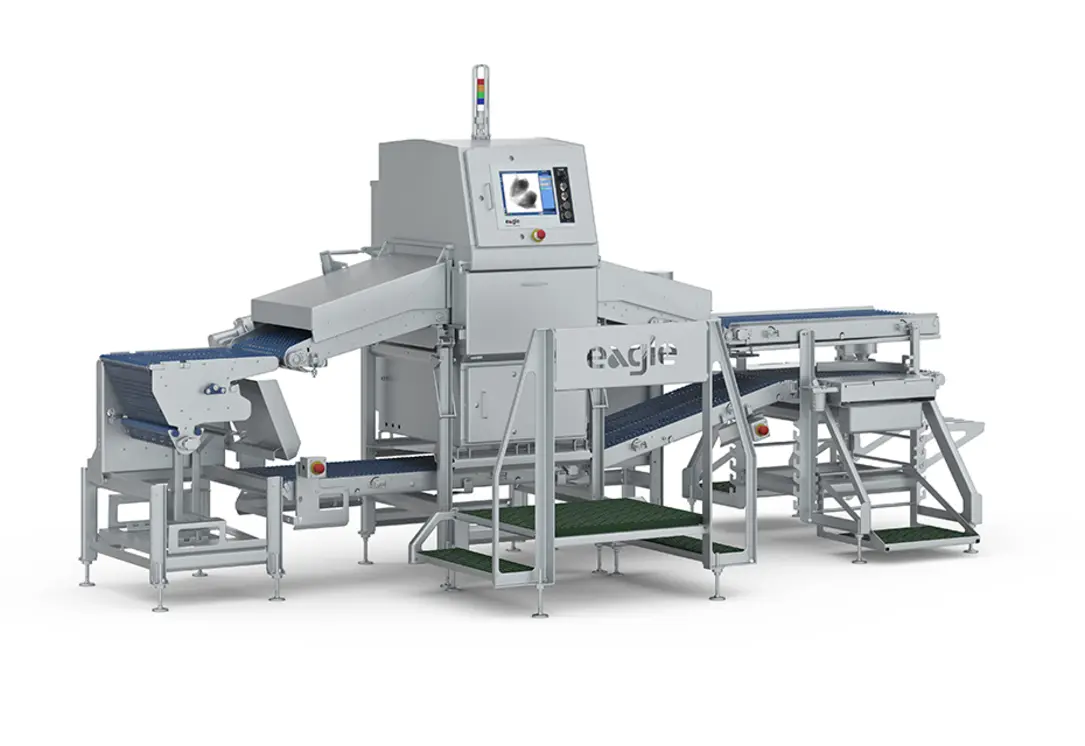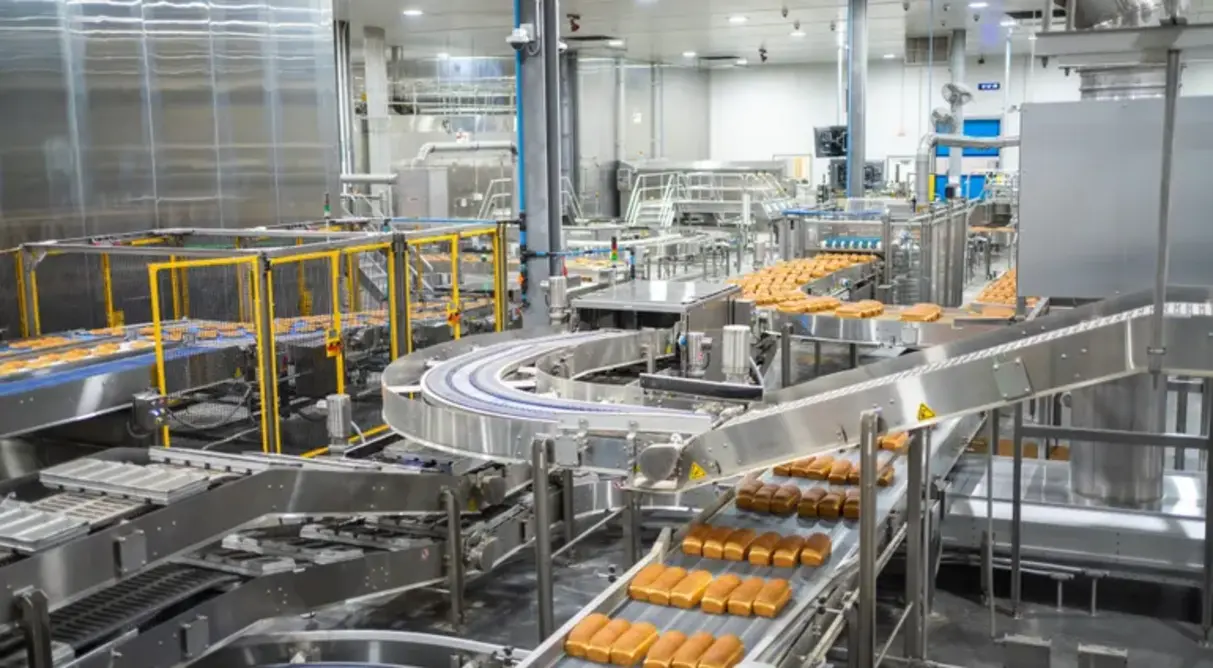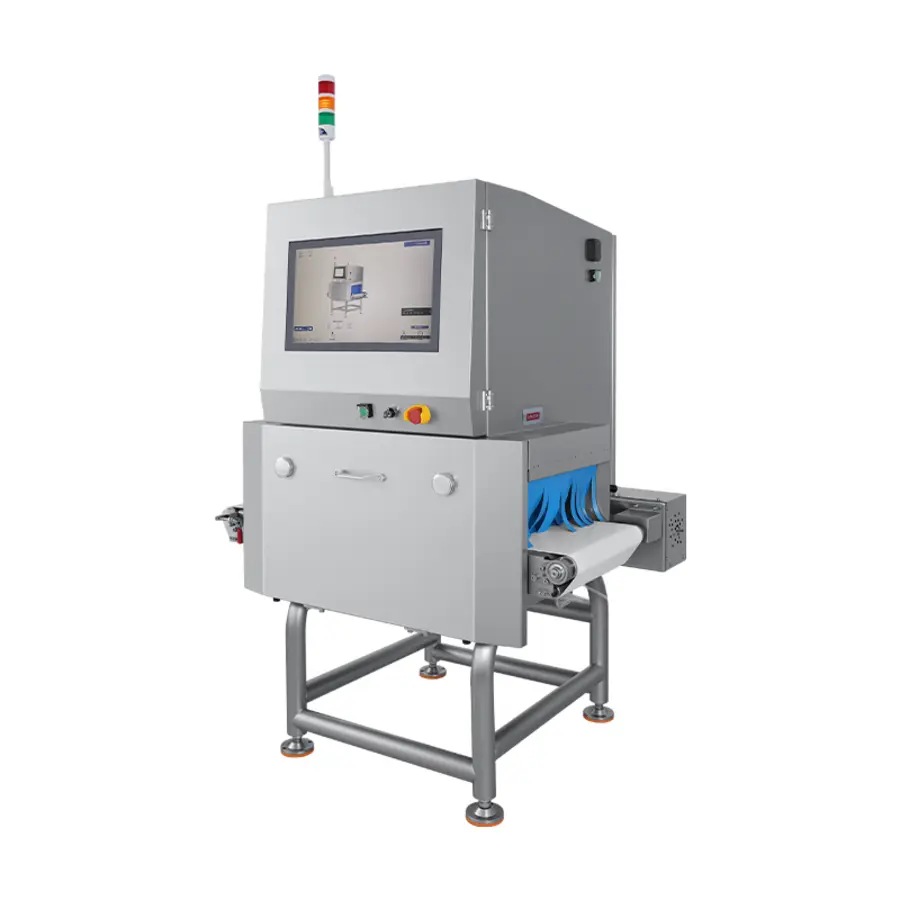
A food X-ray inspection system is usually worth considering when a packaged product has a credible risk of dense nonmetal contaminants, when package material makes metal detection difficult, or when the line also needs checks such as fill level, missing components, or product integrity. It is not automatically a better choice for every line. The right system is the one that can demonstrate reliable performance on your actual product, in its actual package, at normal operating conditions.
Start with the contamination risk and the inspection objective, not a published detection figure. A small, dense test piece moving through a thin, uniform product is a very different application from a similar object hidden within a thick, variable product. Product density, package geometry, orientation, belt speed, aperture size, and reject handling all affect the practical performance of a food X-ray inspection system.
Decide whether X-ray inspection is the right control
X-ray inspection works by creating an image based on differences in X-ray absorption. Materials that are denser, thicker, or otherwise attenuate X-rays differently from the surrounding product may be visible to the system software. In packaged-food applications, systems are commonly used to identify foreign material such as metal, glass, stone, mineral fragments, some bone, and some dense plastics or rubber.
The important limitation is that X-ray inspection detects contrast, not simply the presence of an object. A low-density material may be difficult or impossible to distinguish from the product. Detection can also be limited where the product itself has substantial density variation, overlapping pieces, thick areas, folds, seams, closures, or other structural features.
A metal detector may remain the more appropriate primary control where metal is the only identified hazard, package conditions are suitable, and its validated sensitivity meets the risk assessment. X-ray inspection can add value where the hazard profile includes nonmetal contaminants or where metallized packaging complicates conventional metal detection.
Metal detector vs. X-ray food inspection
| Selection question | Metal detector | Food X-ray inspection system |
|---|---|---|
| Main detection principle | Detects metallic contaminants | Detects density and absorption differences in an image |
| Typical contaminant scope | Ferrous, nonferrous, and stainless steel metals, subject to application conditions | Metal plus certain dense nonmetal contaminants, depending on product contrast |
| Metallized packaging | May present application challenges | Often suitable, but the package and product still require testing |
| Product-effect sensitivity | Can be influenced by conductive or wet products | Can be influenced by density variation, thickness, and product overlap |
| Additional quality checks | Usually focused on metal detection | May support checks such as missing items, fill level, or package-related anomalies where the application is suitable |
| Best basis for choice | Validated metal control requirement | Broader contaminant and quality-control requirement validated on the actual line |
Do not treat this as a simple technology ranking. Some facilities use both technologies at different process points because each addresses a different risk or product condition.
Define the inspection task before requesting quotations
A useful equipment brief describes what the machine must inspect, what it must reject, and how the line actually runs. Provide suppliers with representative samples rather than only an ideal package.
Include the following information:
- Product type, ingredient profile, moisture condition, and expected density variation
- Package type, dimensions, material, seals, labels, closures, trays, and any metallized elements
- Product presentation, including flat, upright, random, single-file, or overlapping orientation
- Maximum and normal line speeds, product spacing, and expected accumulation conditions
- Product height, width, and length, including the largest format expected during the machine’s life
- Foreign-material hazards identified in the facility risk assessment
- Quality checks needed beyond contaminant detection
- Available line space, conveyor elevation, electrical supply, environmental conditions, and sanitation needs
- Existing controls, including upstream sieves, magnets, metal detectors, or process controls
Ask for a documented application trial using production-representative product and packaging. A test with an empty package or a uniform sample may be useful for early screening, but it is not enough to establish line performance.
Understand the product and package effect
The product itself is often the largest variable in X-ray inspection for packaged food. Dense products can make it harder to see a small contaminant. Products with air voids, uneven distribution, variable piece count, or irregular shape can create natural image variation that must be distinguished from a true foreign object.
For example, a system inspecting evenly filled, shallow packs may have a clearer imaging task than one inspecting products that are piled unevenly inside a deep tray. A product containing bone, seeds, nuts, dense inclusions, or large particulate ingredients can require especially careful testing because these features may resemble a contaminant in the image.
Package features matter as well. Consider:
- Tray depth and product thickness: Greater material thickness can reduce image contrast.
- Seams, folds, and closures: These can create dense regions that need to be accounted for in setup and validation.
- Metal clips, lids, or inserts: These may be legitimate package features but can obscure adjacent areas.
- Labels and coding: Their position should be consistent if they affect the inspected image.
- Frozen versus ambient product: Product condition can change image characteristics and conveyor behavior. Test the conditions in which the line will operate.
A food X-ray machine selection process should account for all approved stock-keeping units, not just the easiest package. If multiple formats are planned, group them by inspection difficulty and validate the most demanding representative format.
Size the aperture and conveyor correctly
A larger inspection aperture is not automatically better. The aperture must safely accommodate the tallest and widest product presentation, but unnecessary open space can reduce the inspection setup’s ability to focus on the relevant product area. Select a system whose aperture and conveyor dimensions match the maximum package envelope, expected belt tracking, and reasonable production variation.
Also review the machine as part of the line, rather than as a standalone cabinet. Confirm:
- Infeed and discharge conveyor heights
- Straight, stable product transfer into and out of the inspection zone
- Adequate package separation for reliable imaging and rejection
- Clearance for guards, access doors, sanitation, and maintenance
- Ability to prevent products from bypassing the inspection point
- Safe routing of rejected product away from accepted product
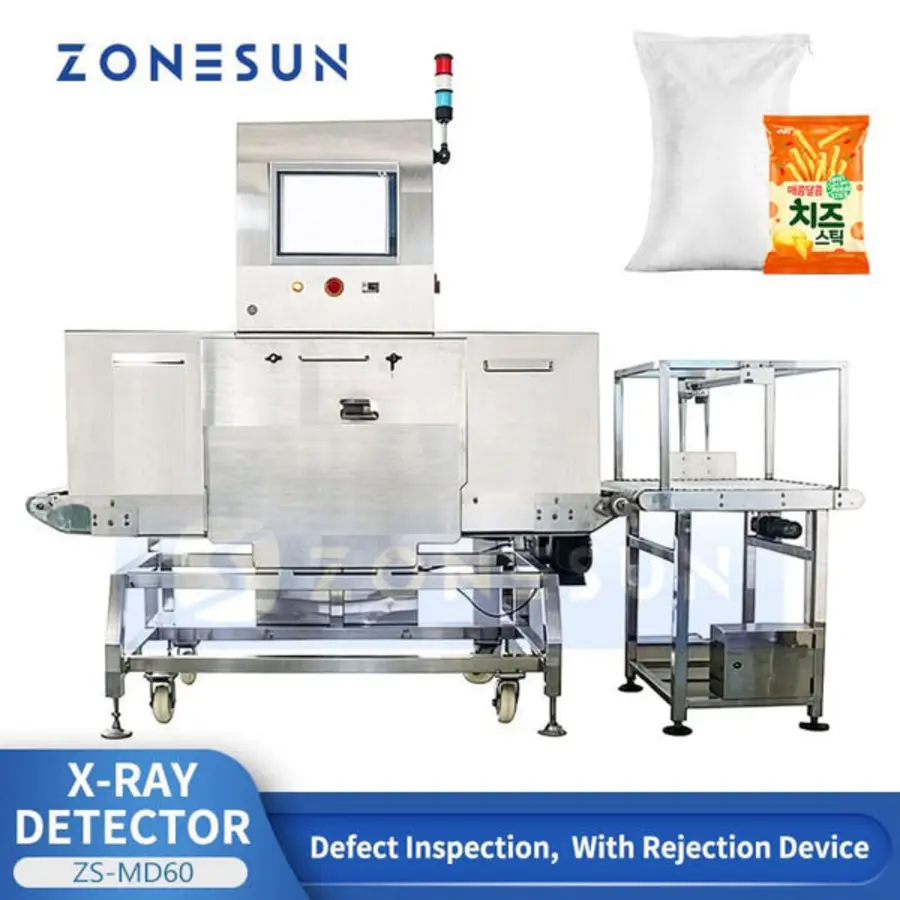
Source: zonesunpack
Product orientation should be controlled wherever possible. A package that arrives skewed, unstable, stacked, or in intermittent contact with another pack can be harder to inspect and harder to reject accurately. If orientation cannot be controlled, state that condition explicitly during application trials.
Match inspection performance to line speed
Line speed is not just a throughput number. At higher speeds, the system must acquire and process images, track each package, and activate the reject mechanism within a shorter time window. Short product gaps can further complicate reliable product tracking.
When discussing capacity, ask suppliers to demonstrate operation at normal and maximum planned speed with realistic package spacing. Also consider startup, stop-start operation, accumulation, and speed changes. A system that performs well on a steady test conveyor may need different settings when installed beside an intermittently running packaging machine.
Review whether the chosen system can maintain the required inspection task across expected production changes. If sensitivity settings must be reduced substantially to avoid frequent false rejects, the system may not be suitable for the product or hazard target.
Treat reject handling as part of the inspection system
Detection without controlled removal is not a complete control. The reject device must remove the correct package, contain it, and make a reject event visible to operators.
Reject options may include pushers, air devices, drop belts, diverters, or other mechanisms selected around product weight, package shape, speed, and line layout. The best choice is the one that consistently separates rejected product without damaging adjacent packs or causing accepted product to enter the reject path.
Specify the following functions during selection:
- Confirmation that a reject action occurred
- A secure, clearly identified reject collection point
- A procedure for handling a full reject bin or blocked reject route
- Alarm and line-response logic for missed reject confirmation
- Product tracking that remains reliable at changes in speed or spacing
- Access controls and records appropriate to the facility’s food-safety plan
The exact response to faults, reject events, and production holds should be defined in the site’s documented procedures. Requirements may depend on customer standards, certification schemes, and applicable regulations, so they should be verified with the relevant authorities and program owners.
Evaluate hygiene, maintenance, and usability
For packaged products, the machine may be located after sealing, but it still operates in the production environment. Select construction and access features that suit the area’s washdown exposure, dust level, temperature, and sanitation practices. Do not assume every X-ray system has the same environmental rating or cleaning suitability.
Ask practical questions:
- Can operators inspect and clean belt, rollers, guides, and reject areas without creating difficult-to-access soil traps?
- Are belts and wear parts accessible for replacement?
- How are format changes and recipe changes controlled?
- Can authorized staff review images and fault history without changing critical settings unintentionally?
- What preventative maintenance, detector checks, calibration, and service support does the manufacturer require?
- What spare parts should be held on site for the conveyor and reject system?
X-ray safety features, shielding, interlocks, and installation responsibilities should be reviewed with the equipment supplier and qualified personnel. Verify applicable local requirements before installation and before modifying equipment or guarding.
Require a validation plan before purchase
The most common selection mistake is buying against a generic sensitivity statement. Instead, agree on a written acceptance plan that reflects the intended production application.
The plan should identify the product formats, package orientations, line speeds, target test objects, placement locations, and pass/fail criteria to be evaluated. Test objects should reflect hazards identified by the facility’s risk assessment; they should not be selected solely because they are easy to detect.
Ask suppliers and internal stakeholders these questions:
- What contaminants are we trying to control, and why are they credible hazards for this process?
- Which contaminants are expected to be detectable in this specific product and package, and which are not?
- What product position represents the most difficult inspection area?
- How do normal variation, product overlap, seals, closures, and labels affect the image?
- Can the system meet the required result at normal and maximum line speed?
- How is every rejected package confirmed, contained, and reconciled?
- What happens if the reject device, detector, conveyor, or product tracking system faults?
- Which routine performance checks will operators perform, and how will results be recorded and investigated?
- What changes to product, package, speed, or settings require revalidation?
A practical purchase checklist
Before committing to a food X-ray inspection system, confirm that the proposed model has been evaluated against the following:
- The actual product, package, and production orientation
- The largest and most difficult approved format
- Expected speed range and realistic package gaps
- Defined contaminant risks rather than generic sample pieces
- Required quality checks beyond foreign-material detection
- A reject method that is proven for the package and line layout
- Hygienic, environmental, access, and maintenance requirements
- Integration with upstream and downstream equipment
- Documented validation, routine verification, and fault-response procedures
- Manufacturer support for commissioning, operator training, and ongoing service
The correct system is not necessarily the one with the broadest list of claims or the largest aperture. It is the system that provides a validated inspection outcome for the hazard, product, package, speed, and reject process your facility actually operates.
References
- X-ray Inspection Systems for Packaged Food Products - Sesotec GmbH. (n.d.). http://www.sesotec.com/en/products/x-ray-inspection-systems/x-ray-inspection-systems-for-packaged-products
- Compact x-ray inspection system for food safety - Making.com. (n.d.). https://making.com/equipment/compact-x-ray-inspection-system-for-food-safety
- X-ray Inspection Systems for Packaged Food Products - Sesotec GmbH. (n.d.). https://www.sesotec.com/en/products/x-ray-inspection-systems/x-ray-inspection-systems-for-packaged-products
- Food Industry Packaged Product X-ray Inspection Machine Detection Systems - X Ray Inspection and Food X Ray Machine. (n.d.). https://foodmanvision.en.made-in-china.com/product/zfCUxGpJuocV/China-Food-Industry-Packaged-Product-X-ray-Inspection-Machine-Detection-Systems.html
- X-Ray Inspection System for Packaged Products | Foodmanvision. (n.d.). https://www.foodmanvision.com/product-category/x-ray-inspection-system-for-packaged-products
- A Practical Guide To Metal Detection And X-ray Inspection Of Food. (n.d.). https://www.foodonline.com/doc/a-practical-guide-to-metal-detection-and-x-ray-inspection-of-food-0001
- X-ray detection for food inspection - Making.com. (n.d.). https://making.com/equipment/x-ray-detection-for-food-inspection
- Boost Food Safety with X-ray Food Inspection Systems | Bizerba USA Inc.. (n.d.). https://www.bizerba.com/us/en/solutions/inspection-systems/x-ray-inspection-systems