Food conveyor belt clamps and splicing tools should be selected as a system, not as a generic emergency kit. Start with the belt type and the approved repair method for that conveyor, then match the clamp, cutting, punching, fastening, or press equipment to the belt width, construction, tension, product zone, and downtime window.
In food plants, the fastest field repair is not automatically the right repair. A mechanical splice may restore a non-product-contact conveyor quickly, while a smooth endless splice may be the more appropriate choice on a sanitary or direct food-contact line. Temporary repair clamps have a narrower role: they can help secure and align a belt during an approved repair procedure, but they should not be treated as a permanent correction for belt damage or a failed splice.
Start with the repair decision, not the tool catalog
Before choosing food conveyor belt clamps, establish which of three repair paths the line can accept. This decision determines nearly every subsequent tool requirement.
| Repair path | Typical purpose | Main advantage | Main limitation |
|---|---|---|---|
| Mechanical fasteners | Rapid installation, removable belt access, some non-product-contact or lower-hygiene applications | Fast field installation with portable tools | Creates a joint that must be compatible with cleaning, product-contact policy, pulley geometry, and foreign-material controls |
| Endless or vulcanized splice | Smooth, continuous belt joint for suitable thermoplastic, homogeneous, or other compatible belts | Better cleanability and a low-profile running surface | Needs compatible belt material, a correctly sized press, preparation tools, power, and trained execution |
| Temporary repair clamp or restraint | Controlled short-term stabilization or belt-end handling during repair work | Useful for alignment and safe handling within an approved procedure | Does not replace a properly engineered splice or a belt replacement |
A belt manufacturer, conveyor OEM, and the plant’s food-safety and maintenance procedures should govern the final choice. This is particularly important where the belt contacts exposed product or operates in raw, high-care, allergen-sensitive, or other controlled areas.
Match the tool set to belt construction
A tool that works well on one belt can damage another or produce an unreliable joint. Record the belt details before requesting quotes or assembling a conveyor belt repair kit.
Identify the belt family
Common food conveyor constructions include lightweight fabric-reinforced thermoplastic belts, homogeneous or monolithic belts, modular plastic belts, metal mesh belts, and specialized positive-drive belts. Their repair approaches differ substantially.
- Fabric-reinforced thermoplastic belts may use mechanical fasteners or an endless splice, depending on the application and belt design. A press-based finger splice often requires precise cutting or punching so the mating fingers fit consistently.
- Homogeneous or monolithic belts are often selected for cleanability. When the belt supplier permits it, a compatible hot-splice press and preparation tools can create a smooth joint. Confirm the approved splice geometry and press settings with the belt manufacturer.
- Modular plastic belts are commonly repaired by replacing damaged modules, rods, or edge components rather than splicing the belt material. A clamp-and-fastener kit for flat belts is not a substitute for the correct modular belt service tools.
- Metal belts and wire mesh belts need hardware and repair methods suited to their mesh, rod, hinge, or link design. Do not assume tools intended for polymer belts will work safely on metal conveying surfaces.
Also document belt thickness, nominal width, ply count where applicable, minimum pulley diameter, drive type, cleat or guide profile, and the expected belt tension. These details affect clamp capacity, fastener selection, press width, and whether the repaired belt will pass around pulleys and transfer points.
Select food conveyor belt clamps by function
The word “clamp” can describe several different maintenance devices. Clarify the intended job before specifying one.
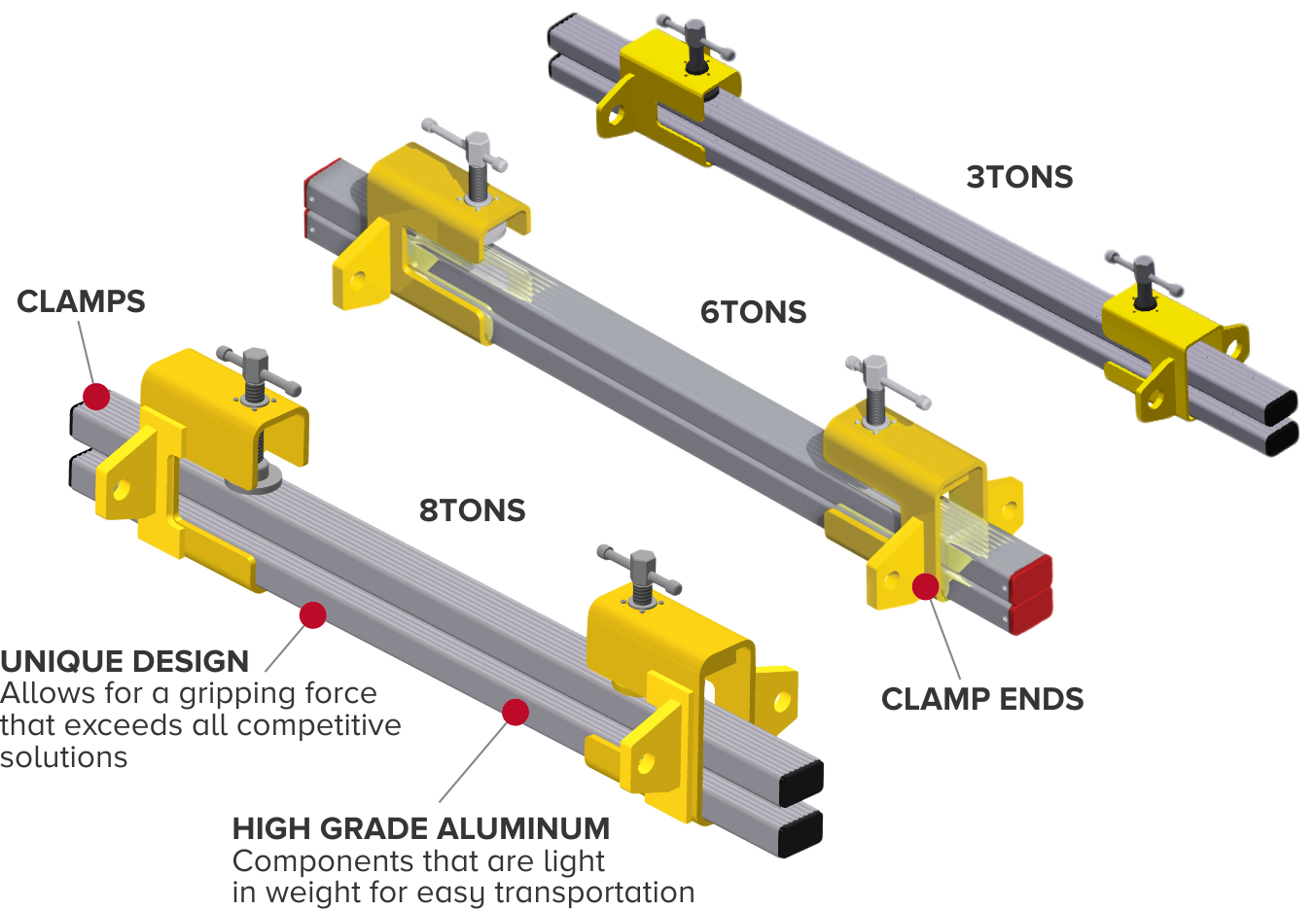
Belt-end holding and alignment clamps
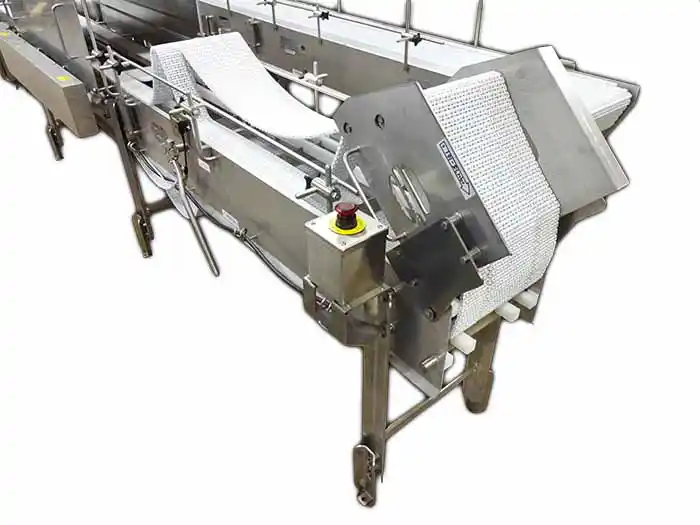
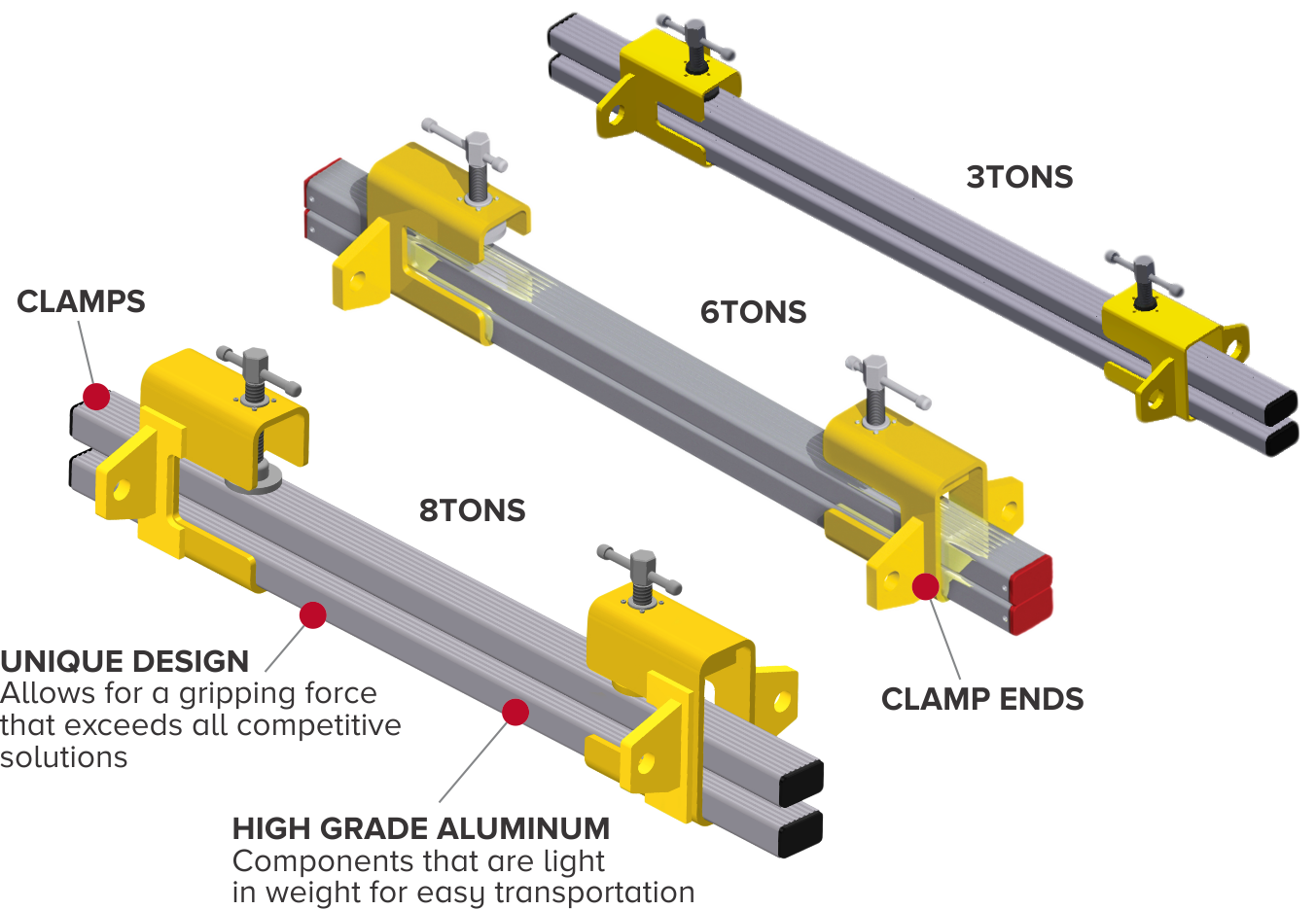
These clamps hold belt ends in position while technicians cut, square, prepare, fasten, or splice them. Look for a clamp that fits the actual belt width and can grip without crushing, permanently marking, or distorting the belt. It should keep the belt ends square and aligned across the full width; a skewed joint can cause tracking problems and uneven loading.
For sanitary applications, favor designs that can be cleaned and inspected readily. Consider exposed threads, inaccessible crevices, damaged coatings, and materials that may not suit the plant’s wet-cleaning environment. Verify material compatibility with the plant’s sanitation program rather than assuming a stainless-looking component is appropriate for every washdown condition.
Belt pullers and tension-management devices
A belt puller may be needed to bring belt ends together under controlled tension before joining. This is different from a simple alignment clamp. Its rated capacity, grip method, anchoring arrangement, and operating instructions must suit the belt and conveyor. Improvised gripping methods can damage belt carcasses or create an uncontrolled release hazard.
Temporary repair clamps
Temporary clamps or patch restraints may have a place in a documented contingency plan, but only when the belt manufacturer and plant procedures allow the arrangement. They should have a clear removal trigger: for example, the next planned stoppage or a defined replacement work order. A temporary device that remains in service without inspection can conceal worsening belt damage, interfere with scrapers or pulleys, and complicate cleaning.
Source: asgco
Choose between mechanical fasteners and endless splicing
Mechanical fasteners and endless splices solve different operating problems. The right choice depends as much on hygiene and conveyor layout as on repair speed.
When mechanical fasteners may fit
Mechanical fasteners can be practical where rapid installation and belt removability are priorities, provided the application permits them. They can be useful for certain conveying duties outside direct exposed-food contact, including some packaging, logistics, and post-process handling areas.
Specify the full fastener system, not only the fastener strip. That includes the fastener style, material, hinge pin where used, installation tool, cutting and squaring tools, and inspection method. A solid-plate splice and a hinged splice behave differently. Hinged designs allow belt separation at the splice, while solid plates create a butt joint; neither is automatically suitable for a food line.
For food-grade belt fasteners, verify the plant’s foreign-material policy, detector or inspection requirements where relevant, sanitation accessibility, corrosion resistance, scraper compatibility, pulley clearance, and direct-contact restrictions. Mechanical fasteners can create places where product or debris may collect, and metal components may be unacceptable in certain raw-food or exposed-product applications.
When an endless splice is the better fit
A correctly made endless splice provides a smoother, more continuous belt surface. This is generally advantageous where cleanability, low residue retention, and smooth product transfer matter. It may also reduce the disturbance created by a raised mechanical joint at small pulleys, transfer points, or sensitive product-handling locations.
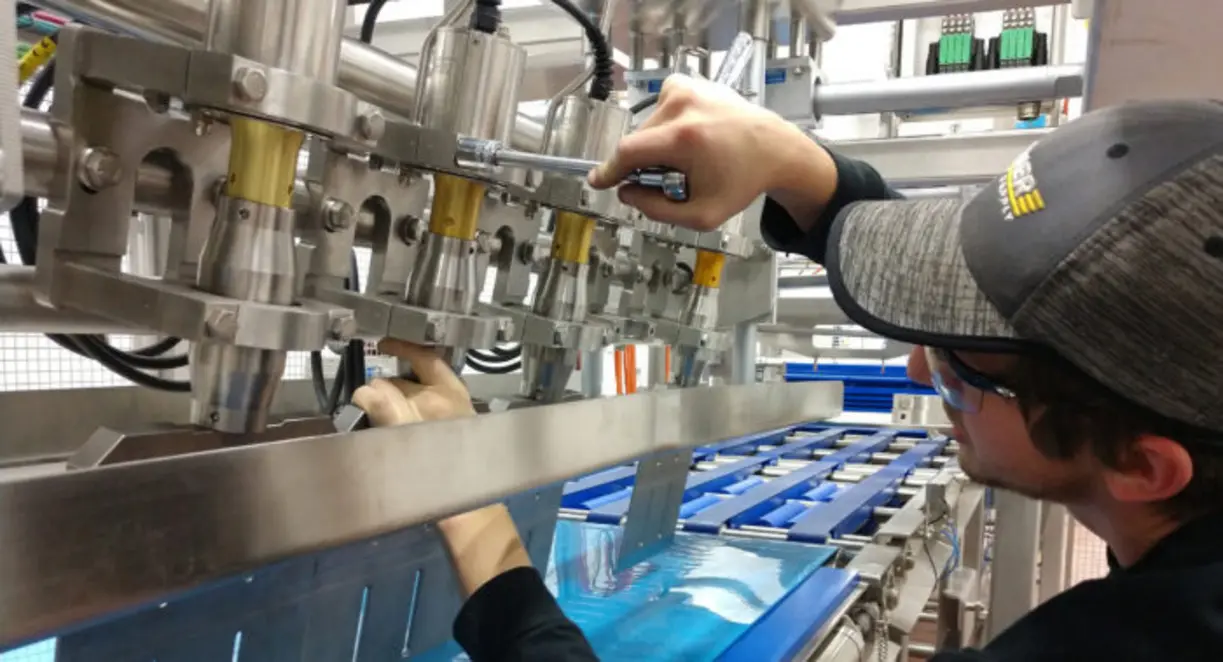
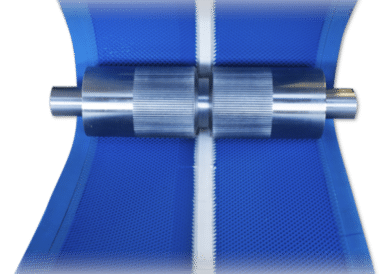
Endless splicing demands more preparation. The maintenance team may need a belt cutter or squaring tool, finger punch or skiving tools as specified by the belt supplier, a splice press sized for the belt, a suitable power supply, and space to work safely around the conveyor. Press selection must match the belt material and the approved splice procedure. Do not transfer press settings, heating cycles, cooling steps, or splice patterns from one belt material to another without supplier confirmation.
Source: flexco
Specify the food conveyor belt splicing tools as a complete kit
An incomplete kit causes avoidable downtime. Build the kit around the approved repair method and keep it assigned to the belt family and line area it supports.
A practical kit may include:
- A belt identification record and approved splice instructions for each supported belt.
- Belt clamps or alignment bars sized to the widest belt to be serviced.
- A suitable belt cutter and a squaring method that produces a repeatable cut.
- Measuring and marking tools dedicated to maintenance use.
- The correct installation tool for mechanical fasteners, if fasteners are approved.
- A compatible splice press and required preparation tools for endless splices.
- Approved replacement belt sections, fasteners, hinge pins, or modular components.
- Cleaning and inspection supplies approved for the area.
- A protected storage case that keeps tools clean, dry, complete, and separated from damaged parts.
Standardize spare parts by conveyor family where possible, but do not force one repair system across every belt in the plant. A narrowly defined kit for each belt type is often more useful than a large collection of mismatched tools.
Evaluate hygiene before approving a repair method
A sanitary conveyor belt splice is not defined only by its surface appearance. It must fit the plant’s cleaning access, inspection practices, product-contact designation, and hazard-control plan.
Ask these questions before approving a repair on a food line:
- Does the repair method comply with the belt supplier’s guidance and the conveyor’s intended use?
- Is the belt in direct contact with exposed food, or is it in a packaging or non-product-contact zone?
- Can the finished joint be adequately accessed, inspected, and cleaned under the site’s validated sanitation program?
- Could the repair introduce loose components, metal fragments, damaged polymer, lubricant, or other foreign material?
- Will the joint interfere with product transfers, belt cleaners, tracking devices, sensors, or pulleys?
- Does the repair preserve the belt’s required tracking, tension, and drive engagement?
- Is belt replacement a better choice than repair because of repeated damage, contamination concern, or material degradation?
The plant should verify cleaning chemicals, cleaning conditions, and sanitation acceptance criteria through its own approved procedures and applicable official requirements. A maintenance repair should not bypass release, inspection, or food-safety documentation requirements.
Plan the downtime window realistically
The advertised speed of a repair tool is only one part of downtime. Include isolation, access, belt removal or lifting, cleaning of the work area, belt preparation, joining, inspection, reinstallation, tracking checks, cleanup, and line release.
A portable press can reduce dependence on outside service, but only if the team is trained and the work area supports the procedure. Check whether electrical supply, press placement, cable routing, guarding access, and cooling or handling needs are realistic at each conveyor location. If the line has limited access, a preassembled spare belt may be more effective than an emergency field splice.
Common selection mistakes
The most frequent problem is choosing a clamp or fastener based only on belt width. Width matters, but belt construction, tension, pulley geometry, hygiene zone, and the repair method matter just as much.
Other mistakes include:
- Treating a temporary clamp as a long-term repair.
- Installing food-grade belt fasteners on a direct food-contact line without formal approval.
- Buying a splice press without confirming belt-material compatibility and required splice geometry.
- Omitting the cutter, punch, or alignment fixture needed for a repeatable joint.
- Storing replacement fasteners and tools in a way that exposes them to damage or contamination.
- Returning a repaired conveyor to production without checking tracking, clearance, guards, and the condition of the joint.
Put the repair setup under control
For each critical conveyor, maintain a short repair specification: belt make and construction, approved splice method, tool list, spare-part numbers, hygiene-zone restrictions, required inspection points, and escalation contacts. Review it whenever the belt specification, product use, sanitation program, or conveyor configuration changes.
All repair work should be performed by trained, authorized personnel using the site’s energy-isolation, guarding, sanitation, and restart procedures. If belt damage is extensive, tracking has become unstable, a splice repeatedly fails, or the repair affects a food-contact surface beyond the approved method, stop and involve the belt supplier, conveyor OEM, or qualified maintenance support. The correct outcome may be a replacement belt rather than a faster repair.
References
- Conveyor Belt Endless Splicing vs Mechanical Fasteners. (n.d.). https://www.flexco.com/EN/Blogs/Conveyor-Belt-Endless-Splicing-vs-Mechanical-Fasteners-GR.htm
- Mechanical Fasteners Or Endless Splicing: Part 2 | Manufacturing.net. (n.d.). https://www.manufacturing.net/home/article/13215283/mechanical-fasteners-or-endless-splicing-part-2
- [PDF] Mechanical Fasteners - RIV-NAIL PLATEGRIP - Conveyor Accessories. (n.d.). https://www.conveyoraccessories.com/wp-content/uploads/2016/07/CAI_1003_MechanicalFasteners_140715.pdf
- Hygienic Belt Conveyor Design Guidelines | PDF | Belt (Mechanical) | Corrosion. (n.d.). https://www.scribd.com/document/681565720/Hygienic-Design-of-Belt-Conveyors-for-the-Food-Industry
- Get the Facts about Mechanical Belt Fasteners - FLEXCO - PDF Catalogs. (n.d.). https://pdf.directindustry.com/pdf/flexco/get-facts-about-mechanical-belt-fasteners/14800-163898.html
- Sanitation in Food Processing - Best Practices for Belt Splicing. (n.d.). https://www.flexco.com/EN/Blogs/LDENDLESS/Sanitation-in-Food-Processing---Best-Practices-for-Belt-Splicing-.htm
- Belt Conveyor Splicing 101: Mechanical Fasteners Or Endless …. (n.d.). https://www.apfoodonline.com/industry/belt-conveyor-splicing-101-mechanical-fasteners-or-endless-splicing
- Conveyor Belt Maintenance in Food Manufacturing. (n.d.). https://oxmaint.com/industries/food-manufacturing/conveyor-belt-maintenance-food-manufacturing-types-pm-schedules