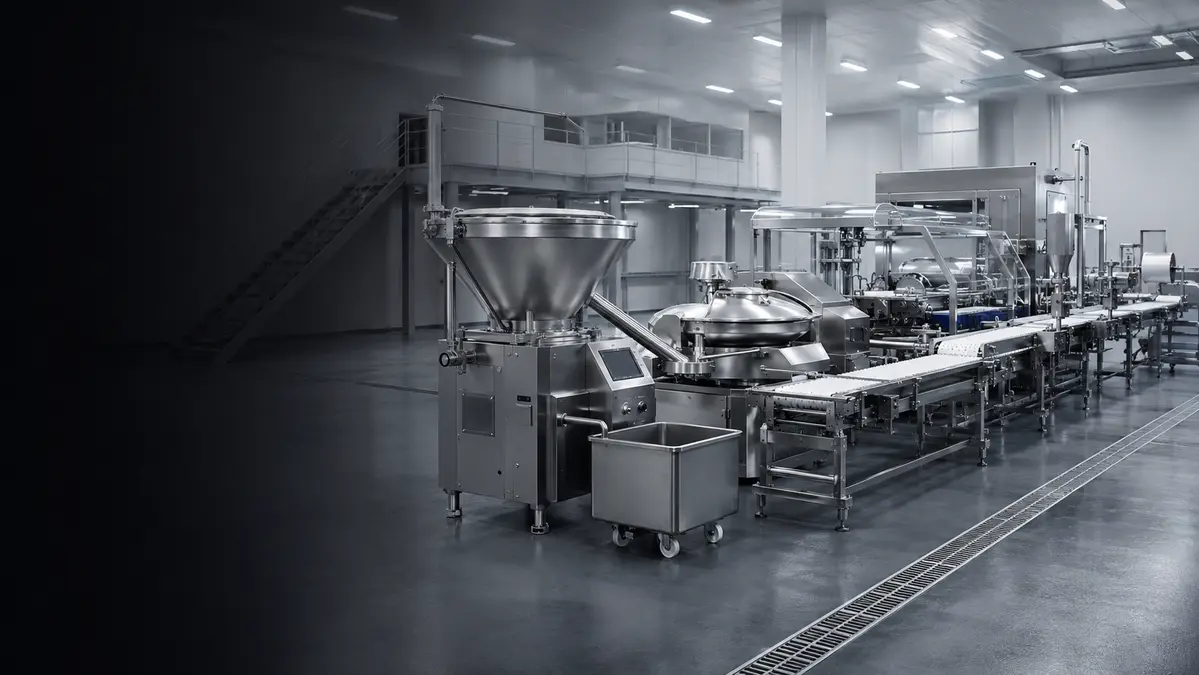
A low purchase price does not make imported machinery a poor choice. It does mean the buyer must define the machine, verify the supplier’s evidence, and price the work that may otherwise be left to the plant. The practical question is not whether an overseas machine is “good” or “bad.” It is whether the exact machine, delivered scope, documentation, and support model are suitable for your product, site, and operating team.
This imported meat processing equipment buying guide uses a due-diligence approach. Compare suppliers against the same written specification, require evidence before deposit and shipment, and calculate the installed, supportable cost rather than comparing quotation totals alone. This is especially important for grinders, mixers, vacuum tumblers, injectors, slicers, dicers, forming equipment, conveyors, packaging interfaces, and other machines that affect hygiene, yield, labor, or line uptime.
Start by normalizing the scope
Many low-cost food processing equipment quotations are not directly comparable. One may include a standard machine only, while another includes motors, controls, guarding, freight packing, spare parts, commissioning support, and documentation. A lower figure can be legitimate, but only after the scope is made equivalent.
Prepare a one-page equipment requirement before requesting final quotations. It should state:
- Product type, product condition, and expected operating range
- Required throughput, portion or cut consistency where relevant, and acceptable product handling
- Contact-material requirements and surface-finish expectations under your plant standards
- Cleaning method, washdown exposure, and restrictions on hollow frames, inaccessible gaps, or difficult-to-clean assemblies
- Electrical supply, controls voltage, site frequency, air and water requirements, drainage, and extraction needs
- Required infeed and discharge elevations, footprint limits, access clearances, and connection points
- Operator functions, language requirements, recipes, data needs, and interface requirements with adjacent equipment
- Guarding, emergency-stop, isolation, and maintenance-access expectations
- Training, manuals, spare parts, remote support, installation support, and acceptance-test requirements
Ask every bidder to mark each item as included, excluded, or optional. Do not rely on a listing title, photos, or a broad statement such as “food-grade stainless steel.” Those descriptions do not establish the grade of material, scope of supply, control components, sanitation design, or actual performance with your product.
Evaluate the machine, not just the listing
Marketplace listings, including Alibaba meat processing machinery listings, can be a useful way to identify equipment categories and suppliers. They are not a technical specification or a substitute for supplier qualification.
Request a current general-arrangement drawing, utility schedule, electrical schematic, component list, and detailed photos or video of the proposed configuration. The evidence should match the model, options, and dimensions quoted—not a similar machine from an older project.
Check hygienic construction in practical terms
For meat equipment, cleanability and moisture management are operational issues as well as purchasing issues. Review the product zone, splash zone, frame, guarding, and underside of the machine. Look for features that make inspection, cleaning, and maintenance realistic for the way your plant operates.
Ask the supplier to explain and show:
- Which stainless steel grades are used in product-contact and non-contact areas
- How material identification or traceability will be supplied when it is part of the contract
- Whether product-contact welds are continuous, finished, and accessible for inspection
- How frames, enclosures, legs, and tubing avoid trapped water or debris
- How belts, rollers, seals, bearings, blades, and wear parts can be removed and reinstalled
- Whether electrical cabinets, motors, sensors, and connectors are suited to the intended cleaning environment
- Which lubricants can be used near the food zone and how lubrication points are accessed
A photograph can reveal obvious concerns, but it cannot confirm every sanitation detail. When the application is demanding or the machine will be difficult to modify after delivery, arrange a live video inspection or an in-person inspection before release for shipment.
Treat safety and electrical documentation as deliverables
A machine that runs at the supplier’s factory may still create expensive work at your plant if controls, safeguarding, wiring, or manuals do not fit local requirements. The buyer should determine applicable legal requirements, insurer expectations, corporate engineering standards, and customer requirements for the installation jurisdiction.
Require the supplier to provide enough technical information for your qualified engineering and safety personnel to review the equipment before shipment. This commonly includes electrical drawings, control-panel layout, component make and model, pneumatic diagrams if applicable, safety-circuit information, operating instructions, and maintenance procedures.
Review the locations and functions of guards, interlocks, emergency stops, reset controls, and energy-isolation provisions. Do not accept a vague assurance that the machine is “CE” or “certified” as proof that it meets your needs. Ask what declaration, risk-assessment material, test record, or third-party documentation is available, which machine configuration it covers, and whether it applies in your jurisdiction.
For programmable equipment, establish ownership and access before purchase. Confirm whether the buyer will receive software backups, parameter files, recipe backups, passwords, change-control procedures, and the tools or permissions needed for normal recovery. A low-cost machine becomes a high-risk asset if a failed drive, HMI, or controller can be restored only by a distant supplier.
Qualify the supplier’s ability to support the equipment
Food equipment supplier due diligence should assess the organization behind the quotation, not only the machine design. A supplier may be capable of building a straightforward mechanical unit yet have limited controls support, export packing experience, English-language documentation, or post-startup service capacity.
Ask focused questions:
| Due-diligence question | Why it matters |
|---|---|
| Who designs, assembles, and tests the machine? | Identifies whether the seller is the manufacturer, an integrator, or a trading company. |
| Can the supplier identify installed components by brand and model? | Helps assess future replacement and local availability. |
| Who answers technical calls after commissioning? | Clarifies whether support is factory-based, distributor-based, or undefined. |
| What response process applies to an urgent failure? | Reveals whether support is a real service commitment or a general promise. |
| Can the supplier provide comparable customer references? | Gives the buyer a basis to ask about installation, documentation, and parts support. |
| What spare parts are normally stocked, and where? | Exposes likely downtime exposure. |
References are most useful when they involve a similar equipment type, production environment, export destination, and level of automation. Ask reference contacts about what arrived, what documentation was usable, how commissioning went, and how the supplier handled defects or replacement parts.
Make factory acceptance testing a contractual gate
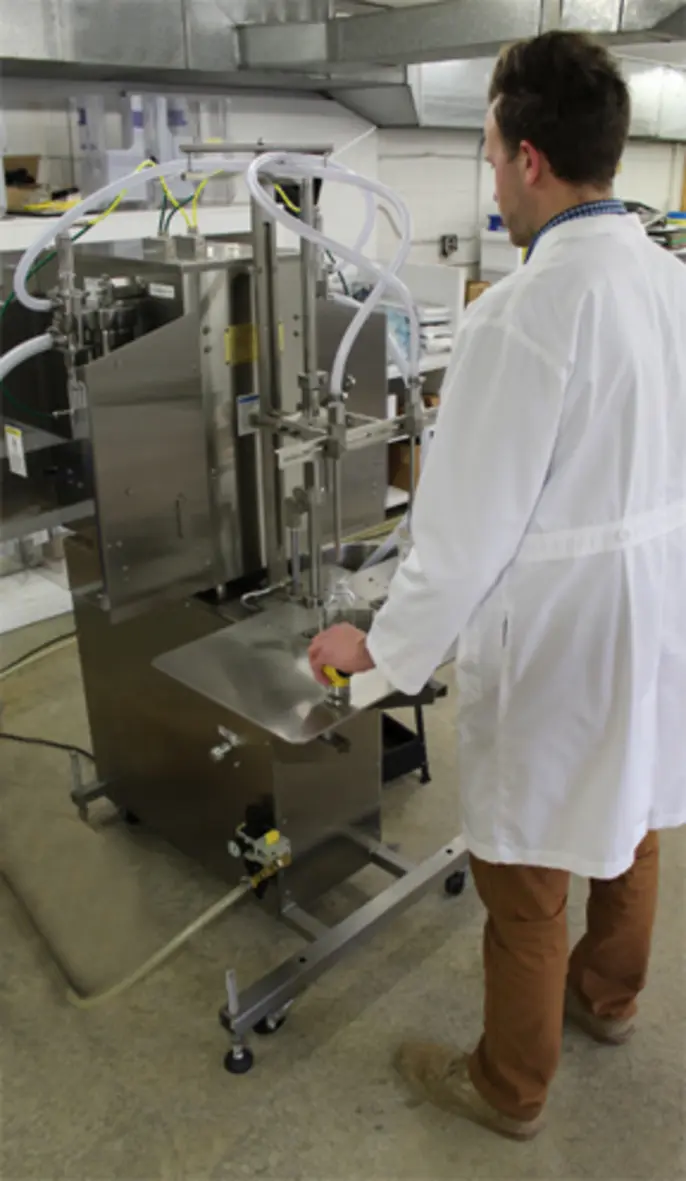
A factory acceptance test (FAT) is one of the strongest controls available to an importer. It is a defined inspection and test before shipment, conducted against agreed conditions and pass/fail criteria. It should be planned during specification and contract negotiation, not improvised after the machine is built.
Source: filamatic
For a meat-processing machine, the FAT protocol should identify the product or representative test material, test setup, run duration, performance measures, safety checks, documents to be delivered, and people authorized to accept or reject the result. If actual product cannot be used, define what the substitute test can and cannot demonstrate.
At minimum, consider verifying:
- Correct machine configuration, dimensions, guarding, labels, and included accessories
- Start-up, normal operation, stop, fault indication, and safe shutdown functions
- Agreed performance demonstration under stated test conditions
- Product handling, discharge, leakage, vibration, and abnormal noise observations
- Access for cleaning, inspection, blade or tooling changes, and maintenance
- Electrical components, HMI language, recipes, alarms, and backup files
- Included documentation, recommended spare-parts list, and packing list
- Resolution plan for nonconformities, including responsibility and deadline
Record results with photos, video where appropriate, signed test sheets, and a defect list. Do not allow “minor” open items to become indefinite. Each should have a clear correction method, owner, verification method, and commercial consequence if it remains unresolved.
Define shipping, installation, and commissioning boundaries
Imported equipment often fails financially at the handoff between supplier responsibility and plant responsibility. The purchase order should state who supplies export crating, lifting points, loose-item identification, corrosion protection, shipping documents, and any special transport instructions.
On the plant side, verify unloading equipment, door openings, floor loading, drains, electrical capacity, compressed air quality, water supply, extraction, network access, and space for safe operation and cleaning. A machine may fit the production room on a drawing but still be impossible to maneuver through the receiving route or service properly after installation.
Also define what commissioning support means. Is a technician traveling to the site? Is support remote only? Who pays travel, lodging, visas, translation, extra days, product for trials, and rework caused by missing site readiness? State the expected training audience and the evidence of completion, such as training materials, attendance records, or a signed commissioning report.
Calculate meat processing equipment total cost of ownership
The appropriate comparison is not quoted machine price versus quoted machine price. It is estimated ownership cost over the period your plant expects to use the equipment.
Build a side-by-side cost model that includes:
- Equipment price, options, tooling, and inspection costs
- Freight, cargo insurance, customs, duties, taxes, brokerage, and inland delivery
- Rigging, installation, utilities, guarding changes, controls integration, and site modifications
- FAT travel or third-party inspection, commissioning, and operator training
- Initial spare-parts package, consumables, critical wear parts, and recommended tools
- Preventive maintenance labor and likely replacement-part lead times
- Utility consumption where it materially differs between options
- Downtime exposure, yield effects, rework risk, and labor requirements
Avoid false precision. If service response, spare-parts lead time, cleaning labor, or yield impact is uncertain, list it as an assumption and test it through references, documentation review, or a negotiated commercial commitment.
Common buying mistakes
The most costly errors are usually omissions rather than visible defects.
Accepting a generic specification. A generic machine may be sound, but it may not handle your product temperature, formulation, bone content, package format, or sanitation routine.
Comparing only the machine invoice. Excluded controls work, rigging, parts, travel, and lost production can outweigh an apparent purchase saving.
Waiting until shipment to ask for documents. Drawings, manuals, software backups, and parts lists should be specified as contract deliverables and reviewed before final payment.
Assuming a local electrician can solve every controls issue. Local support is valuable, but proprietary programming, unavailable components, and undocumented safety circuits can slow recovery.
Ordering no critical spares. A supplier’s standard spare-parts list is a starting point. Your plant should identify components whose failure would stop production and assess availability locally.
A practical release-to-ship checklist
Before authorizing shipment, confirm that the following are complete:
- The final configuration matches the approved specification and drawings.
- FAT results are accepted, and open issues have written closure terms.
- Manuals, schematics, parts lists, utility requirements, and software or parameter backups have been received or are contractually scheduled.
- Packing list, weights, dimensions, lifting information, and shipping scope are confirmed.
- Initial spare parts and special tools are identified and included where agreed.
- Installation responsibilities, commissioning dates, and site-readiness requirements are understood by both parties.
- Your plant has reviewed applicable safety, sanitation, electrical, and regulatory requirements with qualified internal or external personnel.
A lower-priced imported machine can be a sensible purchase when it is matched to a defined application and backed by verifiable evidence. The strongest buying position comes from converting promises into drawings, test criteria, documentation, spare-parts plans, and clear acceptance obligations before the equipment leaves the factory.
References
- Meat Processing / Slaughterhouse Equipment - Food Production Buyers Guide. (n.d.). https://foodproductionbuyersguide.com/Listing/Index/Food_Processing_Equipment_and_Services/Meat_Processing__Slaughterhouse_Equipment/20531/160835//25/1
- Food Processing Equipment Factory Acceptance Test Guide. (n.d.). https://www.teemyeah.com/industry-news/food-processing-equipment-factory-acceptance-test
- Meat Processing Equipment -Texastastes. (n.d.). https://www.texastastes.com/meat-processing-equipment.htm
- Meat Processing / Slaughterhouse Equipment - Food Production Buyers Guide. (n.d.). https://foodproductionbuyersguide.com/Listing/Index/Food_Processing_Equipment_and_Services/Meat_Processing__Slaughterhouse_Equipment/3345/39
- Food Processing Equipment Supplier Evaluation | TEEMYEAH. (n.d.). https://www.teemyeah.com/industry-news/food-processing-equipment-supplier-evaluation
- Factory Acceptance Test FAT Checklist for Food Equipment | Free Template. (n.d.). https://mitti.com/library/manufacturing/gearys-fat-ttiadwn7xsxvfdnd
- Meat Processing Equipment - Efficient, Hygienic, Affordable. (n.d.). https://www.ycmeatmech.com/news/meat-processing-equipment-efficient-hygienic-affordable.html
- Import Guidance | Food Safety and Inspection Service. (n.d.). http://www.fsis.usda.gov/inspection/import-export/import-guidance