Sanitation downtime should be measured as a defined production-window process, not as one broad block of time between the last good product and the next startup. To reduce sanitation downtime in food manufacturing without weakening controls, plants need to separate required cleaning and verification work from waiting, searching, rework, equipment access problems, and delayed handoffs.
The practical objective is not simply to make cleaning faster. It is to make the sanitation window predictable, properly staffed, and free of avoidable loss while preserving the site’s approved sanitation procedures, food-safety plan, allergen controls, and pre-operational release requirements.
Define what counts as sanitation downtime
Start with a common definition that production, sanitation, quality, maintenance, and scheduling all use. A useful boundary is:
- Start: the last acceptable product clears the line, or the line is formally released from production.
- End: the line is released for production and can make acceptable product.
This full interval matters because sanitation-related lost time often occurs before the sanitation crew starts cleaning and after cleaning appears complete. For example, a line may wait for production to finish changeover tasks, for maintenance to replace a guard, or for quality to complete pre-operational checks.
Within that total interval, distinguish three categories:
| Category | What it includes | Management purpose |
|---|---|---|
| Required planned work | Controlled shutdown, disassembly, cleaning, rinsing where applicable, sanitation steps, drying where required, reassembly, inspection, and release activities | Protect the time needed for approved food-safety controls |
| Necessary supporting work | Planned maintenance, utility isolation, waste handling, chemical preparation, staging, and documented verification | Coordinate resources and avoid conflicts |
| Avoidable delay | Waiting for access, missing tools or parts, unclear ownership, repeated cleaning, late inspection, incomplete handoff, or unplanned equipment repair | Find and eliminate recurring losses |
Do not label every long cleaning window as poor sanitation performance. A line with difficult-to-access product zones, frequent allergen or product changes, extensive teardown, or strict site-specific controls may legitimately require more time than another line. The baseline must reflect the approved process for that product and equipment configuration.
Map the cleaning window from end to end
A sanitation window is a sequence of handoffs and tasks. Mapping it exposes delays that a single downtime code hides. Walk the process on the floor for several representative shutdowns and record actual start and finish times for each stage.
A typical map may include:
- Production rundown: stop feeding product, clear product from equipment, account for materials, and complete production closeout.
- Line release to sanitation: isolate or secure the line according to site procedures; remove remaining product and packaging materials as required.
- Setup and staging: bring carts, tools, approved chemicals, personal protective equipment, access platforms, and collection containers to the line.
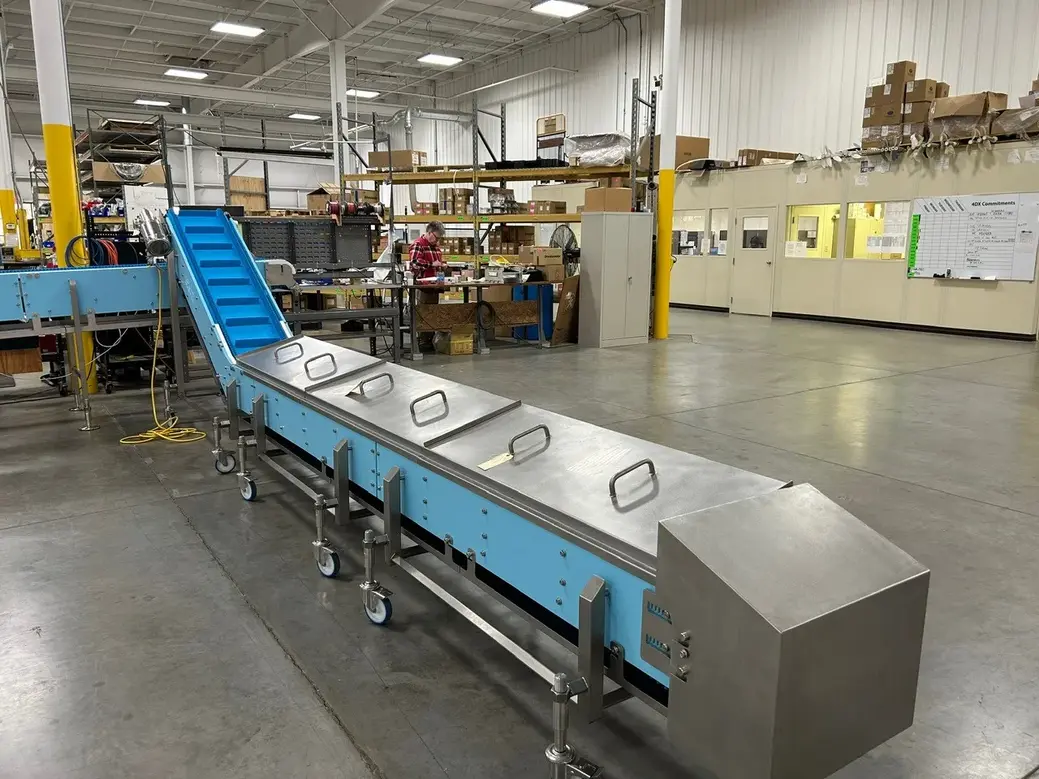
- Disassembly and access: remove guards, belts, change parts, covers, or other components specified in the sanitation procedure.
- Dry or wet cleaning steps: carry out the approved cleaning sequence for the line and product risk.
- Inspection and corrective cleaning: sanitation conducts its checks; quality or designated personnel complete required pre-operational activities.
- Reassembly and maintenance closeout: reinstall components, remove lockout or other controls through the authorized process, and confirm the machine is ready for operation.
- Startup release: restart, make the first acceptable product, and return the line to normal production.
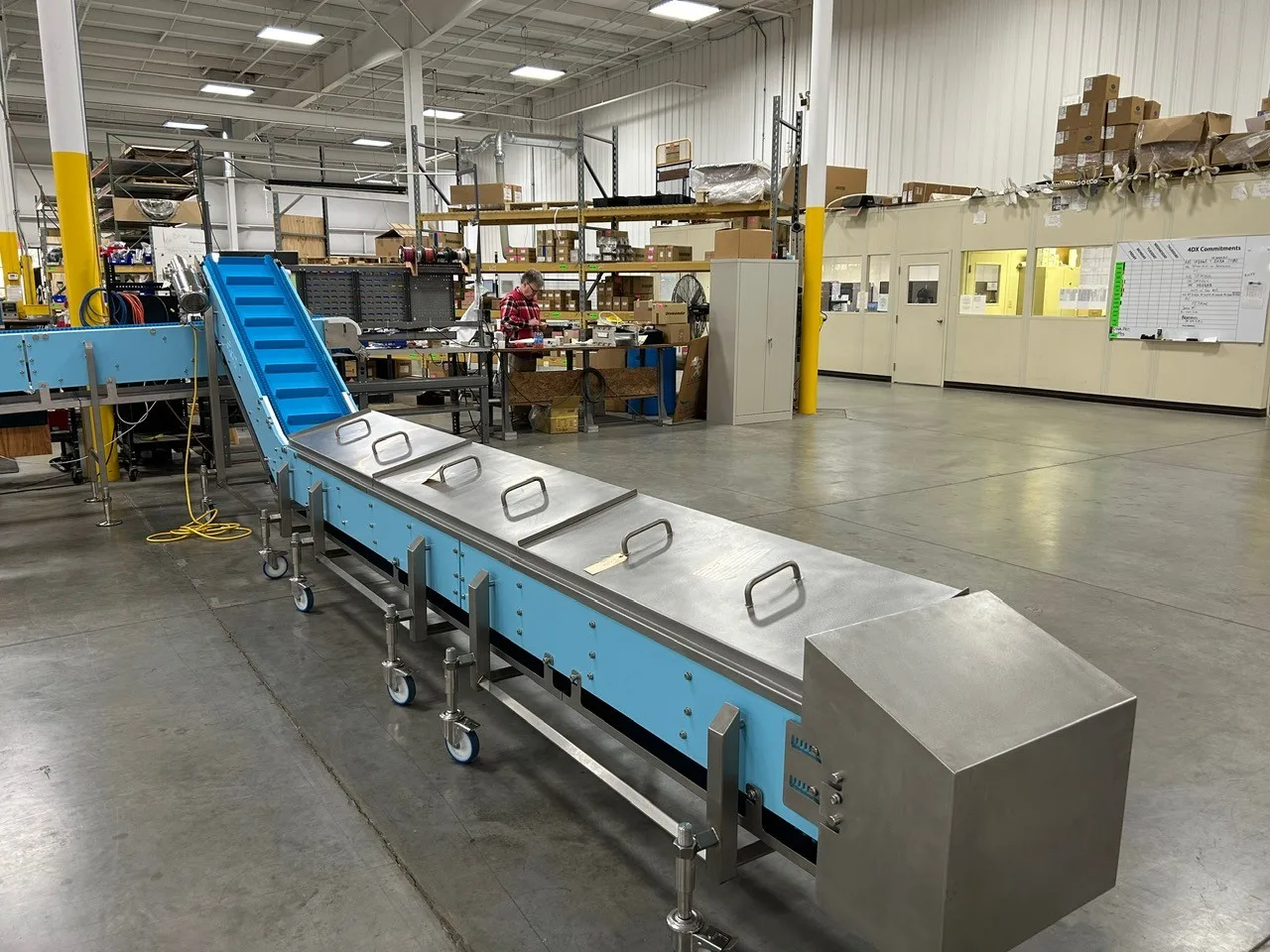
Source: dynamicconveyor
For each stage, capture more than elapsed minutes. Record the crew or department responsible, the equipment involved, the reason for any pause, and whether the delay was planned, necessary, or avoidable. A simple timestamp sheet can be enough at first. More mature plants may pull status signals from machine controls, production records, digital sanitation systems, or maintenance software, but automation does not replace clear event definitions.
Use a small set of practical measures
Avoid building a dashboard that nobody can act on. These measures usually provide a workable starting point.
Total sanitation window
Measure elapsed time from formal production end to confirmed production readiness. Review it by line, product family, shift, and cleaning type. Comparing unlike events—for example, a routine cleanup and a major product change—will produce misleading averages.
Planned versus actual duration
Compare the actual window with the scheduled window for the same approved sanitation scope. The gap is useful only if the schedule itself is realistic. If the plan assumes an ideal crew, immediate access, and no inspection time, it is not a useful standard.
Delay minutes by reason
Use a limited list of codes that operators and supervisors can apply consistently. Typical codes include:
- Waiting for production handoff
- Waiting for sanitation labor
- Missing tools, hoses, carts, or supplies
- Access or disassembly difficulty
- Utility issue
- Maintenance intervention
- Recleaning or correction
- Waiting for inspection or release
- Startup issue after sanitation
Keep a free-text note for unusual events, but do not rely on narrative comments alone. A structured code makes recurring losses visible.
First-pass release rate
Track how often a line proceeds through required pre-operational release without corrective recleaning, reinspection, or missing documentation. This is not a reason to rush inspections. It is an indicator of whether the cleaning process, equipment access, and task instructions are working as intended.
Schedule recovery
Measure whether the line returns to planned production at the intended time. This connects sanitation performance to output planning while recognizing that a late startup may also result from material availability, staffing, mechanical problems, or upstream constraints.
Find the constraints before changing the process
After several cycles, sort delay time by total minutes, not just by frequency. A minor issue that happens often may matter less than one recurring inspection delay that holds an entire packaging line.
Then investigate the largest causes at the point of work. Useful questions include:
- Is the line genuinely available when sanitation is scheduled to begin?
- Are required cleaning tools and approved materials staged before shutdown?
- Does the sanitation procedure identify every removal point, inspection point, and reassembly requirement?
- Do crews lose time reaching, opening, draining, or reassembling a particular machine section?
- Does maintenance work overlap with cleaning in a way that creates waiting or rework?
- Is quality notified early enough to conduct pre-operational activities at the right time?
- Are startup failures caused by missed reassembly steps, damaged components, retained water where it is not acceptable, or unresolved mechanical conditions?
Use direct observation alongside records. A downtime entry of “waiting for inspection” may actually indicate that the inspection request is late, the line was not ready when called, or the release process is unclear.
Improve the handoffs between departments
Many sanitation delays are coordination losses rather than cleaning losses. A short, formal handoff can remove ambiguity.
Production to sanitation
Production should communicate the actual release time, product and allergen status where relevant, unusual spills or process events, equipment concerns, and any unfinished changeover work. Sanitation should know whether the line is truly ready to enter before its clock starts.
Sanitation to quality
Agree on the notification point for inspection or pre-operational checks. Calling quality only after the sanitation crew has packed up can create unnecessary waiting if corrections are needed. Conversely, requesting inspection before the line is ready wastes quality time and creates friction.
Sanitation to maintenance
Separate routine sanitation tasks from identified equipment defects. If maintenance must work on the line, define who owns access, what work can proceed in parallel, and how the equipment will be cleaned or rechecked after repair. Maintenance changes can affect hygienic condition and machine readiness; the site’s authorized procedures should govern release.
Scheduling to all teams
The production schedule should identify sanitation windows, major product transitions, planned maintenance, and labor constraints early enough for teams to stage resources. Sanitation capacity is a production constraint, not an after-hours detail.
Reduce time through preparation and equipment improvements
The best improvements remove recurring friction without changing the approved sanitation standard.
Stage work before the shutdown. Prepare approved supplies, dedicated tools, carts, access equipment, waste containers, and replacement wear parts before the line stops. Verify that materials are available rather than assuming inventory records are correct.
Use visual work instructions. Photos or diagrams can help crews identify disassembly points, hard-to-see areas, correct component orientation, and reassembly checks. These aids should be controlled and aligned with the current sanitation procedure.
Organize tools at the point of use. Clearly assigned carts, storage locations, and shadow boards can reduce searching and prevent tools from migrating between areas. Tool-control practices must remain compatible with the plant’s sanitation and foreign-material-control programs.
Address poor access. Repeated delay at the same covers, guards, conveyor returns, rollers, or enclosed zones is a design and maintainability issue. Review whether hygienic redesign, improved access, quick-release features, drainage improvements, or a different component design could reduce labor and improve cleanability. Any modification should be reviewed through the facility’s food-safety, engineering, and safety change-control process.
Plan maintenance inside the window carefully. Combining work can be efficient when maintenance tasks are known in advance and do not compromise the cleaning sequence or release requirements. Unplanned repairs should be coded separately so they do not distort sanitation performance.
Protect controls while pursuing speed
Sanitation optimization has clear limits. Do not shorten approved cleaning steps, alter chemical use, bypass safety interlocks, skip inspection, or release equipment early merely to meet a production target. Requirements for chemical concentration, contact conditions, rinsing, personal protective equipment, allergen changeover, environmental controls, and pre-operational verification must come from the facility’s validated procedures, chemical supplier instructions, equipment documentation, and applicable regulatory requirements.
When a proposed improvement changes equipment, cleaning chemistry, cleaning method, product sequencing, or verification activity, treat it as a controlled change. Food-safety, quality, sanitation, engineering, and maintenance should assess the effect before routine use.
Run a weekly sanitation-loss review
A brief weekly review is often more useful than an occasional major project. Include production, sanitation, quality, maintenance, and planning representatives. Review:
- Total sanitation-window performance by line and cleaning type
- The largest delay categories and repeated events
- First-pass release and startup issues
- Open actions, owners, and due dates
- Whether a completed action actually reduced the measured delay
Start with one high-impact line or one recurring cleaning event. Establish a baseline, correct the most visible constraint, and verify the result over subsequent comparable runs. This approach helps a plant reduce lost production time while keeping sanitation work visible, controlled, and properly resourced.
A practical sanitation-window checklist
Before the next planned shutdown, confirm that:
- The start and end of sanitation downtime are defined consistently.
- The scheduled duration matches the approved scope of work.
- Production, sanitation, quality, and maintenance each have named handoff responsibilities.
- Cleaning resources and approved materials are staged before production ends.
- Delay codes are simple enough to use accurately.
- Recleaning, inspection waiting, and startup problems are recorded separately.
- Equipment access problems are escalated as engineering or maintenance opportunities.
- Any proposed time reduction is reviewed against approved food-safety and worker-safety requirements.
A reliable sanitation window is not the shortest possible one. It is one that consistently completes the required work, achieves authorized release, and returns the line to production with fewer unplanned waits and less rework.
References
- Food Manufacturing Maintenance: Complete Guide to Reduce Downtime by 40%. (n.d.). https://oxmaint.com/blog/post/food-manufacturing-maintenance-complete-guide-
- Reducing Downtime in Food Packaging and Manufacturing Plants. (n.d.). https://www.advancedtech.com/blog/reducing-downtime-for-food-and-beverage-manufacturing
- Integrated Hygiene Control Strategies in Food Manufacturing. (n.d.). https://www.sciencedirect.com/science/article/pii/S0362028X25000997
- Avoid Pet Food Manufacturing Downtime with Efficient Cleaning - PFI. (n.d.). https://www.pficonveyors.com/resource/avoid-pet-food-manufacturing-downtime-with-efficient-cleaning
- Top 5 Reasons for Downtime in Food Manufacturing. (n.d.). https://qupaq.com/meet-us/news/top-5-reasons-for-downtime-in-food-manufacturing
- #foodsafety #sanitation #operationalexcellence #industryinnovation #professionalgrowth #knowledgesharing #leadershipinaction | James Daniel. (n.d.). https://www.linkedin.com/posts/james-daniel-80323b123_foodsafety-sanitation-operationalexcellence-activity-7399067769788448768-R1I3
- 7 steps for minimizing downtime during cleaning shutdowns. (n.d.). https://www.foodengineeringmag.com/articles/7-steps-for-minimizing-downtime-during-cleaning-shutdowns
- When Downtime Isn’t an Option: The Reality of Sanitation in Food Safety - Food Safety and Food Plant Sanitation Experts | Fortrex. (n.d.). https://www.fortrexsolutions.com/resources/when-downtime-isnt-an-option-the-reality-of-sanitation-in-food-safety