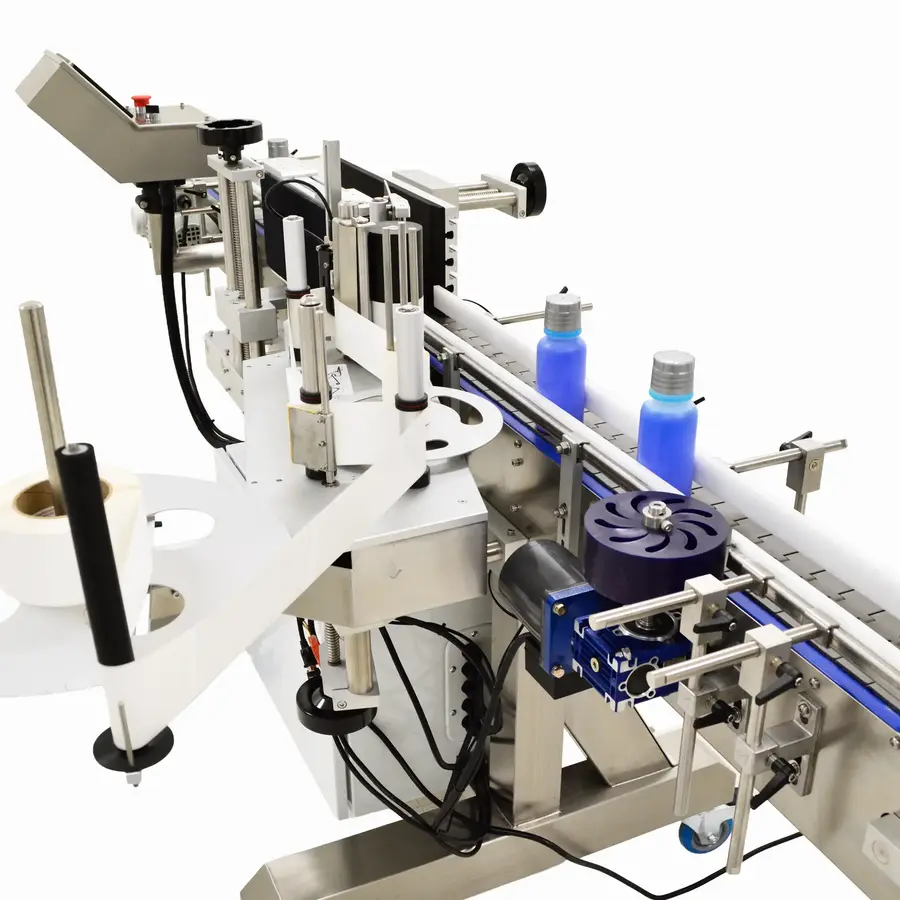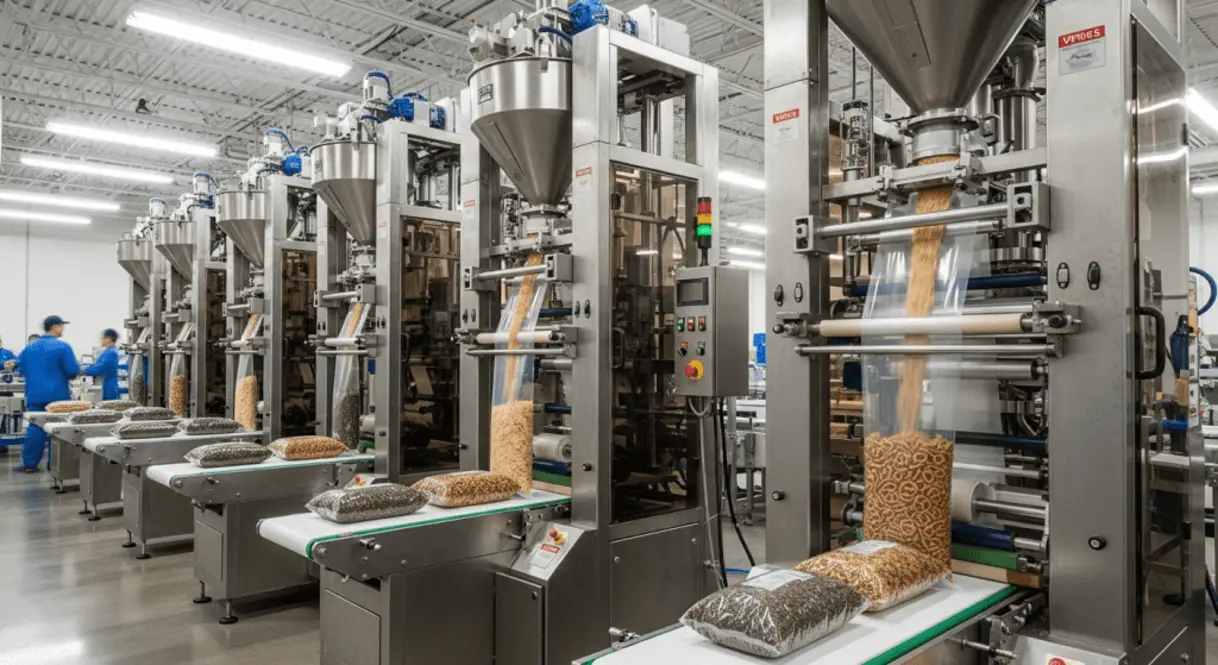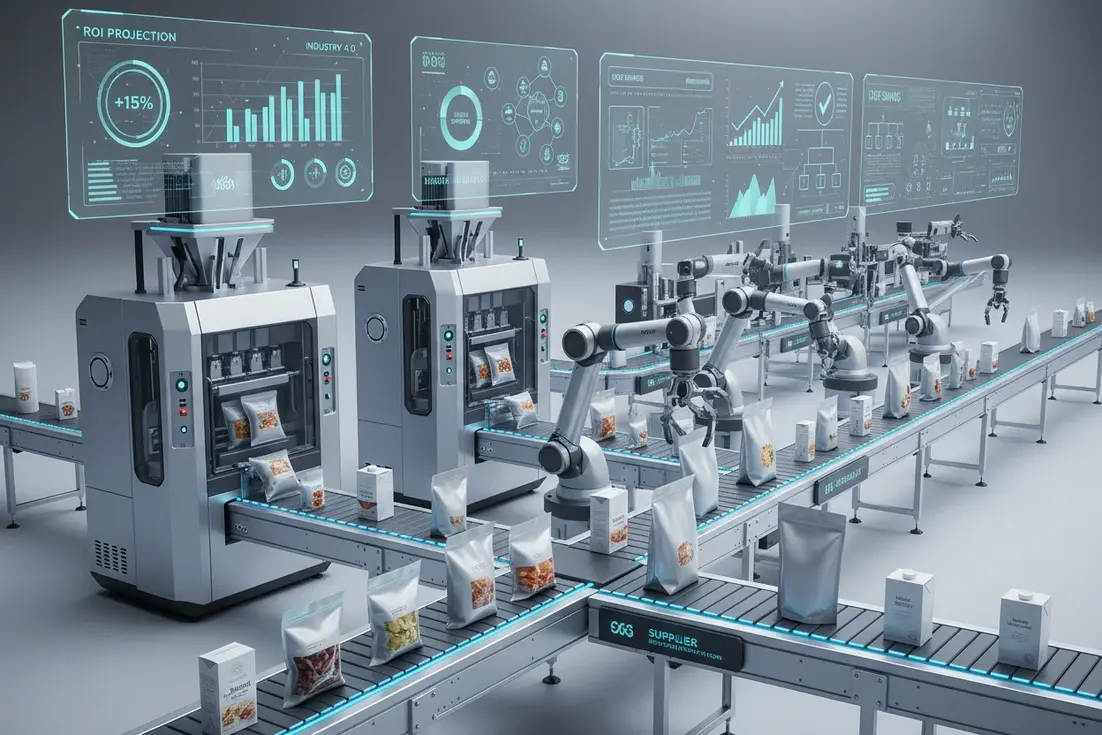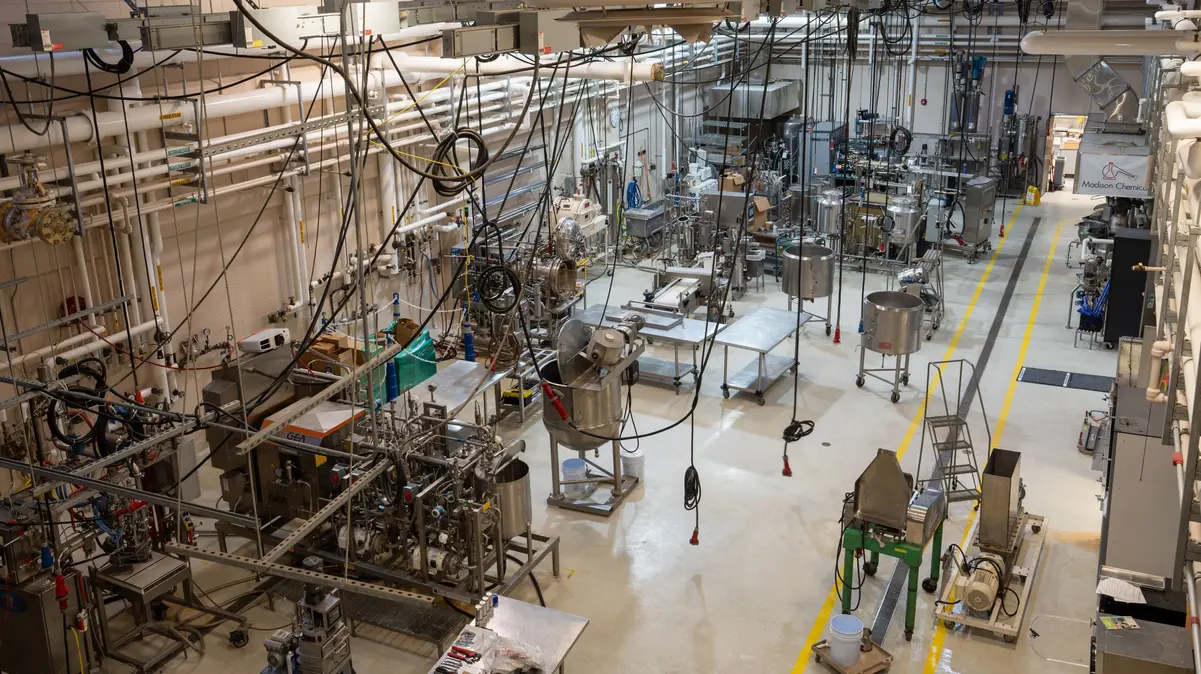
A food manufacturing pilot line is a controlled, small-scale version of the process you expect to use commercially. Its purpose is not simply to make more samples. It is to prove that the formula can move through realistic equipment, achieve repeatable product quality, fill and package reliably, and produce the operating data needed for a larger run.
For an unproven product, begin by defining the question the trial must answer. Then convert the product concept into unit operations, choose a pilot plant, co-packer pilot run, or self-built setup that can perform those operations, and document what happens at every handoff. A successful pilot can prevent expensive surprises during commercial scale-up; an unfocused one can produce a few cases of product without resolving the actual manufacturing risk.
Start with a clear trial objective
Avoid booking equipment because it looks similar to a future production line. First state the decision that the trial must support. The objective determines the facility, equipment, batch size, staffing, samples, and data plan.
Common objectives include:
- Confirming that a formula can be mixed, milled, heated, cooled, or otherwise processed at a meaningful scale.
- Testing whether the product can be pumped and transferred without separation, aeration, blockage, or unacceptable texture change.
- Establishing workable settings for a filler, depositor, or packaging machine.
- Comparing ingredient grades, processing sequences, or packaging formats.
- Producing representative samples for shelf-life, sensory, nutritional, distribution, or customer evaluation.
- Generating early yield, labor, material-loss, and throughput assumptions for a commercial cost model.
- Demonstrating the process to a prospective co-packer or equipment supplier.
Write the objective as a pass-or-fail statement where possible. For example: “Determine whether the finished product can be processed and filled consistently in the intended package format while retaining the specified appearance and texture.” This is more useful than “make a pilot batch.”
A pilot trial is not a substitute for required product safety validation, regulatory review, or qualified technical review. If the product relies on a preservation method, thermal process, acidification, refrigeration, aseptic handling, or another safety-critical control, engage appropriate qualified professionals and confirm applicable requirements with the relevant authorities before production or sale.
Translate the product into unit operations
A kitchen recipe describes ingredients and actions. A manufacturing process needs a flow that identifies each operation, transfer, hold, measurement, and packaging step. This process map is the foundation for selecting food process trial equipment.
For a liquid or semi-solid product, the process may include:
- Receiving and staging ingredients.
- Weighing, sifting, or pre-blending dry materials.
- Adding ingredients to a mixing vessel.
- Mixing, dispersing, emulsifying, refining, or homogenizing.
- Heating, cooling, cooking, or holding as required by the product design.
- Transferring product through piping, hoses, pumps, valves, or filters.
- Holding product before filling.
- Filling containers.
- Closing, sealing, coding, labeling, and secondary packing.
- Inspecting finished packs and retaining samples.
Dry products may instead involve conveying, blending, extrusion, drying, coating, screening, metal detection, weighing, and bagging. A bakery process may require dough development, forming, proofing, baking, cooling, slicing, and wrapping. The point is to identify the real manufacturing sequence, not force every product into the same line layout.
At each step, ask four practical questions:
- What must the equipment do to the product?
- What product condition enters and leaves the operation?
- What can go wrong during the step?
- What observation or measurement will show whether the step worked?
This exercise often exposes gaps. A bench formula may mix well in an open bowl but be difficult to transfer through a pump. A product may be stable immediately after processing but separate after a holding period. A package may look acceptable when hand-filled yet leak, foam, smear, or fail to seal on a pilot-scale filling line.
Choose the right route: pilot plant, co-packer, or self-built line
The best route depends on the maturity of the formula, the technical uncertainty, available capital, and the type of commercial production you expect to use.
| Option | Best fit | Main advantage | Main limitation |
|---|---|---|---|
| Pilot plant or food innovation center | Process is not yet proven and needs development support | Access to production-relevant equipment and technical trial capability | May not match the final commercial line exactly |
| Co-packer pilot run | Formula and package are reasonably defined; a likely manufacturer has been identified | Tests the process in an environment closer to future production | Commercial facilities may have limited time for experimental work |
| Self-built pilot line | Repeated trials are expected and the organization has process and sanitation capability | High flexibility and direct control over development work | Requires investment, utilities, cleaning systems, trained staff, and disciplined documentation |
| Shared commercial kitchen | Early product preparation or limited local production | Lower entry barrier for simple production | Usually not suitable for equipment-based process validation or scale-up work |
A pilot plant is generally the strongest choice when the key unknown is the process itself. Many have pilot-scale mixers, pumps, thermal equipment, homogenizers, dryers, extrusion systems, fillers, and packaging tools that allow developers to test production behavior before committing to a commercial run.
A co-packer pilot run is useful when the likely production partner has an appropriate line and is willing to support development. It can reveal line-specific realities such as container handling, filler behavior, cap or seal performance, changeover needs, operator workflow, and finished-case packing. However, co-packers are designed to run efficiently. They may require a defined scope, minimum run commitment, approved materials, and advance agreement about how much troubleshooting can occur during the scheduled time.
A self-built line can make sense for organizations with a steady pipeline of products or process work. It should be treated as a small manufacturing system, not a collection of standalone machines. Product contact materials, cleanability, utility needs, drainage, ventilation, controls, operator safety, allergen segregation, maintenance access, and waste handling all matter.
Select equipment by process need, not by nameplate capacity
Pilot equipment should reproduce the important forces and conditions of commercial production as closely as practical. Exact geometric scale is not always possible, but the process effects that determine product quality should be understood.
For each unit operation, define the following:
- Product range: viscosity, particle size, fat or sugar content, abrasiveness, stickiness, foam tendency, sensitivity to shear, and temperature response.
- Batch or flow requirement: enough material to make the trial meaningful and to account for startup, hold-up, samples, and packaging losses.
- Processing action: blending, high shear, milling, pumping, heating, cooling, pressure treatment, extrusion, depositing, or another action.
- Product-contact path: vessel, agitator, pump, hoses, pipes, valves, filters, surge tank, filler, and package.
- Packaging interface: container type, closure or seal, headspace needs, coding, label application, and secondary pack.
- Cleaning and changeover: how equipment will be cleaned, inspected, reassembled, and protected from cross-contact or carryover.
A common mistake is selecting a mixer that can create the desired texture but overlooking the transfer system. Similarly, a developer may focus on a filler’s stated output while ignoring whether the product can remain uniform in the hopper, whether particles pass through the filling path, or whether the chosen package and closure work together.
If gas management matters—for example, carbonation, nitrogen dosing, deaeration, or foam reduction—treat it as a complete system question. Product temperature, pressure behavior, vessel design, transfer method, filler configuration, and closure process can all affect the result. Do not assume a gas-related step validated in a small vessel will translate directly to a production filler.
Prepare a pilot trial brief before booking time
Send a concise trial brief to the pilot facility, equipment provider, or co-packer. It should allow the technical team to determine whether the request fits their equipment and operating capabilities.
Include:
- Product description and intended finished format.
- Formula version, ingredient list, and ingredient specifications where available.
- Known allergens and any requested segregation requirements.
- A process-flow sketch and the steps that are still uncertain.
- Target package, closure, label, and case configuration.
- Trial objective and acceptance criteria.
- Expected ingredients, packaging quantities, and sample needs.
- Requested equipment and utilities, if known.
- Any product safety, shelf-life, regulatory, or certification questions that require review.
- A list of measurements, observations, and samples to collect.
Ask the facility what it needs from you in advance. This may include ingredient approval, packaging compatibility review, product specifications, sanitation procedures, insurance documentation, confidentiality arrangements, or confirmation that the work falls within the facility’s approved scope.
Run the trial as a planned experiment
A pilot day can become chaotic if every variable changes at once. Identify a baseline process, then change only the factors needed to answer the trial question.
For example, if the uncertainty is product texture after mixing and filling, keep the formula and packaging constant while comparing a limited set of mixing conditions or transfer approaches. If the question is package performance, use one stable product process and compare the relevant package variables. Record every intentional change and every unplanned event.
Assign roles before production begins:
- A process lead directs the test plan and authorizes changes.
- An operator or facility technician runs equipment within approved procedures.
- A recorder captures settings, timings, observations, sample IDs, and deviations.
- A quality or food safety contact confirms required controls, sanitation status, and sample handling.
Do not bypass guards, interlocks, cleaning procedures, or other safety controls to keep a trial moving. If an equipment issue or process condition creates a safety, sanitation, or product-integrity concern, stop and involve the facility’s qualified personnel.
Capture data that will matter at commercial scale
The deliverable from food product scale-up testing should be more than finished samples. Build a batch record or trial worksheet that follows the product from ingredient staging through packed product.
Useful data categories include:
- Ingredient lot identification, actual weights, additions, and substitutions.
- Order of addition and mixing sequence.
- Equipment used, vessel fill level, processing settings, and observed product response.
- Transfer behavior, including residual product, foaming, separation, blockage, leaks, or pumpability issues.
- Packaging material identification and machine settings used during filling and sealing.
- Fill consistency, rejects, seal or closure observations, and startup or shutdown losses.
- Product observations at defined points: appearance, texture, viscosity or other relevant in-house measurements, temperature where applicable, and signs of instability.
- Yield, scrap, rework if permitted, labor time, downtime, cleaning time, and causes of delays.
- Retained sample IDs and their planned evaluation schedule.
For any measurements used to make safety, shelf-life, nutrition, or regulatory decisions, use appropriate qualified methods and laboratories or technical professionals. A pilot trial can identify what needs validation; it does not automatically validate a commercial process.
Review the pilot before moving to full production
After the run, hold a structured review while observations are fresh. Compare the result with the original acceptance criteria and separate findings into three groups:
- Confirmed: the process or package performed as intended under the trial conditions.
- Open risks: an issue appeared, but the cause or commercial implication is not yet known.
- Required next tests: specific trials, analytical work, equipment changes, or supplier discussions needed before scale-up.
The next step may be another pilot trial, a line trial at the selected co-packer, package testing, shelf-life work, or a commercial readiness review. Do not treat a single successful batch as proof that every scale-up variable has been resolved.
Practical pilot-line checklist
Before approving a food manufacturing pilot line trial, confirm that you can answer these questions:
- What decision will this run support?
- Which unit operations are essential to test?
- Does the selected facility have suitable product-contact equipment and packaging capability?
- Are ingredients, packaging, and product-contact materials compatible with the planned process?
- Which process variables will be held constant, and which will be tested?
- What samples will be retained, where will they go, and what will be evaluated?
- What data will be recorded for yield, quality, packaging, and scale-up?
- Who can stop the run for safety, sanitation, or product-integrity reasons?
- What result would justify moving to a co-packer or commercial line?
A well-planned pilot is a decision-making tool. By treating the trial as a small, documented manufacturing experiment rather than a larger kitchen batch, product developers can identify the equipment, process, packaging, and operational changes needed before commercial production begins.
References
- Food Manufacturing Pilot Process/Line : r/foodscience. (n.d.). https://www.reddit.com/r/foodscience/comments/1jz0ag7/food_manufacturing_pilot_processline
- Food Manufacturing Pilot Process/Line : r/foodengineering. (n.d.). https://www.reddit.com/r/foodengineering/comments/1jz0jjs/food_manufacturing_pilot_processline
- Kitchens/Co-Packers - Cornell CALS. (n.d.). https://cals.cornell.edu/cornell-agritech/partners-institutes/cornell-food-venture-center/kitchensco-packers
- The Alliance. (n.d.). https://www.contractmfg.org/the-alliance
- Importance of R&D Pilot Plant for Food Businesses. (n.d.). https://www.foodresearchlab.com/blog/rte-rtc/why-is-rd-pilot-plant-manufacturing-important-for-food-businesses
- PilotPlants.org — Validate Your Product Before Full-Scale Manufacturing. (n.d.). https://www.pilotplants.org
- Production Operations: Pilot Plants Test Production and Products | Food Processing. (n.d.). https://www.foodprocessing.com/home/article/11372240/production-operations-pilot-plants-test-production-and-products
- What Is a Pilot Plant? — PilotPlants.org. (n.d.). https://www.pilotplants.org/what-is-a-pilot-plant