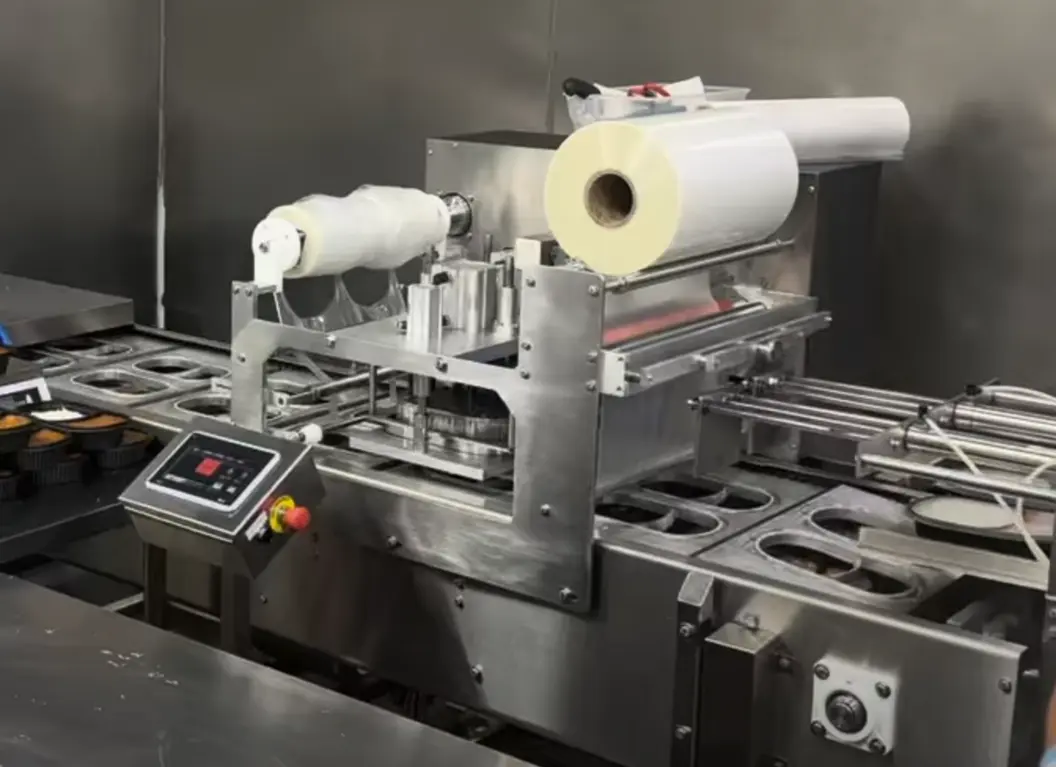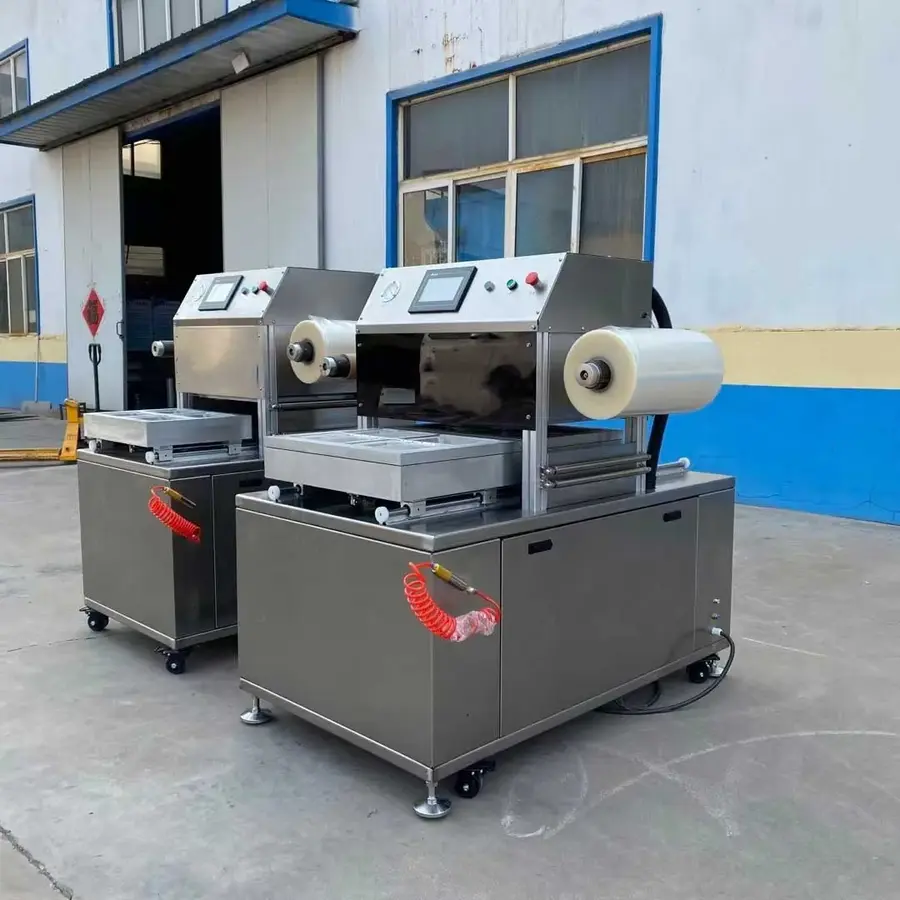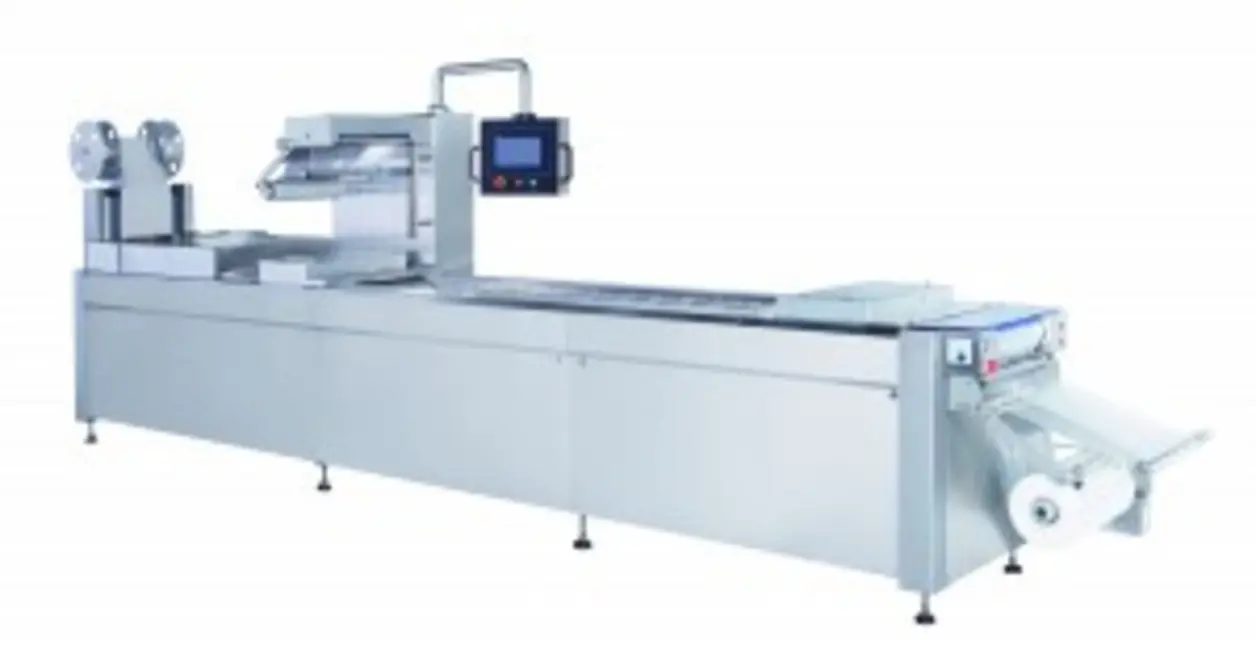
A suitable thermoforming film for food packaging is selected by starting with the finished pack and its end use—not by choosing a familiar resin name first. Define the food, tray geometry and required draw depth, storage and distribution conditions, opening method, barrier target, seal system, and consumer heating or freezing exposure. Then select a forming web and lidding web that can meet those needs on the available thermoformer.
This approach prevents a common mistake: specifying a film that looks suitable on paper but is too stiff to form, thins excessively in tray corners, curls after forming, or produces an unreliable seal. The final specification should describe the complete pack system, including the bottom web, top web, sealing layer, process settings, and validation criteria.
Start with the two web roles
Most roll-fed thermoforming packs use two films with different functions:
- Forming web (bottom web): Heated and drawn into the mold to create the tray, pocket, or cavity. It needs adequate formability, consistent gauge, stiffness appropriate to the pack, and the required barrier and abuse resistance after forming.
- Lidding web (top web): Applied over the filled cavity and sealed to the flange. It may provide printability, clarity, puncture resistance, barrier, peelability, anti-fog performance, or a combination of these features.
The two webs must be considered together. A well-formed tray can still fail in production if the lid does not seal consistently to the formed web, if the lid shrinks or wrinkles at the sealing station, or if the opening behavior does not match the product and consumer expectation.
[[IMAGE:forming-web-and-lid]]
Build the specification from the product and package
Before requesting film samples, prepare a concise package brief. It should include the following.
Product characteristics
Record whether the product is dry, moist, oily, acidic, sharp-edged, bone-in, particulate, or likely to release gas or liquid. These conditions affect puncture resistance, seal contamination tolerance, required barrier, and the risk of product damage to the formed cavity.
Fresh meat, cheese, prepared foods, bakery products, and frozen items may all use thermoformed packs, but the same film structure is rarely optimal for every application. A sharp product may require more abuse resistance than a smooth product. A high-moisture food may need a seal system that performs reliably when the flange is not perfectly dry. These are application-specific questions that should be verified through supplier trials.
Storage and distribution route
Specify the intended distribution environment: ambient, chilled, frozen, or a combination. Also identify whether the pack will face stacking loads, long transport, retail display, or repeated handling.
Barrier requirements should follow the actual shelf-life plan and pack atmosphere, where applicable. Oxygen, moisture, aroma, and light sensitivity can each matter, but the relevant target depends on the product. Film suppliers can provide barrier data for a structure, yet that data should not be treated as a shelf-life guarantee. Validate the complete package with the food, pack geometry, sealing conditions, and intended distribution route.
Consumer use
State whether consumers will refrigerate, freeze, microwave, reheat, or open the pack without tools. A freezer microwave thermoforming film requirement is not simply a request for a thicker web. The package must retain practical performance through its intended temperature exposures, while the lid, seal, inks, labels, and any absorbent or functional components must also be suitable for that use.
Confirm food-contact status and intended-use conditions with the material supplier and the applicable official requirements for the market where the pack will be sold. Do not assume that a material approved for one food-contact application is automatically appropriate for every food type or heating condition.
Match material family to the job
Material names are useful starting points, but multilayer structures and sealant layers often determine actual package behavior. Common thermoforming materials and structures may include PET-based, PP-based, PE-based, PA-containing, EVOH-containing, and other multilayer films.
| Material or structural feature | Typical reason to consider it | Key selection question |
|---|---|---|
| PET-based forming web | Clarity, stiffness, and retail presentation | Can it form to the required geometry without excessive thinning or stress whitening? |
| PP-based forming web | Applications needing greater heat tolerance or microwave-oriented use | Does its forming behavior, stiffness, and seal system suit the tray and machine? |
| PE sealant layer | Heat sealing and toughness in many flexible structures | Is it compatible with the lid sealant and expected flange condition? |
| PA-containing structure | Improved toughness and puncture resistance in some applications | Is the extra forming demand justified by the product and tray geometry? |
| EVOH or other barrier layer | Higher gas-barrier performance where the product requires it | Will the barrier remain adequate after the web is stretched into the cavity? |
| Recycled-content structure | Buyer or sustainability objectives | Does it maintain required food-contact, forming, visual, and performance characteristics? |
A high-barrier film can be a poor choice if the product does not need that protection, because it may add cost or reduce forming latitude. Conversely, a simple clear structure may be inadequate if the product’s shelf-life or distribution requirements demand better protection. The goal is the lowest-complexity structure that reliably meets the complete package requirement.
Specify draw depth and geometry before gauge
Deep draw thermoforming film selection depends on more than cavity depth. The mold shape, corner radii, draft, plug assist design, web heating pattern, and formed area all influence how the material stretches.
As a film is drawn into a cavity, it becomes thinner in some areas. The base, corners, sidewalls, and flange may not retain the same thickness. Thin areas can reduce stiffness, puncture resistance, barrier performance, and visual quality. A film that forms an acceptable shallow tray may fail in a deeper or more sharply contoured cavity.
Instead of asking only for a particular gauge, provide the supplier with:
- Finished cavity length, width, depth, and flange dimensions
- Mold photographs or drawings, including corner radii and difficult features
- Number of cavities and web layout
- Product weight and loading method
- Required pack stiffness and stacking needs
- Any sharp product edges or bone-in applications
- Current machine type and forming method, including plug assist where used
Film thickness matters, but it is a response to the full mechanical requirement. More gauge can improve robustness, yet it may also increase material use, require different heating behavior, and affect cycle consistency. Trial results should guide the final choice.
Treat sealing as a system, not a film feature
Thermoforming film sealing compatibility is determined by the lid sealant, tray flange surface, sealing conditions, pack atmosphere, contamination level, and machine condition. A supplier may describe a structure as sealable, peelable, weld-sealable, or contamination tolerant, but those descriptions still require validation on the production equipment.
Define the intended opening behavior early:
- Permanent or weld seal: Intended to resist opening under normal handling.
- Peel seal: Intended to open in a controlled manner without tearing the tray flange excessively.
- Resealable system: Requires an added functional layer or design feature and should be tested through repeated consumer use.
The seal window is especially important. In practical terms, the process needs enough operating latitude that normal variation in web temperature, flange cleanliness, dwell, pressure, and machine alignment does not create weak seals or distorted packs. A very narrow operating window may run acceptably in a short demonstration but cause inconsistent results across a full shift.
Inspect seals for continuity, appearance, opening consistency, and performance after the pack has experienced its intended storage conditions. If product residue reaches the flange, assess sealing under realistic rather than idealized fill conditions.
Check machine compatibility early
A capable film will not compensate for an unsuitable or poorly set machine. Share the thermoformer make, forming station arrangement, heating method, mold design, web width, unwind configuration, indexing pattern, and target operating conditions with the film supplier.
Important compatibility questions include:
- Does the web track and feed consistently at the planned width and roll format?
- Can the heater arrangement produce even forming across the web?
- Is the film suitable for the machine’s vacuum, pressure-forming, or plug-assist method?
- Does the web release cleanly from the mold and trim reliably?
- Will the lid run smoothly through registration, tensioning, and sealing?
- Does the selected structure create unacceptable curl, shrinkage, or distortion after forming?
Curl is often treated as a minor appearance issue, but it can affect lid placement, flange contact, pack stacking, and downstream handling. Investigate it as a material-and-process interaction rather than changing only one setting without a structured trial.
Use a production-relevant trial plan
A meaningful trial should test the finished package, not only an empty formed tray. Run enough material to observe start-up behavior, stable production, roll changes where practical, and normal process variation.
Trial acceptance checklist
- Formed cavities are complete, with acceptable corner definition and appearance.
- Wall thickness is adequate in critical locations for the intended product and handling route.
- Trays do not crack, split, stick in the mold, or show unacceptable whitening or web marks.
- The film indexes, trims, and handles consistently.
- Lidding film aligns and seals across all cavities.
- Seal quality remains consistent under normal operating variation and representative flange conditions.
- Packs retain shape and appearance through intended storage, transport, freezing, reheating, or display conditions.
- Product loading does not create punctures, distortion, or seal-area contamination problems.
- Package performance and food-contact suitability are confirmed for the actual food and intended market.
Common selection failures and what they usually indicate
Excessive thinning in corners or at the base
This usually points to an unfavorable combination of draw geometry, film structure, heating profile, plug assist, and gauge. Review formed-thickness distribution rather than judging only overall tray appearance. A different structure or a tray design adjustment may be more effective than simply increasing thickness.
Poor detail definition or incomplete forming
Likely causes include insufficient or uneven heating, a web that is too stiff for the draw, unsuitable mold or plug-assist conditions, or inadequate forming force. Check whether the issue occurs in all cavities or only certain zones of the web; the pattern can help distinguish material variation from heating or tooling variation.
Curl, distortion, or flange warpage
These symptoms may result from residual stress, uneven cooling, inappropriate heating, incompatible layer balance, or excessive draw. Evaluate the formed web after cooling and after sealing, because the sealing station can amplify a forming-related issue.
Inconsistent seals or peel performance
Check flange flatness, seal-surface cleanliness, lid-to-bottom-web compatibility, and the stability of the sealing process. If the seal varies across the web, investigate platen condition, pressure distribution, web alignment, and temperature uniformity before concluding that the film itself is at fault.
A practical buying brief
A strong request to a film supplier can be short, but it should be specific. Include the food type; pack drawing; target draw depth; product weight; storage conditions; planned consumer use; desired barrier and appearance; bottom-web and lid requirements; opening style; machine details; expected production rate; and trial acceptance criteria.
The best thermoforming film for food packaging is therefore not the film with the longest feature list. It is the forming-and-lidding system that produces a stable package at the required geometry, protects the food through its intended life, seals consistently on the available equipment, and remains fit for the consumer’s actual use. Finalize that choice only after supplier documentation and production-relevant package trials confirm the requirement.
References
- Thermoforming Film: Guide for Engineers | PennPac. (n.d.). https://www.pennpac.com/blog/thermoforming-film-gauge-thickness
- Which Companies Supply High-Quality Thermoforming …. (n.d.). https://bagla-group.com/blogs/thermoforming-film-supplier-in-the-us
- Thermoforming Film Wholesale | Food Packing Film - HiBags. (n.d.). https://hibags.com/food-packing-film-thermoforming-film
- Uses, Methods, and Types of Thermoforming. (n.d.). https://www.iqsdirectory.com/articles/vacuum-forming/thermoforming.html
- Thermoforming films - Food Packaging Machines Factory from China. (n.d.). https://landercn.com/packaging-materials/thermoforming-films
- Thermoformed Food Packaging | SPI. (n.d.). https://southplastic.com/news/thermoformed-food-packaging-guide
- Food-Safe Plastic Thermoforming – A Practical Guide. (n.d.). https://alcamiglobal.com/food-safe-plastic-thermoforming-a-practical-guide
- Thermoforming Process - an overview | ScienceDirect Topics. (n.d.). https://www.sciencedirect.com/topics/materials-science/thermoforming-process