A food processing magnetic trap in a pump line is a practical control for collecting ferrous metal and some weakly magnetic stainless-steel debris before it moves farther through the process. If rare-earth magnets are collecting stainless-steel shavings, treat the finding as an investigation trigger: the trap is doing useful work, but the debris may point to wear, machining residue, damaged components, or an upstream maintenance issue.
A magnet is not a complete metal-control system and does not prove that all metal contamination has been removed. Its effectiveness depends on the material, particle size, product flow, trap design, location, condition of the magnetic elements, and inspection discipline. The right response is to preserve the evidence, assess the likely source, inspect the affected equipment, and determine whether additional controls or product disposition decisions are required under the facility’s food-safety program.
What a rare-earth magnetic trap can capture
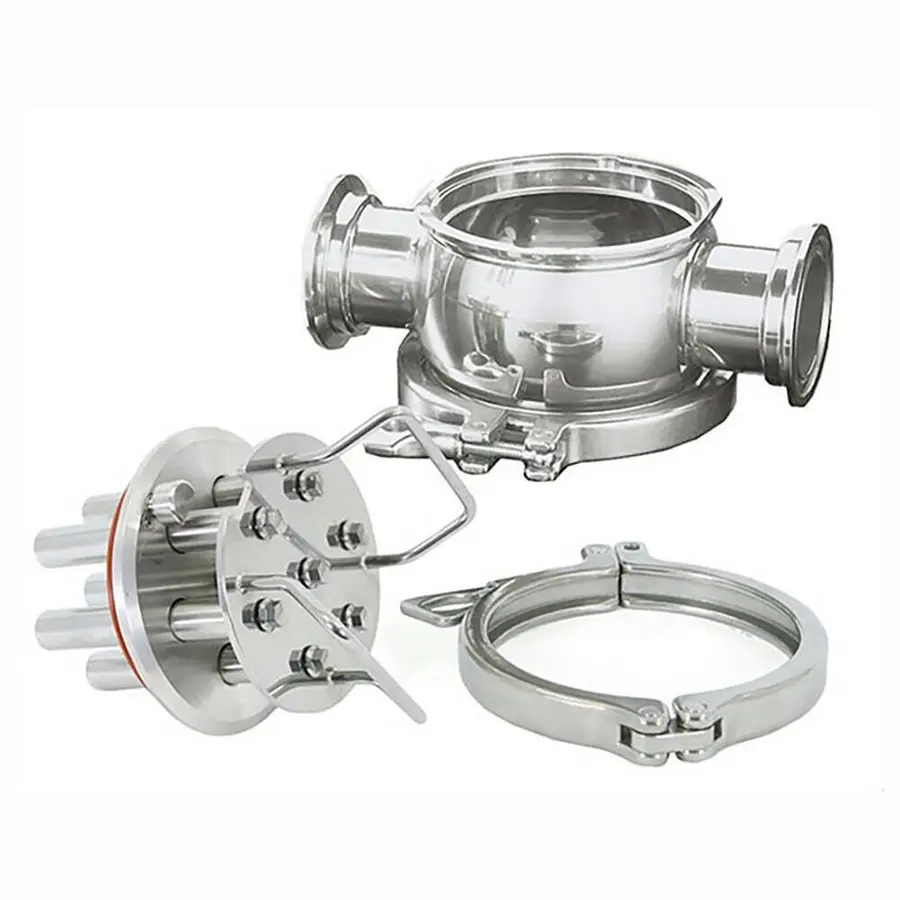
Rare-earth magnets are used because they create a strong magnetic field and can retain fine ferrous particles, rust, scale, iron filings, and certain work-hardened stainless-steel fragments. In a liquid or semi-liquid product line, the magnets are commonly enclosed in sealed stainless-steel tubes or cartridges inside a sanitary housing. Product passes through the housing while magnetic debris is drawn to the tube surfaces.
Typical contaminants a magnetic separator pump line may capture include:
- Iron filings, wire, fasteners, and fragments from damaged ferrous equipment
- Rust or iron oxide scale from equipment, pipework, or water-contact surfaces
- Welding residue or grinding debris left after fabrication or repair
- Carbon-steel particles introduced during maintenance work
- Some stainless-steel shavings, particularly material that has been cold-worked, abraded, or otherwise altered
The important limitation is that not all stainless steel is reliably magnetic. Stainless alloys vary in magnetic response according to their grade, structure, processing history, and degree of work hardening. A magnetic trap may collect certain stainless particles while allowing other stainless fragments to pass. It will not reliably remove nonferrous metals such as aluminum, copper, or brass.
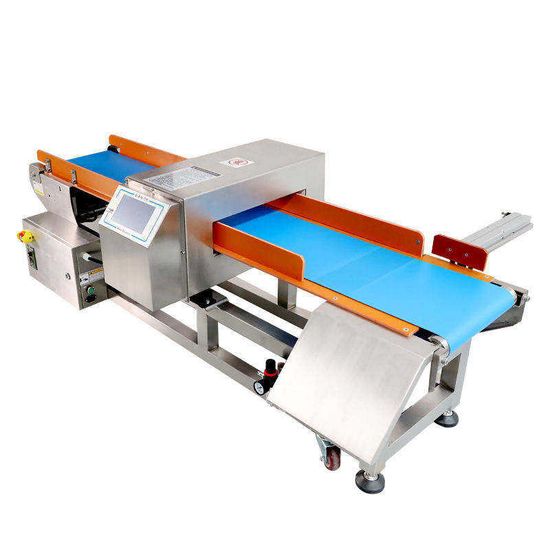
For that reason, rare earth magnets food processing systems are usually one layer of a broader foreign-material control strategy. Depending on the product and hazard analysis, other layers may include screens, filters, metal detection, X-ray inspection, equipment condition monitoring, and controlled maintenance practices.
Where to place a magnetic trap in a pump line
A liquid-line magnetic trap should be positioned where it has a reasonable chance to intercept contamination without creating an unmanageable sanitation, pressure-drop, or maintenance issue. In most cases, placement should be decided with process, engineering, maintenance, and food-safety personnel rather than by fitting a magnet wherever there is open pipe space.
Useful locations may include:
- Downstream of a pump, where pump wear debris could enter the product stream
- Downstream of equipment with moving parts, such as mixers, grinders, mills, or scraped-surface systems
- After maintenance-prone valves, fittings, and flexible connections where applicable
- Before a critical downstream process step or final inspection point
- Ahead of a metal detector or X-ray system, where magnetic separation can reduce ferrous debris while the downstream device addresses a broader range of metals
The trap must match the line’s product and operating conditions. Consider viscosity, particulates, pressure, temperature, flow pattern, pipe diameter, available clearance for opening the housing, and the need to drain and clean the assembly. A poorly sized unit may create excessive restriction, hold up product, or make inspection so difficult that it is skipped.
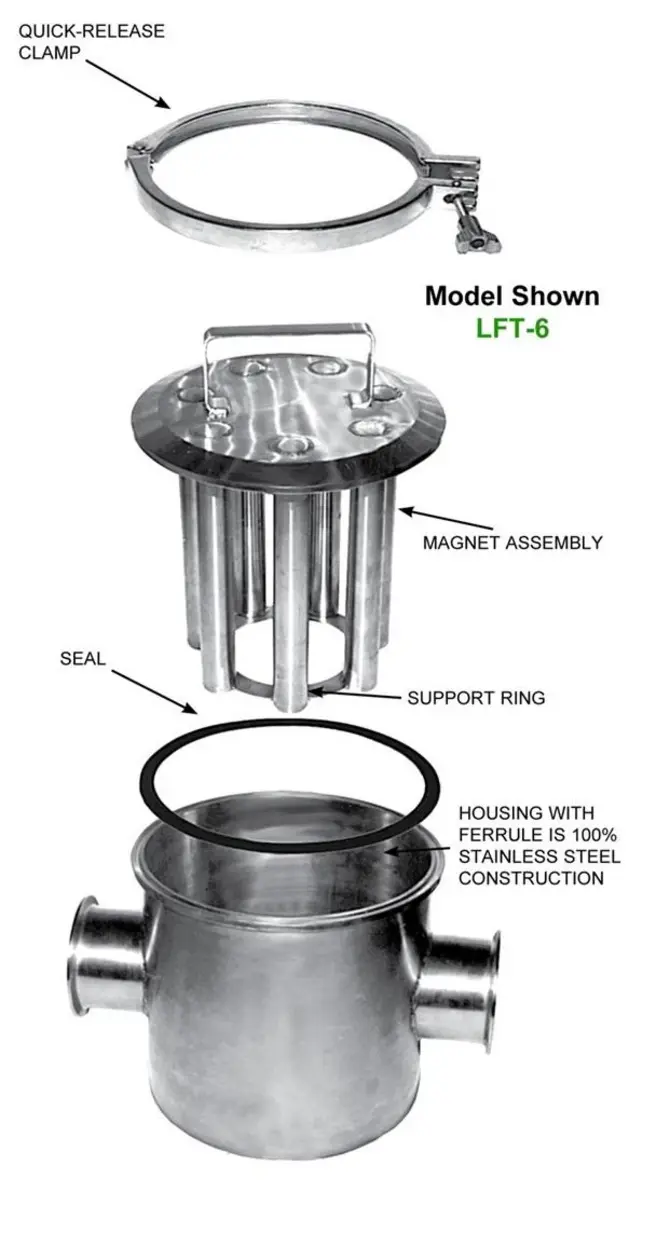
Source: greatmagtech
A practical inspection process when metal is found
The goal of an inspection is not simply to wipe magnets clean. It is to determine what was found, whether the debris is abnormal, where it may have originated, and what must happen before normal operation resumes.
1. Follow the site procedure before opening the trap
Use the facility’s approved isolation, depressurization, drainage, access, and sanitation procedures. A pressurized or hot product line must not be opened casually. Confirm the relevant operating status and involve qualified personnel when the condition is outside routine inspection.
If the trap is part of a preventive-control, quality, or foreign-material program, follow the documented requirements for inspection frequency, records, corrective action, and product handling. These requirements should be site-specific and aligned with the facility’s hazard analysis and applicable regulatory obligations.
2. Preserve useful evidence
Before cleaning the magnetic elements, document the finding. A clear record can make the difference between a focused maintenance inspection and repeated unexplained incidents.
Record, as appropriate:
- Date, time, line, trap location, and product being processed
- Production lot or time window associated with the finding
- Quantity of debris and whether it appears as dust, flakes, wire, chips, or larger fragments
- Color, corrosion, oiliness, and visible signs of heat discoloration
- Whether debris is strongly held to the magnet or only lightly attracted
- Recent line repairs, welding, grinding, pump work, seal replacement, or equipment changes
- Photographs of the magnets before debris is removed, where permitted by the site’s procedures
If the amount, shape, or character of debris is unusual, retain a representative sample in a labeled, controlled manner for maintenance or laboratory review according to site procedures.
3. Distinguish normal background debris from an abnormal event
Some plants may see a small recurring amount of fine ferrous dust or scale during normal operation, particularly in older systems or after work on upstream equipment. What is acceptable, however, should not be assumed. It should be defined in the facility’s own program based on product risk, equipment history, and trend data.
An abnormal finding is more likely when there is a sudden increase in material, repeated sharp shavings, long wire-like pieces, shiny fresh chips, fragments that resemble a known component, or debris appearing soon after maintenance. A new pattern deserves escalation even if the total quantity seems small.
4. Inspect likely sources upstream
Stainless steel shavings magnet findings often point to mechanical contact or unfinished work rather than random contamination. Start with equipment immediately upstream of the trap, then expand the search based on product flow and maintenance history.
Common source categories include:
| Possible source | What to look for |
|---|---|
| Pump internals | Abnormal wear, damaged impeller or rotor components, contact marks, failed bearings, seal damage, or evidence of cavitation and rubbing |
| Valves and fittings | Worn seats, damaged stems, loose hardware, burrs, gasket intrusion, or damaged sanitary clamps |
| Mixers and agitators | Shaft or blade contact, worn bushings, bearing problems, loose fasteners, or metal-to-metal rubbing |
| Screens and filters | Torn mesh, broken retainers, damaged baskets, or fragments from upstream filtration equipment |
| Recent fabrication or repair | Grinding dust, weld spatter, drilled or cut metal, incomplete post-work cleanup, or tools used near open product contact areas |
| Pipework and hose connections | Internal damage, corrosion products, loose fragments, and areas altered during maintenance |
Do not assume the closest pump is the source solely because the trap is installed after it. Product flow can carry debris from farther upstream, while a pump can also break down a larger fragment into smaller pieces. Compare the trapped material with suspected components and review the sequence of recent work.
Cleaning and returning the trap to service
Clean magnetic elements according to the equipment manufacturer’s instructions and the facility’s validated or approved sanitation procedures. Magnetic cartridges are often enclosed in stainless-steel sleeves so collected material can be removed without exposing the magnetic core, but designs differ.
Before reassembly, check for damaged sleeves, cracks, worn seals, rough surfaces, distorted rods, trapped product residue, and incorrect component positioning. Verify that the housing, closures, and gaskets are correctly installed and that the unit can be returned to service without leaks or sanitation concerns.
A magnet that is difficult to access, damaged, or routinely left uninspected is not an effective control. Include the trap in preventive-maintenance and sanitation records, and verify that cleaning methods do not damage the magnetic assembly or its hygienic surfaces.
When stainless-steel debris requires escalation
Escalate promptly when the finding suggests active equipment failure, a foreign-material incident, or a possible impact on released product. Examples include repeated shavings across consecutive checks, large or sharp fragments, debris matching a damaged machine component, evidence of pump contact, or metal found after a repair that involved cutting or grinding.
The escalation path should involve the people responsible for food safety, quality, maintenance, and production. They may need to determine whether to stop the line, inspect equipment, place potentially affected product under control, increase downstream inspection, or obtain qualified technical assessment. Product disposition and regulatory decisions should be made under the facility’s documented program, not from a general rule of thumb.
Common mistakes with magnetic filtration in food processing
Several practices reduce the value of a magnetic trap:
- Treating the magnet as a substitute for metal detection or X-ray inspection
- Installing a trap without considering flow, viscosity, cleanability, pressure, and access
- Cleaning magnets without recording what was captured
- Removing debris before anyone can assess its form or likely source
- Assuming all stainless steel will be captured
- Failing to inspect after upstream maintenance, welding, grinding, or component replacement
- Ignoring small recurring findings that show a worsening trend
- Using an unverified magnet assembly or damaged housing in a hygienic product line
A workable magnet-check routine
A useful routine is simple: inspect at the defined interval, document every meaningful finding, trend the results, and connect abnormal debris to an upstream equipment inspection. The magnetic trap should be treated as both a separator and an early-warning device.
When stainless steel shavings appear, the key question is not only, “Did the magnet catch them?” It is, “What created them, could more be generated, and which products or equipment may be affected?” Answering that question systematically turns magnetic filtration food processing equipment from a passive fitting into a practical part of metal contamination prevention food plant operations.
Frequently asked questions
Can a rare-earth magnet remove stainless steel from food product?
Sometimes, but not consistently for every stainless alloy or fragment. Some stainless steel becomes more responsive to magnets after work hardening or abrasion, while other stainless material may have little magnetic attraction. Use magnetic separation for ferrous and magnetically responsive debris, not as the sole control for all stainless steel.
Does finding metal on a magnetic trap mean contaminated product was released?
Not necessarily. The trap may have captured debris before it traveled farther downstream. However, the finding should be evaluated under the site’s foreign-material and product-control procedures to determine the potential scope, source, and need for further action.
How often should pump-line magnets be checked?
The correct interval depends on the process, equipment condition, product characteristics, production schedule, historical findings, and the role assigned to the trap in the food-safety plan. Establish and document an interval that is appropriate for the line, then review it when findings or operating conditions change.
Can a magnetic trap identify the source of metal shavings?
It can provide evidence, but it does not identify the source by itself. The debris shape, composition, and timing can guide the investigation. Confirmation generally requires inspection of pumps, valves, mixers, screens, recent maintenance areas, and other likely upstream sources.
References
- 10 Inch Stainless Steel Round Food Grade Magnetic Separator Grate with Center Frame - HSMAG. (n.d.). https://www.hsmagnets.com/product/10-inch-stainless-steel-round-food-grade-magnetic-separator-grate-with-center-frame
- food-processing-and-packaging | MPI Magnet. (n.d.). https://www.mpimagnet.com/industry/food-processing-and-packaging
- Food Processing Magnetic Separators. (n.d.). https://magneticholdcompany.com/magnets-for-food-industry
- [PDF] Magnets for Metal Fragment Control and Food Safety. (n.d.). https://fsqservices.com/wp-content/uploads/2020/05/Magnets-for-Metal-Fragment-Control-and-Food-Safety.pdf
- Buy Magnetic Trap Ferrous Food-Grade, Hygienic Design | Alibaba.com. (n.d.). https://www.alibaba.com/showroom/magnetic-trap-ferrous.html
- Province of Manitoba | agriculture - Magnetic Separators in Food Processing. (n.d.). https://www.gov.mb.ca/agriculture/food-safety/education-resources/print,magnetic-separators.html
- Magnetic Separators in Food Processing - Great Magtech. (n.d.). https://www.gme-magnet.com/info/magnetic-separators-in-food-processing-103428281.html
- Food Grade Magnetic Separator | S. G. Frantz Co. Inc.. (n.d.). https://sgfrantz.com/food-industry