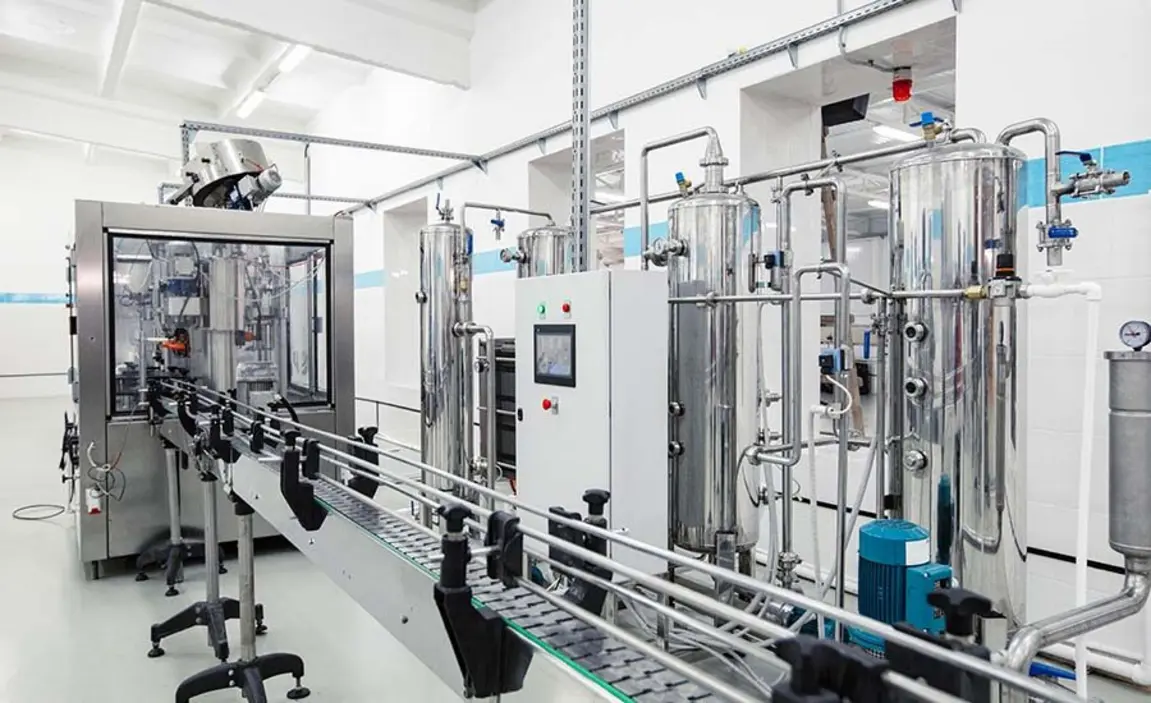
A hygienic design review should answer one practical question: can every relevant surface be cleaned, drained, inspected, and maintained under the plant’s actual sanitation method? If the answer depends on guesswork, improvised disassembly, or an area that cannot be reached or observed, the equipment has a potential cleanability risk.
For processors specifying or improving hygienic design food processing equipment, the best approach is to inspect the complete machine rather than relying on stainless-steel appearance, a general sanitary claim, or a single certificate. Product characteristics, installation details, cleaning method, maintenance practices, and the condition of surfaces all affect whether a machine remains cleanable in service.
Start with the product, process, and cleaning method
Cleanability is not a universal property. An enclosed liquid system may be suitable for cleaning-in-place (CIP), while an open conveyor, depositor, slicer, or mixer may require routine access and disassembly. A design that works for one product may retain another product with different viscosity, particle size, fat content, stickiness, or allergen-control requirements.
Before evaluating a machine, define these operating conditions:
- Product-contact zones and adjacent splash or drip zones
- Product behavior: dry, sticky, fatty, particulate, liquid, or viscous
- Batch, continuous, open, or closed processing
- Planned cleaning method: manual cleaning, foam or rinse cleaning, COP, CIP, or a combination
- Required disassembly frequency and the people expected to perform it
- Changeover needs between products or allergen profiles
- Cleaning-chemical compatibility of materials, seals, finishes, and coatings
- Whether the equipment must drain fully after production and wet cleaning
This context prevents a common purchasing mistake: selecting equipment designed for a cleaning method the plant cannot consistently perform.
Where food residue harborage points occur
A harborage point is a location where food residue, moisture, cleaning solution, or soil can collect and escape effective cleaning. It may be in the product zone, but risks also exist above, below, and beside it. Residue or moisture outside direct product contact can become a source of contamination through dripping, vibration, air movement, maintenance activity, or reassembly.
Corners, crevices, and overlapping surfaces
Look closely at sharp internal corners, lap joints, gasket interfaces, bolted covers, folded sheet metal, and components that meet without a smooth, cleanable transition. These areas can retain product and are difficult to inspect.
A useful question is: Can the cleaning action reach the entire interface, and can an inspector confirm that it did? If a seam opens under load, thermal cycling, vibration, or repeated cleaning, it can become more difficult to clean over time.
Hollow sections and unsealed framework
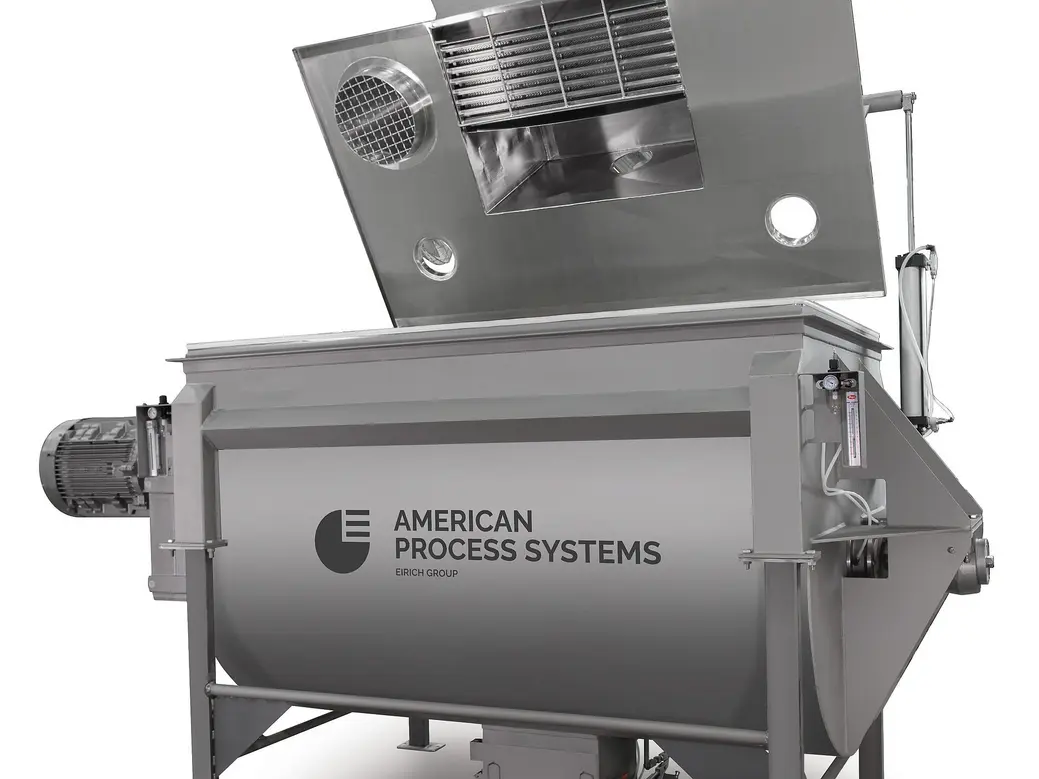
Tubular legs, box frames, handles, guards, and support structures should be examined for open ends, damaged caps, incomplete welds, and penetrations. If water or product enters a hollow section, it may remain hidden and later escape.
Hollow construction is not automatically unacceptable, but its closure, weld integrity, drainage, and accessibility need review. The same applies to insulated panels, cable trays, and enclosed machine bases near wet or high-care areas.
Inaccessible joints and hardware
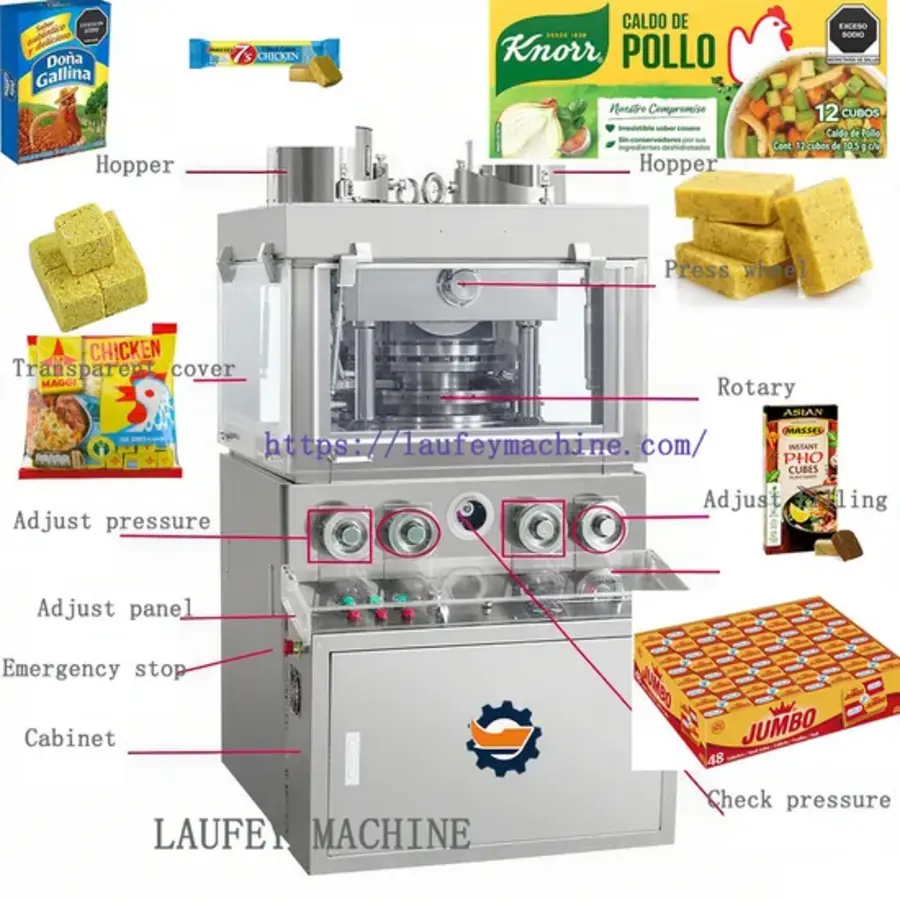
Fasteners, threaded rods, springs, hinges, sensors, brackets, leveling feet, and conveyor components often create more hygiene risk than the main process chamber. Hardware positioned over exposed product deserves particular attention because accumulated debris can fall into the process zone.
Ask the supplier to show how the following are cleaned and inspected:
- Seal grooves and gasket seats
- Shaft seals and bearing housings near product areas
- Conveyor belt edges, sprockets, rollers, and return paths
- Hopper outlets, valve seats, and diverter mechanisms
- Guards and covers that are opened infrequently
- Product-contact attachments, nozzles, scrapers, and tools
Source: sunhyings
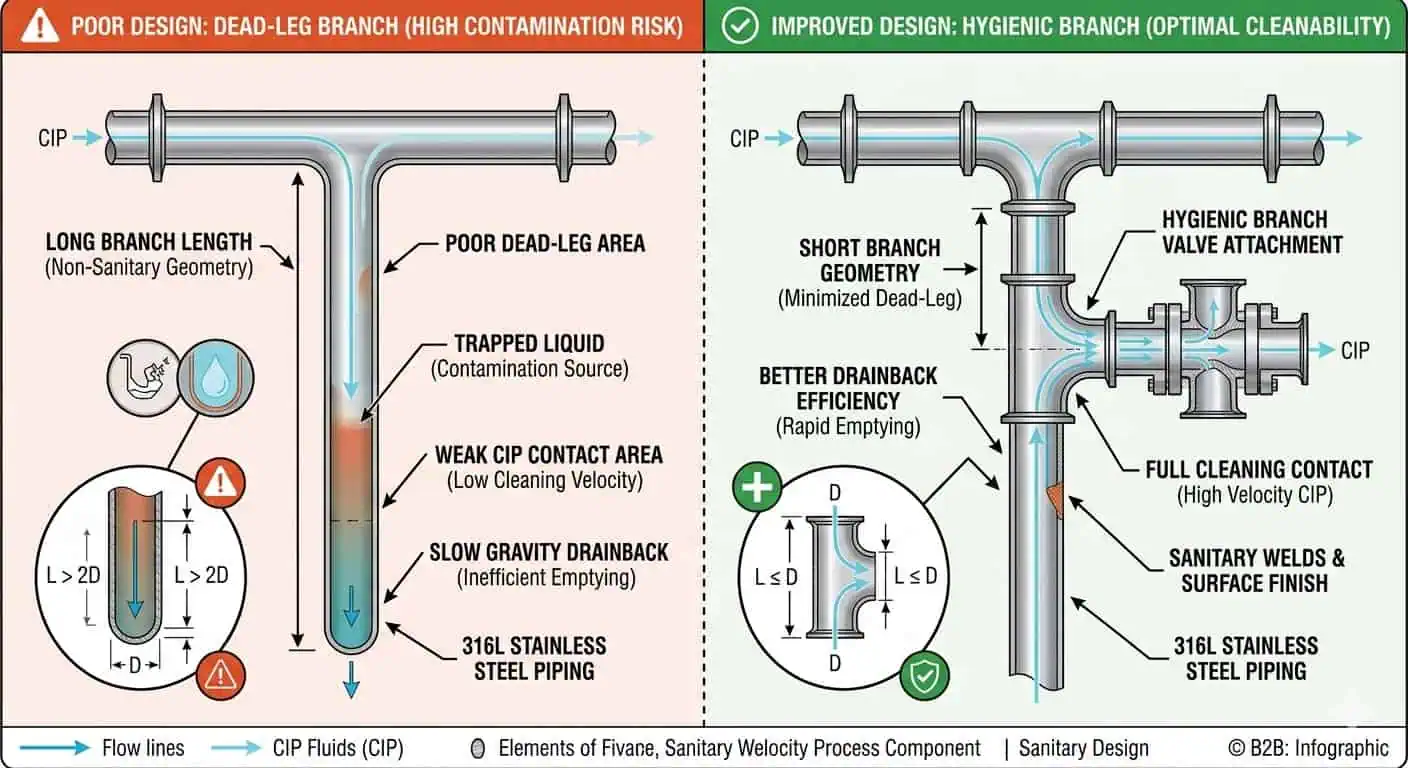
Poor drainability and dead ends
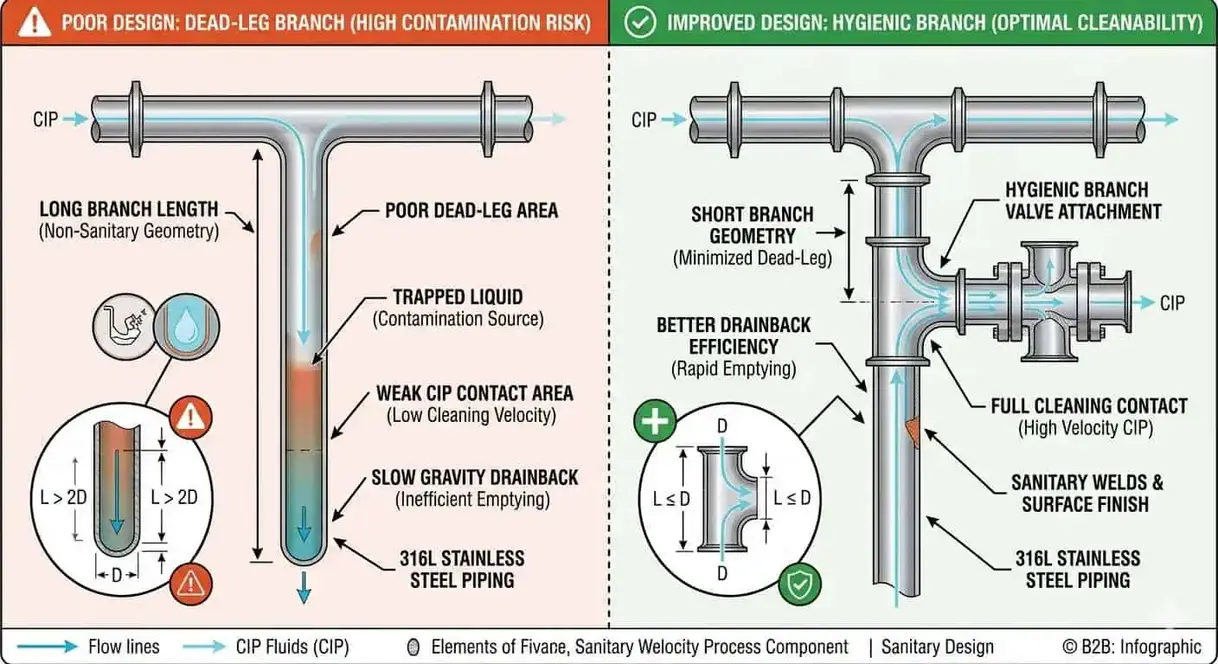
Wet-cleaned equipment should not leave unintended pools after cleaning or rinsing. Pooled water can dilute chemicals, delay drying, conceal soil, and support persistence of contamination risks. Review tanks, pipework, conveyors, drip pans, machine bases, and horizontal surfaces for places where liquids can stand.
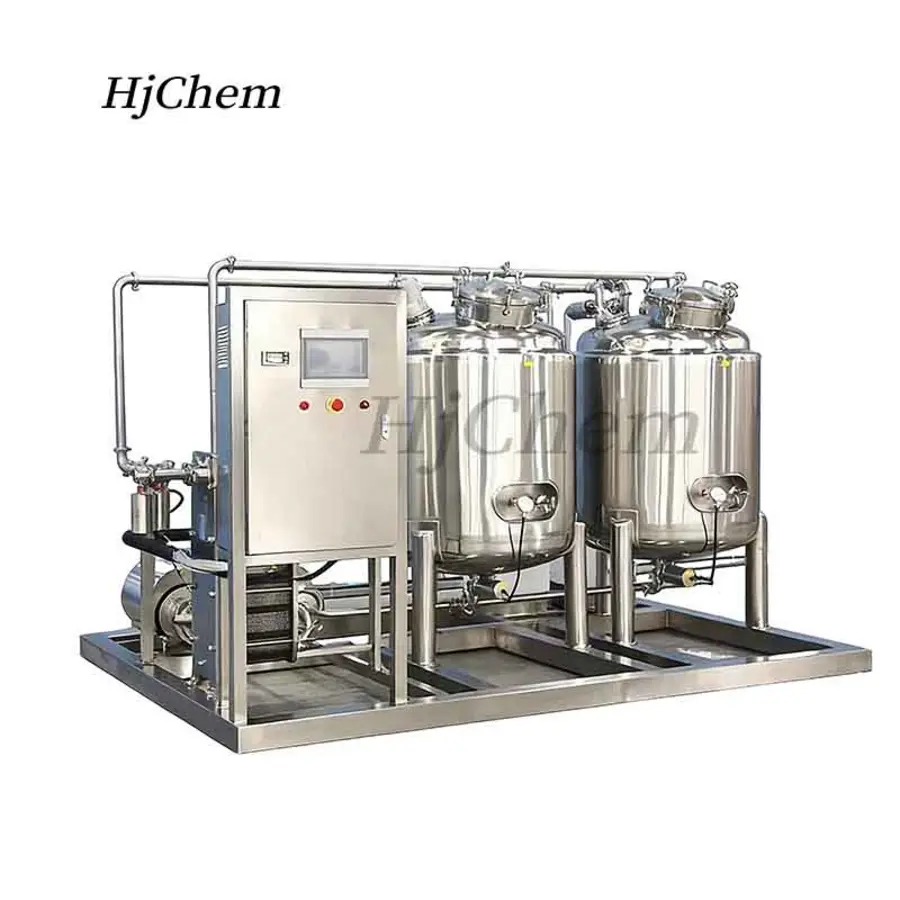
For closed systems, evaluate piping routes, branch connections, valves, instruments, flexible hoses, and end sections. A line may appear drainable on a drawing but retain liquid after installation because of supports, elevation changes, incorrect slope, or field modifications.
Do not assume that a CIP connection alone demonstrates cleanability. CIP effectiveness depends on the actual circuit design, flow conditions, component geometry, spray coverage where relevant, chemical program, and verification method. These conditions should be established and validated for the specific system.
A practical hygienic equipment inspection checklist
Use the following checklist during factory acceptance, site acceptance, supplier review, or an internal hygienic equipment inspection.
| Review area | What good practice looks like | Warning signs |
|---|---|---|
| Product-contact surfaces | Smooth, intact, corrosion-resistant, and compatible with the process and cleaning regime | Pitting, corrosion, cracking, damaged coatings, rough repairs, or worn seals |
| Welds and fabrication | Continuous, finished, accessible weld areas with no obvious gaps or irregular joints | Unfinished welds, pinholes, undercuts, overlap joints, or rough fabrication |
| Access | Covers, guards, and components can be opened or removed safely for cleaning and inspection | Hidden zones require major teardown, special tools, or excessive time to access |
| Drainage | Product and cleaning fluids have a defined path to drain without pooling | Flat ledges, trapped water, low points, blocked drains, or horizontal pipe runs that retain liquid |
| Seals and joints | Gaskets, seals, and mating faces are cleanable and can be inspected for wear | Product behind seals, compressed or damaged gaskets, inaccessible grooves |
| Framework and non-product zones | Supports and enclosures resist water and debris accumulation and can be cleaned | Open hollow members, horizontal ledges, unsealed penetrations, inaccessible undersides |
| Maintenance design | Wear parts can be changed without introducing debris or compromising hygienic assembly | Lubricant exposure risk, difficult reassembly, loose hardware, unprotected bearings near product |
Inspect the machine in its installed condition
An equipment drawing or showroom demonstration cannot reveal every risk. Installation can create new harborage points through added pipe supports, utilities, brackets, field welds, cable routing, floor interfaces, or restricted access between machines and walls.
Conduct the review with representatives from engineering, sanitation, production, maintenance, quality, and food safety. Each group sees different failure modes. Sanitation personnel may identify areas a brush, spray device, or inspection light cannot reach. Maintenance may identify seals that are difficult to replace correctly. Operators may know where product routinely accumulates during startup, stoppages, or changeovers.
Inspect under normal operating conditions where practical. Observe where product drips, smears, splashes, bridges, or builds up. Then inspect after a normal cleaning cycle, not only after a special demonstration clean.
Verify cleanability rather than accepting an appearance claim
A hygienic appearance is useful, but it is not verification. Cleanability should be demonstrated using a documented approach appropriate to the product, equipment, and sanitation program.
A practical verification plan commonly includes these steps:
- Map zones and surfaces. Identify direct product contact, adjacent product zones, difficult-to-clean components, and non-product areas that could affect exposed food.
- Define the intended cleaning procedure. Specify disassembly, tools, cleaning chemistry, rinse steps, access points, inspection requirements, and reassembly controls. Qualified sanitation and food-safety personnel should establish the details.
- Challenge known difficult areas. Focus on seals, corners, valves, belt returns, nozzles, dead ends, and components with sticky or particulate product accumulation.
- Inspect visually after cleaning. Visual inspection remains essential because it can reveal residue, standing water, damaged surfaces, and incomplete reassembly.
- Use the plant’s approved verification methods. Depending on the food-safety plan, these may include documented inspection, swabbing, allergen verification, or other methods selected and interpreted by qualified personnel.
- Record failures and correct the design cause. Repeated cleaning failures should not be managed only by adding labor or extending cleaning time. Identify whether geometry, access, drainage, material condition, or the cleaning method is the underlying limitation.
Cleaning validation is different from routine verification. Verification checks whether the established process was performed effectively on a given occasion. Validation provides evidence that the designed cleaning procedure can consistently achieve its intended result for the defined equipment and product conditions. The appropriate validation approach, acceptance criteria, sampling plan, and frequency should be determined within the facility’s food-safety system and applicable requirements.
Questions to ask equipment suppliers
A supplier should be able to discuss the equipment’s hygienic features in operational terms. Useful questions include:
- Which components are product-contact and which are considered splash or adjacent zones?
- What must be removed for manual cleaning, and how long does normal access take in practice?
- Can the machine be cleaned in place? If so, what cleaning circuit assumptions and installation requirements apply?
- How do tanks, pipes, hoses, valves, and low points drain after production and cleaning?
- What are the materials and surface conditions of product-contact parts, seals, and gaskets?
- Where are the most difficult areas to clean and inspect?
- Which wear parts affect hygienic performance, and how are they inspected and replaced?
- Are there documented cleaning instructions, assembly drawings, and recommended inspection points?
- Has the specific machine configuration been assessed or tested under a recognized hygienic-design framework? If so, what does that assessment cover and what does it not cover?
A certificate or third-party assessment can be valuable evidence, but it should be read carefully. It may apply only to a stated model, component, configuration, or set of operating conditions. Field-installed options and modifications still require review.
Common selection mistakes
The first mistake is equating stainless steel with sanitary equipment design. Stainless steel can be suitable for many food applications, but material alone does not eliminate crevices, poor drainage, inaccessible joints, or degraded surfaces.
The second is overlooking the underside and non-product-contact side of the machine. Frames, guards, drives, cable routing, and utility penetrations can create cleaning problems that affect the product environment.
The third is specifying a highly automated machine without planning access, cleaning labor, spare seals, training, and downtime. Automation can reduce handling, but it can also add valves, sensors, enclosures, and interfaces that require hygienic review.
Finally, avoid accepting a design that can only be cleaned by exceptional effort. A machine should be evaluated against the cleaning routine that will actually be used across shifts, staffing levels, and normal production schedules.
The decision standard: cleanable throughout service life
The most useful purchasing standard is not simply whether new equipment looks smooth and enclosed. It is whether the equipment can remain effectively cleanable as seals wear, surfaces age, products change, and routine maintenance occurs.
Specify cleanability as a functional requirement. Require accessible inspection points, defined drainage, documented cleaning procedures, suitable materials, serviceable components, and evidence appropriate to the machine’s risk and use. Then confirm the design again after installation and during sanitation validation. That approach gives processors a stronger basis for controlling food residue harborage points before they become recurring sanitation problems.
References
- Hygienic Design and its Role in Certified Food Safety Management - Sesotec GmbH. (n.d.). https://www.sesotec.com/en/blog/blog-detail/hygienic-design-and-its-role-in-certified-food-safety-management
- Assessment and Standards in Hygienic Design of Food Equipment: A Comprehensive Cross-Industry Review. (n.d.). https://www.mdpi.com/2305-6703/6/1/9
- Hygienic Design for Food Processing Equipment in 2026 | FDA. (n.d.). https://www.velecsystems.com/en/hygienic-deign-for-sustainable-operations
- Hygienic Design of Equipment in Food Processing | Food Safety Magazine. (n.d.). https://www.food-safety.com/articles/4350-hygienic-design-of-equipment-in-food-processing
- [PDF] Sanitary Design and Construction of Food Equipment1. (n.d.). https://ucfoodsafety.ucdavis.edu/sites/g/files/dgvnsk7366/files/inline-files/26502.pdf
- Hygienic design of food processing equipment. (n.d.). https://www.sciencedirect.com/science/chapter/edited-volume/pii/B9780857094292500048
- Guide to Hygienic Food Equipment Design & Cleanability. (n.d.). https://www.showes.com/blog/the-gold-standard-ensuring-food-safety-with-hygienic-equipment
- Food First Blog | Sanitary Design. (n.d.). https://blog.aibinternational.com/en/food-first-blog/postid/87/sanitary-design