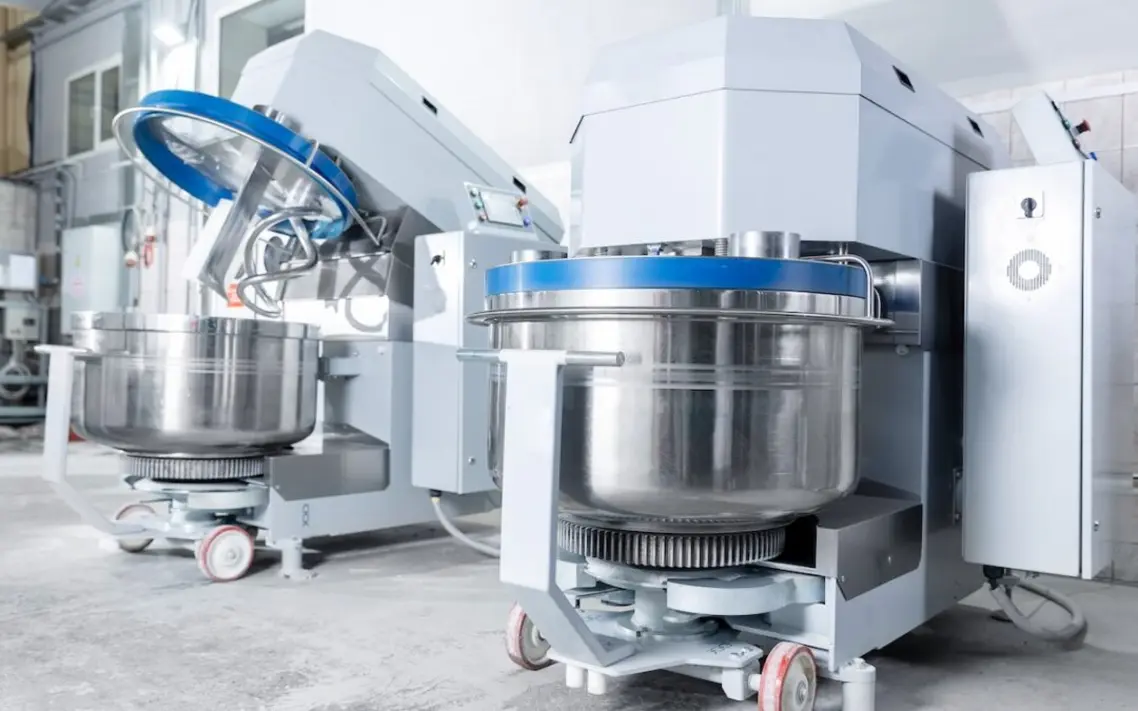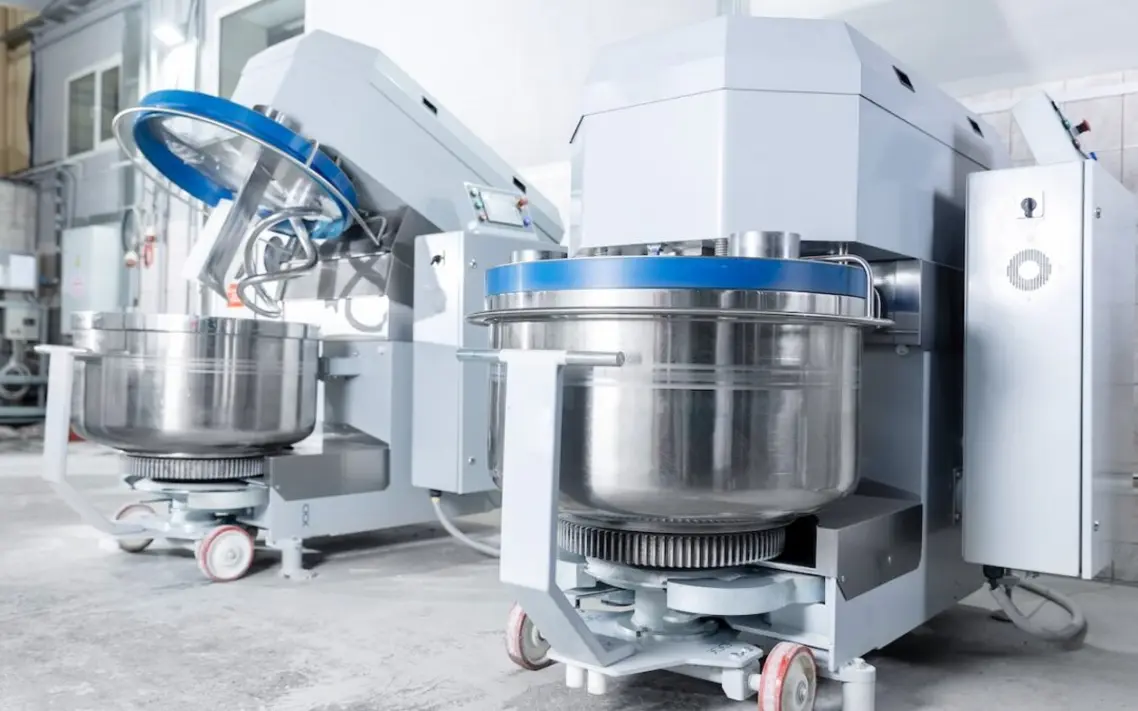
A new or increasing industrial food mixer gearbox noise should be treated as a maintenance signal, not automatically as a grease problem. A steady, familiar gear whine may be normal for a particular mixer. A change in volume, pitch, rhythm, vibration, temperature, or operating performance is not. The main cause categories are lubrication condition, bearing or gear wear, coupling or belt faults, loose mounting, misalignment, and changes in mixer load.
Start by documenting when the sound occurs, then inspect the drive train externally and verify the lubricant against the mixer and gearbox manufacturer’s instructions. Do not add grease or oil simply to quiet a gearbox. The wrong product, wrong quantity, or mixing of incompatible lubricants can worsen heat generation and damage. Grinding, knocking, a sudden severe noise, visible damage, or noise accompanied by overheating or abnormal vibration warrants stopping the equipment in accordance with site procedures and involving qualified maintenance personnel.
First, identify what changed
Gearboxes transmit motor speed and torque to the agitator, bowl, paddles, hooks, or other mixing element. They naturally create some sound through gear mesh and bearings. The practical question is not whether the machine makes noise, but whether its sound has changed from its established normal condition.
Record these details before a shutdown if it is safe to do so:
- When the noise began and whether it is getting worse.
- Whether it appears at startup, under product load, during speed changes, or at all times.
- Which mixer speed, direction, or recipe is involved.
- Whether the sound follows motor speed, agitator speed, or a repeating cycle.
- Any accompanying vibration, housing heat, lubricant leak, reduced output speed, or motor overload indication.
- Recent work, including a lubricant change, motor replacement, coupling adjustment, washdown event, or process change.
This record helps separate a gearbox issue from a fault elsewhere in the drive train. A mixer operating with a denser batch, an overfilled bowl, a seized scraper, or a damaged belt can load the gearbox and change its noise without an internal gear failure.
What the noise may be telling you
| Noise or related symptom | Likely cause categories | First checks |
|---|---|---|
| Higher-pitched whine that rises with speed | Gear mesh change, insufficient lubricant film, incorrect lubricant viscosity, bearing wear | Compare with normal speed and load; verify lubricant specification and level; check temperature and vibration trend |
| Rumbling or growling | Bearing wear, contamination, bearing clearance issue, damaged coupling or driven shaft support | Isolate the apparent location; inspect coupling and mounting; assess vibration and bearing condition |
| Grinding or scraping | Severe lubrication loss, contaminated lubricant, damaged gear teeth, serious misalignment | Stop and inspect under authorized maintenance procedures; do not continue production to “see if it clears” |
| Knocking or cyclic clunking | Damaged gear tooth, loose component, backlash problem, loose mounting, intermittent product-side interference | Check mounting hardware, coupling condition, agitator clearance, and load pattern |
| Rattle at certain speeds | Loose guards, fasteners, coupling elements, base or foundation resonance | Inspect external hardware and guards before assuming internal gearbox damage |
| Noise with rising gearbox temperature | Incorrect lubricant, low lubricant level, overfill, contamination, overload, bearing or gear distress | Verify level, lubricant identity, cooling or airflow arrangements, load, and leaks |
Noise alone is not a diagnosis. Its value increases when it is assessed together with temperature, vibration, lubricant condition, motor current or load data where available, and the mixer’s production history.
Check the drive train before opening the gearbox
Many apparent gearbox noises originate outside the gearbox. Before considering internal work, use the equipment manual and site lockout/tagout procedure to make the mixer safe for inspection. Do not remove guards or access rotating components while the machine is running unless the manufacturer’s procedure and site safety controls specifically permit the task.
1. Check product load and mixer operation
Confirm that the batch size, product viscosity, ingredient temperature, mixing speed, and sequence match the established process. A substantially heavier or less-flowable product can increase torque demand and make a marginal drive sound abnormal.
Also inspect the mixing element and bowl area for mechanical interference. Bent tools, failed scrapers, hardened product buildup, or contact between rotating parts can create a noise that travels through the frame and resembles a gearbox problem.
2. Inspect motor, coupling, belt, and mounting
With the machine isolated, look for loose fasteners, deteriorated flexible coupling elements, damaged belts, pulley wear, shaft movement, and cracked or shifted mounting feet. Misalignment between motor, gearbox, and driven shaft can load bearings and alter gear contact.
Look for signs that the gearbox housing is moving relative to its support. Loose mounting can produce rattle, vibration, and noise that are especially noticeable during acceleration or at a particular mixer speed.
3. Inspect externally visible lubrication indicators
The correct check depends on gearbox design. Some units are oil-lubricated with a sight glass, dipstick, level plug, breather, drain, and fill point. Others have sealed-for-life arrangements. Certain mixer components, bearings, or open gear systems may use grease rather than gearbox oil.
Do not assume that a grease fitting means the enclosed gearbox itself should be greased. Identify the component and consult the manufacturer’s lubrication chart.
Source: i.ytimg
Check for:
- Lubricant leakage at seals, covers, plugs, shafts, or breathers.
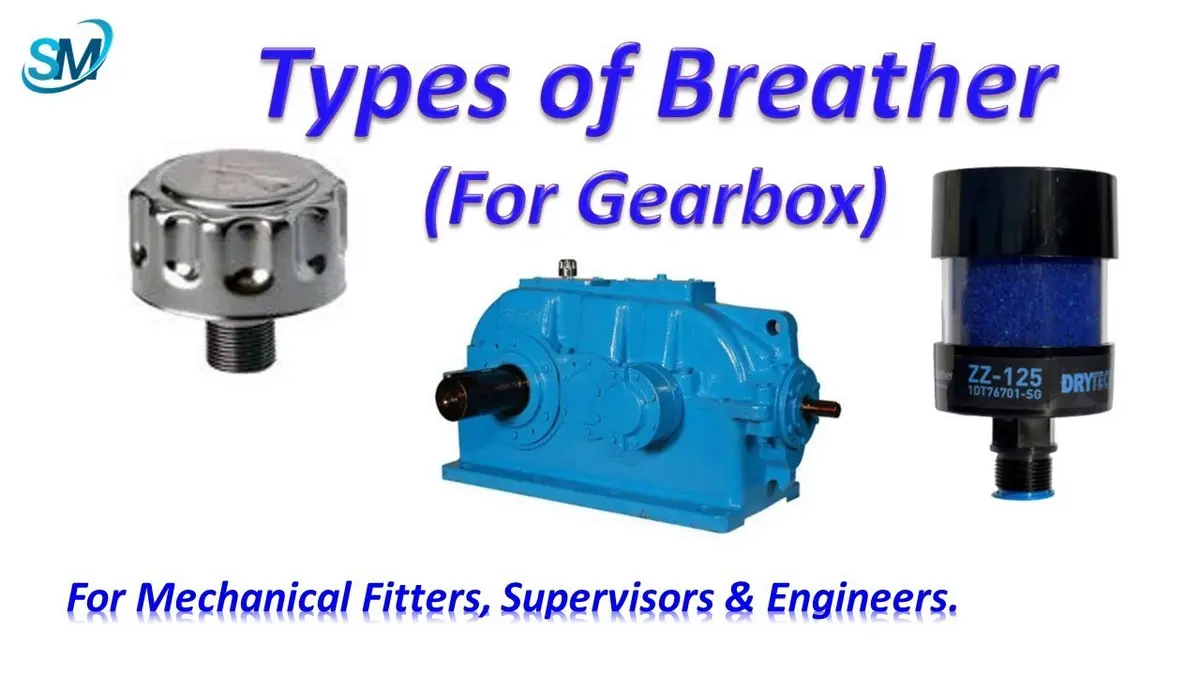
- A blocked, damaged, or contaminated breather where one is fitted.
- A low or unusually high oil level on units designed for level checking.
- Discolored, foamy, thickened, or visibly contaminated lubricant, where safe sampling or viewing is authorized.
- Metal debris on a magnetic drain plug or in a sample, if the gearbox maintenance procedure calls for inspection.
- Water ingress after washdown, cleaning, or a seal failure.
A low level can reduce lubrication film thickness. Overfilling can also cause churning, heat, foaming, and seal stress. Neither condition should be corrected by guesswork.
When lubrication is the likely cause
A mixer gearbox lubrication failure becomes more likely when noise is accompanied by heat, a recent lubricant change, leakage, contamination, or an extended period without scheduled inspection. Lubricant problems can include low fill, incorrect viscosity, oxidation, water ingress, particulate contamination, incompatible products, or use of grease where the gearbox requires oil.
Lubricant condition should be verified against the equipment documentation, not selected based on noise alone. Gearbox design, speed, loading, ambient conditions, seal materials, and lubrication method affect the required product. A thicker lubricant is not automatically better, and adding more lubricant does not correct worn gears or bearings.
Food-grade grease for mixers: where it matters
Food-processing equipment may require a lubricant suitable for the site’s food safety program where incidental food contact is possible. This requirement is usually most relevant to external bearings, open components, or locations where a leak could reach product or product-contact surfaces. Food-grade grease may also be specified for particular mixer assemblies.
However, “food-grade” does not replace the gearbox manufacturer’s requirements for base oil type, viscosity, thickener compatibility, load performance, and approved lubricant quantity. For an enclosed mixer gearbox, verify all of the following before a food mixer grease replacement or oil change:
- The exact gearbox model and the manufacturer’s specified lubricant type and grade.
- Whether the component uses oil, grease, or a sealed lubrication system.
- The food-safety suitability required by the equipment design, plant risk assessment, and customer or regulatory obligations.
- Compatibility with the lubricant already in service and the required changeover method.
- The approved fill quantity or level-setting method.
- Whether drained lubricant, absorbents, and cleaning materials must be handled under a site contamination-control procedure.
If lubricant identity is unknown, do not top up with an assumed equivalent. Label the issue, obtain the equipment documentation, and have maintenance determine the correct corrective action.
A controlled lubrication service approach
A proper lubricant service is a maintenance task, not a quick noise remedy. Follow the mixer and gearbox instructions, site safety procedures, and sanitation controls. In general, the work should include:
- Confirm the fault history. Review noise, vibration, temperature, leaks, and recent maintenance records.
- Identify the component. Confirm whether the service point lubricates a gearbox, bearing, coupling, or another part.
- Verify the approved lubricant. Check product identity, compatibility, and food-grade requirements where applicable.
- Isolate the equipment. Use the site’s energy-isolation procedure before servicing.
- Inspect the removed lubricant where applicable. Note water, debris, unusual odor, discoloration, or metallic material and retain a sample if the site investigation process requires it.
- Correct the underlying issue. Replace failed seals, correct leaks, restore breather condition, or address overload and alignment issues rather than merely refilling.
- Fill or regrease to the specified method. Avoid overfilling and avoid combining products unless compatibility has been confirmed.
- Document and trend the result. Record lubricant used, date, observations, and post-service operating condition.
When noise points to mechanical damage
Lubrication may reduce friction-related noise if deterioration is caught early, but it cannot repair pitted gears, broken teeth, fatigued bearings, or damaged shafts. Escalate for qualified inspection when any of these conditions are present:
- Grinding, scraping, or sharp metallic noise.
- A sudden step-change in sound level or vibration.
- Repeated knocking tied to shaft rotation or mixer speed.
- Rising gearbox temperature after the process and lubricant condition have been checked.
- Metal debris, water contamination, or persistent lubricant leakage.
- Excessive shaft play, damaged coupling parts, or visible misalignment.
- Reduced output speed, unstable mixing speed, or inability to hold load.
- Noise that remains after external causes and correct lubrication have been ruled out.
Internal gearbox inspection may require disassembly, gear contact assessment, bearing evaluation, backlash checks, alignment work, or replacement of damaged components. These activities should be performed by personnel qualified for the specific gearbox and mixer arrangement.
Preventing recurrence in industrial mixer preventive maintenance
The most useful industrial mixer preventive maintenance program establishes a baseline rather than waiting for a loud failure. Include gearbox noise and vibration observations in routine operator rounds, and compare them shift to shift and product to product.
A practical program should also maintain an accurate lubricant register, keep approved products clearly identified, control contamination during lubrication work, inspect seals and breathers, verify mounting and coupling condition, and review unusual load events. Maintenance records should connect lubricant changes, washdown exposure, repairs, and noise reports so recurring patterns become visible.
For mixers that are critical to production, consider a condition-monitoring approach appropriate to the site, such as routine temperature observations, vibration trending, lubricant analysis, or periodic specialist inspection. The right interval and method depend on gearbox design, mixer duty, product load, and the consequences of unplanned downtime.
The key decision is simple: investigate a changed noise early, verify the lubrication system carefully, and do not use new grease or oil as a substitute for diagnosing a developing mechanical fault.
References
- Troubleshooting: 15 Industrial Gearbox Problems & Solutions. (n.d.). https://www.topgeartransmission.com/blog/common-gearbox-problems-and-how-to-solve-them
- Eight signs that you need industrial gearbox repair | STOBER. (n.d.). https://www.stober.com/blog/8-warning-signs-you-need-industrial-gearbox-repair
- Industrial Gearbox Troubleshooting Guide: Common Problems. (n.d.). https://lawlergear.com/learning-center/industrial-gearbox-troubleshooting-guide
- Industrial Gearbox Noise: Causes, Design Fixes, and Maintenance Tips - guomaolide. (n.d.). https://www.guomaolide.com/2026/06/12/industrial-gearbox-noise-causes-design-fixes-and-maintenance-tips
- Whining Noise From Gearbox — Industrial Gearbox Supply. (n.d.). https://industrialgearboxsupply.com/blog/whining-noise-from-gearbox-grinding-whining-and-knocking-explained
- Food Grade Grease for Mixers and Appliances. (n.d.). https://www.walmart.com/c/kp/food-grade-grease-for-mixer
- Spiral Mixer Making Loud Noise: Bearing, Belt, and Gear …. (n.d.). https://ouchengmachinery.com/blogs/news/spiral-mixer-making-loud-noise-bearing-belt-and-gear-diagnosis
- Industrial Gearbox Troubleshooting Guide | Malloy Electric — Malloy. (n.d.). https://www.malloyelectric.com/gearbox-troubleshooting