Machine learning in breweries is most useful when it solves a specific operating problem that existing alarms, reports, and operator experience do not solve early enough. It can help teams spot unusual filtration behavior, prioritize maintenance on filling equipment, forecast energy demand, estimate yield effects from raw-material variation, and improve production or inbound-material planning.
It is not a replacement for brewers, maintenance technicians, process engineers, or a working control system. In practical terms, machine learning is a method for finding patterns in historical and live production data, then producing a forecast, condition score, or exception alert that people can evaluate and act on. A model is only as useful as the data, operating context, and response process behind it.
What machine learning does differently from ordinary automation
A brewery already may have PLCs, SCADA screens, laboratory records, maintenance software, and production reports. These systems are essential, but they generally follow fixed logic: if pressure exceeds a limit, create an alarm; if a tank reaches a setpoint, change a valve state.
Machine learning can add a different layer. Instead of applying one fixed limit to one tag, it can evaluate combinations of variables and identify patterns associated with outcomes such as a short filter run, unstable filler performance, unusually high refrigeration load, or lower-than-expected wort yield.
For example, a filtration model might consider differential pressure, flow, turbidity-related measurements where available, beer type, filter media history, run duration, temperature, and prior cleaning or regeneration events. Its output is not necessarily “the filter will fail.” A more useful output may be: “This run is behaving unlike comparable successful runs and is likely to reach the intervention point earlier than planned.”
The distinction matters. Machine learning should support operating decisions, not silently take control of process-critical equipment. Control limits, quality release decisions, sanitation procedures, and maintenance safety practices still require defined engineering and plant procedures.
The strongest brewery use cases
1. Brewery filtration monitoring and fouling detection
Filtration is a good candidate because performance changes over time and several interacting conditions can influence a run. A standard alarm may identify a high differential-pressure condition after it occurs. A model can instead look for the rate and shape of the pressure increase relative to normal runs for that product and filter configuration.
Useful objectives include:
- Estimating remaining useful filter-run time.
- Identifying runs that are trending toward an early stop.
- Separating normal product-specific behavior from an unusual fouling pattern.
- Comparing filtration performance by beer style, batch characteristics, raw-material lot, operator shift, or upstream process condition.
- Improving the timing of filter preparation, changeover, and downstream packaging scheduling.
The required data is often more important than the model choice. Teams should first confirm that timestamps align across the filtration skid, cellar records, laboratory data, and production schedule. They also need a consistent definition of the event being predicted: a pressure limit, unacceptable quality trend, planned filter change, unplanned interruption, or some other operational endpoint.
A systematic review of brewing applications notes that brewing processes have many possible influencing variables, which creates potential for machine-learning approaches but also makes careful data preparation necessary. The review of machine learning in brewing is a useful reminder that a technically possible application is not automatically ready for plant deployment.
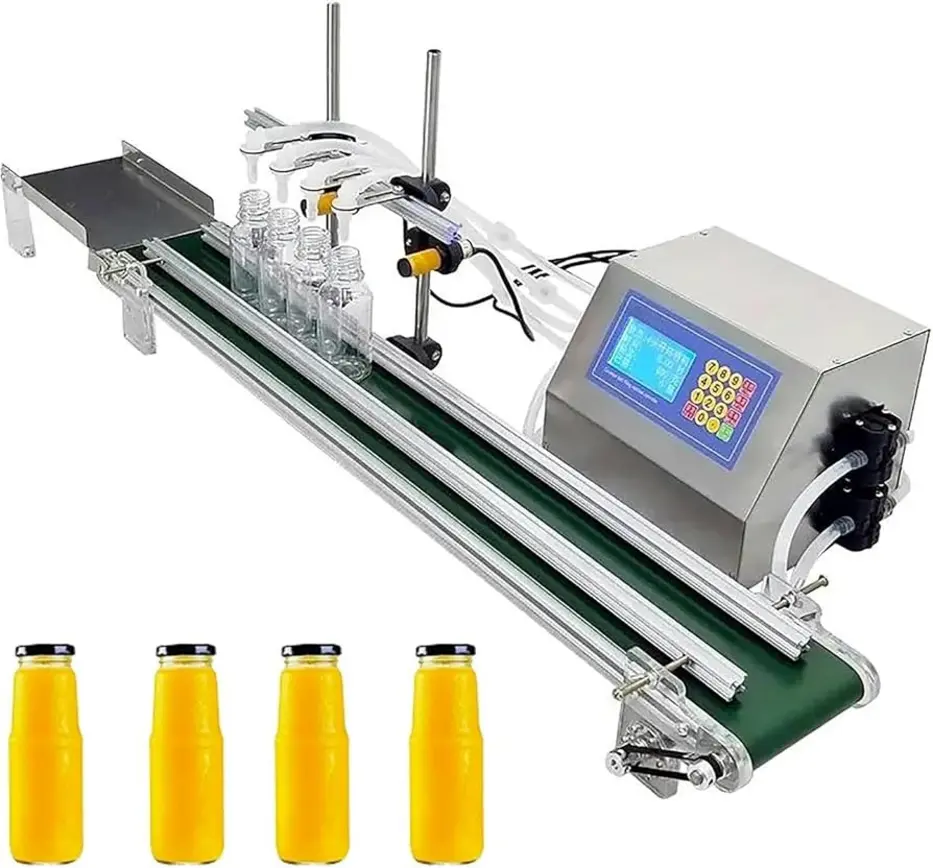
2. Bottle filling predictive maintenance
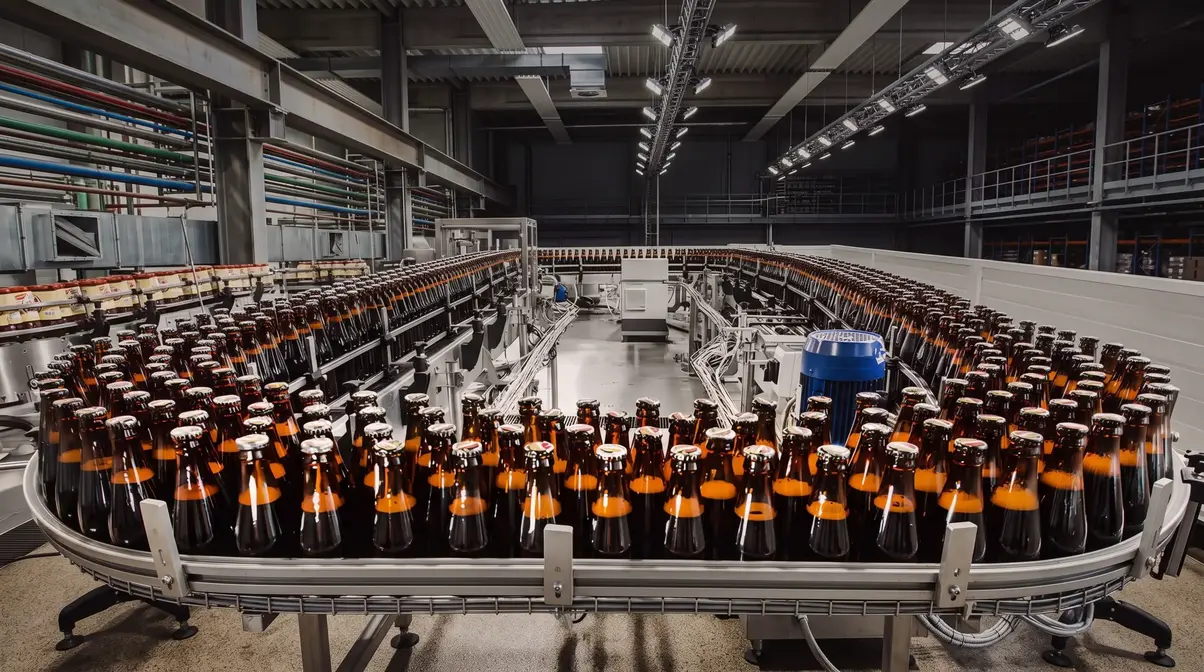
Filling lines create a large volume of time-stamped operational data: line speed, stops, reject signals, motor or drive status, air-related measurements, changeover records, and maintenance history. The opportunity is to identify equipment behavior that precedes recurring minor stops, rising reject rates, poor container handling, or a larger breakdown.
Source: m.media-amazon
Bottle filling predictive maintenance does not require a model to predict every failure mode. A focused first project may target one high-impact component or subsystem, such as conveyor drives, capper mechanisms, labeler sections, infeed timing, or a recurring source of starwheel-related stoppage.
Condition-monitoring inputs can include:
| Data group | Examples | Operational use |
|---|---|---|
| Machine state | Run, idle, fault, changeover, cleaning state | Distinguishes a genuine anomaly from expected operating behavior |
| Performance history | Speed, stops, stop duration, rejects, throughput | Identifies deteriorating line performance |
| Equipment condition | Vibration, temperature, current draw, pressure, lubrication records where available | Supports early mechanical-condition assessment |
| Maintenance records | Work orders, replaced parts, inspections, failure descriptions | Provides outcome labels for model development |
| Production context | Container format, SKU, shift, ambient conditions, startup period | Prevents false comparisons between unlike runs |
Maintenance data is commonly the limiting factor. A work order that says only “fixed filler” is difficult to use for analysis. Records become more valuable when teams use consistent failure codes, identify the affected asset or component, distinguish inspection from corrective work, and record the observed condition.
Predictive maintenance also faces familiar industrial-data problems: noisy sensors, missing values, rare failure events, changing equipment condition, and model performance that declines as the process changes. These limitations are discussed in this practical predictive-maintenance guide. For breweries, the practical lesson is to begin with an alert that helps maintenance prioritize inspection—not an automated instruction to continue running equipment beyond established maintenance limits.
3. Brewery energy optimization and load forecasting
Breweries have energy loads that change with production schedules, refrigeration demand, packaging activity, utility conditions, and the surrounding environment. Machine learning can forecast likely demand from historical production and utility data, helping teams avoid avoidable peaks and coordinate energy-intensive work where plant constraints allow.
Potential applications include:
- Forecasting refrigeration demand based on planned production, tank status, and weather-related conditions.
- Identifying energy use that is unusually high for a comparable production state.
- Improving the sequence of cold-side operations to reduce unnecessary simultaneous loads.
- Comparing specific energy use across products, shifts, operating windows, or packaging formats.
- Flagging cases where utility demand does not match expected process activity.
The correct objective is not simply “use less energy.” A brewery must maintain product, process, equipment, and operational requirements. A useful model helps operations understand expected demand and investigate avoidable waste. It should not override refrigeration safeguards, process-control logic, or requirements established by qualified engineering personnel.
Before modeling, normalize energy data against meaningful production context. Total electricity use alone can mislead when output, product mix, packaging activity, refrigeration duty, and operating hours vary. The available data may support forecasting before it supports optimization.
4. Yield and raw-material decision support
Brewing is well suited to data-driven forecasting because raw-material properties and process conditions interact. Malt, water, recipe, milling, mash conditions, lautering behavior, and evaporation-related effects can all affect throughput and yield outcomes.
One example described in Brauwelt’s overview of brewery machine learning is forecasting cold wort yield and using a forecast before brewing to support proactive decisions. This is a practical framing: the model does not replace brewing knowledge; it gives brewers an earlier indication that a malt mix or planned process may behave differently from expectation.
A yield project needs clear outcome definitions. Teams should decide whether the target is extract recovery, cold wort volume, process loss, brewhouse cycle time, or another controlled measure. They also need reliable lot-level raw-material data and a way to connect it to the relevant brew records. Without traceable lot and batch relationships, apparent model insight can be misleading.
5. Production planning and inbound logistics
Machine learning can also support planning decisions that sit outside the brewhouse. Forecasts may combine order history, production schedules, supplier lead times, raw-material inventory, packaging-material usage, seasonal patterns, and delivery history.
Useful planning questions include:
- Which ingredients or packaging materials are likely to become constrained under the current production plan?
- Which inbound deliveries have a higher likelihood of arriving late or creating a receiving bottleneck?
- How will a change in product mix affect tank availability, packaging time, or material consumption?
- Which schedule creates the highest risk of a missed production target because of known line-performance patterns?
These models work best as planning aids. Procurement and production teams still need to account for supplier communication, inventory verification, quality hold status, warehouse capacity, and changes that may not appear in historical data.
Data required before implementation
A brewery does not need every sensor or a large data lake to begin. It does need a narrow use case and a trustworthy data foundation. Start with the process tags and records that directly relate to the decision.
A minimum preparation checklist includes:
- Define one measurable business or operating outcome.
- Identify the asset, process stage, products, and operating conditions in scope.
- Confirm timestamps, units, tag names, and equipment identifiers are consistent.
- Preserve context such as product, SKU, recipe, batch, format, shift, operating state, and changeover status.
- Review missing values, stuck sensors, manual entries, and unexplained gaps.
- Establish a reliable record of interventions, failures, quality events, or other target outcomes.
- Determine who receives the result and what action they are permitted to take.
- Keep the original data and model output available for review after an alert or recommendation.
Integration is often more difficult than modeling. Data may be divided among a SCADA historian, PLC network, laboratory information system, computerized maintenance management system, enterprise planning software, and spreadsheets. A first project should avoid trying to merge every source in the plant. Use the minimum set that can answer the stated question, then expand only when the model needs additional context.
How to validate a brewery machine-learning project
A useful model must be tested against future-like operating conditions, not just the data used to build it. If teams train and test on randomly mixed records from the same period, they can overestimate performance because the model has effectively seen very similar operating conditions already.
A better approach is to evaluate it on later production periods or comparable runs that were held back from development. Review results with operators, brewers, maintenance technicians, and process engineers. They can often identify a false pattern caused by a sensor replacement, a recipe change, a shift in coding practice, or an equipment modification.
Validation should answer practical questions:
- Does the alert arrive early enough to be useful?
- Is the false-alert rate acceptable for the people who must respond?
- Does the model work across products and normal operating states in scope?
- Does it remain understandable enough to investigate?
- Did using the output improve a decision, rather than simply generate another dashboard?
Run the model in an advisory mode first. Compare its recommendations with normal practice, document exceptions, and monitor performance after deployment. Models need review when recipes, equipment, sensor configurations, maintenance practices, or production schedules change.
Where machine learning is the wrong first step
Machine learning will not correct unreliable instrumentation, poor mechanical condition, missing maintenance discipline, or unclear process ownership. A basic alarm, trend chart, preventive-maintenance task, standard operating procedure, or root-cause analysis may solve the problem more directly.
It is also a poor first choice when the intended action is unclear. An alert has little value if nobody knows who owns the response, what checks are required, or when escalation is needed. In a brewery, the best early projects are usually narrow, repeatable, and connected to an existing decision.
The practical value of machine learning in breweries comes from targeted decision support: recognizing filtration behavior that is becoming abnormal, directing maintenance attention before packaging performance worsens, anticipating energy demand, and improving planning with better forecasts. Start with a problem that operators already recognize, improve the data around that problem, and prove that the output changes a real operating decision.
References
- Applications of machine learning in the brewing process. (n.d.). https://www.researchgate.net/publication/385771432_Applications_of_machine_learning_in_the_brewing_process_a_systematic_review
- Data Driven Production Process Optimization Machine Learning Toolbox & Beverage Industry | #BAS22. (n.d.). https://www.youtube.com/watch?v=oXJNEozo6V4
- Machine learning in breweries (Part 2): Straightforward introduction to AI. (n.d.). https://brauwelt.com/en/topics/management/645761-machine-learning-in-breweri-es-part-2-straightforward-introduction-to-ai
- Predictive Maintenance Machine Learning: A Practical Guide. (n.d.). https://www.neuralconcept.com/post/how-ai-is-used-in-predictive-maintenance
- Applications of machine learning in the brewing process. (n.d.). https://link.springer.com/article/10.1007/s44163-024-00177-6
- Process Control in The Brewery - The Brewers Journal. (n.d.). https://www.brewersjournal.info/process-control-in-the-brewery
- Case Studies: Breweries Cutting Energy Use with Automation. (n.d.). https://impossibrew.co.uk/blogs/journal/case-studies-breweries-cutting-energy-use-with-automation
- Applications of machine learning in the brewing process. (n.d.). https://www.semanticscholar.org/paper/Applications-of-machine-learning-in-the-brewing-a-Nettesheim-Burggr%C3%A4f/a05f554439ec2e1f58456fda3a1ca75c0efd9b8c