Machine vision for food packaging lines is most reliable when it is assigned a specific, visible, repeatable decision: confirm a cap is present, read a code, verify a label, check seal appearance, or reject a damaged pack. The project should begin with the defect definition and production conditions, not with a camera or an AI software claim.
A workable system combines a stable product presentation, controlled lighting, suitable optics and camera resolution, inspection logic, and a reject method that removes the correct package at line speed. If any one of those elements is poorly defined, a vision project can become difficult to tune and maintain.
Start by deciding whether the inspection is suitable for vision
Vision is well suited to features that can be consistently seen from a defined viewpoint. It is less suitable when the defect is hidden, the package orientation varies unpredictably, or the appearance of acceptable product changes more than the defect itself.
Before specifying food packaging vision inspection equipment, write a simple inspection statement:
- Object: What pack, component, or printed area is being inspected?
- Decision: What must be accepted or rejected?
- Defect definition: What exact condition constitutes failure?
- View: Which side or surfaces must be visible?
- Timing: How many products pass each minute, and what spacing is available?
- Action: What happens to a failed product, and how is removal confirmed?
For example, “inspect every jar for cap presence and gross cap skew before case packing” is a usable starting point. “Check package quality” is not. The latter leaves too much room for changing expectations after installation.
Common packaging tasks and their practical fit
| Inspection task | Typical vision fit | Main application question |
|---|---|---|
| Cap or closure presence | Strong | Is the closure visible and consistently presented? |
| Cap height, skew, or tamper-band appearance | Strong to moderate | Can lighting reveal the relevant profile or feature? |
| Label presence and position | Strong | Is the label surface visible without obstruction? |
| Barcode reading | Strong | Is code quality sufficient and the print area stable? |
| Date or lot-code verification | Strong to moderate | Can the code be illuminated and read across print variation? |
| Wrong-label detection | Strong | Is there a dependable reference for each SKU? |
| Carton flap or tray configuration | Strong | Is the view clear before downstream handling obscures it? |
| Seal-area appearance | Moderate | Does the defect have a visible signature under controlled light? |
| Product fill-level appearance | Moderate | Is the container and product appearance suitable for optical inspection? |
| Hidden leaks or internal contamination | Often weak as a vision-only task | Is there an external visible indicator, or is another sensing method needed? |
Machine vision can support quality control, but it should not be treated as proof of conditions it cannot observe. Where an inspection relates to food safety, legal labeling, or release decisions, the manufacturer should define validation requirements with its quality, engineering, and regulatory teams. The applicable product, market, and recordkeeping requirements need to be verified through the relevant official sources.
Define the real production variation
The best inspection images are collected from actual operating conditions, not only from ideal samples on a bench. Assemble examples of acceptable packages across normal variation, along with known reject examples. Include different production shifts, packaging material lots, print changes, orientation changes, and realistic conveyor vibration where relevant.
Ask these questions early:
- Does the package move, rotate, bounce, or change lane position?
- Is the surface glossy, transparent, metallic, wet, curved, wrinkled, or reflective?
- Will product residue, condensation, dust, or washdown affect the viewing window?
- Are multiple SKUs, languages, artwork versions, or date formats handled on the line?
- Is the critical feature always facing the camera?
- Can the package be indexed, guided, or separated before inspection?
A mechanical guide, timing screw, side belt, starwheel, or simple orientation control can make an inspection far more dependable than adding more image-processing complexity. When a package cannot be positioned consistently, consider multiple views, a different inspection location, or a process change that presents the feature reliably.
Build the inspection station around lighting
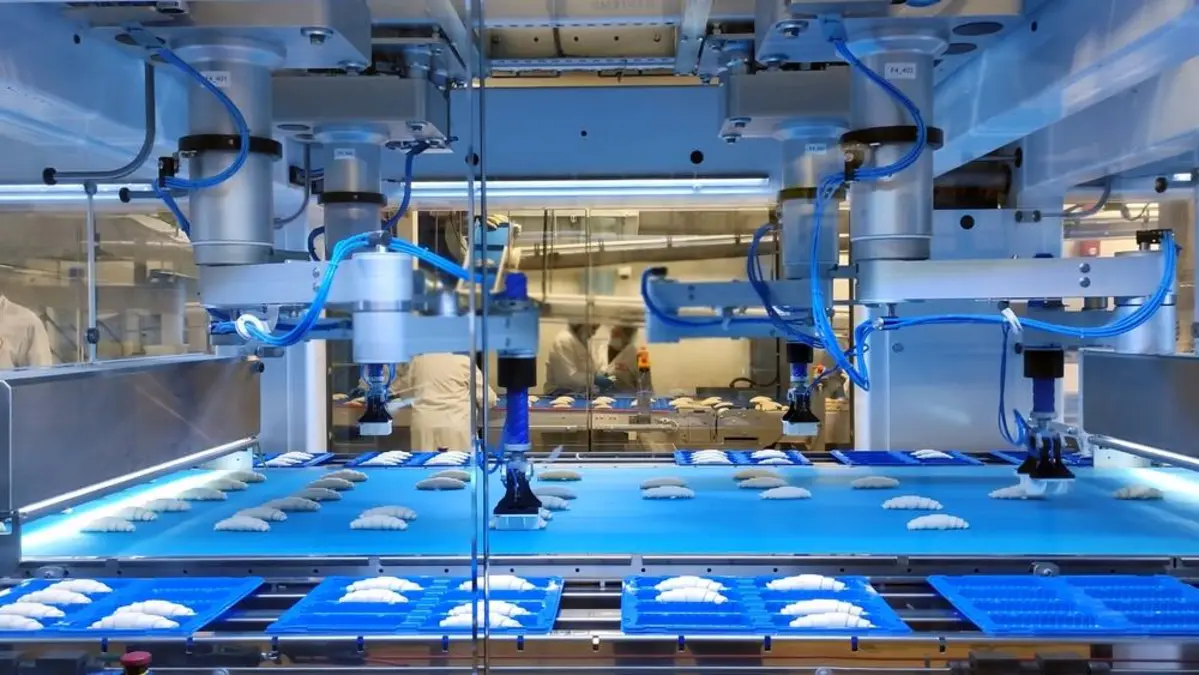
Lighting is usually the first technical selection, because the camera can only analyze the contrast available in the image. Ambient light from windows, overhead fixtures, ovens, or nearby equipment can create inconsistent results. A properly enclosed or shielded lighting arrangement helps make the inspection repeatable from shift to shift.
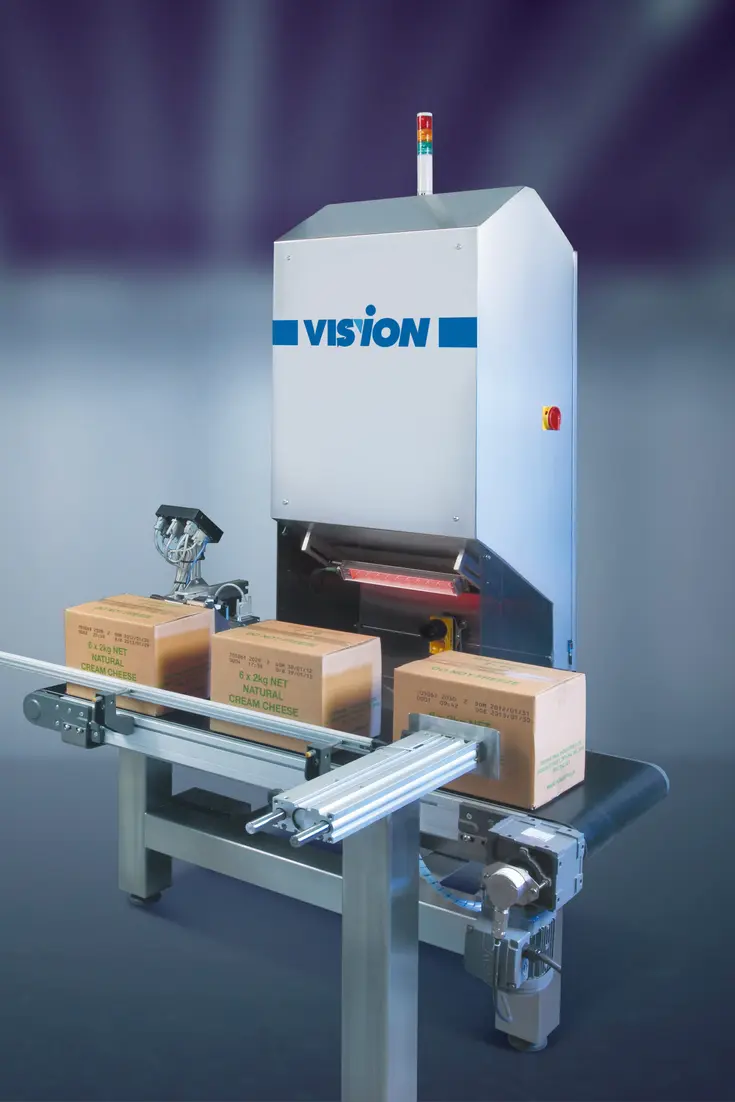
Source: visy-tech
Match lighting to the feature, not the product category
Different light geometries reveal different defects:
- Diffuse front lighting reduces glare and is often useful for general label presence, print, and surface checks.
- Low-angle or dark-field lighting can emphasize raised edges, wrinkles, scratches, particles, and some seal defects.
- Backlighting produces a silhouette and is useful for checking outer profile, cap outline, container shape, and some fill-level applications.
- Coaxial lighting can help inspect relatively flat reflective surfaces, depending on the material and viewing angle.
- Structured or multi-angle lighting may be needed where height, embossing, or difficult reflective features must be distinguished.
Glossy film, clear containers, curved bottles, foil, and wet packaging frequently require trials with several lighting angles. A polarization approach can sometimes reduce troublesome reflections, but it should be verified on the actual materials. Do not assume a lighting method that works on one SKU will transfer unchanged to another.
Lighting and housings also need to match the environment. Food plants may involve moisture, condensation, cleaning activity, and exposure to chemicals. Specify the required environmental protection, housing material, seals, cable routing, and cleaning compatibility with the plant’s sanitation and engineering teams. Confirm ingress-protection and washdown claims from the equipment documentation rather than relying on a general product description.
Select the camera, lens, and trigger as one system
Machine vision camera selection begins with the smallest feature that must be detected or read, the field of view, and the working distance. Resolution alone is not a guarantee of good performance. The feature must occupy enough pixels with adequate contrast, focus, and motion control.
Camera choices
A monochrome camera is often appropriate when the task depends on shape, edge, contrast, or print readability. A color camera is useful when color itself identifies the correct cap, label, product, or packaging component. Color adds information, but it can also make lighting consistency more important.
Choose a sensor and interface that can acquire images at the required product rate with a practical margin. For high-speed lines, consider exposure time, image transfer, processing time, product spacing, and the time available before a reject station. Fast motion may require short exposures and strobed lighting to avoid blur.
A smart camera can be a practical option for a contained task with limited views and straightforward controls integration. PC-based systems can offer greater flexibility for multiple cameras, more demanding processing, centralized recipe management, or future expansion. Neither architecture is automatically better; the application and maintenance resources should decide.
Lens and optical setup
The lens must cover the required field of view while keeping the target in focus. A poor lens choice can cause distortion, corner softness, or insufficient depth of field. For a curved package or a product that moves in height, depth of field deserves particular attention.
Record the intended mounting position, working distance, camera angle, lens setting, and lighting geometry as part of the installation standard. A system that cannot be returned to its validated physical setup is harder to support after maintenance.
Design reject integration before commissioning
A pass-fail decision has limited value if the system cannot remove the corresponding package accurately. The controller must associate each inspection result with the correct item as it travels from camera to rejecter.
The integration plan should define:
- Product detection: A photoeye, encoder, or machine signal establishes when a package reaches inspection.
- Image capture: The camera trigger is tied to product position, not merely a free-running frame rate.
- Tracking: Conveyor movement and product spacing are used to calculate reject timing.
- Reject action: The chosen pusher, air device, diverter, or other mechanism removes the failed pack without disturbing acceptable products.
- Reject confirmation: A sensor, bin monitor, or other defined method verifies that rejected products are handled as intended.
- Fault response: The line response to camera offline status, low confidence, full reject bin, communication failure, or excessive reject rate is documented.
The reject location must allow enough distance for image processing and decision communication, but not so much distance that product tracking becomes unreliable. Closely spaced or unstable products can require accumulation control, additional sensing, or a different inspection position.
Reject devices should be guarded and controlled in accordance with the plant’s machinery-safety practices. Operators should not bypass interlocks or reach into moving equipment to recover products. The appropriate risk assessment and safety design should be completed by qualified personnel.
Plan recipes, operator use, and maintenance
Food label inspection systems often fail in practice because product changeover was treated as an afterthought. Each SKU may need its own inspection recipe, acceptable label position range, code format, reference image, and reject timing.
Keep operator controls focused on necessary actions: recipe selection, status review, controlled reference updates, and response to fault messages. Limit access to tolerance changes and inspection logic. If electronic records, signatures, or traceability are required by a customer or regulated process, establish those requirements before selecting the software architecture.
Routine maintenance should include cleaning of protective windows and lights, inspection of brackets and cables, verification of focus and alignment, review of reject performance, and periodic challenge tests using defined samples. Cleaning methods must be compatible with the installed enclosures, lenses, lights, connectors, and seals.
Validate with a production-representative test plan
Acceptance testing should show more than whether the system detects a few hand-selected defects. A useful plan tests representative acceptable packs and defined defect types across intended products, speeds, and operating conditions.
Document at least:
- Inspection objective and defect classes
- Approved SKU and artwork references
- Camera views and illumination settings
- Line speed range and product presentation conditions
- Pass criteria and reject criteria
- Expected response to unreadable or uncertain images
- Reject verification method
- Changeover and restart checks
- Responsibilities for review, adjustment, and escalation
Pay attention to both false rejects and false accepts. A system that rejects too many good packages can create waste and operator distrust. A system that passes defects outside the agreed risk level does not meet its purpose. The right balance depends on the specific defect, downstream consequences, and quality requirements.
Common selection mistakes
The most avoidable problems are usually specification errors rather than software failures:
- Buying a high-resolution camera before establishing the lighting and field of view.
- Defining “defect detection” without identifying visible defect classes.
- Testing only perfect samples and a small number of obvious rejects.
- Ignoring package movement, reflections, condensation, and background changes.
- Placing the camera where a downstream guard, rail, or operator activity blocks the view.
- Treating reject timing as a controls detail to solve after the inspection is selected.
- Allowing uncontrolled recipe edits or reference-image changes.
- Selecting housings and connectors without considering cleaning and plant environment.
A practical purchase checklist
Before approving a machine-vision project, confirm that the supplier or integrator can demonstrate the proposed approach using representative packages and defects. The review should cover the inspection view, lighting concept, expected line conditions, mechanical mounting, control interfaces, reject method, recipe management, environmental suitability, service access, and acceptance test plan.
The strongest machine vision for food packaging lines is not necessarily the system with the most advanced algorithm. It is the one that makes a clearly defined decision reliably, at the required operating conditions, and remains understandable to the people who run and maintain the line.
References
- Industry Insights: Machine Vision on Packaging Lines | AIA. (n.d.). https://www.automate.org/vision/industry-insights/machine-vision-on-packaging-lines
- Food and Beverage Inspection: Machine Vision Lighting | RODER Vision. (n.d.). https://rodervision.com/applications/food-beverage
- Best Machine Vision Hardware for Food Inspection. (n.d.). https://ifactoryapp.com/industries/food-manufacturing/machine-vision-lighting-camera-lens-food-inspection
- Machine Vision for Label Inspection: Cameras, Optics, OCR & Lighting. (n.d.). https://va-imaging.com/en-us/blogs/machine-vision-solutions-applications/label-inspection-vision-system
- Packaging Inspection Equipment > Vision Inspection Systems - PMMI ProSource Directory. (n.d.). https://www.prosource.org/category/inspection-and-testing-equipment/packaging-inspection-equipment/vision-inspection-systems
- Machine Vision Systems Packaging and Manufacturing. (n.d.). https://www.linkedin.com/pulse/seeing-unseen-how-machine-vision-systems-transforming-packaging-qmmzc
- 5 Ways to Transform Your Packaging Lines with Cutting-Edge Machine Vision Technology. (n.d.). https://www.automation.com/article/5-ways-to-transform-your-packaging-lines-with-cutting-edge-machine-vision-technology
- 4 Applications of Machine Vision Systems in Food Detection. (n.d.). https://themindstudios.com/blog/machine-vision-system-applications