Nitrogen blanketing for food filling can help a pilot team reduce product exposure to air during tank holding, transfer, filling, and package closure. It is most useful when oxidation, flavor change, color loss, moisture pickup, foaming, or oxygen-sensitive ingredients are practical quality concerns. It is not, by itself, a food-safety process or a substitute for a validated preservation method, hygienic design, cleaning program, thermal process, or package-integrity program.
For a useful pilot trial, map the complete system before product arrives: product temperature and flow behavior, tank headspace, nitrogen supply and control, transfer hardware, filler operation, package headspace treatment, sealing, and the measurements used to judge the result. The goal is to learn whether the process can make a consistent package under realistic operating conditions—not simply to show that nitrogen can be connected to a tank.
Start with the product objective
A nitrogen system should be selected around a defined product-quality question. Common objectives include limiting oxidation during a hold period, reducing air entrainment during transfer, lowering oxygen in a package headspace, or maintaining a stable tank atmosphere as product is withdrawn.
State the objective in operational terms before specifying equipment. For example:
- Maintain a nitrogen-covered tank headspace while a sensitive liquid is held and filled.
- Compare package quality with and without headspace purging.
- Determine whether chilled product remains pumpable and fillable without excessive foam or weight variation.
- Identify whether oxygen exposure occurs mainly at mixing, tank filling, transfer, filling, or sealing.
This distinction matters because tank blanketing, line purging, and package headspace purging do different jobs. A nitrogen blanket is maintained above the product in a vessel. A purge displaces air from a vessel, line, or package before or during a process step. A package gas flush is directed into the container headspace shortly before closure. One may support another, but none proves the performance of the others.
Map the pilot process from receiving tank to sealed package
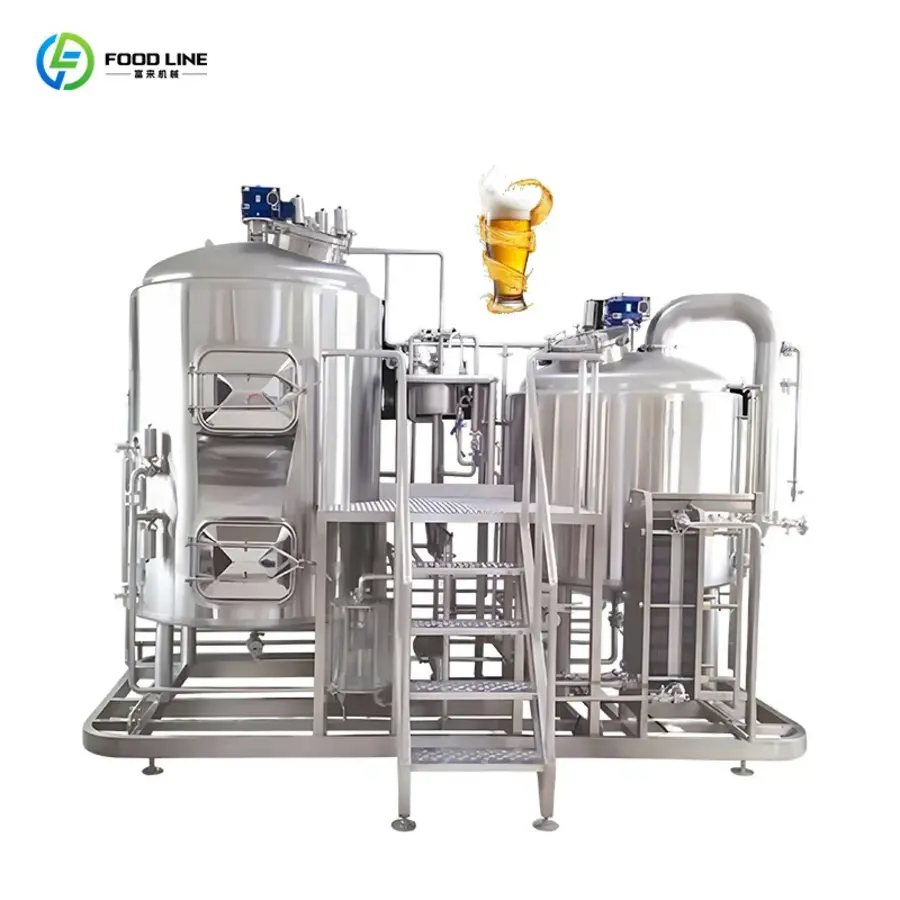
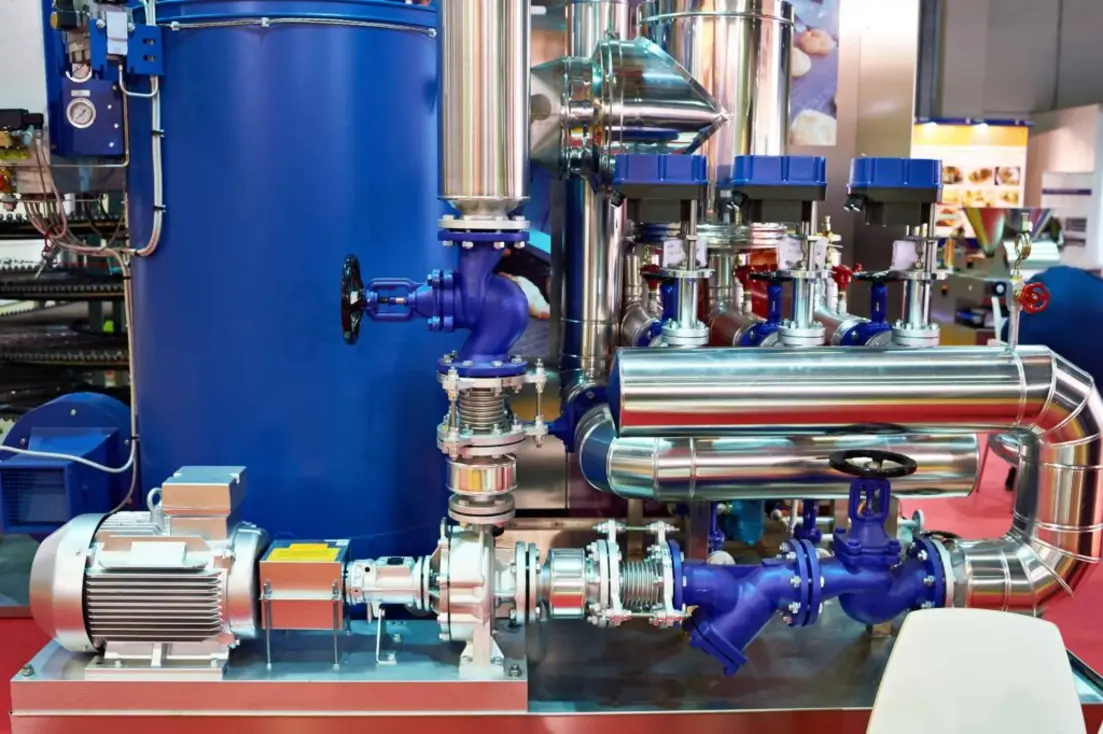
A compact pilot food production line often has more interfaces than expected. Each interface can introduce air, product loss, pressure instability, temperature change, or cleaning difficulty.
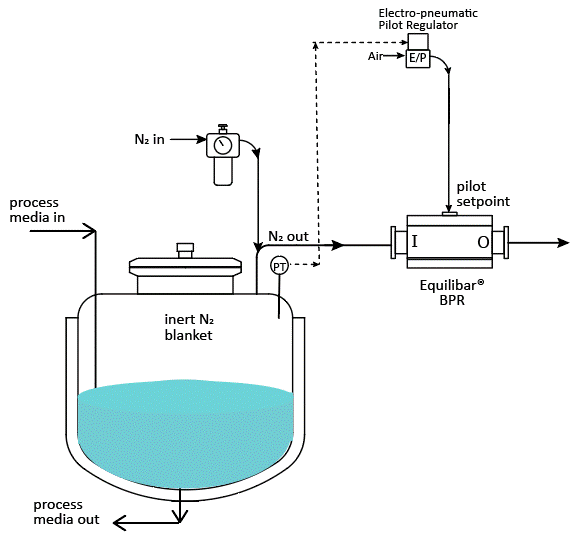
Source: equilibar
A practical process map usually includes these stages:
- Product preparation and temperature control — Mix, blend, chill, or otherwise prepare product in a vessel suitable for its viscosity, particulates, and processing conditions.
- Tank loading — Transfer product into a holding or feed tank while managing headspace displacement and avoiding unnecessary splashing or agitation.
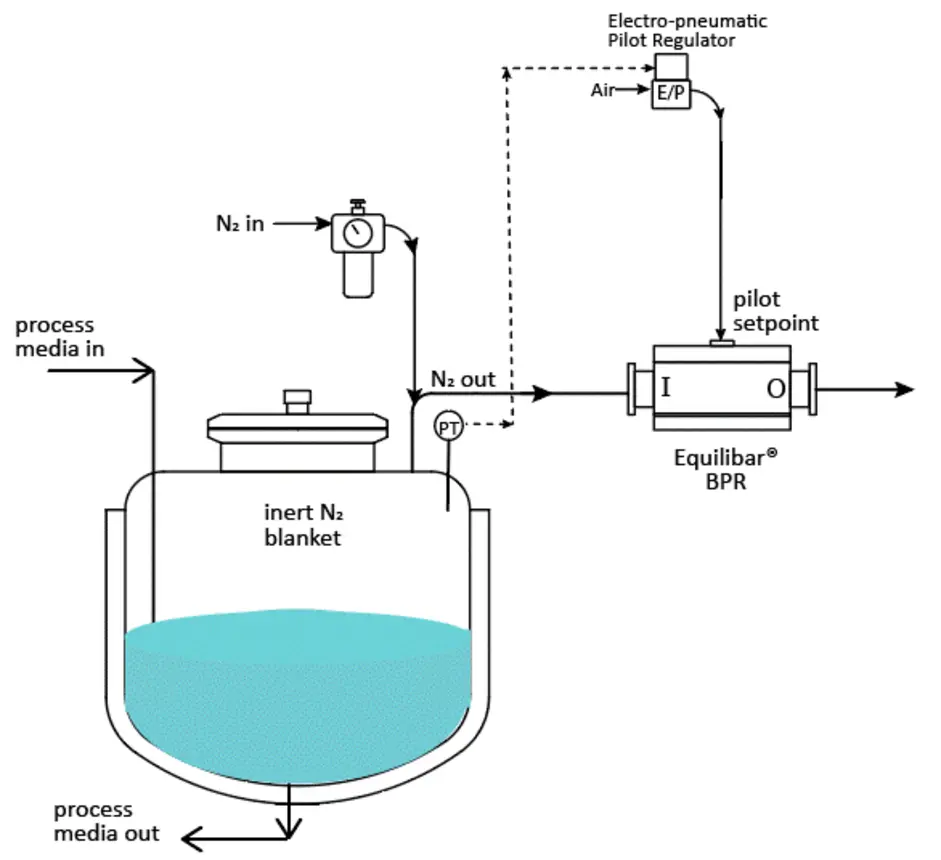
- Tank blanketing or purge — Supply nitrogen to establish and maintain the intended headspace condition while product is held or withdrawn.
- Product transfer — Move product through sanitary piping, hose, valves, pump, or controlled pressure transfer to the filler.
- Filling — Deposit a repeatable amount into the selected package without unacceptable drips, foam, splatter, or product damage.
- Headspace treatment and sealing — If the package requires it, purge or flush the headspace and seal promptly using equipment suited to the container and closure.
- Inspection and hold — Evaluate fill level, seal appearance, leaks, package deformation, product condition, and any planned quality or shelf-life indicators.
The map should identify every opening to atmosphere, vent, drain, sample valve, and product connection. These are often the points where a theoretically inert system becomes an intermittently air-exposed one.
Tank blanketing versus pressure transfer
A blanketed tank is not necessarily a pressure-transfer tank. In blanketing service, nitrogen is introduced to protect the headspace and compensate as liquid leaves the vessel or as temperature changes. The system is generally intended to avoid air being drawn into the tank while maintaining only the pressure conditions the vessel and controls are designed to handle.
Pressure transfer uses controlled gas pressure in the tank headspace to push product toward the filler. It can be useful where a pump would create shear, foam, pulsation, cleaning complexity, or handling problems. But it changes the equipment and risk review substantially. The tank, fittings, hoses, valves, downstream equipment, and pressure-relief arrangement must all be appropriate for the intended service.
Do not treat a standard product tank as suitable for pressure transfer merely because it has a lid and a gas connection. Confirm the vessel rating, venting and relief provisions, compatible seals, pressure-control hardware, and operating instructions with qualified equipment suppliers or engineering personnel. A pilot setup should never defeat, block, or improvise pressure-relief or venting devices.
Core components of a nitrogen tank setup
The exact arrangement varies, but a pilot system commonly needs:
| Component | Function in the process | Trial-planning question |
|---|---|---|
| Nitrogen source | Provides the inert gas supply | Is supply purity, pressure, and available flow appropriate for the trial? |
| Pressure regulation | Reduces and stabilizes supply pressure | Can it maintain stable conditions without overpressurizing the vessel? |
| Tank inlet and distribution point | Introduces nitrogen to the headspace | Does it avoid disturbing or aerating the product? |
| Tank vent or controlled outlet | Allows displaced gas to leave during filling or purging | Where does displaced gas go, and is the area adequately assessed for oxygen displacement? |
| Pressure indication and controls | Shows operating condition | What readings will operators record during the trial? |
| Relief protection | Protects the vessel from excessive pressure | Has the arrangement been reviewed for the actual vessel and operating mode? |
| Sanitary product outlet | Sends product to the filler | Can it be cleaned, drained, and connected without product traps? |
Nitrogen can displace oxygen in enclosed or poorly ventilated spaces. The gas may create an oxygen-deficient atmosphere without an obvious warning sign. Review ventilation, vent discharge location, confined-space implications, gas-cylinder or bulk-supply handling, and emergency procedures with site safety personnel before commissioning the system.
Control product temperature through the entire route
Chilled handling is often central to pilot trials because product viscosity, foam behavior, flow rate, filling accuracy, and seal contamination can all change as temperature shifts. The relevant question is not only the temperature in the preparation tank. It is the product condition at the filler and at the point of sealing.
For a chilled product, identify where heat gain may occur:
- during a tank hold;
- in uninsulated hoses or piping;
- in a pump, piston cylinder, or valve body;
- during pauses while product sits in a transfer line;
- in the filled package before it enters refrigerated storage.
Set the trial’s product-temperature limits based on the product specification and the applicable process or safety plan. Those limits should be established by the responsible food-safety and product-development team, not inferred from nitrogen use. Record product temperature at meaningful points and note hold times, line stoppages, and rework decisions.
Match transfer and filling equipment to product behavior
The transfer method should fit the product, not the other way around. Thin liquids may be readily pumped or pressure-fed. Thick sauces, emulsions, purees, products containing particulates, and aerated products can require different valve sizes, line geometry, pump styles, or filling principles.
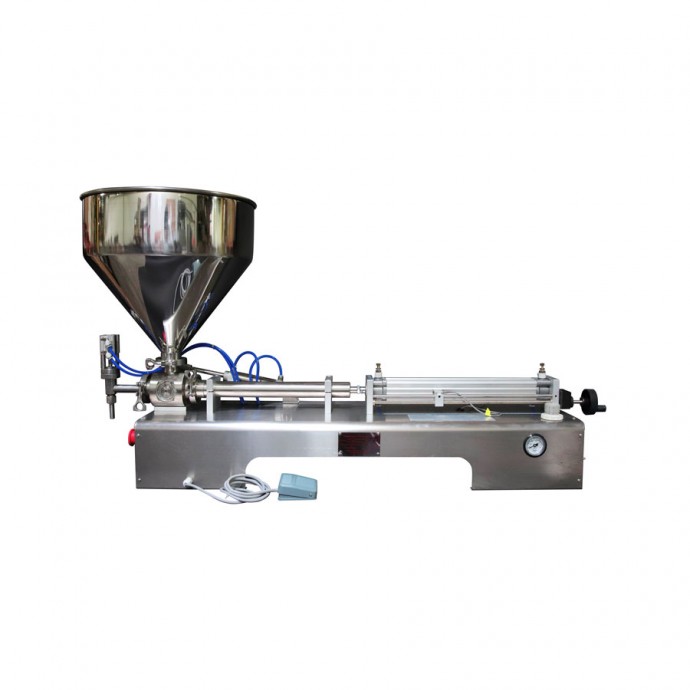
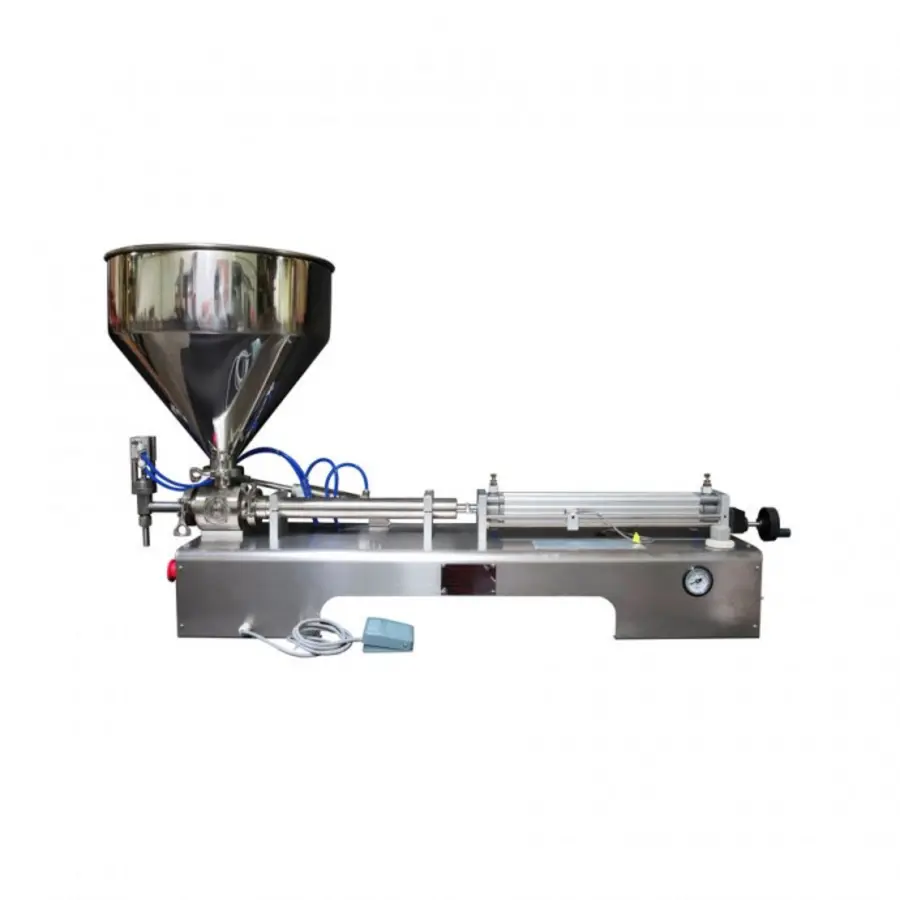
A pneumatic piston filler is a common pilot-scale option for many viscous foods because it meters product by piston movement and can provide repeatable deposits when the product and setup are stable. It may be suitable for sauces, dressings, fillings, and similar products, subject to product compatibility and hygienic design. Its actual performance depends on factors such as product viscosity, particulate size, inlet consistency, fill nozzle design, product temperature, and the relationship between the filler and feed tank.
Source: impakcorporation
During setup, check for:
- product starvation at the filler inlet;
- air pockets introduced during priming or changeover;
- drips or stringing at the nozzle;
- splashing or foam in the package;
- fill variation after pauses or tank level changes;
- product buildup that could interfere with container sealing;
- dead legs, difficult-to-drain sections, or joints that complicate cleaning.
Avoid assuming that more gas pressure will solve inconsistent filling. It can instead change flow behavior, increase foaming, overload an unsuitable component, or make a control problem harder to diagnose. Establish the product feed condition first, then adjust within the approved operating limits of the system.
Plan package headspace purging separately
Tank blanketing protects product before filling. It does not guarantee low oxygen in the final package. Packages can take on air at the filler, during nozzle withdrawal, while moving to the sealer, or through incomplete sealing.
If package oxygen control is an objective, assess the filling and closure sequence as a single operation. Consider container geometry, target fill level, nozzle position, gas-flush location, delay before sealing, closure type, and seal cleanliness. A nitrogen dose that appears effective in an open container may be less effective once normal line movement and sealing delays are included.
Use an appropriate measurement plan to determine whether the final package meets the product team’s target. Depending on the product and package, that may include headspace-gas analysis, seal-integrity checks, visual inspection, package weight, retained samples, and defined quality observations over the intended evaluation period. The method, sampling plan, acceptance criteria, and any required validation should be approved by the responsible technical and quality teams.
Separate quality trials from food-safety validation
Nitrogen is widely used to displace oxygen and reduce exposure to air in tanks, transfer systems, and packaging. That can support quality goals for oxidation-sensitive foods. However, reducing oxygen should not be represented as a complete microbial-control or shelf-life solution.
A pilot plan should clearly separate:
- Quality hypotheses: flavor stability, color retention, oxidation resistance, foam reduction, package appearance, or reduced moisture exposure.
- Process controls: temperature management, fill consistency, sealing conditions, cleaning status, and sanitation controls.
- Food-safety requirements: the applicable hazard analysis, process authority input where required, validated preservation steps, environmental controls, allergen controls, and regulatory obligations.
For products with refrigerated distribution, low-acid characteristics, reduced-oxygen packaging considerations, or other elevated process concerns, involve qualified food-safety, regulatory, and process-authority resources before commercializing a pilot result. The applicable requirements depend on the food, package, distribution conditions, and market.
Build a trial sheet that produces scale-up data
The best pilot run produces a usable operating window rather than a single successful batch. Record the settings and observations that explain the result.
Minimum trial data to collect
- Product formula or batch identifier and starting condition.
- Product temperature at tank fill, filler inlet, and finished-package handling.
- Tank level, headspace condition, and nitrogen supply or regulator settings.
- Transfer method, line configuration, and significant start-stop events.
- Filling equipment configuration, including nozzle, piston or metering setting, and container format.
- Fill-weight or volume results using the site’s approved method.
- Observations of foaming, bubbles, drips, splashing, product separation, and seal contamination.
- Package seal observations and leak or integrity test results where applicable.
- Headspace oxygen results if package oxygen is part of the objective.
- Cleaning and changeover observations, including difficult areas and product retained in equipment.
- Retained sample plan and the quality checks to be completed after the run.
Document failures as carefully as successes. A brief loss of feed pressure, a filler that drips after a pause, or a seal contaminated by product can reveal more about scale-up needs than a smooth short run.
Pre-run checklist
Before introducing product, confirm that the trial team has reviewed the following:
- The process flow and equipment connections are documented.
- Tank, piping, hose, clamps, seals, and filler-contact materials are compatible with the product and intended cleaning method.
- The gas supply, regulators, gauges, vents, and relief protections are installed according to approved equipment guidance.
- The intended operating pressures are within the ratings of every relevant component.
- Venting and work-area safety have been assessed for nitrogen use.
- Cleaning, sanitation, allergen segregation, and startup inspection requirements are defined.
- Product specifications, temperature controls, packaging requirements, and hold conditions are established by the responsible team.
- Operators know the normal sequence, stop conditions, communication method, and escalation contacts.
- Sampling forms and measurement tools are ready before filling begins.
What a successful pilot should answer
A useful nitrogen-blanketing trial does not need to replicate a full production plant. It should answer practical scale-up questions: Can the product be held and transferred without unacceptable quality change? Does the filler receive a stable feed? Does package headspace control survive the actual fill-and-seal sequence? Can the system be cleaned and changed over reliably? Which pressures, temperatures, line conditions, and package settings need tighter control?
When these answers are documented, nitrogen blanketing becomes part of a defined process design rather than an isolated gas-addition step. That gives product developers a stronger basis for selecting production-scale tanks, transfer systems, fillers, package equipment, and verification methods.
References
- Nitrogen Blanketing. (n.d.). https://saato.fi/wp-content/uploads/nitrogen-blanketing.pdf
- Food Packaging Nitrogen Gas Generator for Processing & …. (n.d.). https://www.southteksystems.com/foods
- Nitrogen Blanketing Systems | On-Site, Made in USA. (n.d.). https://gasgenerationsolutions.com/nitrogen-blanketing
- Nitrogen Tank Blanketing: What Is It And What Is The Purpose?. (n.d.). https://www.onsitegas.com/blog/nitrogen-tank-blanketing
- Nitrogen blanketing improves safety, preserves quality, and …. (n.d.). https://www.youtube.com/watch?v=J5FO2w6V3vo
- Nitrogen Blanketing of Edible Oils (Part I) | Manufacturing.net. (n.d.). https://www.manufacturing.net/operations/article/13183952/nitrogen-blanketing-of-edible-oils-part-i
- Packaging, Inerting and Blanketing. (n.d.). https://www.airproducts.com/applications/packaging-inerting-blanketing-chemicals
- The use of nitrogen for purging and blanketing – ON2Quest – Sustainable gas generation & purification. (n.d.). https://on2quest.com/the-use-of-nitrogen-for-purging-and-blanketing