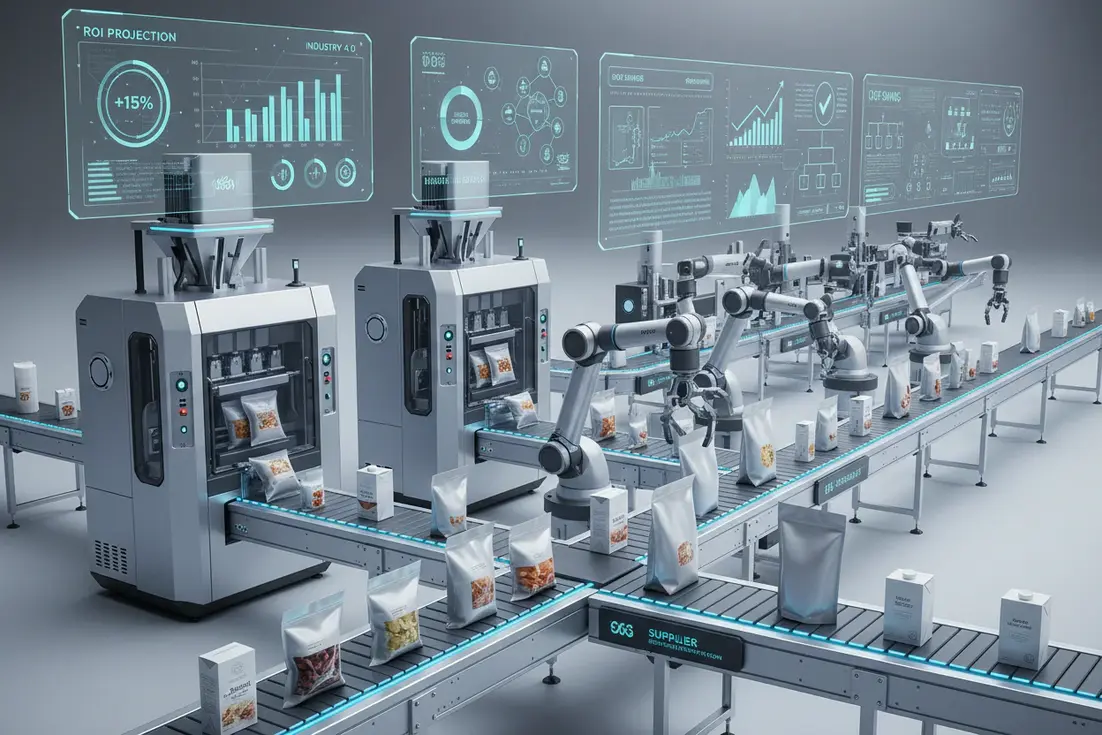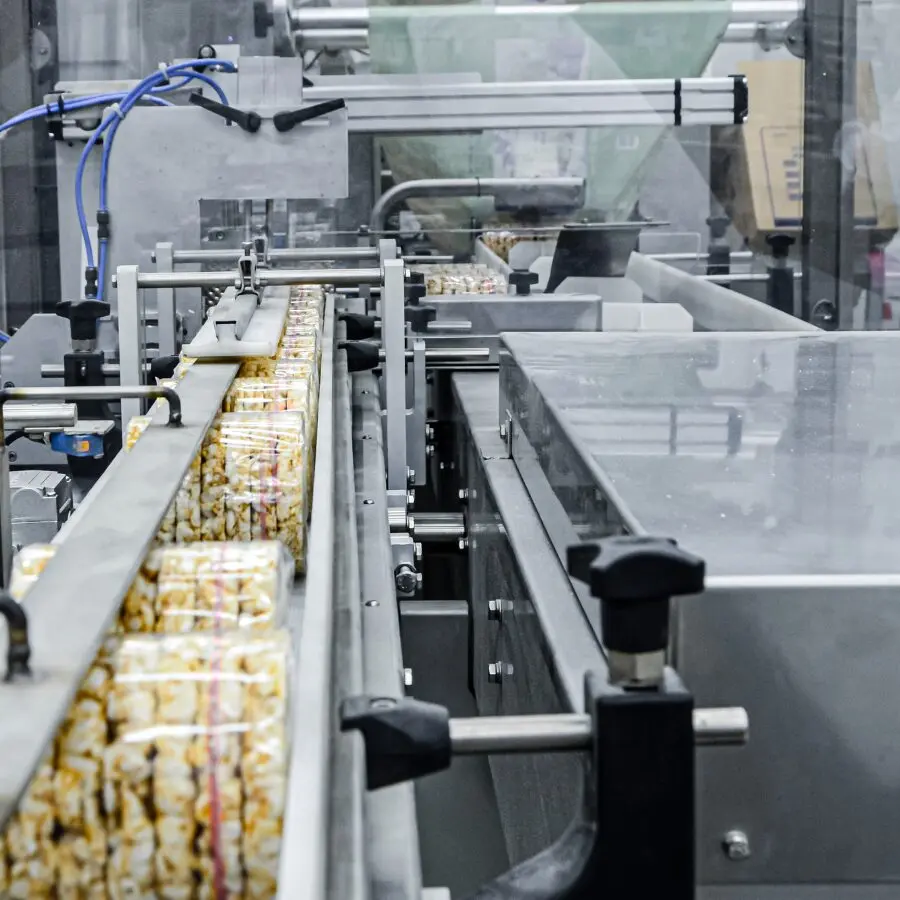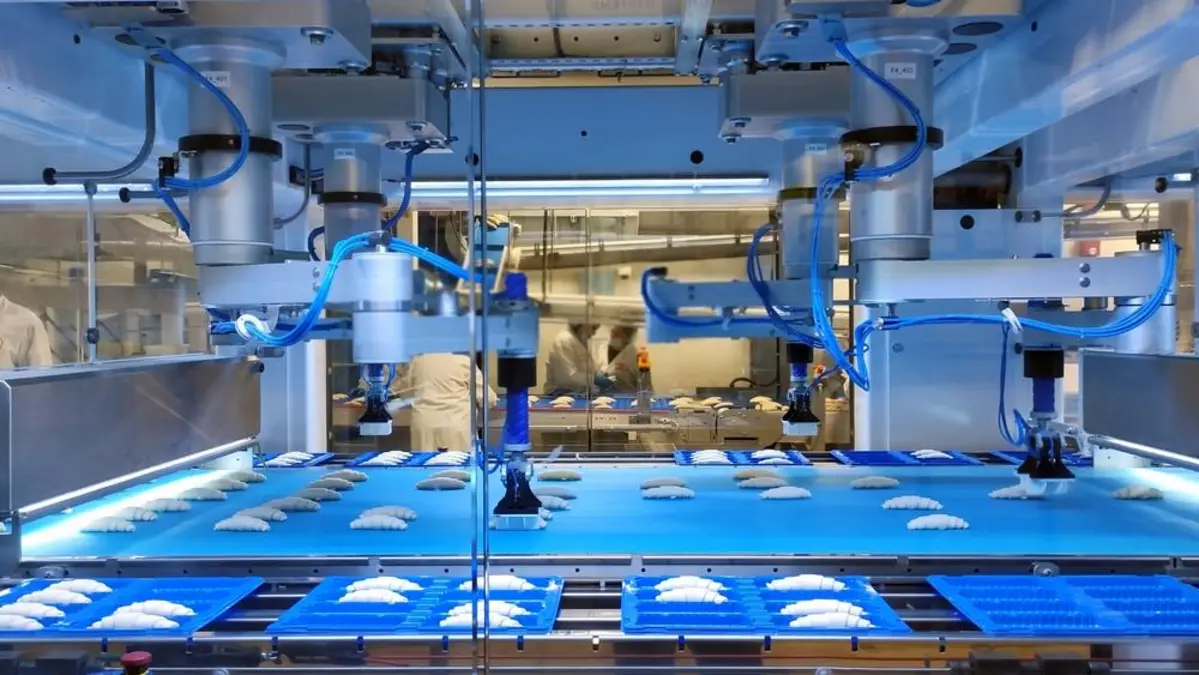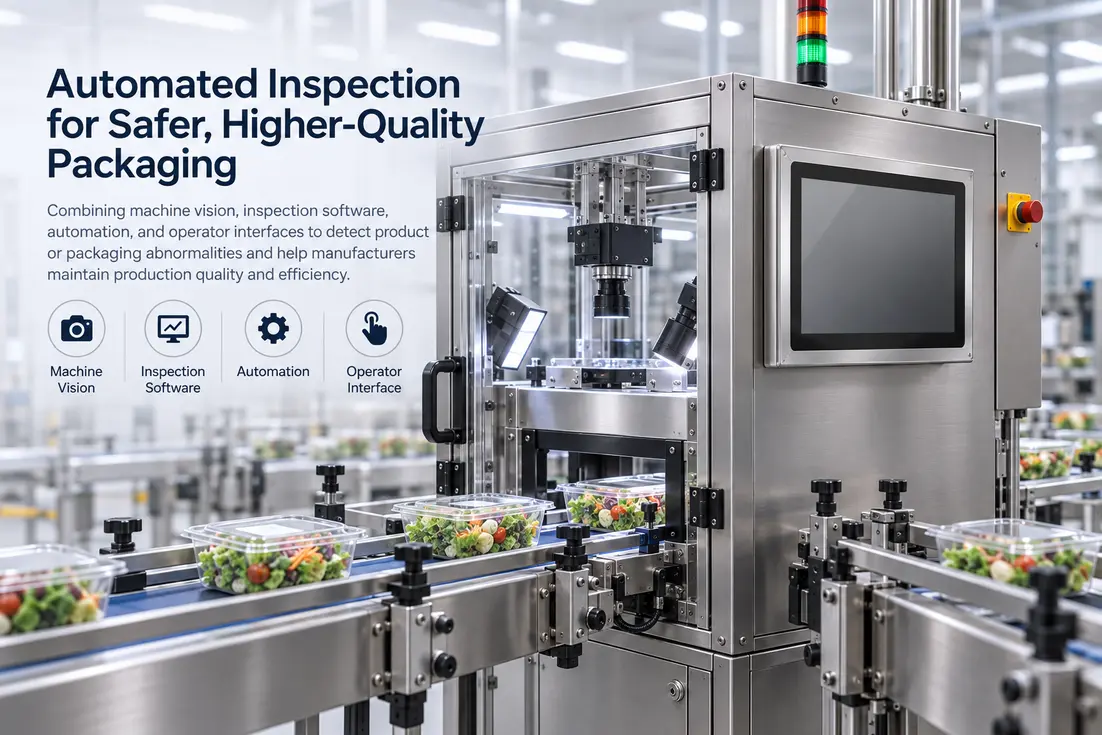
PLC and machine vision in food processing deliver the most value when they solve a specific repeatability, inspection, or line-coordination problem. PLCs control the sequence of equipment actions—such as conveying, dosing, mixing, filling, sealing, and rejecting—while machine vision provides visual information that ordinary sensors cannot reliably provide, including product position, print quality, package condition, color, shape, and code presence.
The strongest projects do not begin with a camera or a controls platform. They begin with a production loss: recurring label errors, difficult manual inspection, inconsistent product orientation, avoidable give-away, unexplained stops, or weak connection between a quality event and its batch record. In food plants, washdown exposure, variable raw materials, frequent changeovers, and the cost of downtime often matter as much as the inspection algorithm itself.
What PLCs and machine vision each do
A programmable logic controller, or PLC, is the industrial control system that reads inputs, applies programmed logic, and commands outputs. In a food plant, those inputs may include photoelectric sensors, load cells, temperature instruments, level switches, motor feedback, safety devices, and signals from packaging equipment. Outputs may start motors, position actuators, control valves, adjust conveyor behavior, trigger a filler cycle, or divert a nonconforming product.
Machine vision combines cameras, lighting, image-processing software, and industrial communication hardware. It turns an image into a pass/fail result, a measurement, a classification, a position, or a readable code. A vision system may inspect every item, sample a stream, or locate products for robotic handling.
The practical division of responsibility is usually simple:
- Vision determines what is visible: Is the label present? Is the date code readable? Is the seal area visibly damaged? Is the product in the correct position?
- The PLC coordinates the physical response: Which product should be rejected? When should the reject device fire? Should the line slow, stop, alarm, or continue under a defined rule?
- The production data system retains context: Which lot, SKU, line, shift, event, image, or defect category was associated with the result?
This PLC vision integration is valuable because inspection alone does not correct a production problem. The result must be synchronized to the moving product and connected to an appropriate machine action.
Where controls automation creates value across the process
Ingredient receiving and handling
Ingredient systems often depend on reliable identification, routing, weighing, and batching. PLC controls can sequence conveyors, pumps, valves, bins, dust collection equipment, and weigh systems. They can also enforce the order of steps in a recipe-driven process, provided the broader production and quality procedures are properly defined.
Machine vision may help where visual verification is meaningful, such as checking container identity, reading barcodes or data-matrix codes, confirming the presence of a label, or identifying visibly damaged incoming packs. For bulk materials, vision is not a substitute for the receiving checks or testing appropriate to the ingredient and food-safety plan.
A common high-value use is error prevention at transfer points. If an operator scans or presents the wrong identified container, a PLC-controlled routing or batching sequence can block the next action and create a clear exception for review.
Processing and product handling
In processing, PLCs are usually the primary automation layer. They coordinate mixing, pumping, portioning, conveying, depositing, cooking-related equipment, cooling-related equipment, and cleaning sequences. They also record machine states and alarms that help maintenance and operations teams understand why production slowed or stopped.
Machine vision becomes useful when the product’s appearance or position affects downstream performance. Typical examples include:
- Checking product orientation before slicing, cutting, loading, or packaging.
- Detecting missing, broken, misshapen, or visibly off-color pieces.
- Measuring dimensions or surface features where the application can tolerate normal product variation.
- Guiding pick-and-place or robotic loading systems.
- Sorting produce or other naturally variable products by size, shape, color, or visible defects.
Vision is often more effective when it supports a defined operational decision rather than trying to judge every aspect of product quality. For example, a system may reliably identify whether a tray contains the required count of visible portions, while subjective appearance grading may require carefully designed acceptance criteria and validation.
Packaging-line applications are often the clearest starting point
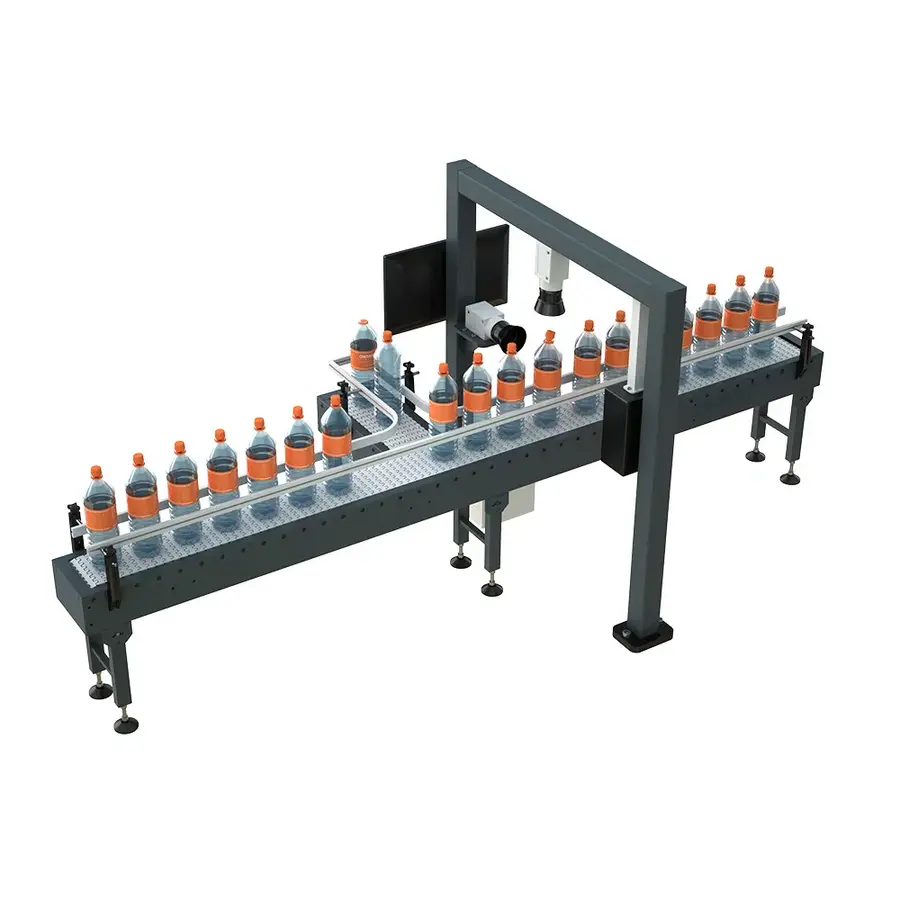
Food packaging PLC controls and machine vision work especially well together because packaging machines operate in defined sequences and packaging defects can often be observed clearly. Common applications include package presence, orientation, label position, code verification, cap inspection, fill-level checks where the product and container allow reliable imaging, seal-area inspection, and carton verification.
Source: image.made-in-china
| Application | Vision task | PLC response | Operational value |
|---|---|---|---|
| Label verification | Check label presence, position, and readable information | Reject affected package and log event | Reduces mislabeling risk and manual checking burden |
| Date or lot-code inspection | Read and assess the presence or legibility of printed characters | Alarm, reject, or stop according to site rules | Links packaging checks with traceability discipline |
| Product count | Confirm expected items in a tray, carton, or multipack | Divert incomplete packs | Helps prevent downstream customer complaints |
| Seal or closure inspection | Identify visible seal, cap, or closure abnormalities | Reject suspect package | Supports package-integrity monitoring where vision is suitable |
| Package orientation | Identify reversed or misplaced packs | Control diverter, orienter, or robot | Improves downstream packing and coding consistency |
| Case and pallet identification | Read codes and verify applied labels | Hold, route, or record shipment unit | Improves warehouse and dispatch accuracy |
A vision system should not be assumed to prove package integrity, food safety, or regulatory compliance by itself. What it can detect depends on the camera view, lighting, product presentation, package materials, inspection criteria, and the defects that are actually visible. Plants should validate the inspection method against the specific defect modes they need to control.
Traceability: useful when data is structured, not merely collected
Vision can read printed text, barcodes, two-dimensional codes, and label features. The PLC can associate the result with a machine cycle, encoder position, lane, reject action, and line state. That information can then be passed to a supervisory system, manufacturing execution system, quality database, or other approved record system.
Useful records may include product identity, batch or lot identifier, timestamp, line number, inspection result, defect category, and image reference where image retention is justified. The goal is not to store every possible data point. It is to make investigations faster and give teams enough context to distinguish between an isolated defect, an equipment drift issue, and a recurring setup problem.
For traceability applications, define ownership before installation. Operations, quality, engineering, IT, and maintenance may all need access, but one group should own data definitions, retention expectations, exception handling, and change control.
Integration details that determine whether a project works
The camera is only one part of the system. Successful food plant automation systems address timing, product handling, communication, and maintainability early.
Product tracking and timing
For a reject decision to affect the correct pack, the controls system must track the product from inspection point to reject point. Conveyor speed changes, product gaps, multiple lanes, accumulation, and slip can complicate this task. Encoders, photoeyes, tracking logic, and carefully defined reject confirmation are often as important as the inspection result.
Lighting and mechanical presentation
Many apparent vision problems are really lighting or product-presentation problems. Glare from film, reflective lids, condensation, unstable products, changing ambient light, and inconsistent spacing can reduce reliability. A mechanically stable presentation and controlled lighting frequently improve performance more than a more complex algorithm.
Communications and system architecture
Vision controllers and PLCs commonly exchange triggers, pass/fail results, measurements, job selections, and diagnostics through industrial networks. The exact protocol and architecture should fit the plant’s installed controls standard, cybersecurity approach, support capability, and requirement for response time.
Keep critical machine actions local enough to remain dependable if a higher-level data connection is unavailable. At the same time, design clear alarm and status signals so operators can distinguish a product defect from a camera fault, communication loss, blocked reject device, or machine timing issue.
Changeovers and SKU management
Food lines often handle many products, pack formats, label designs, and seasonal variations. Each recipe or inspection job should have controlled settings for camera exposure, lighting, pass/fail criteria, expected code format, product dimensions, and reject timing as applicable.
An uncontrolled edit can create either excessive false rejects or missed defects. Limit access appropriately, retain approved configurations, and use a documented procedure for changes. The correct approach depends on the plant’s quality system and the role the inspection point plays in its controls.
Sanitation and washdown are design requirements, not afterthoughts
Food-zone equipment must suit the actual environment. Cameras, lighting, brackets, cables, enclosures, connectors, and operator interfaces may be exposed to water, chemicals, temperature changes, dust, or product debris depending on the area and cleaning method.
Before specifying equipment, define:
- Whether the location is dry, damp, wet, or subject to direct washdown.
- The cleaning method and chemicals used in that area.
- Required enclosure, cable, connector, and mounting arrangements.
- Access needed for inspection, sanitation, lens cleaning, and maintenance.
- Risks of creating harborage points, obstructing cleaning access, or damaging product-contact-area design.
Equipment suitability, installation details, and cleaning procedures should be reviewed against the plant’s sanitation program, equipment supplier guidance, and applicable food-safety requirements. Do not rely on a generic environmental rating alone to establish suitability for a specific cleaning regime.
Choosing the first PLC and vision project
The best first project is usually narrow, measurable, and operationally important. Start with a point where the defect is visible, the required response is clear, and the product can be presented consistently.
A practical selection checklist:
- Define the defect, error, or delay to be addressed.
- Confirm whether it is visually detectable under controlled conditions.
- Identify the required machine response: reject, stop, alert, sort, guide, or record.
- Map how the PLC will track the inspected item to that response point.
- Account for all SKUs, package finishes, expected variation, line speeds, and changeovers.
- Design the mounting, lighting, guarding, sanitation access, and maintenance access together.
- Establish acceptance criteria for false rejects, missed defects, and system availability.
- Define how operators respond when the system faults or rejects increase.
- Validate the finished system with representative products and normal operating conditions.
Limits to recognize early
Machine vision is not a universal replacement for human judgment, laboratory testing, preventive maintenance, or a food-safety management system. It cannot reliably identify defects that are hidden from the camera, poorly defined, inconsistently presented, or visually indistinguishable from acceptable product.
Likewise, a PLC can automate a sequence accurately without proving that the sequence is the right one for product safety or quality. Critical process limits, sanitation controls, allergen procedures, and regulatory obligations must be established and verified through the plant’s approved food-safety and quality systems.
The most effective use of PLC and machine vision in food processing is therefore practical: automate repeatable decisions, make inspection results actionable, preserve useful production context, and design the equipment so that it can be cleaned, maintained, and understood by the people who run the line.
References
- Applications of Machine Vision Products in Food Production. (n.d.). https://www.unitxlabs.com/blog/ai-visual-inspection-food-production
- Machine Vision Applications in Food Processing | Quality Control | Visionify | Visionify. (n.d.). https://visionify.ai/articles/machine-vision-food-industry
- Machine vision agro and food | Vision Partners. (n.d.). https://visionpartners.nl/en/industries/machine-vision-agro-and-food
- Vision Systems in Food Manufacturing: What They Can …. (n.d.). https://pfi.com.au/food-processing-automation/vision-systems-in-food-manufacturing-what-they-can-and-cannot-do
- Food Inspection Vision System for Quality Control | CoreIPC. (n.d.). https://www.coreipc.com/solutions/food-inspection-vision-system
- Integration of Machine Vision and PLC-Based Control for Scalable Quality Inspection in Industry 4.0. (n.d.). https://www.mdpi.com/1424-8220/25/20/6383
- PLC in Food Processing: Automation and Efficiency - Blog Crouzet. (n.d.). https://blog.crouzet.com/industry/plc-in-food-processing-automation-and-efficiency
- 4 Applications of Machine Vision Systems in Food Detection. (n.d.). https://themindstudios.com/blog/machine-vision-system-applications