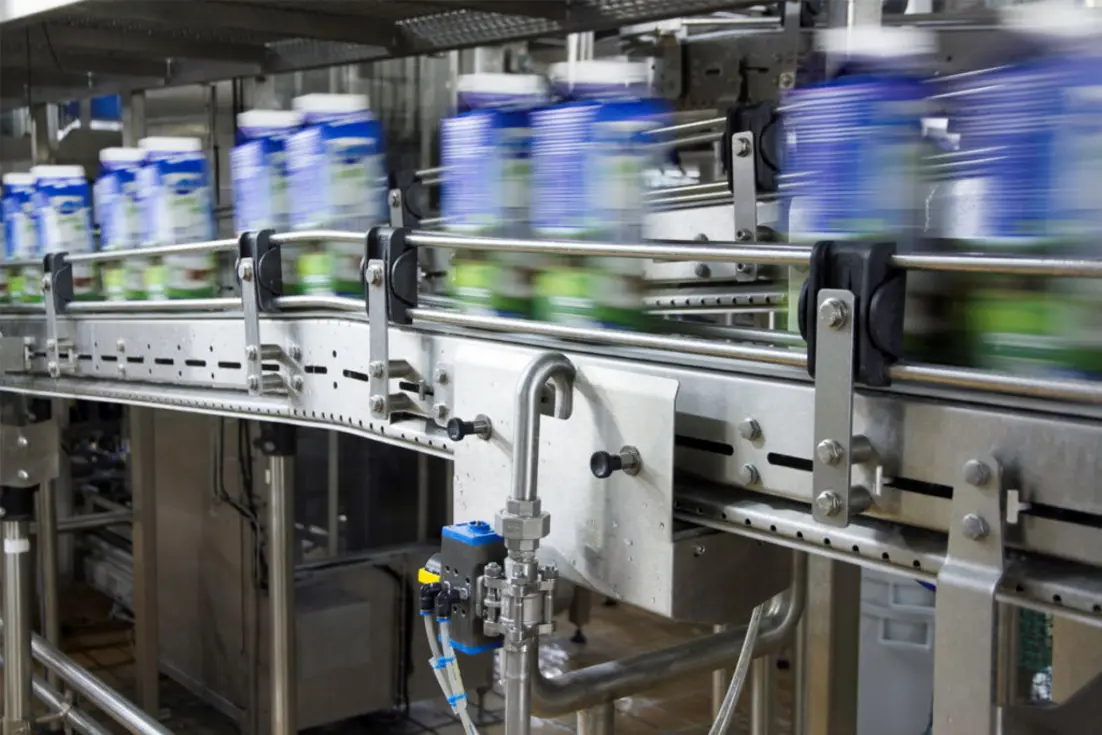
A decision to repair or replace a food conveyor system should not be based on one failed belt, bearing, or drive alone. Repair is usually appropriate when the fault is isolated, its root cause is understood, the conveyor remains cleanable, and the repair restores dependable service at a reasonable total cost. Replacement becomes more defensible when failures recur, sanitation or safety concerns cannot be resolved, parts are difficult to obtain, or the existing conveyor no longer supports production requirements.
The useful comparison is not simply repair cost versus purchase price. Plant teams should compare the expected cost and operational risk of keeping the current system with the cost, disruption, and expected value of a replacement or targeted retrofit. That assessment should include lost production, maintenance labor, product exposure, cleaning difficulty, spare-parts risk, and the effect of downtime on upstream and downstream equipment.
Start with a structured conveyor reliability assessment
Before authorizing a major repair or capital project, gather evidence from the conveyor’s recent operating history. A short review of work orders, operator reports, sanitation observations, and production interruptions often shows whether a problem is isolated or systemic.
Review at least these areas:
- Number of unplanned stops and their causes
- Total downtime, including diagnosis, cleaning, restart, and verification activities
- Belt, splice, sprocket, roller, bearing, drive, and control failures
- Repeat repairs to the same location or component family
- Age and condition of the belt, frame, supports, guards, and drive system
- Evidence of tracking, tension, or transfer problems
- Cleaning access, recurring soil buildup, and any unsuccessful cleaning validation
- Availability and lead time for belts, modules, bearings, gearmotors, controls, and proprietary parts
- Planned changes in product, package, throughput, line layout, or washdown practice
A failure log is more useful when it distinguishes the immediate failed component from the underlying cause. For example, a failed belt splice may result from an incorrect splice, but it may also point to poor tracking, inadequate pulley condition, excessive tension, a product jam, frame misalignment, or unsuitable belt construction. Replacing the splice without correcting the initiating condition can turn a repair into a repeating expense.
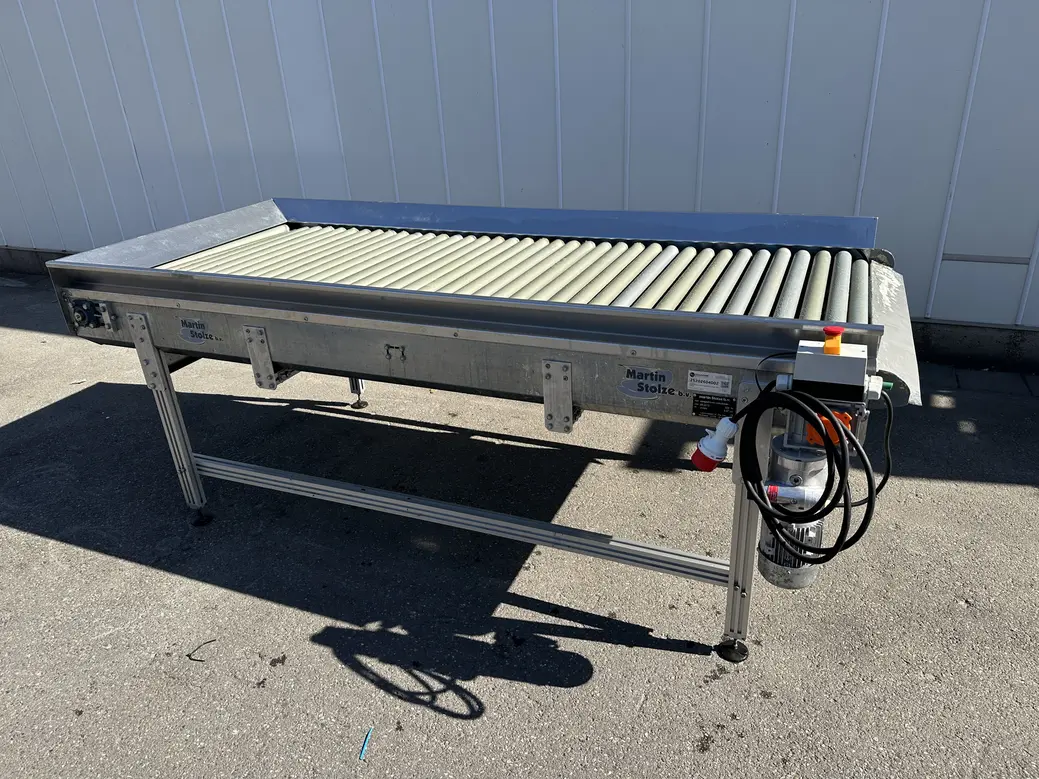
Source: duijndam-machines
Separate isolated defects from end-of-life evidence
Not every damaged belt or worn component requires a new conveyor. The key question is whether the system’s structure and operating design remain sound.
Conditions that usually support repair
Targeted repair is often reasonable when the conveyor has a limited, identifiable defect and the rest of the system remains fit for service. Examples include:
- A single damaged modular belt section with compatible replacement modules available
- A localized belt tear where the belt remains structurally sound and an approved repair method is appropriate for the application
- A worn bearing, roller, sprocket, or guide rail with no evidence of wider alignment damage
- A damaged sensor, cable, or control component on an otherwise reliable conveyor
- Tracking drift caused by a correctable adjustment, buildup, worn roller, or minor alignment issue
- A drive component near the end of its expected service life, where the frame, belt path, guarding, and controls remain suitable
A repair decision should include root-cause work. Check the belt path, pulley or sprocket condition, loading point, side guides, supports, frame level, take-up arrangement, and product accumulation behavior. If the fault returns after the underlying cause has been addressed, escalate the decision rather than repeating the same repair.
Conditions that point toward replacement
Replacement should move to the front of the discussion when the conveyor presents several signs of deterioration or design mismatch. Common indicators include:
- Frequent failures with no stable interval of dependable operation
- Repeated conveyor belt splice failure in the same belt or line section
- Persistent belt tracking and tension problems after proper inspection and adjustment
- Recurrent belt damage caused by worn or misaligned pulleys, sprockets, transfers, or frame members
- A belt surface that is damaged, delaminating, cracked, or otherwise difficult to clean reliably
- Corrosion, damaged welds, distorted frame sections, or inaccessible areas that prevent effective cleaning or inspection
- Obsolete controls, gearmotors, or belt designs with uncertain parts availability
- Repair work that requires increasing amounts of custom fabrication or temporary workarounds
- A conveyor that cannot meet current throughput, product handling, package stability, or automation needs
In food applications, cleanability is a decision gate rather than a secondary maintenance issue. If a belt, frame, transfer, or guarding arrangement cannot be cleaned and verified according to the facility’s food-safety program, the plant should involve its food-safety, sanitation, engineering, and equipment specialists before returning it to service. Requirements vary by product, process, facility program, and applicable regulations, so the required acceptance criteria should be confirmed through the plant’s approved procedures and relevant official guidance.
Evaluate belt and splice condition carefully
Belts often receive the most attention because they are visible and directly affect product movement. But belts commonly reveal problems elsewhere in the conveyor.
For fabric or monolithic belts, inspect for cuts, edge fraying, cracking, surface wear, delamination, damaged cleats, and splice deterioration. Determine whether a repair will restore the belt’s function without introducing a cleaning, tracking, or product-handling concern. A patched belt can be a practical planned-life extension, but repeated repairs can create multiple weak points and complicate cleaning.
For modular plastic belts, examine modules, hinge rods, sprockets, wear strips, and belt engagement. Isolated broken modules may be replaceable. Multiple failures in a concentrated area may indicate excessive loading, poor support, chemical incompatibility, heat exposure, impact at a transfer, or worn drive components. Replacing modules without investigating the pattern can leave the original mechanism in place.
For wire mesh or chain conveyors, look for broken wires, bent links, elongation, damaged flights, worn rails, and poor engagement with sprockets. These conveyors may be repairable in sections, but the condition of the full belt path and support structure still matters.
What repeated splice failures usually mean
A conveyor belt splice failure deserves more than a quick re-splice when it happens repeatedly. Investigate:
- Belt tracking through the full operating cycle
- Excessive tension or an incorrectly set take-up system
- Pulley, roller, or sprocket wear
- Product jams and abrupt starts or stops
- Mistracking caused by frame alignment or uneven loading
- Contamination or moisture affecting the approved splice method
- A belt that is unsuitable for the application, load, cleaning method, or transfer geometry
Mechanical fasteners, vulcanized splices, and other joining approaches have different suitability depending on belt material, process conditions, sanitation needs, and OEM guidance. Use the belt supplier’s approved method and confirm that the final assembly meets the facility’s sanitation and safety requirements.
Put downtime into the food conveyor lifecycle cost
A food conveyor lifecycle cost is broader than maintenance invoices. A low-cost repair can become expensive if it creates unplanned stops, product holds, disposal, overtime, missed shipments, or disruption to a connected line.
Use a consistent comparison for each option:
| Cost area | Repair or component upgrade | Full replacement |
|---|---|---|
| Initial spend | Usually lower | Usually higher |
| Installation outage | Often shorter, but may recur | May require planned shutdown and commissioning |
| Near-term reliability | Depends on root cause and overall condition | Usually improves if the design matches the duty |
| Spare-parts exposure | May remain high on aging equipment | Can be reduced with current, supported components |
| Sanitation improvement | Limited if the core design remains difficult to clean | Can address access, drainage, materials, and hygienic design issues |
| Capacity and layout flexibility | Limited by existing architecture | Can be designed around current requirements |
For a practical estimate, identify the cost of a typical unplanned stop: lost line time, labor, maintenance materials, product impact, restart work, and any downstream consequences. Then compare the expected frequency of those events under a repair plan with the planned outage and ownership cost of replacement. Do not assume a new conveyor eliminates all downtime; installation quality, operator training, preventive maintenance, controls integration, and correct application design remain important.
Consider retrofit before full replacement
A retrofit can be the right middle path when the frame and fundamental layout are sound but selected systems are outdated or poorly matched to the process. Potential retrofit scopes include a new belt type, upgraded sprockets and wear strips, a replacement drive package, new controls, improved guides, revised transfers, added access for cleaning, or revised guarding.
A retrofit is less attractive when it leaves the plant with a structurally weak frame, inaccessible sanitation zones, incompatible spare parts, or inadequate capacity. The question is whether the existing conveyor architecture can support the required improvement. If not, a retrofit may only postpone replacement while consuming maintenance resources.
Use production requirements to test the decision
A conveyor that was adequate when installed may not suit the current line. Before choosing repair, retrofit, or replacement, document what the conveyor must do now:
- Product type, condition, size range, and fragility
- Required throughput and operating schedule
- Product accumulation and transfer requirements
- Package format and stability
- Washdown and cleaning approach
- Need for inspection, sorting, metal detection, weighing, or other integrated equipment
- Available floor space and elevation changes
- Required controls, data, and line coordination
- Maintenance access and spare-parts strategy
A replacement project should not merely reproduce the old conveyor unless the old design still meets these requirements. Conversely, do not allow a desire for modernization to obscure a simple, well-supported repair that solves an isolated problem.
A practical repair-or-replace decision sequence
- Make the condition safe and control the immediate failure. Follow site lockout, sanitation, and restart procedures. Do not bypass guards, interlocks, or safety devices to restore production.
- Document the failure mode. Photograph the defect, record the operating conditions, and note where product, belt, and components were positioned at the time of failure.
- Identify the root cause. Inspect alignment, loading, belt tension, drives, transfers, supports, sanitation conditions, and maintenance history.
- Classify the system condition. Decide whether the problem is isolated, repeated, or systemic.
- Cost the realistic options. Include downtime and operational disruption, not only replacement parts and labor.
- Check food-safety and sanitation suitability. Confirm that the repaired or replacement configuration can meet the site’s approved cleaning and verification requirements.
- Test against future production needs. Include known product, throughput, package, or automation changes.
- Set a review trigger. If choosing repair, define the conditions that will reopen the replacement decision, such as another similar failure, a parts availability change, or a sanitation finding.
The decision in brief
Repair a food conveyor when the failure is isolated, the root cause can be corrected, cleanability remains acceptable, and the system can reliably meet current production needs. Choose a targeted retrofit when a sound conveyor needs updated belting, drives, transfers, controls, or sanitation access. Replace the system when failures, cleaning limitations, parts risk, structural deterioration, and production mismatch show that further repair is extending a problem rather than restoring dependable operation.
The strongest decision is evidence-based: a documented failure history, a physical condition assessment, a realistic downtime calculation, and confirmation that the selected option supports the plant’s sanitation, safety, and production requirements.
References
- Conveyor Belt Maintenance in Food Manufacturing: Types, Issues, and PM Schedules. (n.d.). https://oxmaint.com/industries/food-manufacturing/conveyor-belt-maintenance-food-manufacturing-types-pm-schedules
- Repair vs Replace Conveyor System: Millwright Guide. (n.d.). https://horizon-industrial.com/blog/repair-vs-replace-conveyor-system
- When to Repair vs Replace Conveyor Components. (n.d.). https://www.ultraplastindia.com/blog/when-to-repair-vs-replace-conveyor-components-a-cost-based-approach
- When Should You Replace a Unit Handling Conveyor …. (n.d.). https://ibtinc.com/learn/when-to-replace-a-unit-handling-conveyor
- Conveyor Belt Repair Methods and Tips. (n.d.). https://www.johnmayecompany.com/post/conveyor-belt-repair-methods-tips
- Conveyor Belt Repair: When to Patch and When to Replace | Noreside Engineering Group. (n.d.). https://www.noresideengineering.com/spotlight/conveyor-belt-repair-when-to-patch-and-when-to-replace
- Preventing Food Conveyor Belt Failures. (n.d.). https://www.conovey.com/blogs/common-conveyor-belt-failures-in-food-processing-and-how-to-prevent-them
- Conveyor Retrofit vs. Replacement. (n.d.). https://www.dornerconveyors.com/blog/conveyor-retrofit-vs-replacement
.jpg)