A reusable food container washing system is not simply a washer placed before a filler. It is a controlled material-handling process that keeps returned containers separate from clean packaging, removes soils, applies a verified cleaning and sanitation procedure, dries or drains containers as appropriate, inspects them, and releases only acceptable units to the refill area.
For food businesses, the essential design question is whether the full workflow—not just the washing machine—can prevent contamination, allergen carryover, physical contamination, and traceability gaps. The right system matches the container type, soil load, return condition, production schedule, and applicable local requirements. Cleaning chemistry, sanitation method, time, temperature, water quality, and acceptance criteria should be established and verified for the specific container and product application.
Start with a one-way dirty-to-clean flow
A container wash and refill line should be organized so returned packaging does not travel back through clean-container or open-product areas. The practical objective is a one-way sequence:
- Receive and identify returned containers.
- Segregate visibly unsuitable, damaged, or unknown containers.
- Remove gross debris and separate lids, inserts, labels, or dunnage where required.
- Wash and rinse containers using a defined program.
- Apply the required sanitation step and manage final rinse conditions where applicable.
- Drain and dry containers sufficiently for the product and filling process.
- Inspect, reject, and release acceptable containers.
- Stage clean containers in protected storage or feed them directly to filling.
- Refill, close, code, and document the batch.
The layout should make the status of each container obvious. Dirty returns, in-process containers, released clean containers, and rejected units need designated routes and holding areas. This reduces the chance that an unwashed tote, lid, or container stack is mistaken for clean packaging during a busy shift.
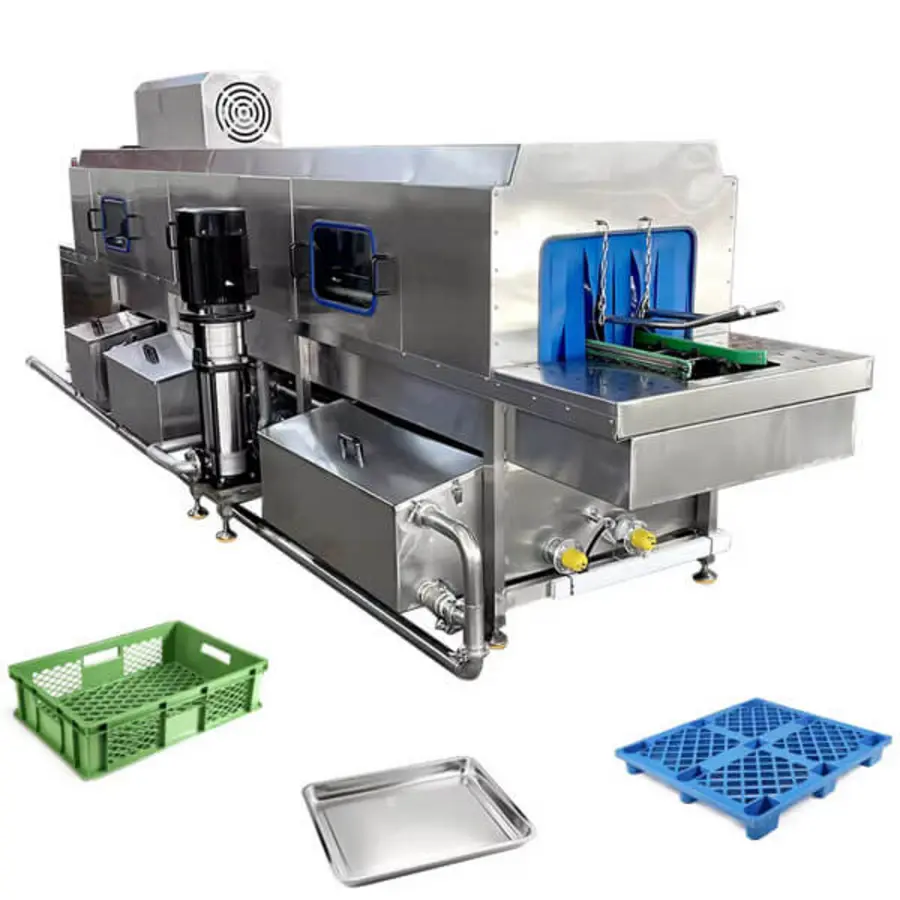
Source: vegetable-machine
Receiving and segregation
Receiving is a food-safety control point because returned containers may arrive with unknown handling history, residual food, damaged surfaces, foreign material, or incorrect components. A receiving station commonly includes a defined dirty-side staging area, container identification method, visual sorting point, and a route for waste and rejected items.
Establish clear rules for what the system accepts. These may include approved container models, compatible lids and seals, permitted previous contents, condition limits, and labeling or tracking requirements. Containers from an unapproved source, with unknown prior use, or with damage that prevents effective cleaning should not enter the normal reuse flow without an approved disposition.
For operations handling allergens or multiple product categories, segregation should be considered before washing begins. A validated program may require dedicated container families, scheduled processing, enhanced wash procedures, or other controls based on the facility hazard analysis. The correct approach depends on the containers, residues, cleaning process, and regulatory obligations; it should not be assumed from a washer’s general capabilities.
Match equipment to container geometry and soil
Food container rinsing equipment and industrial washers vary substantially. A simple open crate may clean effectively on a continuous conveyor washer, while a deep pail, lidded tote, drum, or intermediate bulk container can require targeted internal spray coverage, inversion, fixtureing, or a batch process.
Common equipment configurations
| Equipment type | Best suited to | Main planning considerations |
|---|---|---|
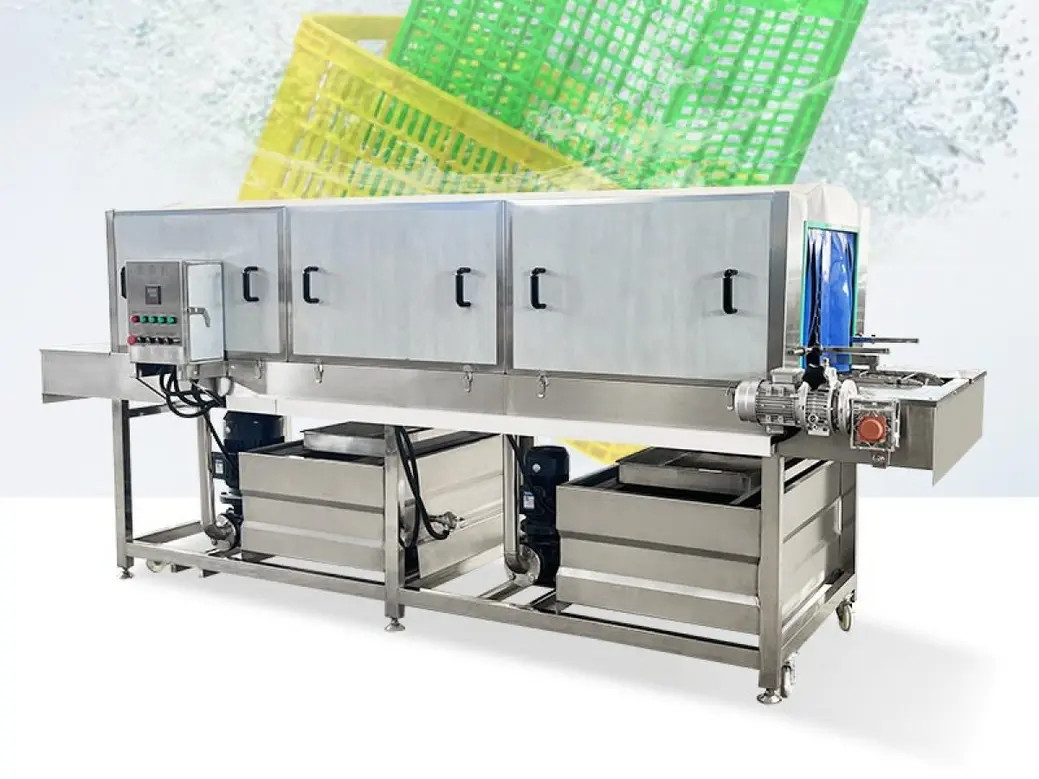
| Conveyor or tunnel washer | Crates, trays, tubs, bins, and similarly sized high-volume containers | Consistent orientation, conveyor loading, spray coverage, line speed, and clean-side discharge |
| Batch cabinet or rotary washer | Lower-volume containers, mixed sizes, pails, and difficult geometries | Loading labor, repeatable positioning, cycle control, and throughput between batches |
| Internal-external container washer | Drums, vessels, larger totes, and containers with enclosed interiors | Internal lance or spray device coverage, drainage, access, and container restraint |
| Separate lid and component washer | Lids, inserts, dividers, and smaller returnable parts | Retention of small parts, nesting prevention, and complete rinse and drainage |
| Drying or air-knife section | Containers that must be dry before filling or storage | Air quality, drainage, condensation control, and whether residual water affects the product |
Equipment selection begins with a representative container set. Measure the largest and smallest approved formats, note internal corners and threaded areas, identify labels and adhesive residues, and assess whether containers nest or trap wash water. Also evaluate the typical returned condition rather than only a new container. Soil can include dried food, oils, proteins, powders, syrups, labels, dust, and transport debris, each of which may change the wash program or pre-cleaning need.
A supplier may describe a machine as suitable for food applications, but that does not by itself demonstrate that it cleans a particular container to an acceptable standard. Request a documented discussion of spray coverage, container orientation, chemical dosing capability, controls, changeover, access for maintenance, and the records available from the machine.
Design the wash sequence around repeatable coverage
A reusable food container washing system usually combines several stages rather than relying on one high-pressure wash zone. The exact sequence depends on the soil and container design, but a typical line may include pre-rinse or debris removal, detergent wash, intermediate rinse, sanitation step, final rinse if required by the procedure, and drying or drain time.
The important principle is controlled contact. Spray nozzles must reach the surfaces that matter, including interiors, undersides, rims, handles, corners, and lids. The container must be presented to the sprays in a consistent orientation. A container that rides sideways, nests with another unit, or retains a lid can leave critical surfaces untreated even when the washer is operating normally.
Utilities and process controls
Before selecting a washer, document utility availability and constraints:
- Water supply quality, pressure, flow, and treatment needs.
- Drainage capacity and wastewater handling requirements.
- Electrical supply and any heat source required by the selected process.
- Compressed air requirements for actuators, blow-off, or drying.
- Chemical storage, dosing, containment, and safe connection arrangements.
- Ventilation and moisture management around wash and drying zones.
Controls should support repeatability, not merely start and stop functions. Depending on the process, useful monitored parameters can include tank level, dosing status, wash-zone temperature, pressure or flow indication, conveyor speed, cycle completion, alarm conditions, and chemical concentration verification. The parameters to monitor and their acceptable limits should come from the facility’s approved sanitation procedure, equipment documentation, chemical supplier guidance, and applicable regulatory requirements.
Cleaning validation is broader than a completed wash cycle
Reusable packaging cleaning validation means demonstrating that the defined procedure, when operated as intended, produces containers suitable for their next use. It is different from confirming that the machine ran without an alarm.
A practical validation plan starts with a written description of the container types, previous soils, intended next use, wash program, sanitation method, and acceptance criteria. It should identify the hardest-to-clean locations and credible worst-case conditions, such as dried residue, difficult product soils, extended return time, complex lid features, or a change between allergen-containing and non-allergen products.
The facility should determine suitable verification methods with its food-safety team and qualified laboratories or service providers where needed. These may include documented visual inspection, process parameter checks, chemical checks, residue or allergen verification where relevant, and microbiological assessment when appropriate to the risk and regulatory context. Methods, sampling locations, limits, and frequency need to be scientifically and operationally appropriate for the specific process.
Avoid adopting a generic wash time, temperature, sanitizer concentration, or test limit from an unrelated line. Those values depend on the container material, soil, chemistry, water conditions, equipment design, and jurisdiction. Verify the approved process against the current requirements of the responsible regulatory authority and the instructions for the cleaning and sanitation chemicals used.
Drying, inspection, and rejection handling
Containers leaving the washer are not automatically ready to refill. Residual water can dilute some products, create handling problems, or support undesirable conditions during storage. Other products may tolerate a drained container but not pooled water. Define what “dry enough” means for the product and filling system, then provide sufficient drain time, air movement, or controlled drying capacity to meet that requirement.
The clean side should have an inspection point before containers enter the filler or protected clean storage. Inspection can be manual, automated, or both. Look for visible residues, retained labels, cracks, chips, deep scratches, odor concerns, trapped water, damaged sealing surfaces, foreign material, and incorrect components. Automated vision can help with orientation, presence checks, or obvious defects, but it should be evaluated against the defects it is expected to detect.
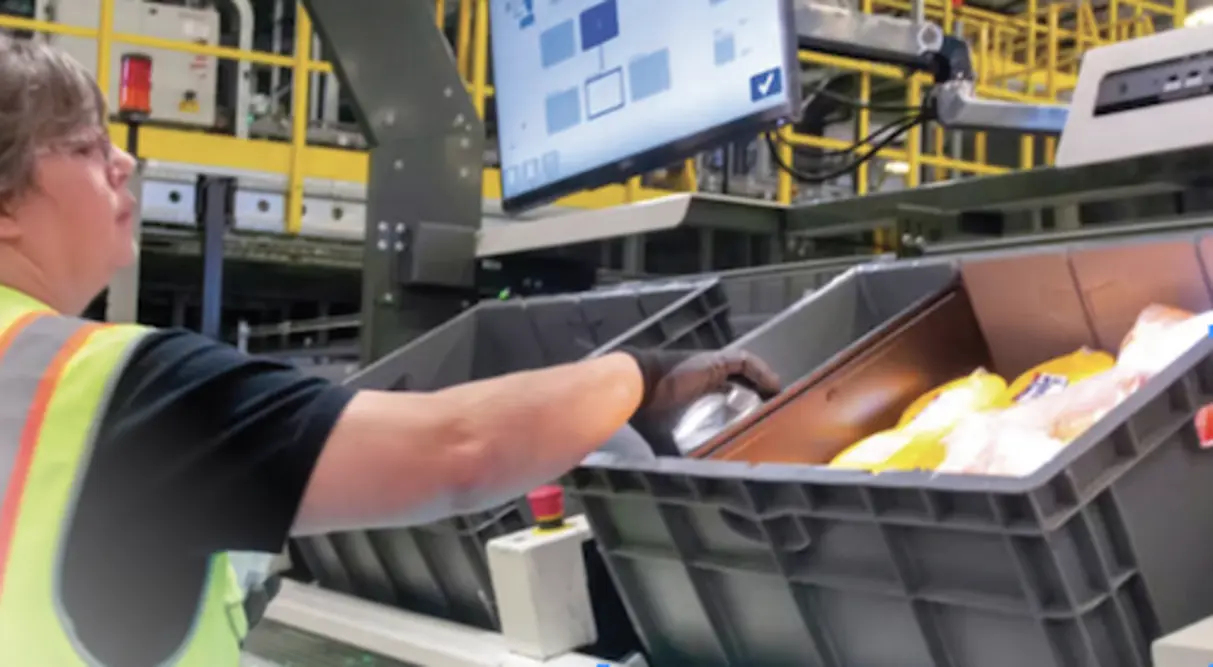
Source: mmh
Rejected containers need a defined route that does not mix back into released stock. Mark the reason for rejection where useful: rewash, repair, disposal, unapproved format, or investigation. Rewash should not become an informal exception loop. Repeated failures can indicate loading problems, spray blockage, depleted chemistry, unsuitable container design, excessive return damage, or an inadequately defined wash program.
Integrate the washer with the refill line
The clean-container buffer between washing and filling should protect containers from recontamination while preventing a starvation or overload condition at the filler. In a compact line, washed containers may discharge directly to an orienter, conveyor, filler, and closer. Larger operations may use clean racks, covered accumulation, or separate clean-container staging.
Integration decisions include:
- Whether containers are filled immediately or stored after release.
- How lids and inserts are cleaned, inspected, and reunited with the correct container.
- How container identity links to the refill batch, especially for deposit or return programs.
- How the system prevents use of containers that have not completed the approved wash process.
- How changeovers between container formats and products are controlled.
- How line stoppages affect clean-container exposure and restart checks.
A simple status system can be effective: physical zone separation, color-coded racks, controlled barcode scanning, batch tickets, or electronic production records. The method matters less than making the container’s status visible, traceable, and difficult to bypass.
Records that support control and investigation
Recordkeeping should be proportionate to the risk and the complexity of the operation. At minimum, the business should be able to show which wash procedure was used, when it ran, who checked it, what containers or container lot were processed, whether key parameters were acceptable, and how deviations were handled.
Useful records can include receiving logs, wash-program selection, chemical and process checks, sanitation verification results, maintenance and nozzle inspections, rejected-container counts, corrective actions, and refill batch linkage. Trend these records. A gradual rise in rewashes, residue findings, water-use changes, or damaged containers is often more useful as an early warning than a single end-of-shift review.
A practical commissioning checklist
Before routine production, confirm that the system can answer these questions:
- Are dirty returns physically separated from clean containers and open product?
- Is every approved container format held and oriented so wash coverage is repeatable?
- Are lids, inserts, and difficult internal features included in the cleaning procedure?
- Have cleaning and sanitation parameters been established for the actual soil and container combination?
- Are critical operating conditions monitored, recorded, and acted on when out of limit?
- Is there a defined inspection and rejection process after washing?
- Does dry or drained condition meet the needs of the product and filler?
- Can the operation trace a filled product batch back to the clean-container process?
- Are local food-code requirements, chemical instructions, wastewater obligations, and worker-safety requirements confirmed for the facility?
A well-designed reusable-container program treats the washer as one control within a complete return, sanitation, inspection, and refill workflow. The strongest systems make the correct path easy to follow and make an unverified container difficult to return to production.
References
- Industrial Container Washing Systems for the Food Industry. (n.d.). https://drumwashing.com/industrial-container-washing-systems-for-the-food-industry
- Reusable Packaging Washing Systems. (n.d.). https://girton.com/reusable-packaging
- Premium Returnable Plastic Container Cleaning Systems | Niagara Systems. (n.d.). https://niagarasystemsllc.com/returnable-packaging-cleaning
- Modular Container Washers | Series MP Industrial Washing Systems. (n.d.). https://www.bakfoodequipment.com/modular-container-washers
- Reusable Food Container Programs Guide | Restaurantware. (n.d.). https://www.restaurantware.com/blogs/take-out-and-delivery/what-are-reusable-food-container-programs
- Industrial Container Washing Machines. (n.d.). https://mcbradyengineering.com/feeds/category/container-washing-machine
- Industrial Washing Systems – Trays, Bins, Utensils & Pallets. (n.d.). https://www.aesfoodequipment.com/category/industrial-washing-systems
- Food Processing: Industrial Parts Washers | Better Engineering. (n.d.). https://www.betterengineering.com/industries/food-processing