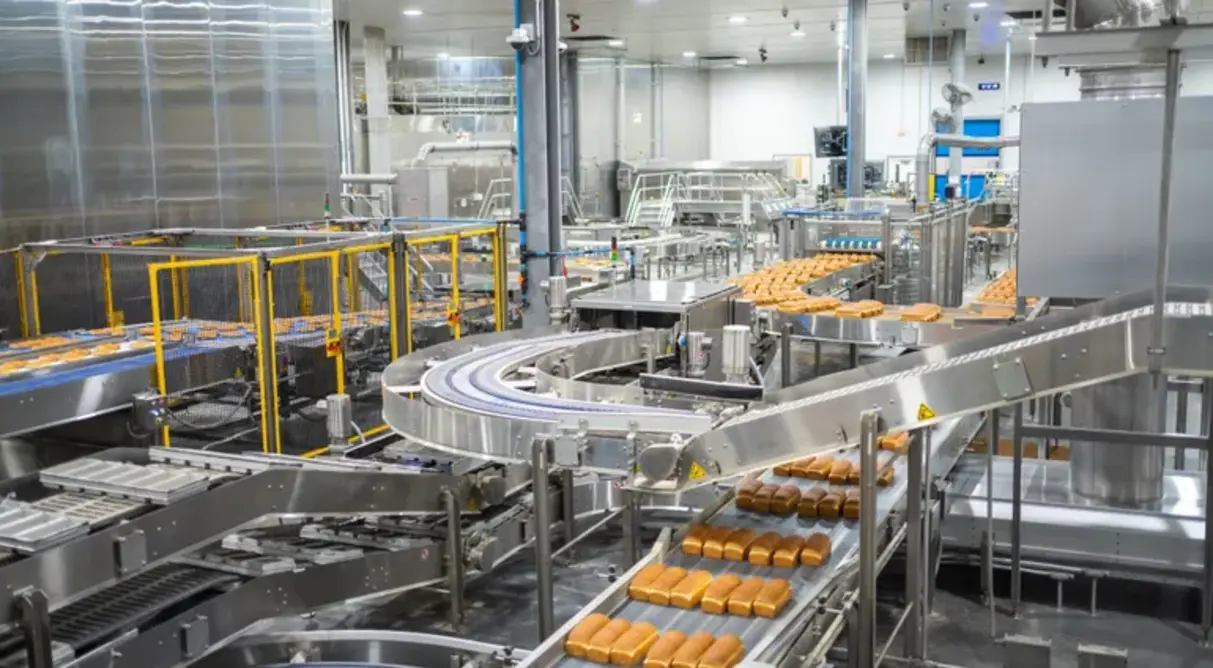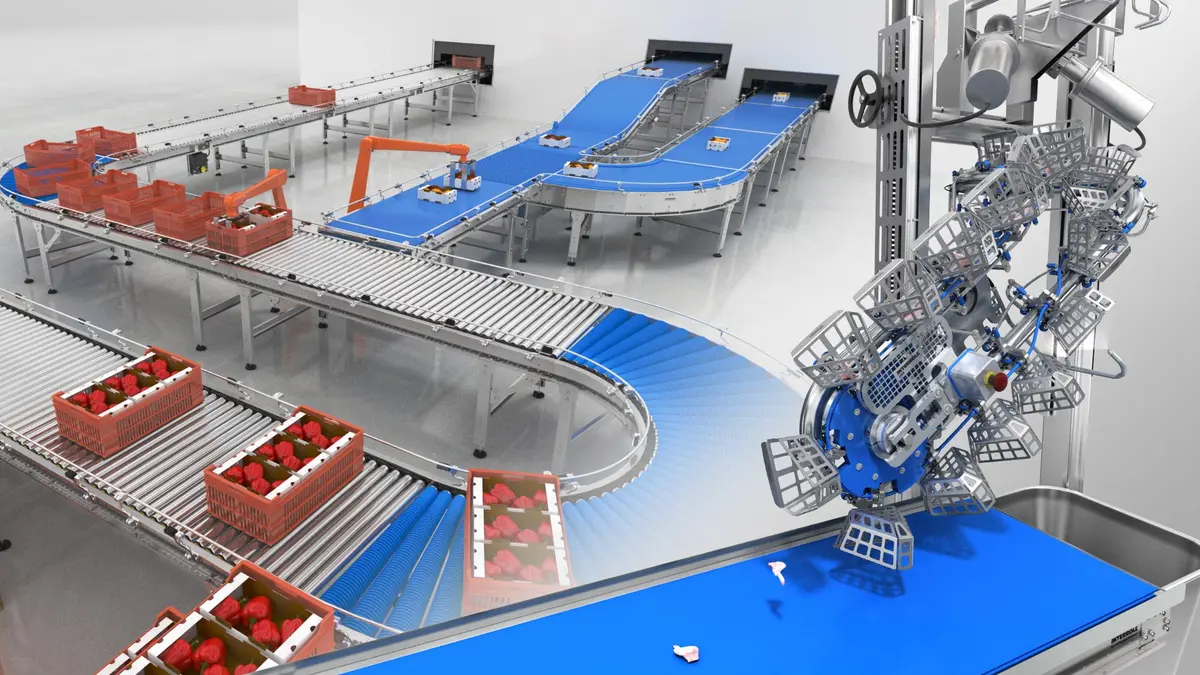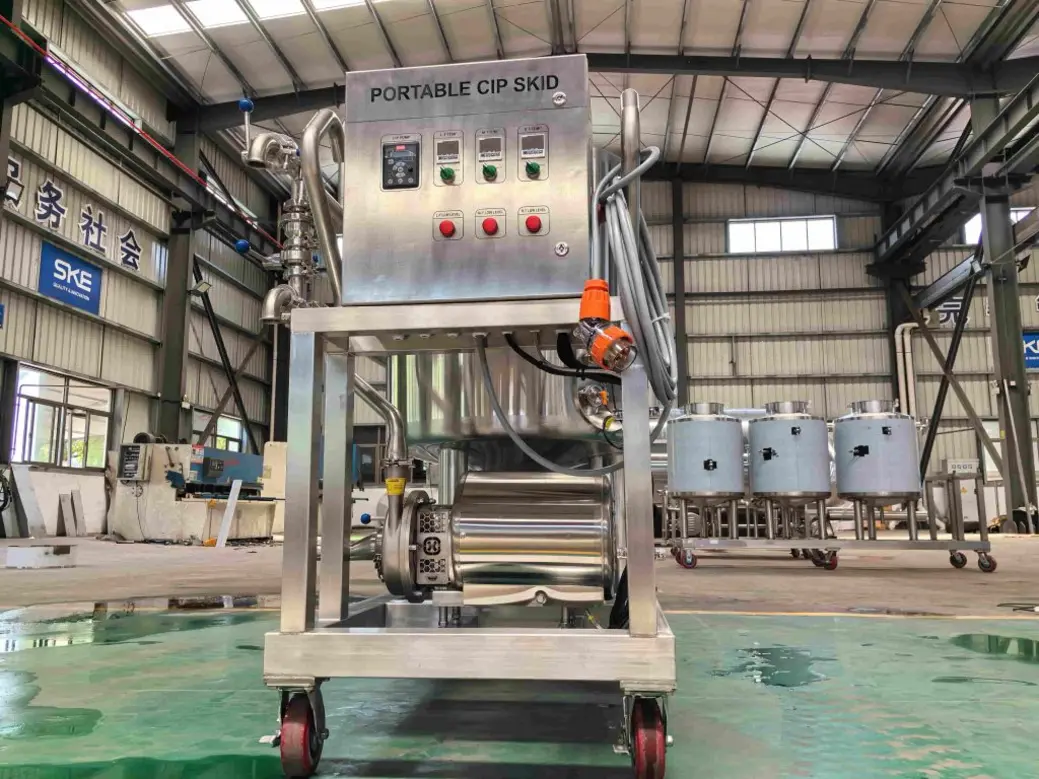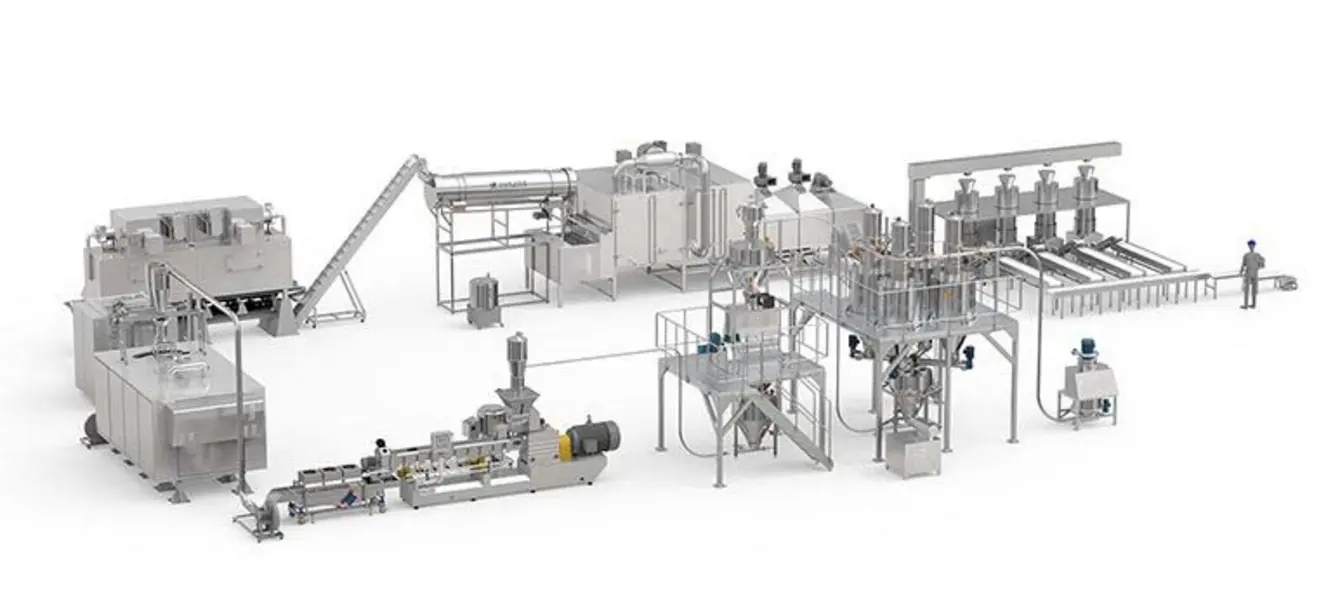
A shared line can produce allergen-containing and allergen-free products only when the manufacturer can show that its controls work for the actual products, equipment, and operating conditions involved. In many cases, validated cleaning, controlled scheduling, ingredient handling, and release checks can manage the risk. But cleaning is not automatically enough: if residue cannot be reliably removed or verified, or if dust and traffic can reintroduce the allergen, dedicated or physically segregated production may be the sounder choice.
The central question in shared equipment allergen cross-contact control is not whether a sanitation procedure exists. It is whether the entire system prevents undeclared allergen carryover consistently, including residue inside equipment, airborne material, utensils, rework, personnel movement, and labeling errors.
Start with a practical decision framework
Before buying dedicated assets or relying on a shared-line cleaning program, assess the transition as a combination of product risk and equipment cleanability.
A shared-equipment approach is more defensible when all of the following are true:
- The allergen-containing product can be removed from all relevant product-contact and adjacent non-contact areas.
- The equipment can be accessed, inspected, and cleaned consistently without impractical disassembly or uncontrolled shortcuts.
- The cleaning procedure has been validated for the specific allergen, formulation, machine design, and worst-case operating conditions.
- Production scheduling, material flow, employee practices, rework, and label control do not create separate routes for cross-contact.
- The facility can verify each changeover and respond appropriately when verification or inspection identifies a failure.
Segregation or dedicated allergen production equipment should be strongly considered when one or more of these conditions cannot be achieved reliably. This is especially important when allergen residues are difficult to remove, equipment contains inaccessible spaces, dry particulates can travel beyond the line, or the product is intended to support a sensitive allergen-free claim.
Assess the product residue, not just the allergen name
The same allergen can create very different cleaning problems depending on its form. A wet sauce, a baked inclusion, a dry powder, a nut paste, a seasoning blend, and a protein-rich batter do not behave the same way in equipment.
Consider these residue characteristics during an allergen changeover risk assessment:
| Factor | Why it matters on shared equipment |
|---|---|
| Adhesion and stickiness | Pastes, fats, syrups, and wet doughs can lodge in seals, joints, transfer points, and dead spaces. |
| Dry, airborne particles | Powders and fines can move through dust collection, open conveyors, compressed-air activity, and employee traffic. |
| Particle size | Large pieces may be visible and removable, while fine particles can remain in crevices or travel farther than expected. |
| Oil content | Oily residues may smear across surfaces and can make dry removal less effective. |
| Product buildup during a run | Deposits that accumulate behind guards or inside conveying components may not be represented by a brief routine clean. |
| Product flow path | A product that contacts fillers, nozzles, pumps, belts, or packaging-machine surfaces creates a larger potential residue map. |
The relevant question is: where can the previous product go, remain, or be transferred? Map the path from receiving through weighing, blending, processing, conveying, filling, packaging, and rework. Do not limit the assessment to the main mixer or depositor.
Identify hard-to-clean machine zones
A line may look clean from the outside while retaining residue in locations that are difficult to see or reach. Equipment selection and line design have a direct effect on whether cleaning can be validated and repeated.
Typical concern areas include:
- hopper transitions, chutes, and discharge gates;
- screw conveyors, augers, elevators, and enclosed transfer systems;
- fillers, depositor heads, valves, pumps, manifolds, and nozzles;
- belt edges, lacing, rollers, bearings, and underside supports;
- gaskets, seals, O-rings, threaded connections, and worn interfaces;
- guards, framework ledges, cable trays, and nearby non-product-contact surfaces;
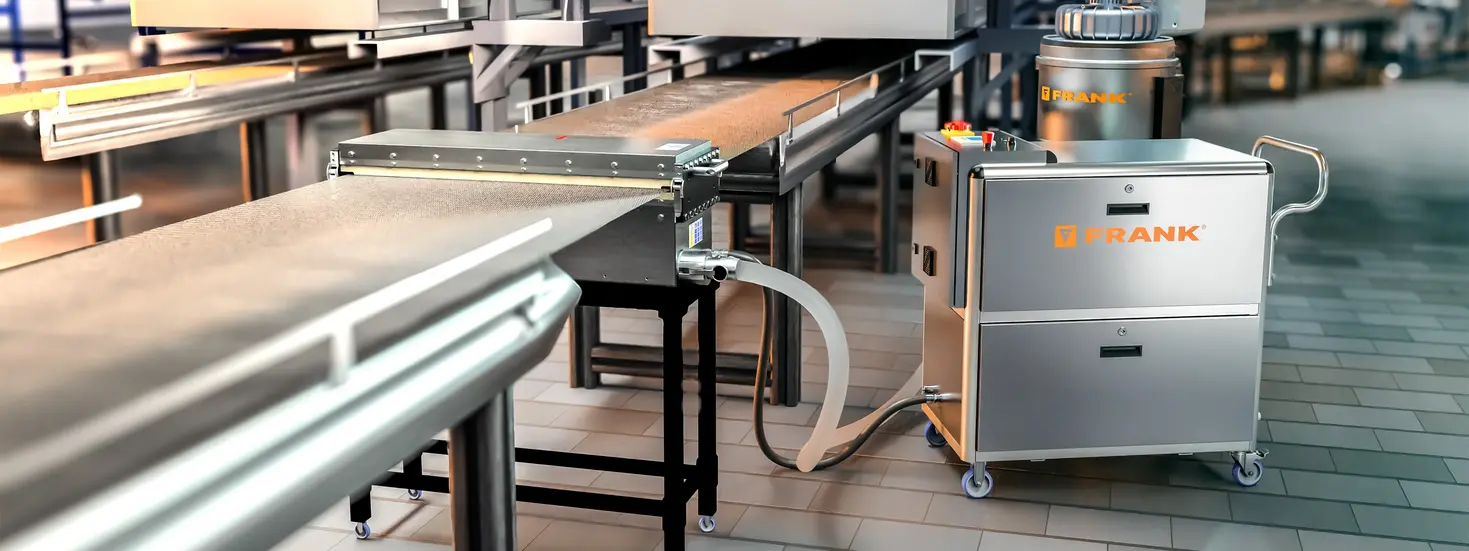
- dust collection components and air-handling paths;
- packaging equipment where loose product can accumulate around guides and infeed areas.
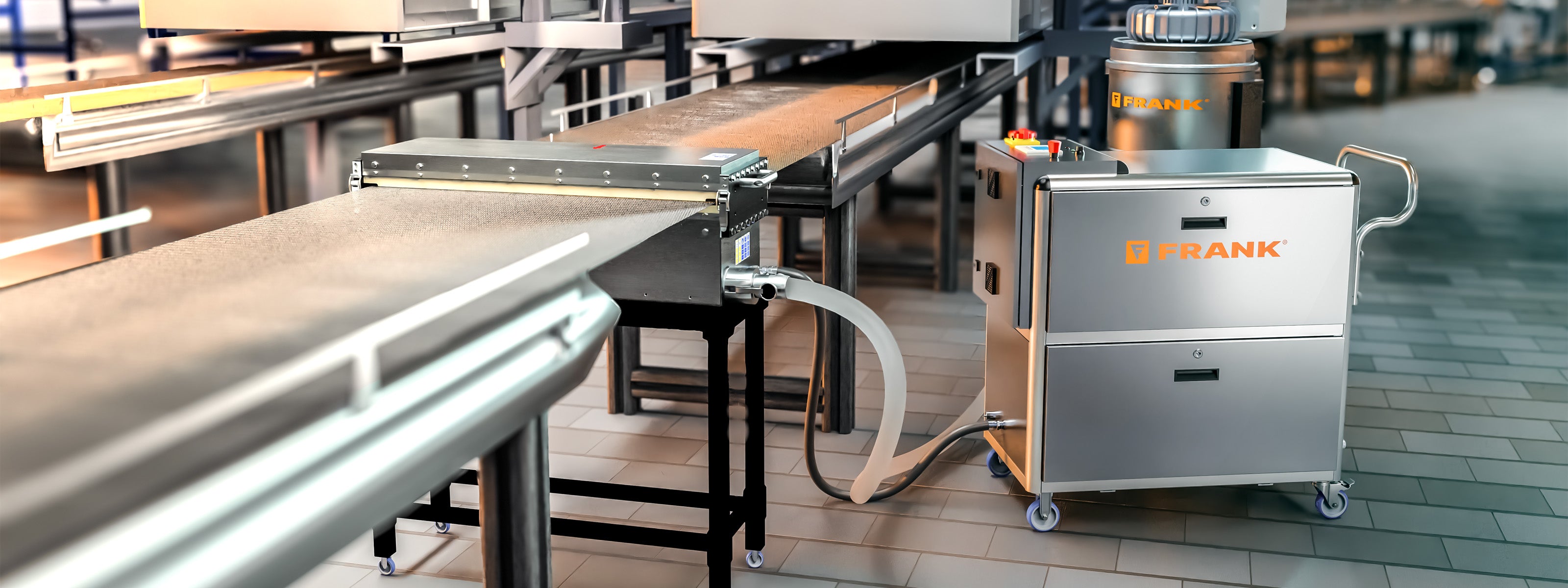
Source: frank-hdr
A machine that requires extensive dismantling is not necessarily unsuitable for shared production. However, the required disassembly must be practical enough to occur every time the risk assessment says it is needed. If the method depends on difficult access, lengthy unverified work, or specialized knowledge available only on one shift, the control may not be robust in routine operation.
When evaluating new equipment, ask suppliers for clear information about access panels, tool requirements, clean-out features, disassembly points, drainability where relevant, and locations where product can accumulate. A hygienic design review should include the products planned for the line, not just general sanitation expectations.
Use scheduling as a control, not a substitute for cleaning
Production sequence can reduce the number and severity of allergen transitions. A common strategy is to run products with the least restrictive allergen profile before products containing additional allergens, followed by a defined cleaning break when the sequence requires it.
Scheduling does not eliminate the need for effective cleaning. It reduces opportunities for carryover and can make the line easier to control. The written schedule should identify the allergen profile of each product and define when a full allergen clean, inspection, verification, or quality release is required.
Scheduling decisions should also account for:
- whether products share ingredients, processing aids, or rework streams;
- the presence of dry allergen powders or open handling steps;
- the time available for proper cleaning and inspection;
- whether the next product carries an allergen-free claim or other strict market requirement;
- label and packaging-material changeover requirements.
Avoid treating a short gap between runs as a cleaning control. Time alone does not remove allergen residue.
Dry cleaning versus wet cleaning: match the method to the process
Facilities often prefer dry cleaning in low-moisture operations because introducing water can create operational and food-safety complications. Wet cleaning may be necessary for sticky or oily residues, but it can also require drying, sanitation, and controlled restart procedures appropriate to the process.
Neither approach should be selected by preference alone. The cleaning method must remove the relevant allergen from the relevant surfaces without creating another uncontrolled route of spread.
For dry systems, assess whether brushes, vacuum systems, wipes, dismantling, and controlled removal methods actually reach the equipment’s residue points. Uncontrolled use of compressed air can disperse particulates and should be evaluated carefully within the facility’s allergen-control plan.
For wet systems, confirm that cleaning solutions, mechanical action, rinse steps, and equipment access are suitable for the residue and compatible with the machine. The facility should establish and validate its own parameters rather than assuming that a microbiological sanitation cycle also controls allergen residue.
Validation proves the approach; verification confirms routine execution
Allergen cross-contact equipment cleaning needs both validation and ongoing verification.
Validation establishes that the defined cleaning procedure is capable of removing the identified allergen hazard under representative, challenging conditions. The work should reflect the actual line configuration, product formulation, residue locations, cleaning tools, personnel practices, and production duration. The sampling plan and analytical approach should be selected by qualified food-safety personnel and should be suitable for the allergen and surfaces being assessed.
Verification checks that the validated procedure is being followed and remains effective in daily use. Depending on the risk assessment, this may include documented visual inspection, pre-operational checks, review of cleaning records, periodic analytical checks, and quality release controls.
Visible cleanliness remains useful but is not, by itself, proof that allergen residues are absent. Conversely, analytical results are only meaningful when sampling locations and methods reflect the actual risk. A swab taken from an easy-to-reach flat panel does not demonstrate cleaning effectiveness inside a valve, transfer chute, or conveyor return area.
Control the non-equipment routes of cross-contact
Dedicated equipment may still fail to protect an allergen-free product if ingredients, people, or packaging move without controls. A complete program should address the following routes.
Ingredients and tools
Store and identify allergen-containing ingredients so that they cannot be confused with allergen-free materials. Use controlled dispensing, designated containers, and appropriate tool management. Supplier information also matters: an ingredient may not be appropriate for an allergen-free claim if its own supply-chain controls do not support that use.
Rework
Rework needs a clear allergen identity and defined permitted destinations. Rework from an allergen-containing product should not be introduced into a product that does not declare that allergen. This rule must apply to planned rework, start-up material, line sweepings, returned product, and off-spec material.
Personnel and traffic
Gloves, footwear, garments, forklifts, carts, maintenance tools, and cleaning equipment can carry material between areas. Where dry allergens are handled openly, assess movement patterns and airflow as seriously as direct product-contact surfaces.
Labels and packaging
A physically clean line can still produce an undeclared allergen if the wrong label or packaging is used. The allergen-control program should connect product formulation, production order, packaging issuance, line clearance, and final release.
When dedicated equipment or segregation is justified
Dedicated equipment is not a universal requirement, but it becomes the practical answer when shared-line controls cannot be validated, consistently executed, or adequately verified.
Conditions that commonly support segregation include:
- equipment geometry prevents access to meaningful residue locations;
- validated cleaning cannot reliably remove the allergen from the line;
- production creates persistent dust or airborne particulates that can enter other production areas;
- the same employees, tools, or material routes repeatedly bridge allergen and allergen-free operations;
- changeovers are too frequent or too compressed to permit the required cleaning and release activities;
- the product claim, customer requirement, or target consumer population demands a control margin that the shared operation cannot support;
- repeated verification findings, deviations, or near misses indicate that the system is not stable.
Segregation can take several forms. It may be a dedicated machine, an isolated line, a separate room, a separate production zone, enclosed transfer equipment, or a combination of space and time controls. The appropriate level depends on the hazard analysis and the facility’s ability to prevent transfer through air, people, materials, and equipment.
A selection checklist for shared-line decisions
Before approving shared production, have the food-safety, operations, engineering, sanitation, and quality teams answer these questions together:
- What allergens are present in each product, ingredient, processing aid, and rework stream?
- Which product and operating condition represent the hardest-to-clean transition?
- Where can residue accumulate inside and around each machine?
- Can operators access those locations during every required clean?
- Is the procedure validated for the actual equipment and product residue?
- How will cleaning be verified before the next product starts?
- Can dust, personnel, tools, carts, airflow, or maintenance work bypass the line-cleaning control?
- Is the production sequence documented and compatible with the required cleaning time?
- Are rework and packaging controls aligned with the allergen profile?
- If a check fails, can the facility hold product, investigate the cause, clean again, and document release appropriately?
The practical decision
Validated cleaning can be an effective shared-equipment allergen cross-contact control when the machine is genuinely cleanable, the process is disciplined, and verification confirms the system is working. It should not be treated as a paper exercise or a generic sanitation step.
When residue behavior, inaccessible equipment design, airborne spread, production pressure, or weak supporting controls make reliable removal uncertain, segregation is often less costly than managing recurring risk. The best choice is the one that the facility can execute, verify, and sustain across shifts—not simply the option with the lowest immediate capital cost.
References
- Allergen Control. (n.d.). https://tractian.com/en/glossary/allergen-control
- Appendix 9: Allergen Cross-Contact Prevention. (n.d.). https://www.fda.gov/media/129670/download
- Effective Allergen Management and Control in Food Manufacturing. (n.d.). https://www.solenis.com/en/resources/blog/effective-allergen-management-and-control-in-food-manufacturing
- Allergen Management in Food Manufacturing | AlfaPeople US. (n.d.). https://alfapeople.com/us/allergen-management-in-food-manufacturing
- tip sheet 17 allergen management. (n.d.). https://www.sqfi.com/docs/sqfilibraries/code-documents/tip-sheets/tip-sheet-17-allergen-management.pdf?sfvrsn=aeb37125_9
- FDA releases draft guidance on food allergen programs under the Preventive Controls rule. (n.d.). https://www.hlc.com/en/publications/fda-releases-draft-guidance-on-food-allergen-programs-under-the-preventive-controls-rule
- Best Practice Considerations to Enhance the Effectiveness of Allergen Cleaning and Validation | Food Safety Magazine. (n.d.). https://www.food-safety.com/articles/11362-best-practice-considerations-to-enhance-the-effectiveness-of-allergen-cleaning-and-validation
- Understanding Allergen Cross-Contact: What Every Food Facility Should Know. (n.d.). https://blog.aibinternational.com/understanding-allergen-cross-contact-what-every-food-facility-should-know