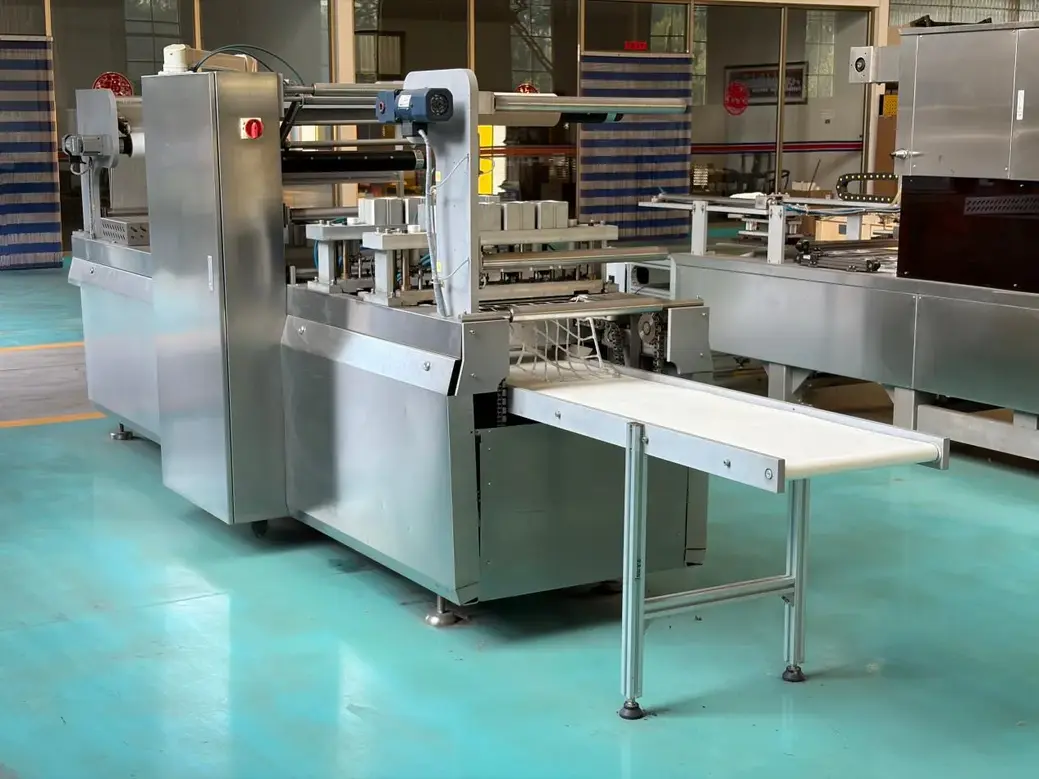
A small batch food contract packaging partner can be the right fit when your product is already made and you need a facility to receive components from several suppliers, vacuum-seal an item, assemble a retail kit, inspect the finished pack, and release freight. The best partner is not necessarily a full food manufacturer. It is the provider whose scope, handling controls, quality documentation, and shipping process match the actual work.
Start by defining whether the product will be opened, filled, repacked, or only handled in its finished primary package. That single distinction affects the type of facility, food-safety controls, equipment, insurance, documentation, and regulatory obligations you should verify before placing an order.
Choose the service model before comparing vendors
Terms such as co-packer, contract packager, kitting provider, sourcing agent, and 3PL are often used loosely. Their normal roles overlap, but they are not interchangeable.
| Provider type | Typical role | Best fit for | Key question to ask |
|---|---|---|---|
| Co-manufacturer | Makes the food product, often from a formula or process specification | You need product made as well as packed | Do you manufacture the food, or only package finished goods? |
| Co-packer or contract packager | Fills, seals, labels, or packs product supplied in bulk or as components | You need primary packaging or retail-ready packing | Can you package this food format and manage the required controls? |
| Secondary contract packager | Receives finished items and performs kitting, bundling, cartoning, displays, or rework | Components are already packaged and need assembly | Do you specialize in secondary packaging and kit assembly? |
| 3PL | Stores, picks, packs orders, and ships | You need inventory management and order fulfillment | Can you perform controlled assembly, or only pick and ship? |
| Sourcing agent | Finds suppliers and may coordinate purchasing or inspections | You need help managing overseas or fragmented sourcing | Will you take physical custody, or only coordinate suppliers? |
For the project described here, the likely requirement is a secondary contract packager with food-capable handling and 3PL or freight-forwarding coordination. If the provider must open a food package, fill a pouch, vacuum-seal exposed food, or relabel a regulated food pack, the project moves closer to primary food packaging. That usually requires a deeper review of the facility and applicable requirements.
Map the intended workflow in writing
Small runs fail less often when the brand documents the physical flow before requesting quotes. A vendor cannot accurately price or control a project described only as “assemble a gift box” or “make a kit.”
Create a simple process map covering:
- Inbound receipt: Which suppliers ship which components? Are deliveries consolidated or received separately?
- Quarantine and release: How will received goods be identified, counted, checked, and approved for use?
- Storage: Which parts require dry, refrigerated, frozen, odor-controlled, secure, or allergen-separated storage?
- Vacuum sealing: What item is placed in the vacuum bag, and is it food, food-contact material, or a fully enclosed item?
- Kit assembly: What is the exact order of placement, and what version of each component belongs in each kit?
- Final packout: Which carton, insert, seal, label, barcode, tamper-evident feature, or shipper is required?
- Palletization and release: How are finished cases counted, labeled, documented, and handed to the freight forwarder?
This map should become the basis of the statement of work, bill of materials, kit drawing, packaging specification, and quality plan.
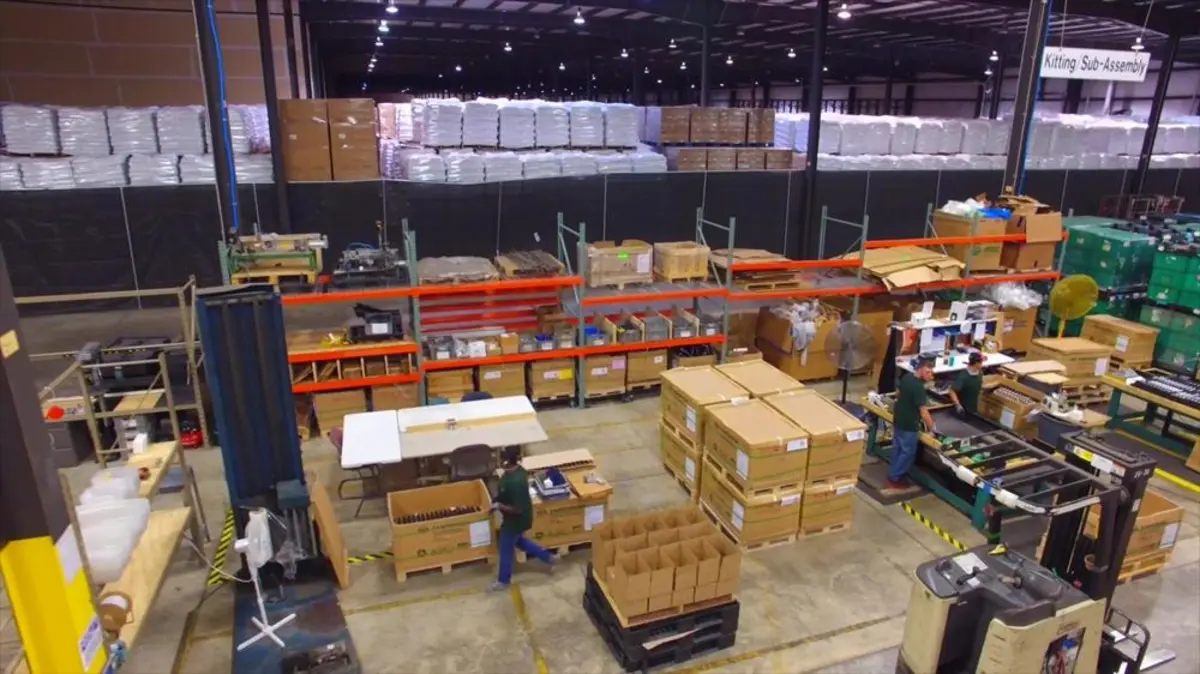
Source: supplysourceoptions
Treat vacuum sealing as a packaging operation, not a shelf-life claim
“Vacuum sealing” can mean several different tasks. A provider may be able to evacuate air from a pouch around a non-food accessory, a sealed retail item, or an exposed food product. Those are materially different projects.
Before selecting a partner, define the following:
- Whether the item being vacuum-sealed is exposed food, a food-contact component, or a fully packaged product.
- The pouch material, dimensions, closure style, print requirements, and any required barrier or puncture resistance.
- The target pack appearance, including acceptable wrinkles, seal position, product movement, and headspace.
- The inspection method for seal integrity, package damage, foreign-material concerns, and labeling.
- Whether the operation changes a product’s storage conditions, shelf-life basis, or label information.
Vacuum packaging removes air from the package, but it does not by itself prove product safety or establish shelf life. If the project involves exposed food or a change to the original primary package, verify the applicable food-safety, labeling, process-validation, and regulatory requirements with qualified specialists and the relevant authorities. A prospective vendor should be able to explain its documented process, but its sales description should not substitute for your product-specific validation.
Verify food-safe handling at the level the work requires
A low-volume project does not need a large factory to be well controlled. It does need a facility whose procedures fit the product risk and handling scope.
Ask vendors to describe, and where appropriate document, how they manage:
- Receiving inspection and identification of incoming lots.
- Segregation of food, non-food components, damaged goods, returns, and rejected material.
- Storage conditions required by your products and packaging materials.
- Cleaning and sanitation procedures for the relevant work area and equipment.
- Allergen controls when allergens are present in the product or facility.
- Pest-control, foreign-material, and glass or brittle-plastic controls where relevant.
- Employee hygiene and training practices.
- Traceability from received component lots to completed kit lots.
- Hold, release, correction, and disposition procedures for nonconforming product.
Do not assume that “food-grade packaging” means the entire operation is suitable for handling exposed food. Food-contact material suitability, facility handling practices, and the legal status of the packaging operation are separate questions. Request the documentation relevant to your product category and sales market, then have it reviewed by the appropriate quality or regulatory resource.
Evaluate kitting accuracy as a quality system
For many small-batch programs, the largest commercial risk is not machine speed. It is a missing component, wrong flavor, incorrect language insert, mismatched lot, or retail carton packed with the wrong item.
A capable food-safe kitting service should be able to explain its controls at each stage:
Component identification
Every inbound component should have a usable identifier. This may include an internal SKU, supplier code, lot code, revision level, or date information. The partner needs a way to distinguish visually similar components and prevent old packaging from being mixed with current artwork.
Bill-of-material control
Provide a version-controlled bill of materials for each sellable kit. It should identify every item, quantity, acceptable substitute policy if any, and packaging revision. A kit drawing or approved physical sample is especially useful for complex packs.
Line clearance and changeover
When one kit changes to another, remaining components, labels, inserts, and paperwork can create mix-up risk. Ask how the provider clears the work area, verifies the next job, and records the changeover.
In-process and final checks
Clarify what will be checked during the run and at finished-goods release. This may include component count, orientation, seal appearance, carton closure, label placement, barcode readability, package weight where appropriate, and finished case count. Agree in advance on the sampling approach, acceptance criteria, and reporting format rather than relying on a general promise of inspection.
Nonconformance handling
Ask what happens when a component is damaged, an inbound count is short, a seal appears unacceptable, or a kit is found incomplete. The provider should identify the affected material, isolate it, notify the brand under an agreed escalation process, and avoid unauthorized substitutions or rework.
Compare capacity by practical constraints, not headline volume
A small-batch contract packaging project can be commercially unattractive to a high-volume co-packer even when the equipment is technically capable. Ask about minimum charges, setup fees, material receiving limits, storage fees, batch minimums, changeover charges, and whether the facility can schedule hand assembly alongside larger runs.
Also ask about the constraints that may slow the project:
- Number of suppliers and staggered arrival dates.
- Number of unique SKUs in each kit.
- Manual versus automated vacuum sealing and cartoning.
- Need for artwork approval or packaging-material procurement.
- Inspection intensity and documentation requirements.
- Seasonal labor availability.
- Finished-goods storage before pickup.
A partner with modest automation but strong project management may be a better fit than a larger plant designed around long, repeatable runs.
Make freight handoff part of the selection process
Freight release is often treated as an afterthought, even though errors at this point can undo an otherwise successful packout. Decide whether the partner is responsible only for loading the carrier, or also for booking freight, preparing shipping documents, applying pallet labels, transmitting inventory data, and coordinating with a nominated freight forwarder.
Confirm these details before production:
- Who authorizes release of finished goods.
- Required pallet configuration, case labels, and shipping marks.
- Whether the forwarder requires an appointment, booking reference, photographs, count verification, or specific documents.
- Which party owns the inventory at each handoff point.
- How shortages, damage, and count discrepancies are documented.
- Whether the provider can provide pallet-level or case-level traceability if your channel requires it.
If goods are crossing borders, do not assume the packaging partner is handling export compliance. Establish who is responsible for commercial documentation, classification, customs arrangements, and destination-market requirements.
A vendor-qualification checklist
Use this checklist during discovery calls, site visits, or document review.
Scope and operations
- Can the provider receive components from multiple suppliers?
- Can it store and identify each component until the full kit is ready?
- Does it perform the required vacuum-sealing, kitting, cartoning, and palletizing work in-house?
- Is the proposed line manual, semi-automatic, or automated, and why is it suitable for the batch size?
- Can it accommodate expected repeat orders and demand changes?
Food handling and quality
- Will the provider handle exposed food, food-contact materials, or only sealed finished goods?
- What facility practices and documentation apply to that scope?
- How are lots, allergens, damaged materials, and nonconforming goods controlled?
- What inspections occur at receiving, during assembly, and at final release?
- Can the provider share a sample batch record, inspection form, or release report with commercially sensitive details removed?
Packaging execution
- Has the provider run comparable pouches, cartons, inserts, or kit configurations?
- Can it provide a trial or pre-production sample for approval?
- What defines an acceptable vacuum seal and finished package appearance?
- How are packaging revisions controlled and obsolete materials prevented from entering production?
Commercial and logistics fit
- What are the minimum fees, setup costs, storage terms, and lead-time assumptions?
- Who procures packaging materials, and who owns excess inventory?
- What happens if inbound components arrive late or short?
- Can the provider meet freight-forwarder requirements and document the final handoff?
Common selection mistakes
The first mistake is choosing a “co-packer” without confirming whether it will accept finished components for secondary assembly. Some food manufacturers are optimized for filling and production, not multi-supplier receiving or detailed kit work.
The second is treating vacuum sealing as a simple cosmetic step. Seal quality, pouch compatibility, product condition, labeling, and shelf-life implications must be defined before the run.
The third is sending a vague bill of materials. A kitting partner needs approved artwork, SKU codes, packout instructions, revision control, and a clear answer to what happens when a component is unavailable.
The fourth is separating quality requirements from freight requirements. The final pallet label, case count, release record, and handoff process should be part of the same operating plan as the kit assembly.
A practical way to shortlist partners
Send the same concise request package to each candidate. Include product photos, handling status, component list, estimated order frequency, target batch size, packaging drawings, a proposed workflow, storage needs, quality expectations, and freight destination. Ask each provider to identify assumptions, exclusions, minimums, and the documents it would require before production.
Then compare candidates on operational fit rather than quote price alone. For small-batch food contract packaging, the strongest partner is usually the one that can clearly show how it will receive, identify, protect, assemble, inspect, trace, and release your specific kit—not simply the one that says it offers co-packing or fulfillment.
References
- Looking for small-batch co-packer in China for clean food …. (n.d.). https://www.reddit.com/r/AmazonFBA/comments/1os0aud/looking_for_smallbatch_copacker_in_china_for
- Contract Packaging & Co-Packing Services. (n.d.). https://www.dynamic3pl.com/contract-packaging-services
- Contract Packaging Companies | US Supplier Directory | KokoQuest. (n.d.). https://www.kokoquest.com/companies/packaging/contract-packaging-companies
- Contract Packaging & Co-Packing — Kitting & Assembly | Cubit. (n.d.). https://www.cubitpackaging.com/contract-packaging
- Using Co-Manufacturing and Co-Packing in a Small Food Business. (n.d.). https://www.foodmanufacturing.com/supply-chain/article/22952121/mrpeasy-using-comanufacturing-and-copacking-in-a-small-food-business
- A Complete Food Contract Manufacturing Guide For 2025. (n.d.). https://foodtech.folio3.com/blog/food-contract-manufacturing-guide
- Contract Packaging Companies | Contract Packaging Services. (n.d.). https://contract-packaging.net
- How to Add a Contract Packaging Partner Without Disrupting Your Network. (n.d.). https://www.industrialpackaging.com/blog/add-contract-packaging-partner