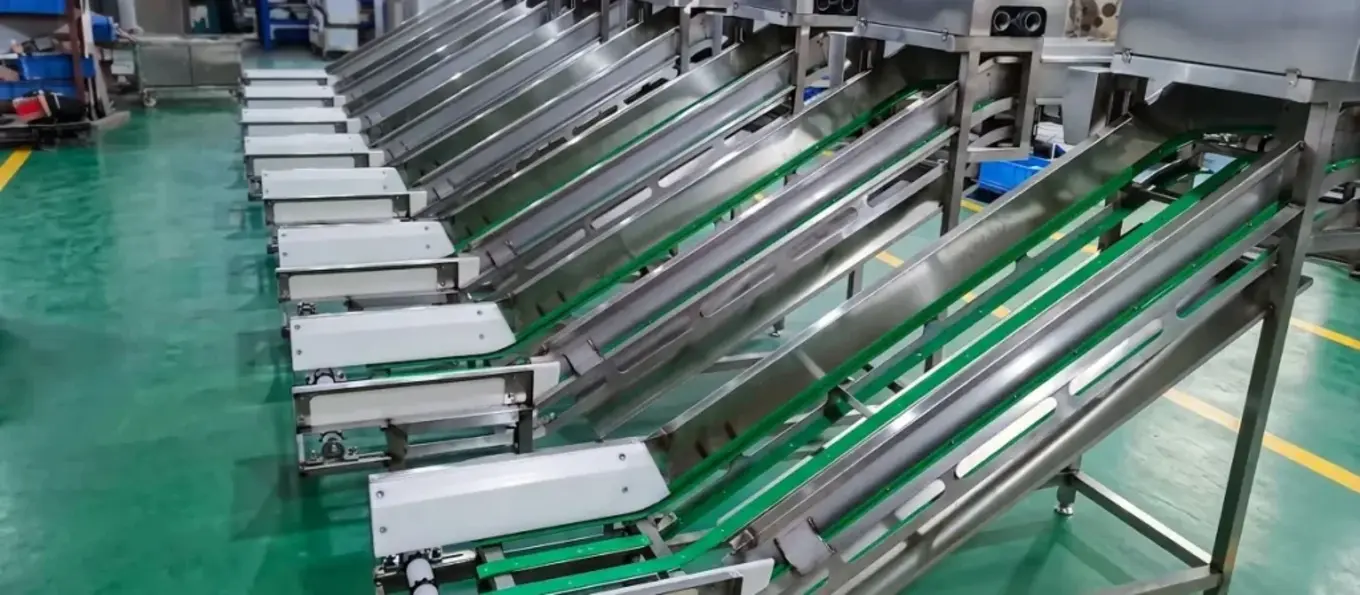
Stainless steel failures in food processing equipment should be treated as an engineering and sanitation problem, not simply as a rust-removal job. Stainless steels resist corrosion because of a thin passive surface layer, but that protection can be damaged by unsuitable cleaning exposure, retained product or water, poor weld finishing, contamination from ordinary steel tools, vibration, overload, or an incorrect repair.
When severe damage appears, first make the equipment safe, preserve the evidence, and determine the failure mechanism before grinding, welding, or replacing parts. A repair that restores appearance without addressing the cause can create a recurring crack, a corrosion site, or a hard-to-clean product-contact surface.
Start with containment and evidence preservation
A broken support, leaking vessel wall, cracked agitator component, damaged conveyor frame, or rusting product-zone weld can affect both worker safety and hygienic operation. Follow the site’s lockout, food-safety, and maintenance procedures before inspection. Do not operate equipment with a known structural crack, loose part, product-zone leak, or condition that could shed metal or retain product.
Before cleaning away evidence, document the condition:
- Photograph the overall machine, then the damaged area from several angles.
- Record the equipment identification, component location, date, product being run, recent cleaning activity, and any unusual operating event.
- Note whether the damage is in a product-contact area, splash zone, washdown zone, structural frame, or utility system.
- Retain broken pieces, loose fasteners, failed bearings, and removed sections when practical.
- Record recent modifications, including new guards, supports, motors, tooling, chemical programs, weld repairs, or changes in production rate.
- Ask operators what changed before the failure: noise, vibration, difficult cleaning, standing liquid, belt tracking problems, repeated jams, or altered cycle conditions.
This record helps separate the visible defect from its initiating cause. A crack at a weld, for example, may be associated with weld quality, but it may also indicate a support problem, cyclic vibration, misalignment, or a load beyond the original design assumptions.
Sort the symptom before selecting a repair
The appearance and location of damage provide useful clues, although laboratory examination may be needed for a conclusive material failure analysis.
| Visible symptom | Possible cause categories | Initial maintenance question |
|---|---|---|
| Orange staining or broad surface rust | Surface contamination, damaged finish, inappropriate environment, poor drainage | Is the stain superficial, or is metal loss present? |
| Small pits or pinholes | Localized corrosion, retained deposits, aggressive chemical exposure, unsuitable alloy | Is the damage concentrated in crevices, welds, or wet retention points? |
| Cracking beside or through a weld | Fatigue, residual stress, poor joint design, vibration, overload, corrosion-assisted cracking | What loading or motion reaches this joint during operation? |
| Rough, dark, discolored weld area | Heat tint, inadequate cleaning after welding, poor shielding, poor finishing | Was the weld finished and restored for its service environment? |
| Repeated broken brackets or mounts | Vibration, resonance, misalignment, inadequate section strength, impact loading | Is the component being used as a structural stop or carrying an unintended load? |
| Leakage at a seam or fitting | Cracked weld, gasket problem, crevice corrosion, distortion, mechanical damage | Is the leak at the joint itself or from adjacent thinning material? |
Stainless steel is not a single material. Food equipment commonly uses alloys such as 304 and 316, but the correct choice depends on the service environment, including product chemistry, cleaning and sanitizing chemicals, temperature, chloride exposure, moisture retention, and mechanical duty. Verify the actual material rather than relying only on appearance or an old drawing.
Inspect the failure systematically
A useful investigation moves from simple observations to more specialized tests. Start with a careful visual inspection under good lighting. Look beyond the most obvious damaged point: inspect nearby welds, corners, tube ends, supports, drain paths, fasteners, and interfaces between stainless and other materials.
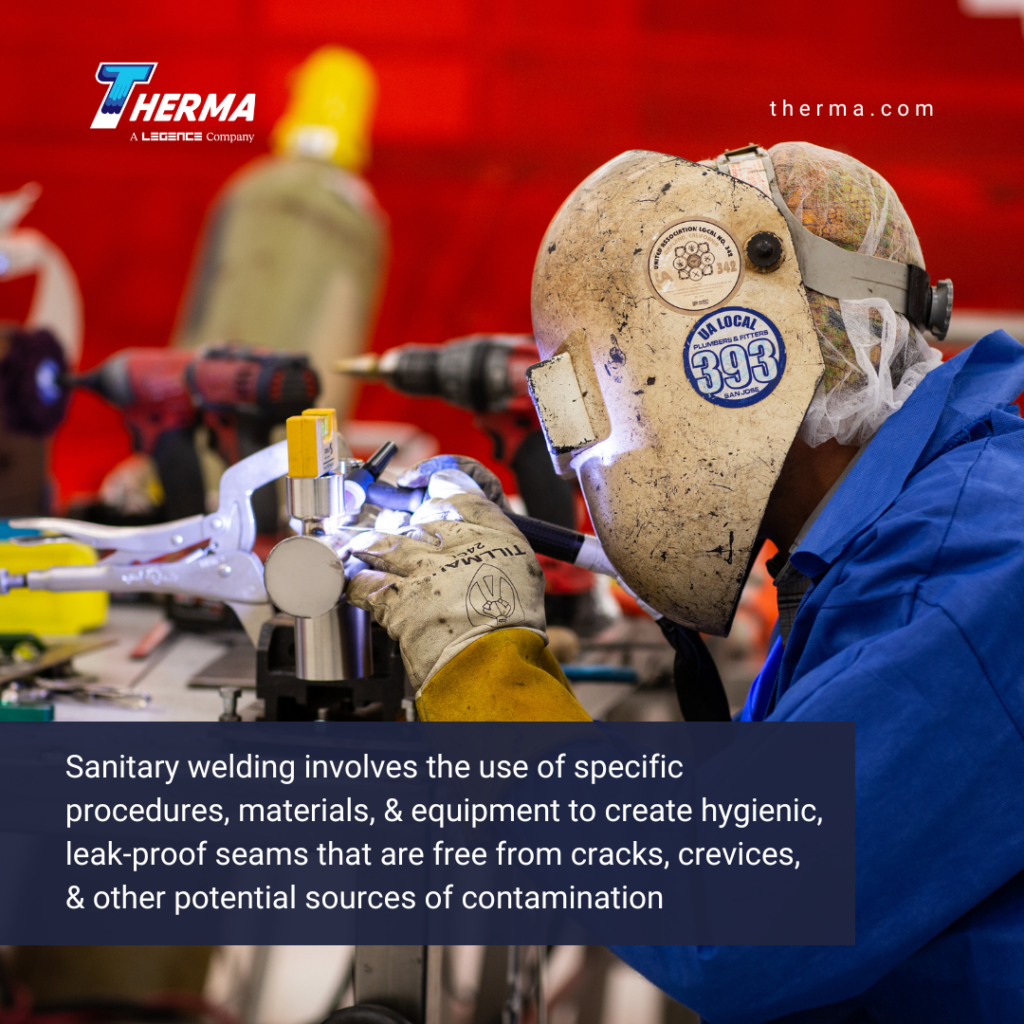
Source: therma
Check the damage geometry
Cracks often tell a story through their direction and origin. A crack starting at the toe of a weld, a sharp corner, a drilled hole, or a bracket termination may indicate stress concentration. A crack that repeats in the same location after repair strongly suggests the loading path or geometry remains wrong.
Inspect for signs of movement around the failure:
- Polished or fretted areas where parts rub.
- Elongated mounting holes.
- Loose anchors, distorted brackets, or missing spacers.
- Misaligned shafts, belts, chains, rollers, or guide rails.
- Evidence of product buildup that changes loading or prevents free movement.
- Unsupported piping or cable runs transferring load into sanitary equipment.
For rotating, reciprocating, or conveying machinery, check vibration sources before repairing a crack. Worn bearings, imbalance, poor belt tracking, bent shafts, damaged rollers, intermittent impacts, and unsuitable operating speed can all turn a small defect into a fatigue failure.
Examine corrosion locations and retention points
Corrosion on stainless steel is often localized rather than evenly distributed. Pay particular attention to crevices under clamps, gaskets, brackets, nameplates, guards, deposits, insulation, and poorly drained overlaps. Product residue or cleaning solution that remains trapped can create conditions very different from the rest of the machine surface.
Welds deserve close inspection because welding changes the surface and thermal history of the metal. Untreated heat tint, rough weld profiles, undercut, pinholes, incomplete fusion, crevices, and unblended transitions can reduce cleanability and create preferred sites for corrosion or cracking. A visually shiny weld is not automatically a suitable sanitary repair.
Confirm material and fabrication history
For a significant failure, gather the available records:
- Original drawings and equipment manuals.
- Material certificates or purchase records.
- Welding procedure and welder qualification records where applicable.
- Previous repair reports.
- Cleaning and sanitation chemical information.
- Operating changes and maintenance history.
If alloy identity is uncertain or the consequence of failure is high, involve a qualified materials professional or testing provider. Portable alloy identification methods can be useful screening tools, but their limitations should be understood. Material grade, wall thickness, weld quality, and internal condition may require additional examination.
Common mechanisms behind stainless steel equipment damage
Localized corrosion
Pitting and crevice corrosion can occur when the passive surface layer is disrupted and the local environment becomes unfavorable. Chloride-containing exposure, deposits, stagnant liquid, concentrated residues, poor drainage, and inaccessible seams can contribute. Stainless steel grades differ in resistance, so an alloy that performs well in one part of a plant may not be appropriate for another.
Do not assume that upgrading one visibly damaged part to a higher-grade alloy solves the problem. If a crevice still traps liquid, or if cleaning chemistry is misapplied, the replacement may eventually fail in a similar way.
Fatigue and vibration cracking
Fatigue damage develops from repeated stress cycles rather than one obvious overload. It is common at weld toes, abrupt section changes, cantilevered brackets, and mounting points. A cracked guard support may seem minor, but it can be evidence that vibration is affecting adjacent components.
The effective corrective action may be to improve support spacing, reduce an unsupported span, realign driven equipment, eliminate impact, or revise the bracket geometry. Simply adding weld metal over a crack without removing the cause can increase stiffness locally while moving the next crack to the edge of the patch.
Weld and fabrication defects
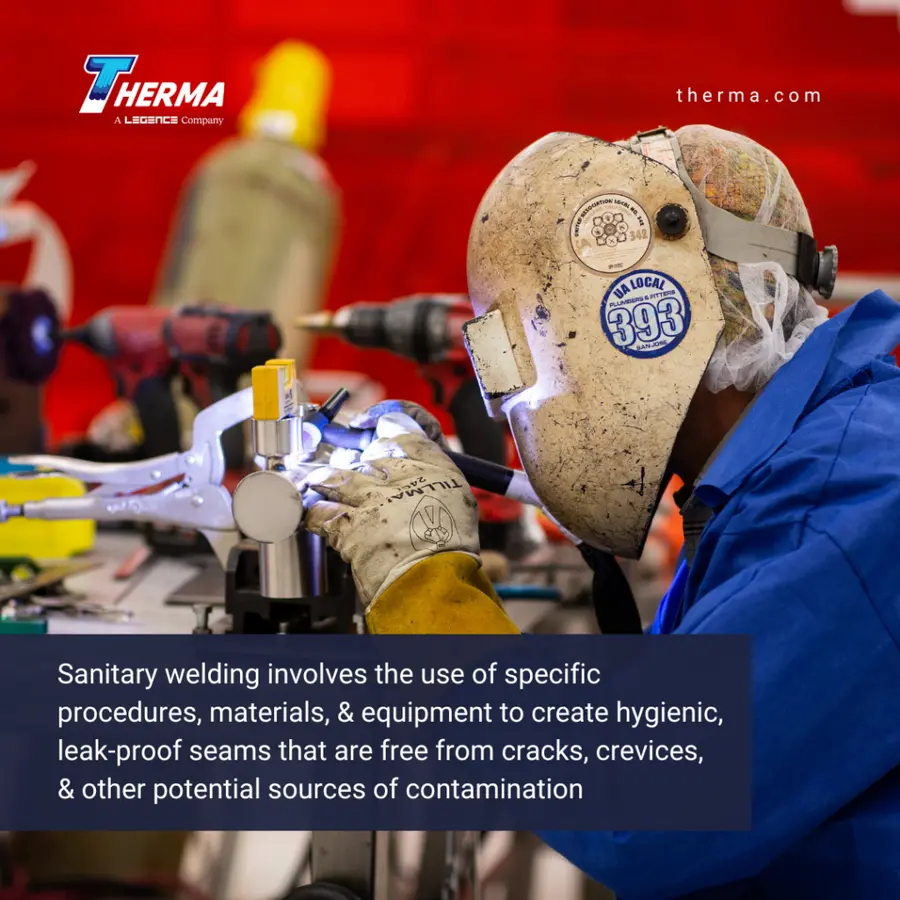
Sanitary equipment welding repair must address both structural integrity and cleanability. A repair can fail if it has incomplete fusion, porosity, excessive undercut, unsuitable joint preparation, poor access for welding, or a rough internal profile. Product-contact repairs also require appropriate finishing, cleaning, inspection, and release under the facility’s food-safety controls.
Avoid field fixes that leave intermittent welds, open tube ends, sharp crevices, unsealed overlaps, or inaccessible cavities in a washdown or product zone. Repairs should preserve drainage and allow the equipment to be inspected and cleaned as intended.
Mechanical damage and overload
Forklift strikes, dropped tooling, jammed product, improper lifting, thermal distortion, and modifications made without engineering review can bend or crack stainless components. Thin sheet, vessel jackets, conveyor side frames, and fabricated guards can look robust while having limited tolerance for point loads or repeated impact.
Review whether the failed part was used as a step, handhold, lifting point, pipe support, cable support, or stop even though it was not designed for that purpose.
Repair or replace: make the decision on function, not appearance
A food plant stainless steel repair may be reasonable when the component can be restored to its original function, hygienic condition, and expected loading capacity. Replacement is often the better choice when damage is widespread, wall thickness has been lost, cracking is recurrent, access prevents a sanitary repair, or alloy and fabrication quality cannot be confidently verified.
Use these questions before approving repair:
- Can the damaged area be fully accessed, cleaned, welded, finished, and inspected?
- Will the repair remove the defect rather than cover it?
- Can the original material and compatible filler material be verified?
- Will the completed surface remain smooth, drainable, and free of product-retention features?
- Has the underlying corrosion, vibration, alignment, or loading cause been corrected?
- Does the repair require engineering review, nondestructive examination, pressure testing, or food-safety release before service?
For pressure-containing equipment, rotating assemblies, load-bearing structures, or product-contact equipment with a potential contamination consequence, involve qualified engineering, fabrication, and quality personnel. Do not rely on an informal visual check alone where the risk or service duty warrants a controlled inspection.
Specify a better repair
A repair work order should be more specific than “weld crack and polish.” Clear specifications reduce the chance of a cosmetically acceptable but unsanitary or short-lived repair.
Include, as applicable:
- Exact equipment and component identification.
- Confirmed or required base-metal grade and thickness.
- Repair extent, joint preparation, and whether damaged material must be removed.
- Welding process and qualified procedure requirements.
- Requirements for weld continuity, profile, blending, drainage, and access for cleaning.
- Controls to prevent carbon-steel contamination from shared tools, grinding media, or handling.
- Surface restoration requirements suitable for the service environment.
- Inspection and acceptance criteria, including visual examination and any required testing.
- Post-repair cleaning, sanitation verification, and quality release steps required by the site.
If a product-contact surface is involved, coordinate the repair with the plant’s sanitation and food-safety team. The facility should verify that the finished surface is cleanable, that no repair debris remains, and that any required cleaning or validation activities are completed before production resumes. Applicable customer requirements, equipment standards, and regulatory obligations should also be checked for the specific process and market.
Preventing repeat equipment failures
The most effective preventive action is usually a combination of design, maintenance, and operating controls.
Improve drainage and cleanability
Eliminate standing-water locations, open tube ends, unnecessary ledges, overlapping plates, and difficult-to-clean crevices where practical. Review repairs after installation from the perspective of both the mechanic and the sanitation crew: can the area be seen, accessed, rinsed, and inspected?
Control vibration and unintended loading
Add failure locations to condition-monitoring routes. Inspect mounts, fasteners, bearings, conveyor tracking, drive alignment, and supports before a small crack becomes a machine outage. When modifications add motors, piping, guarding, platforms, or automation hardware, confirm that the original frame is not carrying new loads beyond its intended duty.
Manage cleaning exposure with material selection
Maintain accurate information on cleaning and sanitizing products, use conditions, rinse practices, and areas where chemicals can concentrate or remain trapped. Material selection should be reviewed when equipment is moved to a new service, a cleaning program changes, or corrosion occurs repeatedly. Verify compatibility with chemical suppliers, equipment manufacturers, and qualified materials specialists rather than making a grade change by assumption.
Standardize sanitary repair controls
Keep approved repair procedures for common stainless work, including welding, grinding, tool segregation, finishing, inspection, and documentation. Record recurring failures by location and mechanism. That history can reveal a design weakness that is invisible when each event is treated as an isolated maintenance job.
Practical closeout checklist
Before returning repaired stainless equipment to service, confirm that:
- The initiating cause has been investigated, not just the visible damage repaired.
- The repair meets the equipment’s structural and operational needs.
- Product-contact and washdown surfaces are smooth, accessible, and drainable as required for their service.
- Welds, fasteners, supports, and adjacent components have been inspected.
- Required testing, cleaning, sanitation verification, and quality release have been completed under site procedures.
- Repair details and recommended follow-up inspections are recorded.
Stainless steel is a durable material, but it is not automatically corrosion-proof, fatigue-proof, or repair-proof. A disciplined investigation of stainless steel equipment damage—combined with a repair specification that addresses material, weld quality, drainage, loading, and cleanability—gives maintenance teams the best chance of preventing the next failure rather than merely delaying it.
References
- Corrosion in Welded Stainless Steel: A Failure Analysis | Northern Manufacturing. (n.d.). https://northernmfg.com/the-anatomy-of-failure-a-metallurgical-analysis-of-corrosion-in-welded-stainless-steel
- Stainless Steel Food Processing Equipment: Grades & Standards. (n.d.). https://loyalfoodmachines.com/stainless-steel-food-processing-equipment
- Food-processing stainless steel fabrication | ADI Laval. (n.d.). https://www.adilaval.com/en/blog/food-processing-stainless-steel-fabrication
- View of Sanitary Design and Construction of Food Equipment. (n.d.). https://journals.flvc.org/edis/article/view/114860/113198
- Stainless Steel Fabrication for Food Processing Equipment - R Parra Steel Fab Inc.. (n.d.). https://rparrasteelfab.com/blog/stainless-steel-fabrication-for-food-processing-equipment
- Study of the Corrosion Behavior of Stainless Steel in Food Industry - PMC. (n.d.). https://pmc.ncbi.nlm.nih.gov/articles/PMC11012613
- Sanitary Stainless Steel Fabrication for Food Plants. (n.d.). https://apfabsolutions.com/sanitary-stainless-fabrication-food-processing-plants
- STAINLESS STEEL EQUIPMENT (FOOD AND MARINE) – 4Ever Machinery. (n.d.). https://4evermachinery.com/portfolios/stainless-steel-equipment-food-and-marine