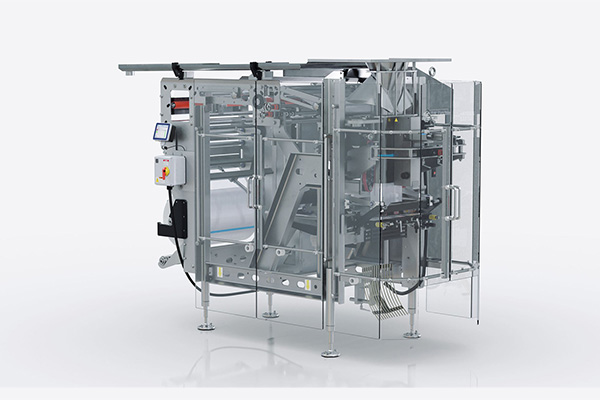
Weak, wrinkled, burnt, or leaking VFFS seals usually come from one of six areas: contaminated seal surfaces, unstable film delivery, incorrect temperature or dwell time, incorrect sealing pressure, jaw misalignment or wear, or a film structure that does not suit the process settings. The fastest way to solve VFFS machine seal problems is to isolate the defect before changing multiple settings at once.
Start by identifying exactly where and how the seal fails. A cleanly opened seal, a seal split through damaged film, a leak caused by product in the seal area, and a wrinkled but apparently closed seal are different faults. Treating all of them by increasing temperature can worsen distortion, film sticking, brittleness, or jaw contamination.
Classify the seal defect before adjusting the machine
Inspect rejected bags from the start, middle, and end of a run. Separate samples by seal location: longitudinal or vertical seal, top cross seal, bottom cross seal, gusset area, or a localized point along a seal. Then note whether the defect is continuous or intermittent.
| Symptom | Likely cause categories | First checks |
|---|---|---|
| Seal opens with little resistance | Low heat, short dwell, low pressure, unsuitable sealant layer | Actual temperature, jaw closure, film specification |
| Random pinholes or channels | Product contamination, wrinkling, damaged film, debris on jaws | Seal area, product timing, jaw faces, film path |
| Burnt, thin, brittle, or distorted seal | Excess heat or dwell, excessive pressure, unsuitable film | Temperature stability, cycle timing, film response |
| Wrinkled cross seal | Poor film tension or tracking, uneven pressure, jaw alignment | Web path, pull belts, forming set, jaw parallelism |
| One side of seal is weak | Uneven jaw pressure, misalignment, worn pads or bands | Jaw faces, closing mechanism, pressure distribution |
| Film sticks to jaws | Excess heat, contamination, damaged release surface, film mismatch | Jaw cleanliness, temperature, sealing surface condition |
A useful rule is to inspect the material entering the jaws, not just the finished package. The sealing station can only seal the film it receives. Film that arrives skewed, stretched, contaminated, or folded can produce a defect that looks like a heat-seal failure.
Use a controlled fault-isolation sequence
Do not change temperature, pressure, dwell time, speed, and film tension together. That may restore production briefly, but it removes the evidence needed to identify the root cause. Establish a baseline using the current approved film and record the machine settings, line speed, defect type, and where the defect occurs.
Then work through the following sequence.
1. Check for product or foreign material in the seal zone
Product trapped in the cross seal is a common cause of leaking bags, especially with powders, crumbs, oily products, wet products, or irregular particulates. A small amount of material can create a channel through an otherwise acceptable seal.
Inspect failed bags for visible product at the leak path. Also inspect the jaws for buildup, film residue, dust, or damaged release material. If contamination is present, review filling timing, product drop behavior, settling time, and the relationship between the filler discharge and jaw cycle.
For a recurring contamination problem, do not compensate only by raising temperature or pressure. Higher settings may flatten some contamination but can also damage the film, force product into the seal area, or increase buildup on the jaws.
2. Verify the film is tracking and forming correctly
Wrinkles often begin upstream of the sealing jaws. Check the unwind, dancer or tension-control system, rollers, pull belts, forming collar, and forming tube. Film should enter the sealing station centered, stable, and without excessive lateral movement.
Poor tracking can expose the wrong side of the film to the seal area, especially at the vertical seal. It can also cause the longitudinal seam to drift, leading to uneven overlap, inconsistent seal width, or wrinkles that are compressed into the cross seal.
Look for these signs:
- Wrinkles that appear before the cross-seal jaws close.
- A back seal that wanders left or right from bag to bag.
- Film pulling toward one side of the machine.
- Uneven pull-belt grip or visibly worn belts.
- A forming collar or tube that is no longer correctly positioned after a changeover.
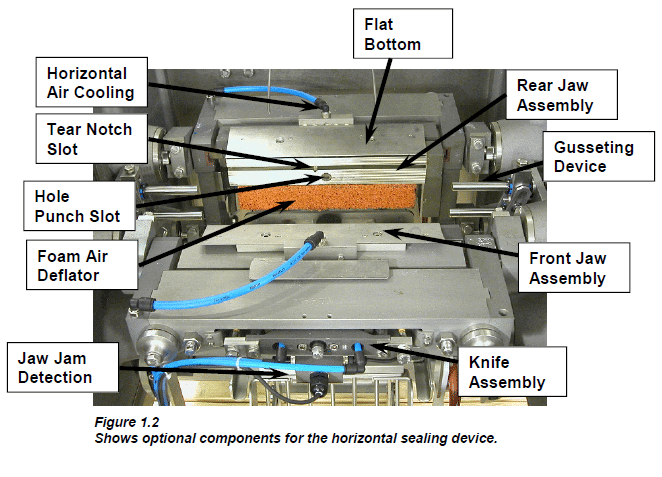
Source: rovema-na
Correct web-path issues before tuning sealing variables. Film tension and tracking faults can create intermittent defects that temperature adjustments will not reliably solve.
3. Confirm actual temperature, not only the controller setting
Weak heat seals packaging operators see at the discharge conveyor may result from insufficient heat, but the displayed setpoint is not proof of jaw-face temperature. A faulty sensor, heater, controller, wiring connection, or uneven heating pattern can create differences across the jaw surface.
Compare the current setpoint with the film supplier’s recommended sealing range and the established validated production setup, where available. If the machine has a history of stable performance with the same film, investigate whether actual operating conditions have changed rather than assuming the specification is wrong.
Low temperature can leave the sealant layer insufficiently fused. Excess temperature can cause burn-through, film shrinkage, distortion, sticking, or a brittle seal. Temperature should be adjusted carefully and documented one change at a time.
4. Check dwell time and line-speed changes
Dwell time is the period in which the film is held under the sealing jaws. When line speed increases, available dwell time may change depending on the machine design and motion profile. A seal that was satisfactory at a lower output rate may become weak or intermittent at the higher rate even when the temperature setpoint is unchanged.
This is particularly important on continuous-motion VFFS equipment, where synchronization between film movement and sealing components affects the quality of the vertical and cross seals. Review whether the defect began after a speed increase, product change, recipe change, or adjustment to machine timing.
If a lower speed resolves the defect, do not assume speed alone is the root cause. It may be revealing insufficient dwell, marginal heating, unstable film handling, inadequate pressure, or a film structure with a narrow operating window.
5. Inspect pressure distribution and jaw alignment
Sealing pressure must be sufficient and evenly distributed, but more pressure is not automatically better. Excessive pressure can mark, thin, or distort film. Too little pressure can prevent full contact between the heated surfaces and the sealant layer. Uneven pressure often produces a strong seal on one side and a weak or open area on the other.
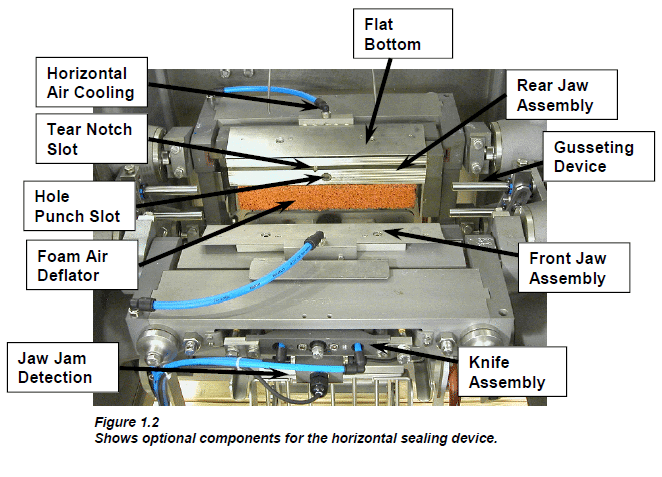
With the machine safely stopped and isolated according to the site’s procedures, inspect the jaw faces, pads, bands, springs, pneumatic or mechanical closing components, and mounting hardware. Check whether the jaws meet parallel across their full width. Look for worn surfaces, buildup, damaged coatings, looseness, or visible uneven contact marks.
For VFFS wrinkled seals, jaw alignment is especially important. A jaw that closes unevenly can push film into folds rather than compressing it consistently. On the vertical seal, verify that the sealing unit is correctly aligned with the forming tube and that film overlap is consistent.
Distinguish film problems from machine problems
A VFFS machine can be mechanically sound and still produce poor seals if the film structure changes. Different films may have different sealant layers, thicknesses, coefficients of friction, stiffness, heat response, and acceptable operating ranges. A film that runs well on one format may not tolerate the same temperature, pressure, or dwell conditions on another.
Investigate the film when:
- The problem starts immediately after a roll, supplier, print, laminate, or product-format change.
- The same machine settings work with previous inventory but not the current roll.
- Defects vary by roll or lot.
- The film curls, shrinks, stretches, or wrinkles unusually through the web path.
- The sealant side appears inconsistent or the film is being presented in the wrong orientation.
Keep suspect rolls clearly identified and compare them with known-good material. Confirm the required sealant side, web direction, structure, and approved operating guidance with the film supplier. Avoid using extra heat to force an unsuitable material to run; the result may be a seal that looks acceptable immediately but fails later in handling.
Practical checks for common seal failures
Weak or open seals
Check for low actual temperature, insufficient dwell, low or uneven pressure, poor film overlap, and film sealant compatibility. If the failure is localized, inspect for contamination or a damaged section of the jaw. If it occurs across the full seal width, focus first on thermal performance, jaw closure, and material suitability.
Leaking bags with an apparently closed seal
Look for channels caused by powder, crumbs, oil, moisture, wrinkles, or small creases. Inspect the seal under good lighting and compare failed bags with acceptable samples. Review fill timing and the product’s behavior during the sealing cycle. A leak path may be difficult to see but can often be located through the pattern of residue or deformation.
Burnt or brittle seals
Reduce the tendency to make broad setting changes. Confirm whether temperature is overshooting, dwell is too long, or pressure is causing excessive compression. Also verify that the current film is approved for the process. A distorted seal can be cosmetically unacceptable even when it initially appears closed.
Wrinkled seals
Start upstream: film tension, pull-belt condition, roller alignment, tracking, forming collar setup, and tube alignment. Then inspect jaw parallelism and pressure distribution. A wrinkle that enters the jaws cannot always be corrected at the jaws.
When to stop and involve qualified technical support
Escalate the issue when jaw movement is inconsistent, heaters or temperature feedback appear unstable, electrical components show faults, pneumatic or servo timing is abnormal, or the sealing assembly requires mechanical adjustment beyond routine operator procedures. Stop production when seal integrity cannot be reliably verified or when continued running risks releasing leaking packages.
For food products, the appropriate quality and food-safety personnel should determine the disposition of affected product. Package appearance alone is not sufficient evidence that a seal meets site requirements.
Prevent repeat VFFS seal problems
A short preventive routine can reduce unplanned stoppages:
- Record approved settings by film, bag format, product, and operating speed.
- Inspect sealing surfaces routinely for buildup, wear, and damage.
- Keep film-handling components clean and maintain consistent web tension.
- Verify film identification and orientation at roll changes.
- Review filler timing when product characteristics or fill weights change.
- Trend rejects by defect type and seal location rather than recording all failures as leaks.
- Make and document one controlled adjustment at a time during troubleshooting.
The central principle is simple: stabilize the film and seal area first, then tune temperature, dwell, and pressure. This approach makes VFFS seal bar troubleshooting faster, protects the packaging material from unnecessary heat damage, and provides a clearer path to consistent package integrity.
References
- VFFS Machine Troubleshooting Guide: Common Problems, Causes & Solutions. (n.d.). https://www.kinsunpack.com/news/5-common-problems-with-vffs-machines-and-how-to-fix-them.html
- How to Troubleshoot VFFS Packaging Machine Sealing Issues - High Performance Packaging - HP-Packaging. (n.d.). https://highperformancepackaging.com/2015/08/25/how-to-troubleshoot-vffs-packaging-machine-sealing-issues
- Troubleshooting 10 Common VFFS Packaging Machine Issues. (n.d.). https://qualipakmachines.com/troubleshooting-10-common-vffs-packaging-machine-issues
- Packaging Film on VFFS Lines: A Practical, Plant-Safe Guide to VFFS Troubleshooting. (n.d.). https://unifiedflex.com/blog/packaging-film-on-vffs-lines-a-practical-plant-safe-guide-to-vffs-troubleshooting
- Vertical Seal Troubleshooting On Your Continuous Motion VFFS Machine. (n.d.). https://www.rovema-na.com/tech-notes/while-running-your-continuous-motion-vertical-form-fill-seal-bagger-you-find-vertical-seal-problems
- Troubleshooting Common VFFS Machine Problems. (n.d.). https://www.greatvffs.com/troubleshooting-common-vffs-machine-problems
- VFFS Machine Working Principle: How Vertical Form Fill Seal Works | Soontrue. (n.d.). https://www.foshansoontrue.com/article/working-principle-of-vffs-machines-a-comprehensive-guide.html
- VFFS Machine Poor Sealing: 5 Causes and Ultimate …. (n.d.). https://fill-package.com/vffs-machine-poor-sealing-5-major-causes-and-ultimate-solutions