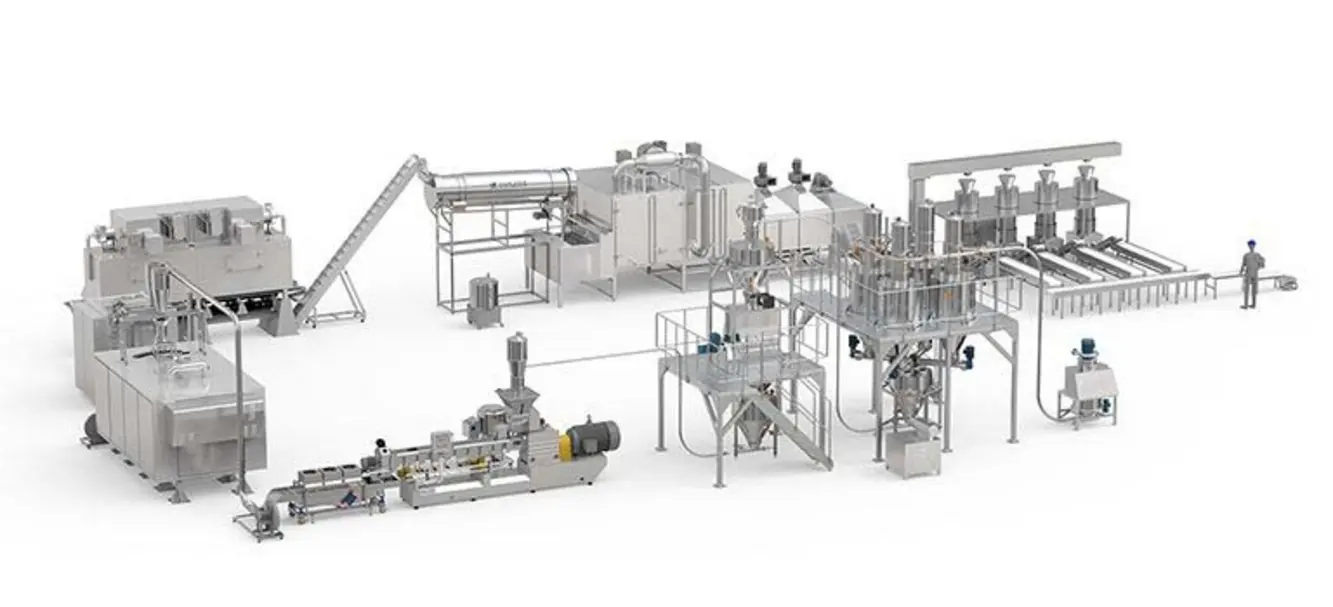
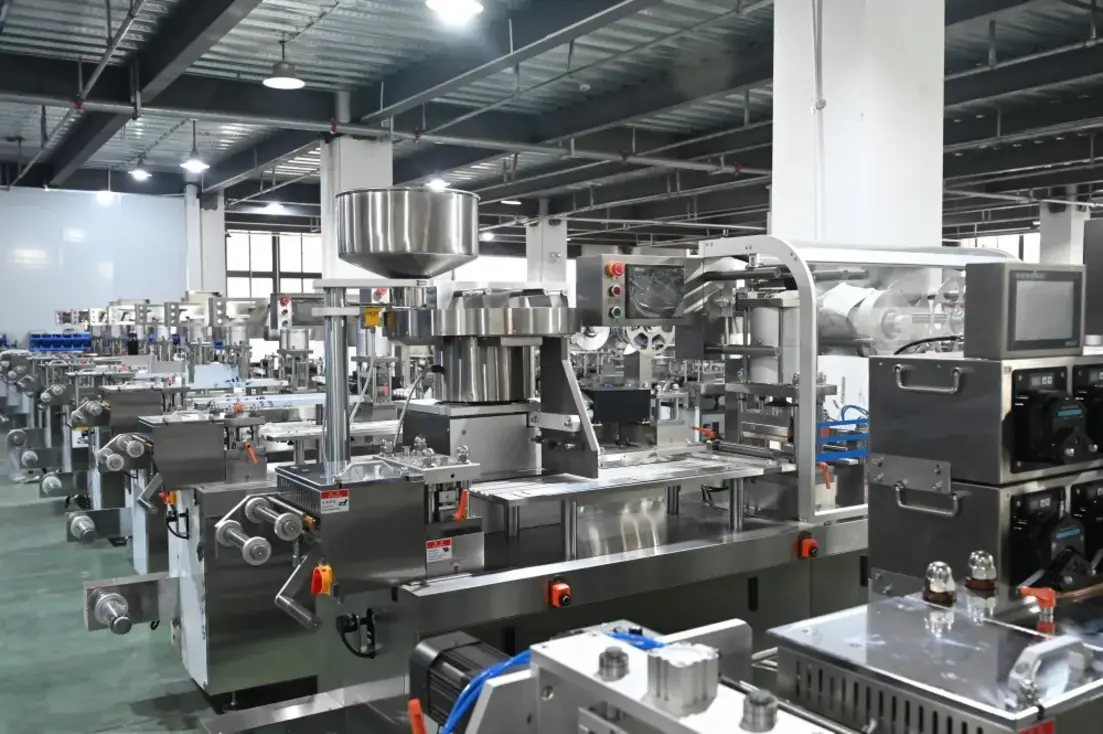
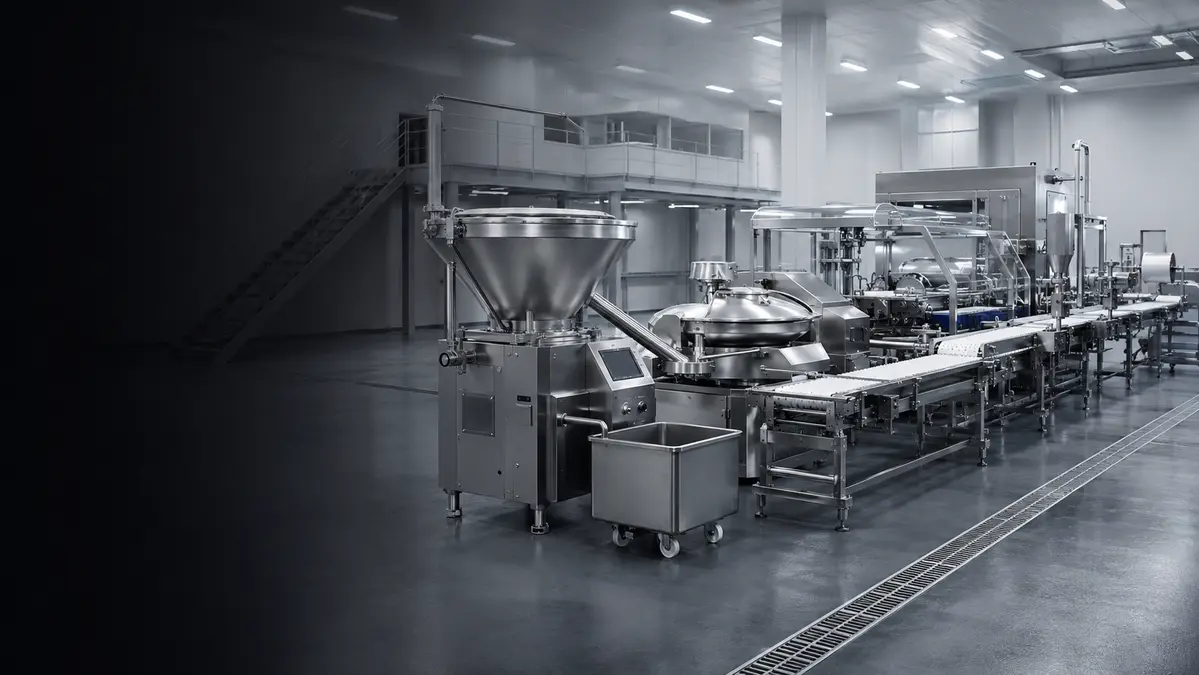
Industrial food machinery is expensive because it is not simply built to move, cut, fill, cook, convey, or package a product. It must do those jobs reliably in a demanding production environment while supporting cleaning, maintenance, operator safety, product quality, and the documentation expected by a food business.
That is why food processing equipment is expensive compared with superficially similar general-purpose machinery. The quoted purchase price includes more than motors, frames, and controls. It reflects sanitary materials and fabrication, guarded moving parts, hygienic layout, electrical integration, engineering time, testing, commissioning support, service capability, and the lower production volumes typical of specialized equipment.
The practical buying question is not just, “Which machine costs less?” It is, “Which option creates the lowest acceptable total cost and operational risk over its useful life?”
The purchase price is only one part of the cost
A machine quote is usually the most visible number in a capital project, but it is not the full cost of putting equipment into productive use. A food processing equipment total cost of ownership review should include the costs before startup, during normal operation, and at replacement or major overhaul.
A useful lifecycle model is:
Total ownership cost = acquisition + installation + operating cost + sanitation + maintenance + downtime + compliance support + eventual replacement or disposal.
Not every cost can be forecast precisely. Still, comparing these categories makes hidden differences visible before a purchase order is issued.
| Cost area | What it can include | Why it matters |
|---|---|---|
| Acquisition | Machine, options, controls, guarding, tooling | A lower base price may exclude necessary production features. |
| Installation | Freight, rigging, utilities, foundations, integration | These costs can vary greatly by plant layout and line complexity. |
| Operation | Labor, energy, air, water, consumables, changeovers | Small recurring burdens compound over years of production. |
| Sanitation | Cleaning labor, chemical compatibility, water use, access | Difficult-to-clean equipment can consume time every production cycle. |
| Maintenance | Parts, lubrication, inspections, technician time, tools | Poor access and proprietary components can increase repair effort. |
| Downtime | Lost output, product loss, delayed orders, restart work | A failure can affect far more than the repair invoice. |
| Support | Training, documentation, remote assistance, field service | Strong support can shorten commissioning and recovery time. |
A lower-priced machine can be the better choice when the duty is simple, the production schedule is light, the design fits the sanitation program, and parts are readily available. It becomes a poor bargain when it creates recurring cleaning delays, unstable throughput, frequent repairs, or difficult changeovers.
Sanitary design raises cost because details matter
Food equipment is often made from stainless steel and other materials selected for durability, corrosion resistance, cleanability, and compatibility with the product and cleaning environment. Material choice is not cosmetic. Exposure to moisture, salt, acids, cleaning compounds, temperature changes, and mechanical wear can affect how long a machine remains serviceable.
For example, 304 stainless steel is widely used in food environments, while more corrosion-resistant grades may be considered for certain harsh or chloride-exposed applications. The appropriate selection depends on the actual product, cleaning chemicals, plant conditions, and equipment location. Buyers should ask the supplier to identify material grades and confirm whether they suit the intended environment rather than assuming one stainless specification is right for every area.
Sanitary equipment cost factors also include the labor needed to fabricate a machine properly. Smooth welds, clean transitions, sealed or protected areas where appropriate, sloped surfaces, drainage, accessible product-contact zones, and minimized harborage points require more design attention and fabrication effort than a basic industrial frame.
These details can reduce cleaning difficulty and make inspections more practical, but no design should be treated as automatically sanitary for every use. The processor remains responsible for validating cleaning and sanitation procedures for its own product, allergens, soils, chemicals, and operating conditions.
Cleanability is an operating-cost feature
A machine may look simple in a proposal drawing yet be difficult to clean in service. This is one reason buyers should review sanitation as carefully as throughput.
Questions to ask include:
- Which parts contact product, and can personnel access them without excessive disassembly?
- Which components are removed during routine cleaning, and how long does removal and reassembly take?
- Are there hollow sections, crevices, threaded areas, belts, seals, guards, or drain points that need special attention?
- Does the proposed cleaning method match the plant’s existing sanitation approach?
- Are cleaning chemicals, water exposure, and washdown conditions compatible with motors, sensors, controls, seals, and frame materials?
- What tools, lifting aids, or trained personnel are needed for cleaning and inspection?
A machine with more removable parts is not automatically worse. Sometimes removable components make inspection and manual cleaning more effective. The key is whether the design fits the plant’s available labor, shift schedule, sanitation process, and documented cleaning procedures.
Safety systems and controls are not optional extras
Industrial food equipment has moving mechanisms, electrical systems, pneumatic or hydraulic components, hot or cold process areas, cutting tools, conveyors, and other hazards depending on the machine type. Guarding, interlocks, emergency-stop arrangements, safe access points, electrical enclosures, and control logic add material and engineering cost.
They also affect usability. A guard that is difficult to open, clean around, or reinstall may slow sanitation and encourage poor workarounds. Conversely, a well-designed access system can improve both routine maintenance and operator compliance.
Buyers should not rely on a generic statement that equipment is “safe” or “compliant.” Ask what standards, market requirements, and site-specific safety expectations the supplier has considered. Have qualified safety, engineering, and operations personnel review the final installation and risk controls before production use. Local legal requirements and customer standards may differ by facility and product category.
Engineering and integration can cost as much as the visible machine
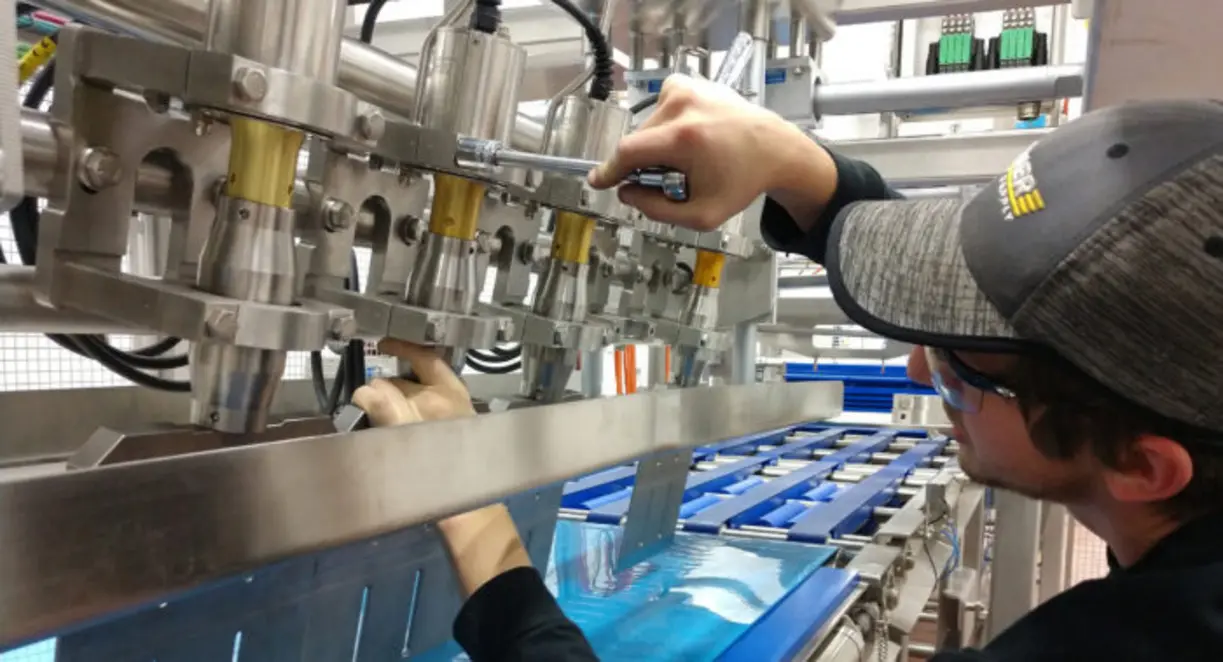
A standalone machine may require considerable work before it runs as part of a line. It may need product infeed and discharge handling, guarding between machines, utility connections, line controls, data communication, recipe management, inspection devices, reject handling, or integration with upstream and downstream equipment.
The vendor may also need to adapt equipment for package sizes, product characteristics, line speed, available floor space, ceiling clearance, drainage, or operator access. Customization is often necessary, but it increases engineering, lead time, controls work, testing, and installation complexity.
This is especially important when comparing quotes. One supplier may include controls integration, format parts, startup support, and documentation. Another may quote a lower base machine while treating those items as exclusions or change orders.
Source: marchantschmidt
Low production volume makes specialized machines cost more
Many food machines are built in far lower volumes than consumer products or general industrial equipment. A depositor for a particular product, a hygienic slicer, a thermal process skid, or a custom packaging system may be engineered and assembled in limited quantities.
The manufacturer still must maintain design capability, fabrication capacity, controls expertise, supplier relationships, testing resources, spare-parts inventory, and field-service staff. Those costs are spread across fewer units. Custom machinery also contains more application-specific engineering than a standardized commodity product.
This does not mean every premium quote is justified. It means buyers should compare the scope, design assumptions, and support package instead of treating two machine descriptions as identical because their stated capacities appear similar.
Reliability and maintenance access have financial value
Equipment that runs reliably is valuable not only because it avoids repair bills, but because it reduces disruption. An unplanned failure can stop production, create product or packaging losses, require troubleshooting labor, delay shipments, and force cleaning or restart activities. The actual cost can be much larger than the replacement part.
Maintenance-friendly design usually includes practical access to wear components, clear lubrication and inspection points, replaceable parts, organized wiring and pneumatics, and documentation that helps technicians diagnose faults. It may also include condition monitoring or controls diagnostics where appropriate.
When evaluating industrial food equipment lifecycle cost, ask:
- Which parts are expected to wear in normal service?
- What are the recommended inspection and replacement intervals?
- Which parts should the plant keep in stock?
- Are components standard and locally obtainable, proprietary, or subject to long lead times?
- Can maintenance be performed safely and efficiently without major teardown?
- What remote and field-service options are available?
- What training is included for operators, sanitation personnel, and maintenance technicians?
A vendor that can clearly answer these questions is often easier to work with after installation than one focused only on the initial sale.
Documentation and commissioning are part of the product
Food processors often need more than a machine manual. Depending on the application and project scope, useful deliverables may include electrical drawings, pneumatic diagrams, spare-parts lists, recommended preventive-maintenance tasks, cleaning guidance, operating procedures, controls documentation, training records, and factory or site test information.
The required documents should be defined in the purchase specification. Do not assume a supplier’s standard documentation package meets internal engineering, quality, customer, insurer, or regulatory expectations.
Commissioning also deserves attention. Startup may involve mechanical installation checks, utility verification, dry runs, product trials, operator training, performance confirmation, and corrective work. Establishing acceptance criteria before delivery helps avoid disputes about what the machine must demonstrate and under what product conditions.
A practical food machinery buying checklist
Before comparing final quotes, build a one-page evaluation sheet that every bidder answers in the same format.
Product and production fit
- Product type, viscosity, size, temperature, fragility, and variability
- Required output range rather than only a peak theoretical rate
- Package formats, recipes, and expected changeovers
- Yield, waste, giveaway, and product-damage concerns
Hygiene and sanitation fit
- Product-contact material specifications
- Cleaning access and disassembly requirements
- Compatibility with planned cleaning compounds and washdown conditions
- Drainage, residue control, inspection access, and allergen-changeover considerations
- Cleaning and sanitation procedures that must be validated by the processor
Plant and line fit
- Floor space, access routes, ceiling height, drainage, and service clearances
- Power, air, water, steam, refrigeration, vacuum, and wastewater requirements as applicable
- Upstream and downstream interface responsibilities
- Control-system integration and data requirements
Lifecycle and vendor fit
- Included training, commissioning, and acceptance testing
- Recommended spare-parts package and parts availability
- Preventive-maintenance requirements
- Warranty terms, response options, and service coverage
- Documentation package and ownership of drawings or software access where relevant
- References from applications similar to the intended duty
Common buying mistakes
The most common mistake is comparing a low base quote against a more complete proposal and assuming the equipment is equivalent. Another is specifying only a target speed without defining product condition, changeover expectations, cleaning method, uptime needs, and acceptance criteria.
Buyers also underestimate installation scope. A machine that fits on a layout may still need structural work, utility upgrades, safety guarding, line controls, drainage changes, or access modifications. These requirements should be reviewed early with operations, maintenance, sanitation, engineering, quality, and safety personnel.
Finally, avoid buying capacity that cannot be used. The fastest machine on paper may not improve line output if the constraint is labor, cooling, inspection, packaging supply, sanitation time, or a downstream conveyor. Evaluate the full line, not just the individual machine.
The right question to ask suppliers
Instead of asking only, “Why does this food machine cost so much?” ask suppliers to explain the cost in operational terms:
- What design features reduce sanitation time or improve access?
- What is included in the quoted scope, and what is excluded?
- Which components and materials were selected for this product and cleaning environment?
- What operating assumptions support the stated performance?
- What maintenance tasks, spare parts, and training will the plant need?
- How will installation, testing, acceptance, and service be handled?
The best buying decision is rarely the machine with the lowest initial price or the longest feature list. It is the machine whose sanitary design, production capability, serviceability, integration scope, and vendor support match the processor’s real operating conditions at an acceptable lifecycle cost.
References
- Food Processing Equipment Maintenance: Complete Guide. (n.d.). https://loyalfoodmachines.com/food-processing-equipment-maintenance
- Worximity | The Hidden Cost of Downtime in Food Processing. (n.d.). https://www.worximity.com/blog/the-hidden-cost-of-downtime-in-food-processing
- Best & Worst Materials for Food Processing Equipment. (n.d.). https://www.disher.com/blog/best-materials-food-processing-equipment
- FSHN15-07/FS270: The Cost of Food Safety. (n.d.). https://ask.ifas.ufl.edu/publication/FS270
- The Hidden Cost of Aging Equipment: Rethinking …. (n.d.). https://www.linkedin.com/pulse/hidden-cost-aging-equipment-rethinking-reliability-tavernarakis-1ee6f
- Why Having the Best Industrial Food Processing Equipment is a Must for Your Business | Marlen. (n.d.). https://marlen.com?p=4741
- Why Cheap Disinfectants Cost Food Processors More Long-Term – Selective Micro Technologies. (n.d.). https://www.selectivemicro.com/blogs/blog/why-cheap-disinfectants-cost-food-processors-more-long-term
- Why Having the Best Industrial Food Processing Equipment is a Must for Your Business | Marlen. (n.d.). https://marlen.com/why-having-the-best-industrial-food-processing-equipment-is-a-must-for-your-business