A food pump loses prime when air, vapor, or an inadequate liquid supply prevents it from maintaining the continuous liquid column needed to move product. On a processing line, the fastest route to a solution is usually to work from the source vessel to the pump inlet: confirm liquid level and valve positions, inspect for suction-side air entry or restrictions, then check whether product conditions and pump condition still match the duty.
Do not assume every low-flow complaint is a priming problem. A centrifugal pump that runs loudly with unstable flow may have air entrainment or cavitation. A positive-displacement (PD) pump that trips or shows high discharge pressure may instead be pumping an overly viscous product against a closed valve or blocked downstream path. Symptoms overlap, so a structured check prevents unnecessary seal, motor, or pump-head replacement.
First, make the line safe and define the symptom
Follow site lockout, isolation, depressurization, and sanitation procedures before opening a pump, strainer, or process connection. Do not loosen clamps or drain plugs on a line that may be pressurized, hot, or carrying cleaning solution. Product recovery and cleaning requirements should be confirmed before maintenance begins.
Record what changed immediately before the problem appeared:
- Did it begin after CIP, maintenance, or a product changeover?
- Does the pump fail at startup, after several minutes, or only at higher flow demand?
- Is the source tank level lower than normal?
- Are flow, discharge pressure, motor load, vibration, or noise changing?
- Is the product colder, thicker, foamy, aerated, or different from the previous run?
- Does the problem affect one pump or multiple pumps connected to the same tank or header?
This short history often separates a local pump fault from a piping, process, or operating-sequence issue.
Common causes when a food pump loses prime
| Likely cause | Typical signs | First check | Usual correction |
|---|---|---|---|
| Air leak on suction side | Bubbles, fluctuating flow, inability to prime after shutdown | Clamp joints, gaskets, valve stems, drain points, seal arrangement | Replace damaged seals or gaskets; tighten and reassemble correctly |
| Low tank level or vortexing | Problem worsens as vessel empties; air reaches pump inlet | Tank level, inlet submergence, agitation pattern | Restore adequate level; review tank outlet and agitation conditions |
| Closed or partly closed inlet valve | Little or no flow; low inlet pressure | Valve lineup and actuator status | Open and verify the correct valve position |
| Blocked strainer or suction restriction | Low flow, rising suction loss, possible cavitation noise | Strainer differential or physical condition | Clean the strainer; investigate the source of debris |
| Air pocket in suction piping | Intermittent flow after cleaning or line changes | High points, pipe slope, venting provisions | Vent safely; correct piping or operating procedure if recurring |
| Inadequate NPSH available | Crackling or gravel-like noise, vibration, reduced flow | Tank level, temperature, suction losses, pump duty | Increase inlet pressure margin or reduce suction losses |
| Product viscosity increase | Slow transfer, high motor load, poor refill at inlet | Product temperature, formulation, actual viscosity | Adjust approved process conditions or operating rate; review pump suitability |
| Worn impeller, rotor, or internal components | Persistent capacity loss despite sound suction conditions | Internal clearances and wear surfaces | Inspect and replace parts to manufacturer specifications |
| CIP reassembly error | Fault occurs immediately after cleaning | Gasket placement, valve orientation, impeller/rotor installation | Reassemble against the correct pump and valve documentation |
A field workflow for pump suction problems
1. Verify the liquid source and valve lineup
Start with the simplest conditions. Confirm that the correct source vessel contains enough liquid, the pump inlet is connected to that source, and all required inlet valves are genuinely open. A valve indicator can be misleading if an actuator has failed, a manual valve is partially closed, or a valve seat has become obstructed.
Check the discharge side as well. Centrifugal pumps should not be expected to establish normal process flow against an unintended downstream isolation. For PD pumps, a closed discharge valve can create pressure rapidly. Confirm that the intended flow path, return path, and any bypass or relief arrangement are in their approved operating positions.
Where a tank is being agitated, watch for a vortex or surface disturbance near the outlet. A pump can be adequately supplied at one tank level and begin drawing air as the level falls or agitation changes.
2. Look for suction-side air entry
Suction piping is often under pressure below atmospheric pressure while the pump is running. That means a small defect may draw air inward without leaving an obvious liquid leak. Inspect all likely entry points:
- Tri-clamp gaskets that are nicked, flattened, misplaced, or incompatible with the cleaning cycle
- Loose clamps, incorrectly aligned ferrules, and poorly seated blind caps
- Pump casing drain plugs, vent points, instrument connections, and sample ports
- Valve stems, seat seals, and diaphragms
- Mechanical seal support connections where applicable
- Flexible hoses, hose ends, and temporary changeover connections
A defect that appears only during operation is especially relevant. If the fault began after CIP, prioritize components that were opened, removed, or reassembled. Verify that the correct gasket size and type were used and that valves were returned to their production configuration.
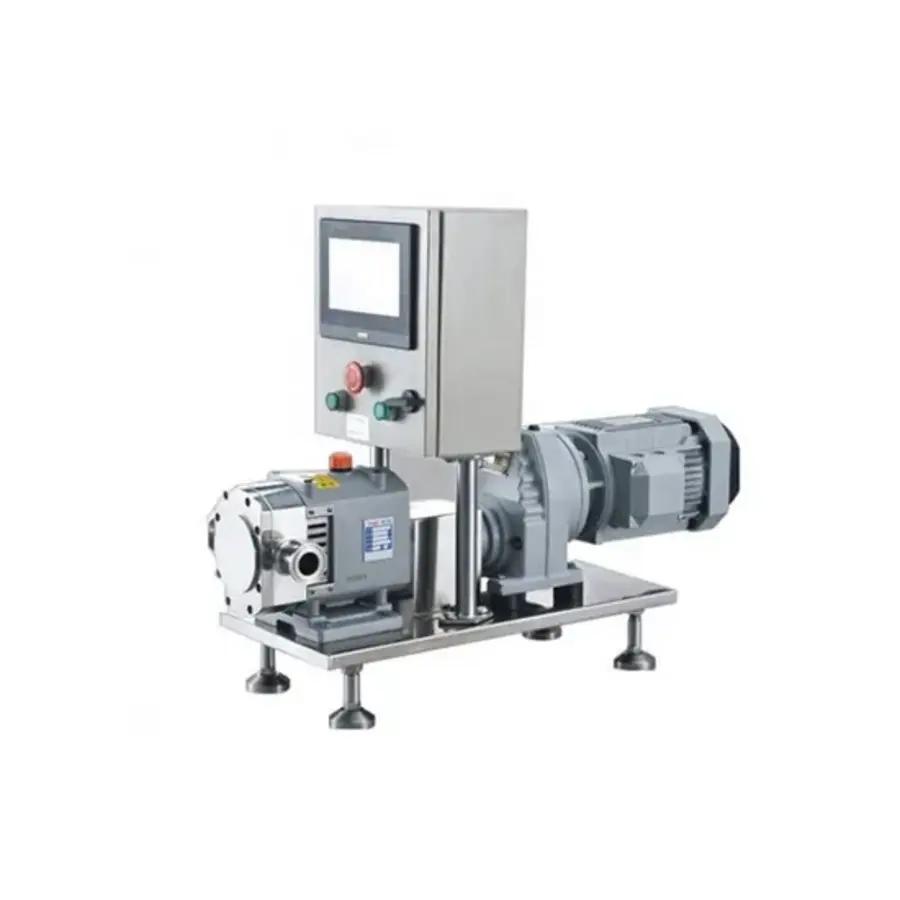
Source: image.made-in-china
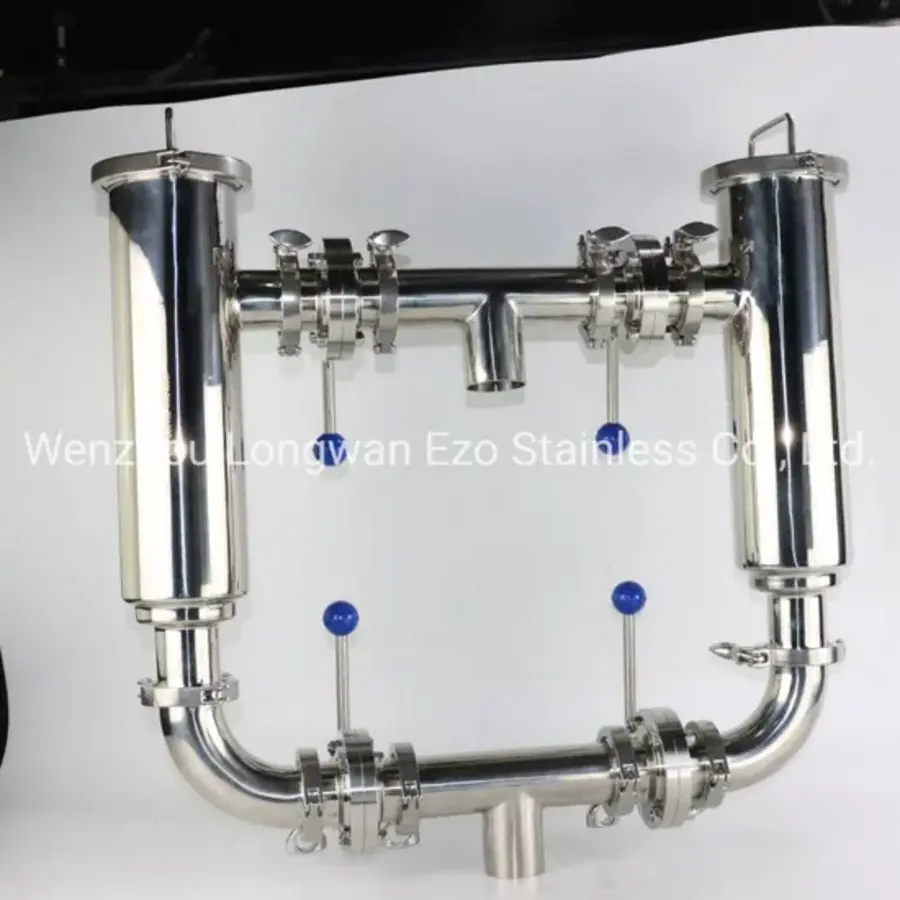
3. Check for blocked strainers and suction restrictions
A blocked suction strainer reduces pressure at the pump inlet. It can mimic low tank level, cause unstable flow, and contribute to cavitation. Isolate and inspect the strainer according to plant procedure. Do not simply clean it and restart without identifying what collected in it. Gasket fragments, product solids, packaging debris, or cleaning residues can point to a separate upstream failure.
Also inspect for collapsed hoses, kinked temporary lines, partially closed valves, fouled filters, and undersized or excessively long suction runs. Suction piping should avoid unvented high points where air can collect. A recurring air pocket is generally a piping-layout or operating-sequence issue, not a problem solved by repeated manual priming.
4. Distinguish air lock from cavitation
An air lock occurs when trapped air prevents the pump from establishing a continuous liquid path. It is common after draining, CIP, line breaks, or an empty source vessel. The pump may run with little flow and may not recover until the suction path and pump casing are properly filled and vented using the equipment’s approved procedure.
Cavitation is different. It occurs when pressure at the inlet falls sufficiently for vapor bubbles to form; bubbles then collapse as pressure rises inside the pump. The result can include crackling noise, vibration, reduced flow, and progressive damage to wetted components. As summarized in an NPSH overview from Iwaki America, vapor formation and collapse can erode impellers and other internal surfaces.
For centrifugal pumps, compare the system’s net positive suction head available (NPSHA) with the pump manufacturer’s required value (NPSHR) for the actual flow and product condition. This review must account for changing tank level, product temperature, vapor pressure, suction-line losses, and product properties. A setup that works during a cool-water test may be marginal with a warm or volatile food product.
Practical ways to improve inlet conditions include raising source level, reducing suction lift, removing restrictions, reducing flow demand, lowering product temperature where the approved process permits, or revising suction pipe size and routing. Do not treat cavitation by simply increasing pump speed; that can increase inlet losses and worsen the condition.
5. Confirm product condition and entrained air
Product changes can alter pump behavior without any mechanical defect. Thick sauces, concentrates, dairy products, batters, and products with particulates may require more favorable inlet conditions than thin liquids. Lower product temperature can raise viscosity and reduce the ability of liquid to flow into the pump.
Entrained air is another common source of unstable flow. It may come from vigorous tank agitation, powder induction, return-line turbulence, leaks, foaming formulations, or a poorly positioned tank return. Air-laden product can cause a centrifugal pump to lose hydraulic performance and may make a PD pump deliver an uneven flow.
Check whether the problem follows a particular recipe, tank fill method, agitation speed, or transfer rate. If it does, involve process engineering rather than treating it solely as pump maintenance.
Centrifugal versus positive-displacement pump symptoms
Centrifugal and PD pumps both need a reliable liquid supply, but their failure patterns differ.
| Pump type | Prime-related behavior | Important diagnostic distinction |
|---|---|---|
| Centrifugal pump | Often needs a liquid-filled casing and stable inlet to develop flow; may lose performance quickly with air or vapor | Noise and falling flow commonly point to air entry, air lock, or inadequate NPSH |
| Positive-displacement pump | Can handle some applications that challenge centrifugal pumps, but still needs adequate inlet supply | Starvation can cause noise, wear, unstable output, or high torque; never assume it can safely run dry or pump against a closed discharge |
For either type, confirm the manufacturer’s limits for dry running, maximum speed, product viscosity, solids, temperature, seal flush needs, and cleaning procedure. A pump’s sanitary construction does not make it immune to incorrect operating conditions.
Inspect the pump only after suction conditions are proven
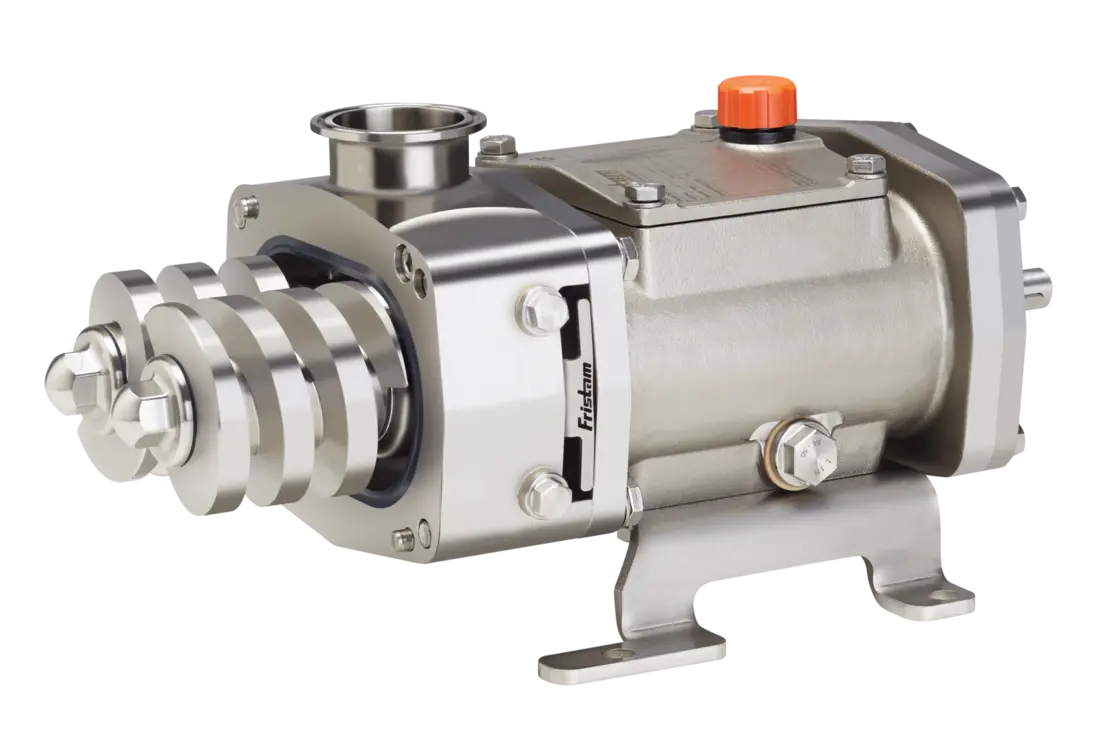
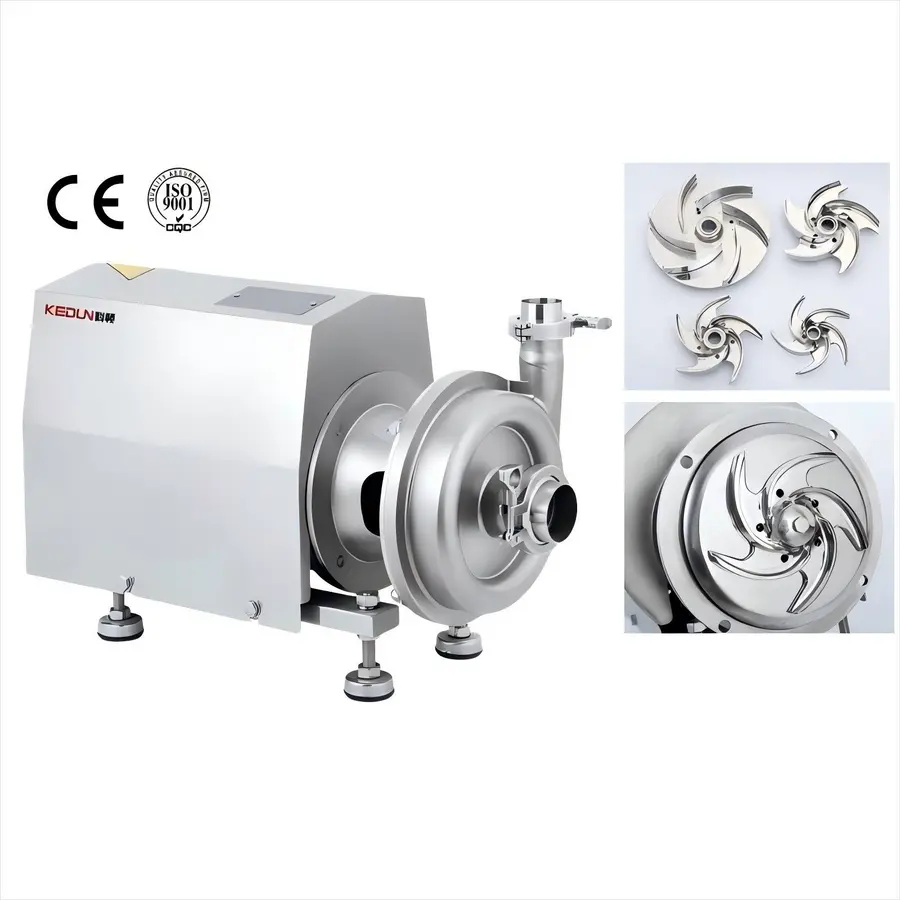
If the inlet supply, valve lineup, strainer, and air-tightness checks are sound, inspect the pump. On centrifugal units, look for a worn, damaged, or plugged impeller; casing damage; incorrect impeller installation; or a mechanical seal issue. On PD pumps, inspect rotors, lobes, timing components, clearances, seals, and wear plates as applicable to the design.
A seal leak deserves attention, but do not assume an external seal leak caused a loss of prime. A seal may be damaged by prior dry running, vibration, cavitation, or incorrect assembly. Establish the initiating problem before replacing parts.
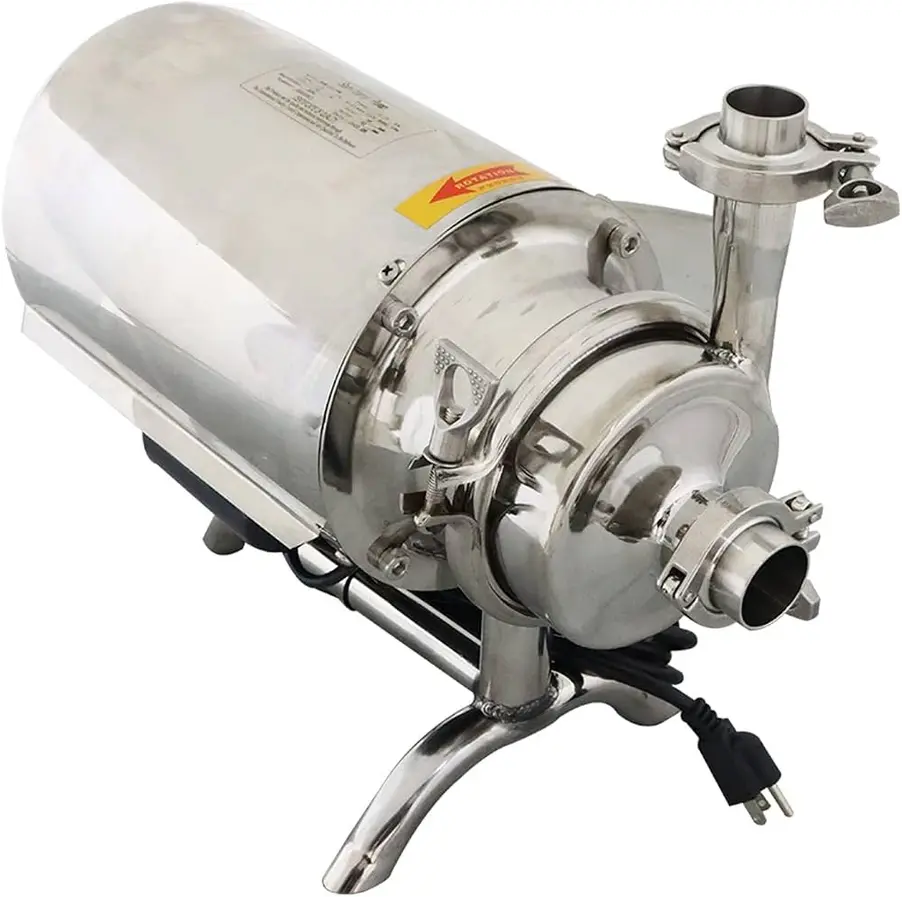
Source: image.made-in-china
CIP and changeover checks that prevent repeat failures
Repeated prime loss after cleaning is often a reassembly or valve-sequencing problem. Use a documented post-CIP readiness check that includes:
- Correct pump-head assembly, including impeller or rotor orientation where relevant
- Correct, undamaged, and properly seated sanitary gaskets
- Tight, aligned clamps and installed drain plugs
- Production valves opened and CIP-only paths isolated as required
- Strainers and filters reinstalled in the correct direction
- Pump casing filled or vented according to the approved startup procedure
- Correct speed setting, especially where a VFD recipe or manual override is used
- Confirmation that the source tank has sufficient product and is not drawing air
Cleaning chemistry, temperatures, contact times, and verification methods should follow the facility’s validated sanitation program and equipment manufacturer guidance. A pump that runs after CIP is not, by itself, evidence that the line has been adequately cleaned or correctly reassembled.
When to stop and escalate
Stop the pump and involve qualified maintenance, engineering, or the pump manufacturer when there is repeated cavitation, rapidly increasing vibration, seal failure, unexplained motor trips, metal contact noise, visible internal damage, or a persistent inability to maintain flow after basic suction checks. Continuing to run a starved pump can damage seals, impellers, rotors, and bearings and may create a larger production interruption.
The durable fix is not repeated priming. It is identifying why the liquid column breaks down: air entering the suction side, vapor forming at the inlet, liquid draining back, a restricted flow path, a changed product condition, or an assembly error. Once the fault is tied to its operating condition, the line can be corrected and the startup checklist updated to prevent recurrence.
References
- How Do Pumps Lose Prime? - PSG® Store. (n.d.). https://store.psgdover.com/blog/tech-tips/how-pumps-lose-prime.html
- Why Your Pump Is Losing Prime and How to Fix It - DXP Pacific. (n.d.). https://dxppacific.com/why-your-pump-is-losing-prime-and-how-to-fix-it
- Sanitary Pump Maintenance Guide for Food Plants | IPE. (n.d.). https://ipe-pumps.com/process-equipment/the-ultimate-guide-to-maintaining-sanitary-pumps-in-food-plants
- Why Pumps Fail: Causes & Prevention Tips | Carl Eric Johnson Co.. (n.d.). https://www.cejco.com/why-pumps-fail-causes-and-prevention-strategies
- Troubleshooting Centrifugal Pumps: Common Problems and Fixes. (n.d.). https://www.pumpworks.com/troubleshooting-centrifugal-pumps-common-problems
- NPSH in Centrifugal Pumps: Causes, Effects & Prevention Guide. (n.d.). https://www.rotechpumps.com/understanding-npsh-centrifugal-pumps-cavitation-prevention
- Pump Cavitation: Root Causes Beyond NPSH Requirements. (n.d.). https://industrialmonitordirect.com/blogs/knowledgebase/troubleshooting-centrifugal-pump-cavitation-beyond-npsh
- The Role of NPSH in Preventing Pump Cavitation. (n.d.). https://iwakiamerica.com/blog/role-of-npsh-in-preventing-pump-cavitation